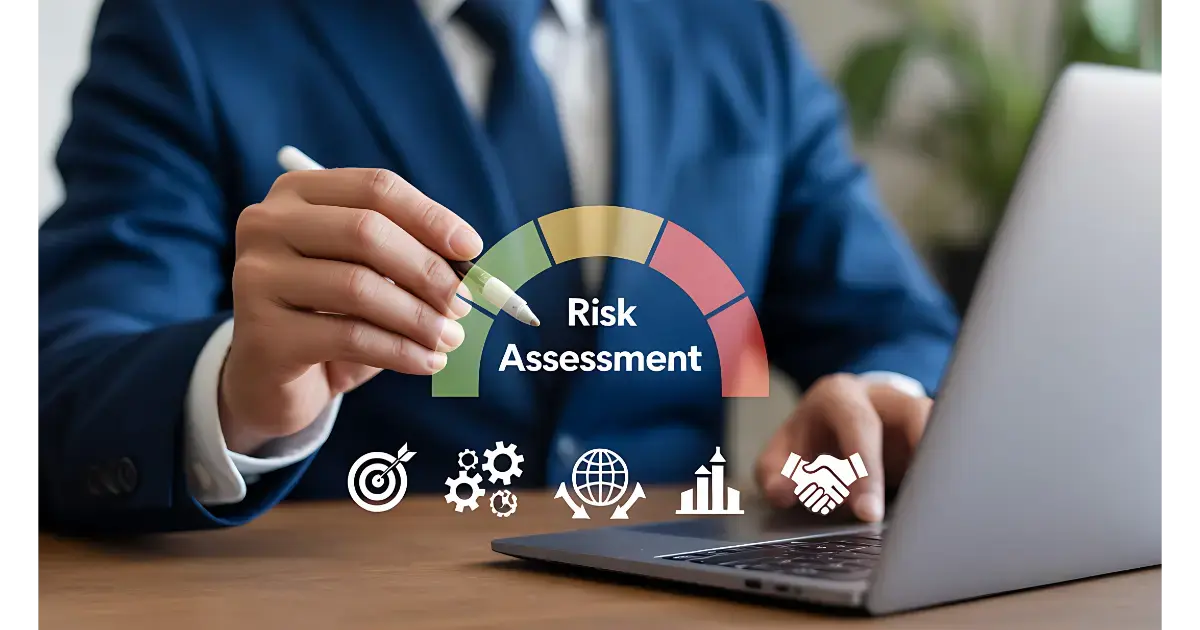
An audit report that says "passed" doesn't necessarily mean the controls work the way they're supposed to. It means the vendor was cooperative during the audit window and controls were functioning during the specific time the auditor was looking. Two weeks later when normal business resumes, that control might be partially implemented, misconfigured, or not used at all.
Audit failure is usually not the auditor's fault. It's a structural issue. Audits are point-in-time events. Vendors know exactly when the auditor is arriving. The controls you need to trust operate 365 days a year.
Here's what causes audit findings to miss real gaps and how to design vendor audits that actually capture what matters.
Why Vendor Audits Fail (Even When They Look Successful)
1. Auditor inexperience:
An internal auditor with no security background conducts a vendor security audit. They check boxes ("Does vendor have firewalls?" "Yes."). They miss nuance. They don't ask: "Show me your firewall rules." They don't verify.
2. Vendor cooperation theater:
The vendor knows an audit is coming. They stage: cleaning up log files, temporarily enabling disabled controls, asking employees to give "correct" answers. The auditor sees what the vendor wants. Once the audit ends, controls revert.
3. Narrow scope:
The audit asks: "Do you have encryption?" It doesn't ask: "What encryption standard? Key length? Rotation frequency? Who manages keys?" The yes/no answer hides weakness.
4. One-time perspective:
An audit is a snapshot. Even a rigorous audit captures a moment. Controls degrade between audits. A vendor might be compliant on audit day and non-compliant the next week.
5. No follow-up verification:
Findings are logged. The vendor promises remediation. The auditor moves on. No one confirms that remediation actually happened.
What a Vendor Audit Failure Actually Costs
1. Compliance violations
A vendor audit should have caught a control gap. It didn't. If a regulator later discovers the gap, they blame you for inadequate vendor oversight. You're cited for a control that technically you delegated but you failed to verify delegation.
2. Data breaches
A vendor audit failure means you didn't catch a security weakness. That weakness becomes an attack vector. The breach happens. Cleanup and fallout are on you.
3. Operational disruption
A vendor audit missed a system instability. The system fails. Your operations grind to a halt. This is exactly the blind spot a dedicated operational risk management platform is built to close — the audit failure meant you didn't see the risk coming.
4. Regulatory fines
If regulators determine you had inadequate vendor oversight processes, you face enforcement action. GDPR, HIPAA, SOC 2 auditors all view vendor oversight as a customer responsibility.
Example: A healthcare provider audited a cloud vendor's backup systems. The audit was generic; the auditor didn't verify encryption or access controls specifically for health data. A year later, a security researcher discovered the vendor's backup systems were unencrypted. Patient data was exposed. The healthcare provider faced HIPAA enforcement because the audit failure meant they didn't detect an obvious control gap.
Red Flags That Signal an Audit Failure in Progress
1. The vendor "passed" but offered few specifics:
An audit report says "Controls are in place." But when you ask for detail "Show me the encryption key rotation logs" the vendor gets vague. That's a sign the audit was surface-level.
2. Findings are all low-risk:
A vendor in any sector should have some minor findings. Zero findings suggests either the vendor is exceptional (unlikely) or the auditor didn't look hard (likely).
3. The auditor didn't ask to see operational logs:
Access logs, patch logs, encryption key management logs—these prove controls are working, not just in place. If the auditor didn't review logs, they didn't audit.
4. Scope was limited to what the vendor offered:
A strong audit asks: "Show me X." A weak audit asks: "What should I see?" The vendor controls the narrative in the second case.
5. No testing of controls:
An audit should include testing. "You say MFA is enabled. Log in and show me." If the auditor didn't test, they verified claims, not reality.
6. The auditor was on-site for less than two days:
A meaningful security audit of a critical vendor takes time. Rushed audits are almost always superficial.
The Anatomy of a Rigorous Vendor Audit
1. Pre-audit
Auditor reviews prior audits, recent incident reports, and regulatory changes. Auditor develops a testing plan. Not a questionnaire—a plan. Which controls are critical? How will they be tested?
2. Kickoff
Auditor meets with vendor leadership. Sets expectations: "We'll test controls, not just review policies. We'll ask for operational evidence."
3. Documentation review
Auditor reviews policies, procedures, architecture diagrams, and risk assessments. Auditor looks for gaps and inconsistencies between policy and reality.
4. Testing
The hard part. Auditor tests controls:
- "You say encryption is enabled. Show me the TLS version on your API. Let me see the cipher suites."
- "You say access controls are in place. Show me the most recent access review. Who has admin access? When was it last reviewed?"
- "You claim you've implemented the fix from our last audit. Show me the change log and test results."
If the vendor can't show evidence, the control failed. Document it.
5. Interviews
Auditor talks to operational staff, not just compliance. "Walk me through your incident response process. Has it been tested?" Real answers reveal whether processes are real or theatrical.
6. Close-out
Auditor drafts findings with evidence. Vendor reviews and can rebut. Auditor finalizes report with clear remediation steps and timelines.
7. Follow-up (often missed)
30–90 days post-audit, auditor requests evidence of remediation. High-risk findings are followed up within 30 days. Medium-risk within 90 days.
Why Vendor Audit Failures Often Go Unnoticed
1. Audits are infrequent:
Annual or biennial audits mean you have visibility once a year. Between audits, controls degrade and you don't know.
2. Audit reports are hard to action:
A finding lands in a Word document. It requires manual follow-up to verify closure. If no one is assigned explicit ownership, the finding drifts.
3. There's no integration between audit findings and operational monitoring:
An audit finds a control gap. Operational monitoring should then be configured to catch reoccurrence. Most firms don't make that connection.
4. Audit failures aren't visible to leadership:
If audit failures remain buried in a spreadsheet, leadership doesn't know vendors are slipping. Escalation doesn't happen.
Your Response Protocol: When You Discover an Audit Failure
Immediate (24 hours):
- Confirm the failure. Is it real or just unclear documentation? Get evidence.
- Assess impact. Did the failed control let an attacker in? Has data been compromised?
- Notify leadership and legal. If the failure is material, they need to know now.
Short-term (Week 1):
4. Demand vendor remediation. "The control we audited wasn't in place. You have 30 days to fix it and provide evidence."
5. Increase monitoring. If auditing missed this, monitoring might catch future slips. Tighten it.
6. Audit the auditor. Why did the audit miss this? Was the auditor under-qualified? Was scope insufficient? Document lessons learned.
Medium-term (Weeks 2–4):
7. Verify remediation. Don't accept "we fixed it." Request evidence: config files, test results, logs.
8. Consider re-assessment. If one audit was weak, others might be too. Conduct follow-up audits of similar vendors or systems.
9. Update vendor contracts. Tighten audit language: more frequent audits, broader scope, independent auditor (not vendor-selected), testing requirements.
Long-term:
10. Integrate findings into monitoring. Whatever control was missed in the audit, set up continuous monitoring to catch future degradation.
11. Assess vendor trust. If the vendor tried to game the audit (staging, hiding things), that's a governance issue. Consider whether you can trust them going forward.
How to Prevent Audit Failures
1. Use qualified auditors:
Internal auditors are cheaper but often lack deep security expertise. For Tier 1 vendors, hire third-party auditors with relevant certifications (CISM, CISSP, industry-specific qualifications).
2. Define audit scope clearly:
Before the audit, agree on what will be tested. Scope should tie to your critical risk drivers don't let the vendor narrow scope to their comfort zone.
3. Require testing, not just review:
Make it explicit: "This audit includes hands-on testing of critical controls. Not just policy review."
4. Mandate follow-up:
Build follow-up into your audit plan. Findings require evidence of remediation within 30–90 days. That evidence is verified.
5. Rotate auditors:
The same auditor year after year can become too familiar with the vendor. Every 2–3 years, bring in a fresh set of eyes.
6. Combine audit with monitoring:
An audit is annual. Monitoring is continuous. This is exactly the gap vendor management tools are built to close, catching control drift that a once-a-year audit can't.
How ComplyScore® Prevents Audit Failures
ComplyScore® brings rigor and continuity to vendor auditing:
- Audit workflows document scope, testing procedures, and findings in a standardized format
- Evidence repository centralizes all audit findings, remediation steps, and closure proof
- Continuous monitoring between audits flags control degradation so you don't rely solely on annual audits
- Automated follow-up ensures remediation evidence is collected and verified within defined timelines
- Audit readiness dashboard shows which vendors are due for audits and which have overdue findings
- Integration with risk scoring ties audit findings directly to vendor risk profiles; audit failures automatically trigger re-tiering
Schedule a demo to see how ComplyScore® helps you build an autonomous, AI-driven, and auditable vendor risk management process.
FAQs
1. How often should we audit critical vendors?
Minimum annual for Tier 1 (critical data, critical ops). For Tier 2, every 18 months. Tier 3, every 24 months. Increase frequency if the vendor handles new data categories, if audit findings were significant, or if regulatory requirements tighten. Event-driven audits should also happen post-incident or post-acquisition.
2. Can we conduct audits remotely, or do we need on-site assessments?
Both have merit. Remote audits (via video, secure file sharing) are faster and lower-cost. On-site audits provide more visibility and harder-to-fake evidence. For critical vendors, a hybrid approach works: remote document review + annual on-site testing.
3. What's the difference between an audit and a compliance assessment?
Audit: testing actual controls. "Show me your access logs." Compliance assessment: review against a standard (SOC 2, HIPAA, ISO). "Do your controls align with HIPAA requirements?" Both are useful; don't conflate them. A vendor can be HIPAA-compliant on paper but fail an operational audit.
4. How do we know if an audit finding is actually remediated?
Request evidence specific to the finding. If the finding was "encryption not enabled," request the configuration showing encryption enabled, plus proof it's been tested. Don't accept "we fixed it" without proof.
5. What should we do if a vendor resists auditing?
Push back. Contractually, you have audit rights. If a vendor refuses or obstructs, escalate to their leadership. Frame it: "We need this to stay compliant with our regulators. Let's find a workable approach." If they continue to resist, consider whether that vendor is worth the risk.
6. Can we reduce audit frequency if the vendor passes multiple audits in a row?
Carefully. A vendor can pass multiple audits while controls degrade between them. Instead of reducing audit frequency, keep frequency constant but increase monitoring intensity. The combination of regular audits + continuous monitoring is more effective than audits alone.






.webp?width=387&height=387&name=headless-tprm%20(1).webp)


































%20(1).jpg)