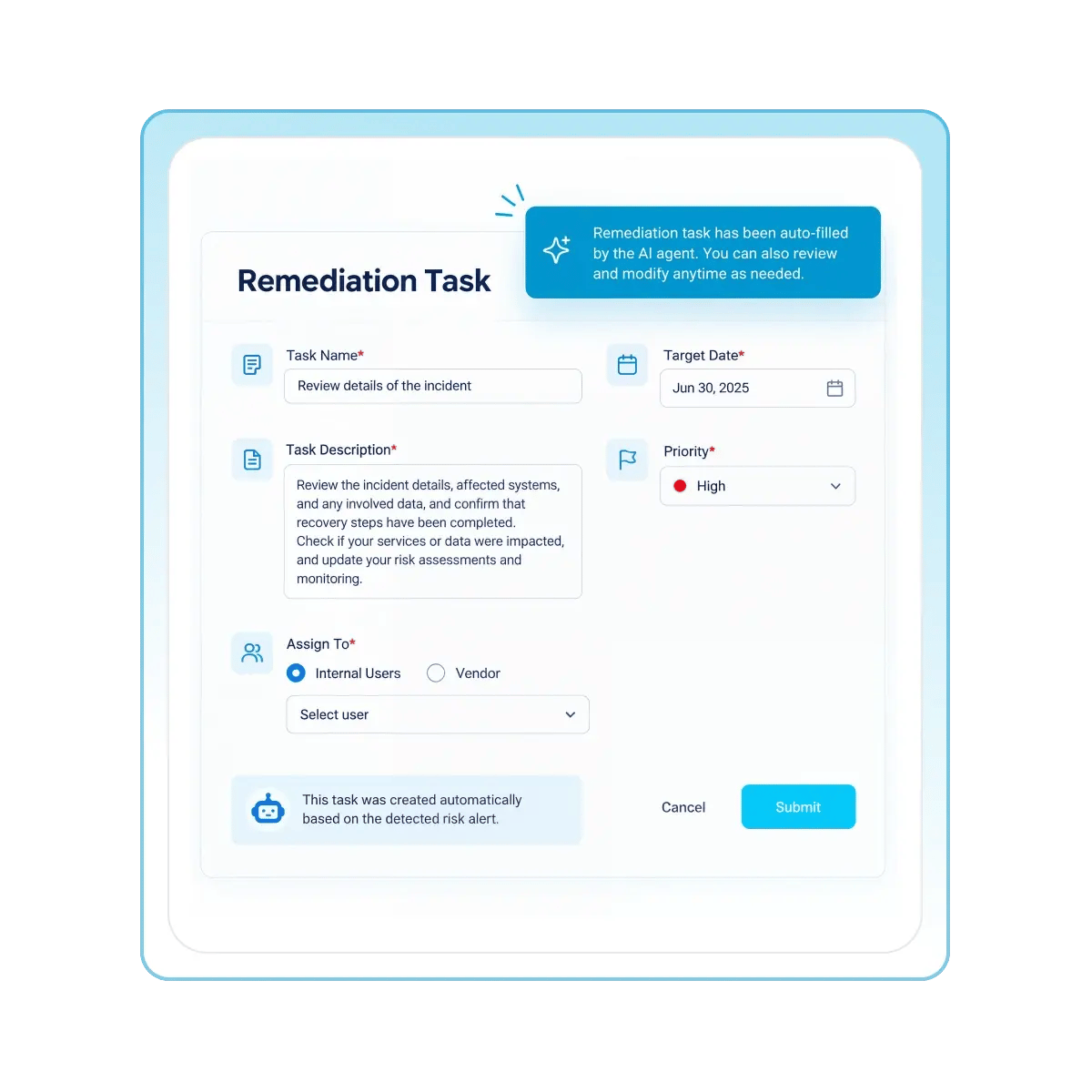



Stop discovering vendor risks late. ComplyScore® continuously monitors vendors and routes critical alerts as owned tasks in real time.
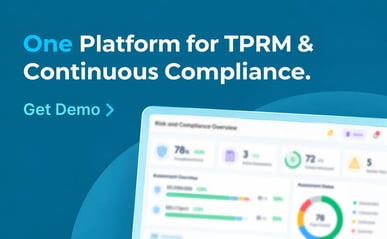
One Platform for TPRM and Continuous Compliance
Centralize vendor assessments, automate workflows, and gain real-time visibility into third-party risk.
Atlas Systems Named a Representative Vendor in 2025 Gartner® Market Guide for Third-Party Risk Management Solutions.
Read the announcementBy submitting this form, I consent to Atlas Systems sending me marketing communications and processing my personal information in accordance with the privacy policy.
Our team will reach out to schedule your 30-minute demo shortly.
Stop discovering vendor risks late. ComplyScore® continuously monitors vendors and routes critical alerts as owned tasks in real time.
➡️ 24/7 Multi-Domain Monitoring
➡️ Real-Time Alert Routing
➡️ Continuous vendor monitoring
Annual or quarterly vendor assessments create months-long visibility gaps. Cybersecurity incidents occur, credit ratings drop, compliance certifications expire, and legal issues surface. By the time the next scheduled review happens, material risks have already impacted operations.
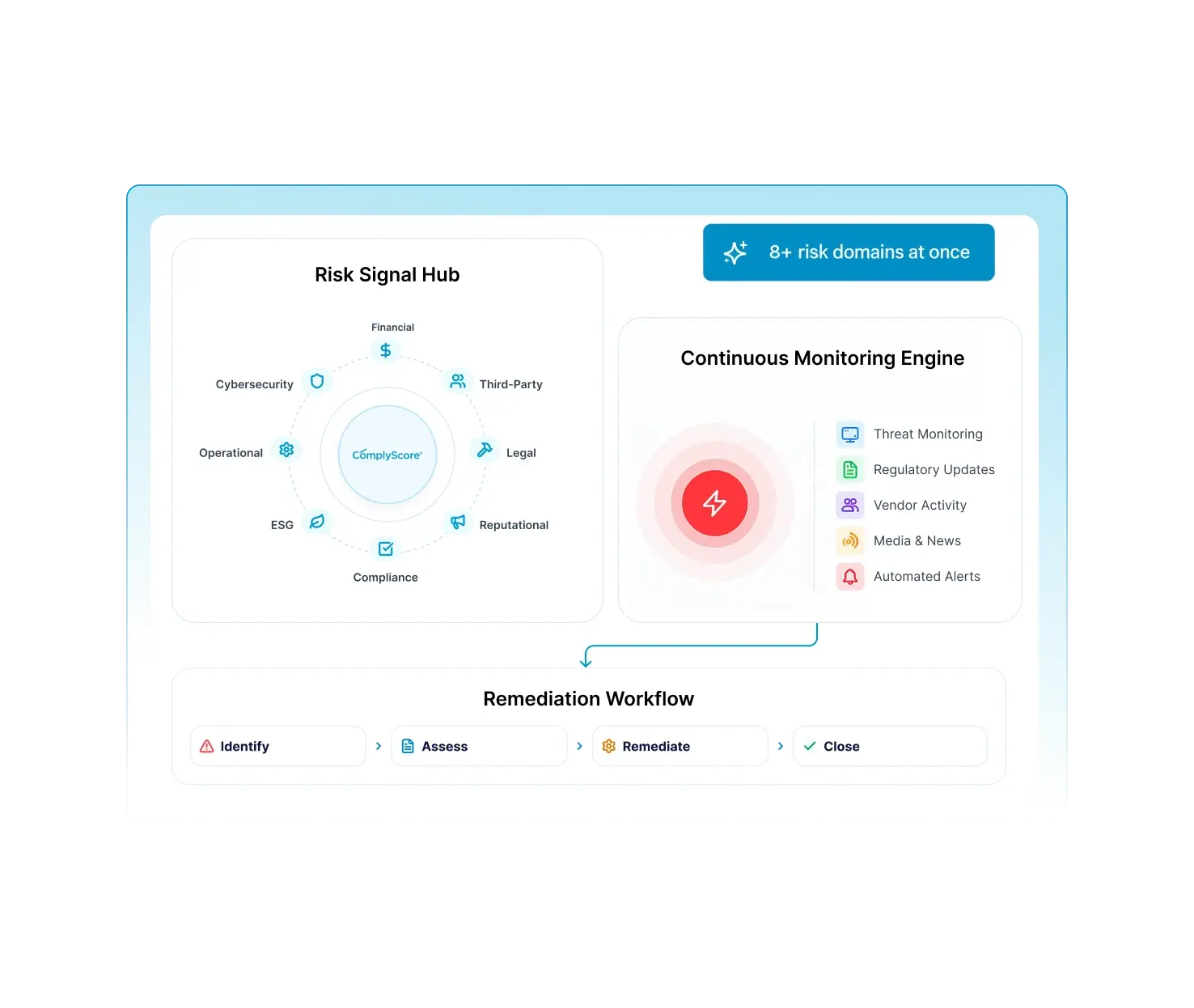
ComplyScore® connects to external risk intelligence feeds that monitor signals around the clock. When alerts cross configured thresholds, the system routes them as remediation tasks with automatic owner assignment based on risk domain.
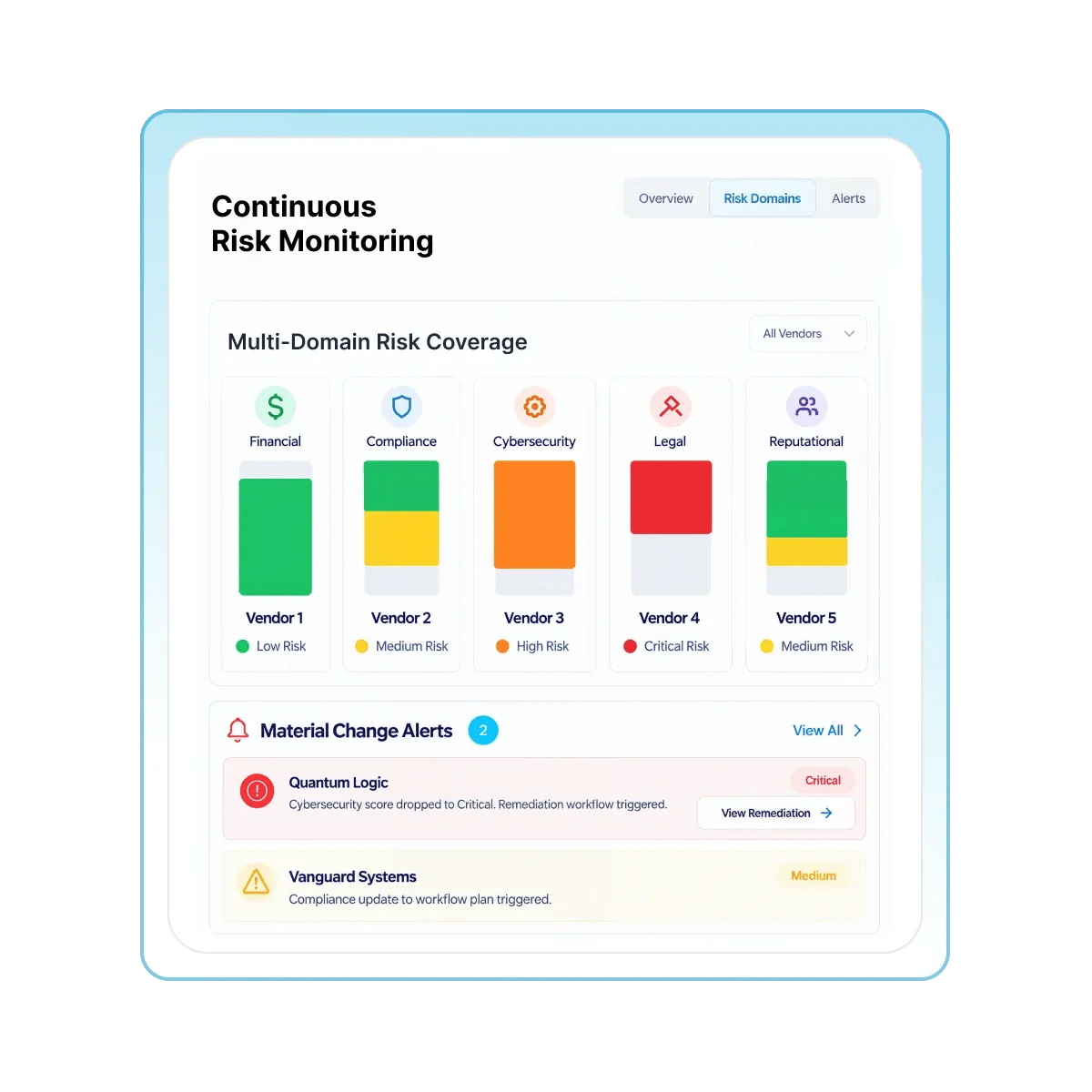
ComplyScore® continuously monitors vendors across multiple risk areas and routes material changes into action.
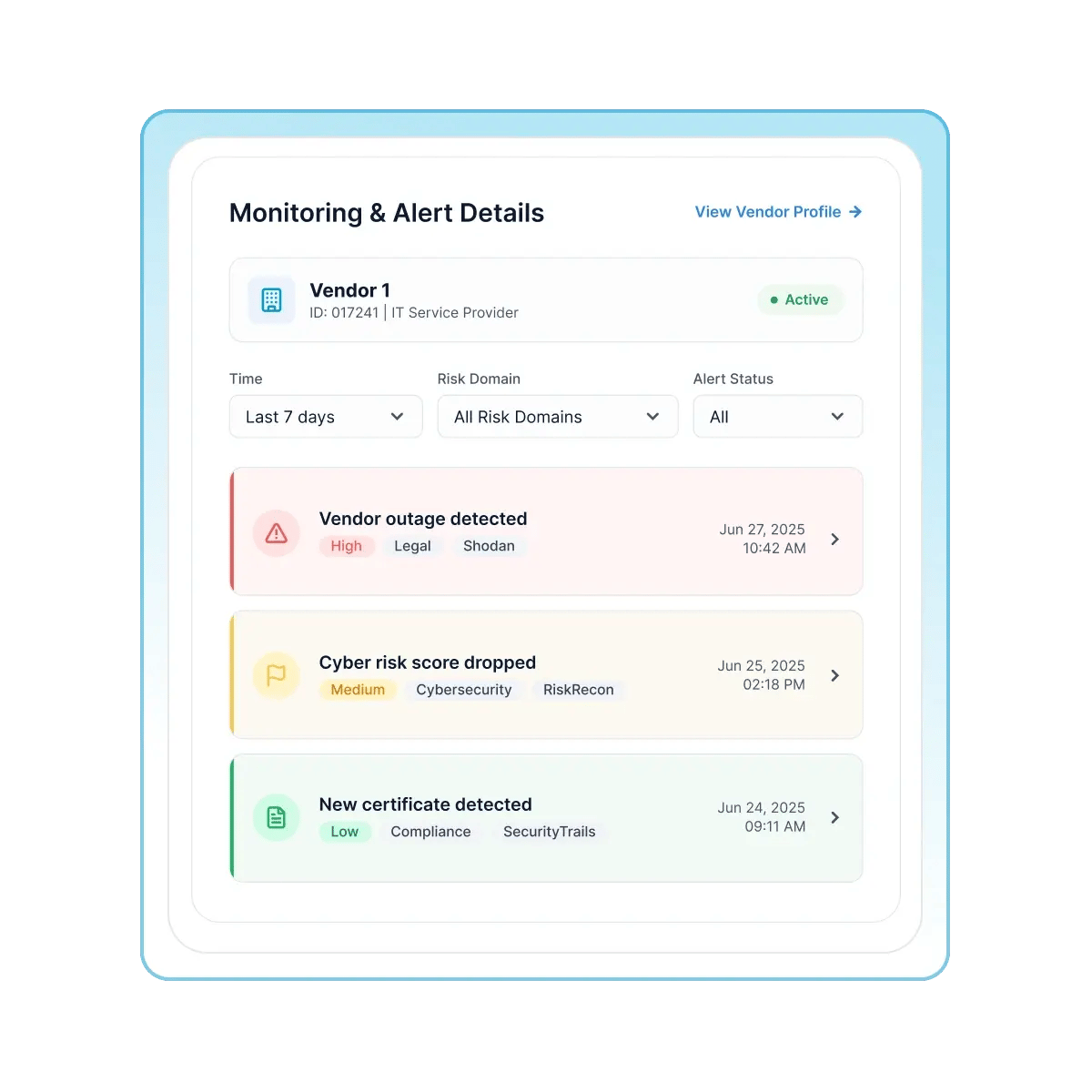
ComplyScore® classifies vendor risk alerts by severity and business impact to drive the right action at the right time.
ComplyScore® turns vendor risk alerts into actionable remediation tasks based on your risk tolerance.
Material changes reach teams within hours instead of waiting for the next quarterly review. When vendors experience incidents or threshold breaches, response begins immediately. Risks get addressed before they compound during visibility gaps between scheduled assessments.
Track your entire vendor portfolio across multiple risk domains without drowning in noise. The system correlates signals from different sources, deduplicates redundant alerts, and applies your policy thresholds so teams only see what requires attention. Coverage expands while workload stays manageable.
Define what constitutes material risk for each vendor tier. Critical vendors get real-time monitoring with instant alerts and automatic task creation. Lower-tier vendors use daily digest summaries with manual review gates. Set deduplication windows, notification channels, and alert frequencies that match how your team operates.
Every alert links to the remediation task it generated, showing who was assigned, what action was taken, and when resolution occurred. Leadership sees which risks triggered responses, which got logged for awareness, and where monitoring detected issues before they became incidents.
ComplyScore® integrates with leading risk intelligence sources such as RiskRecon, SecurityScorecard, BitSight, and Shodan to continuously ingest external vendor risk signals.
Pull credit, financial, and compliance insights from providers like Dun & Bradstreet, Dow Jones, LexisNexis, OpenCorporates, and sanctions databases for broader risk visibility.
Monitoring data syncs bidirectionally. External risk signals flow into ComplyScore®, while task updates push to connected workflow systems where teams already manage work..
ComplyScore® documents continuous vendor monitoring in a way that meets regulatory and audit expectations, with full traceability for every alert and response.
Security standards: Support ISO 27001 and SOC 2 continuous control monitoring requirements with documented alert history and actions taken.
Third-party oversight mandates: Meet DORA and SAMA expectations with auditable records of ongoing vendor risk monitoring and response.
Data protection regulations: Track GDPR and CCPA-related vendor data protection risks with clearly classified monitoring events.
Senior Director, Cybersecurity, Carelon Behavioral Health
G2 Review (Jan 2025)

Gartner Peer Insights (Sep 2024)
Periodic assessments give you a point-in-time snapshot accurate the day you run it, potentially outdated the next week. Continuous monitoring tracks live signals (breach disclosures, financial distress, sanctions hits, adverse media) between assessment cycles so risk changes surface in hours, not months. The distinction matters most for critical vendors where a missed signal has direct regulatory or operational consequences.
At minimum: cybersecurity posture changes (open ports, leaked credentials, SSL degradation), financial distress indicators, sanctions and watchlist hits, adverse media, and regulatory enforcement actions. More mature programs also track industry-specific signals — FDA 483s for pharma, DORA-relevant incidents for financial services. The signal set should be configurable by vendor tier and geography, not one-size-fits-all.
Regulators including the OCC, DORA, and NIS2 increasingly expect documented evidence of ongoing third-party oversight — not just annual assessments. Continuous monitoring creates a time-stamped audit trail showing that risk changes were detected and acted on. For audit prep, that trail can significantly reduce the manual effort of assembling compliance evidence after the fact.
Monitor across financial, compliance, cybersecurity, legal, reputational, and operational domains. Enable all domains for critical vendors or select specific domains based on vendor tier and engagement risk profile. Coverage scales to your vendor portfolio size and risk priorities.
Alert timing depends on your external data source capabilities and configured monitoring frequency. Real-time feeds deliver alerts within minutes of detection. Daily digest options batch lower-priority signals for review at scheduled times.
Yes. Configure impact thresholds determining which alert severities auto-generate tasks versus logging for awareness. Set rules per risk domain and vendor tier so high-impact alerts create tasks immediately while lower-severity signals route for review first.
Yes. Set deduplication windows so the same event detected by multiple providers doesn't generate redundant alerts. The system correlates signals across sources and presents consolidated alerts with attribution showing which providers detected the event.
This is the question most programs get wrong by defaulting to "all vendors." Monitoring everything at the same frequency burns budget on low-risk suppliers while diluting attention from vendors that actually matter. The practical approach: tier vendors by criticality and data access, then apply continuous monitoring selectively to Tier 1 and high-exposure Tier 2 vendors. For the rest, scheduled reassessments are sufficient.