ComplyScore® Launches World’s First Headless TPRM, Bringing Conversational AI to Compliance Management. 










.webp?width=387&height=387&name=headless-tprm%20(1).webp)








































Third-Party Risk Management Built for Retail
PCI DSS compliance, e-commerce partner security, and rapid seasonal vendor onboarding for omnichannel operations.











TPRM Challenges Facing Retail Organizations
PCI DSS service provider management
Payment processors, gateways, and POS vendors require documented assessments, AOC tracking, and ongoing monitoring satisfying PCI DSS Requirement 12.8.
E-commerce and digital channel vendor complexity
Online marketplaces, fulfillment partners, customer data platforms, and marketing technology vendors create extensive third-party attack surfaces.
Customer data protection across vendors
Privacy regulations including GDPR, CCPA, and state privacy laws require documented data processor assessments and sub-processor visibility.
Omnichannel operational dependencies
Order management systems, inventory platforms, and logistics providers must maintain 24/7 availability supporting seamless customer experiences across channels.
Seasonal vendor scaling and marketplace sellers
Rapid onboarding of seasonal vendors, pop-up partners, and marketplace sellers requires fast security assessments without compromising customer data protection.
How ComplyScore® Addresses Third-Party Risks in Retail
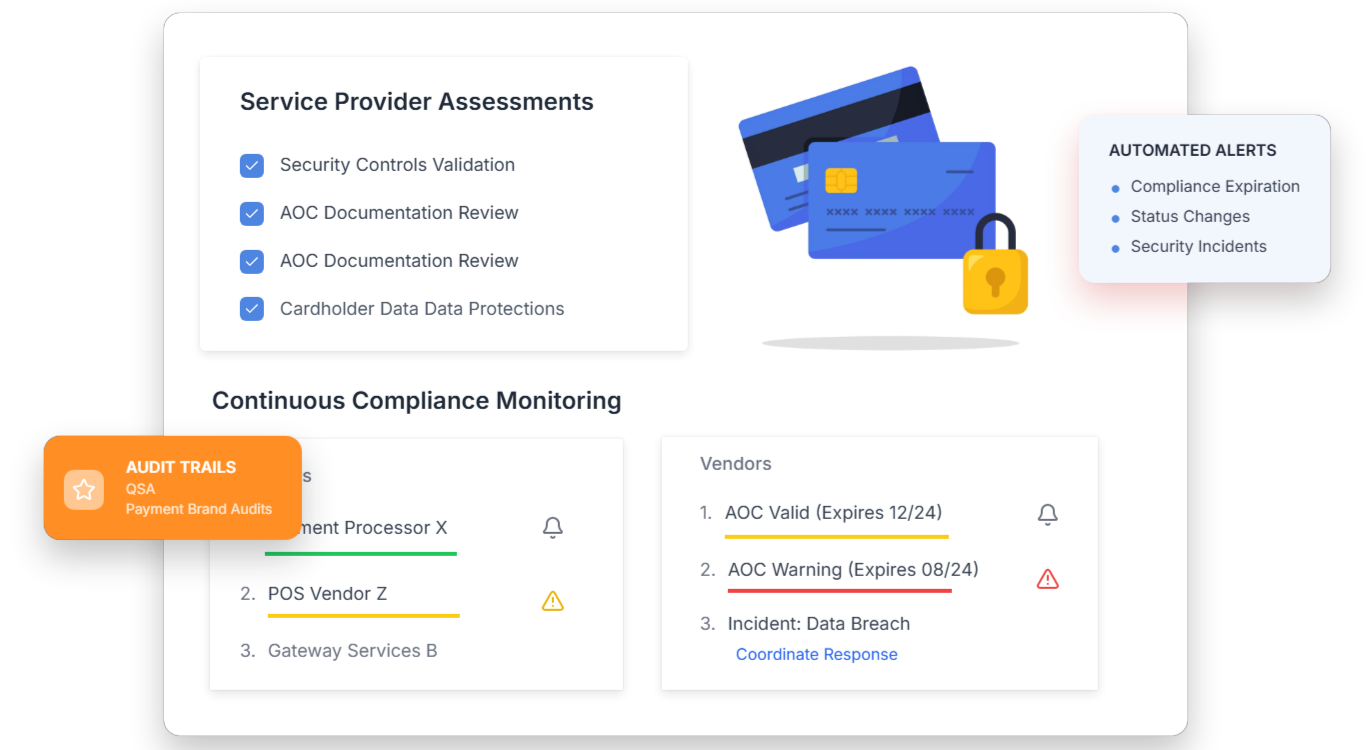
PCI DSS Service Provider Compliance Management
ComplyScore® automates PCI DSS Requirement 12.8 compliance with payment service provider assessments validating security controls, AOC documentation, and cardholder data environment protections. The platform tracks payment processor, gateway, and POS vendor AOCs with automated alerts when compliance status expires or changes. When payment vendors experience security incidents, alert workflows coordinate breach response activities and payment brand notification with complete audit trails.
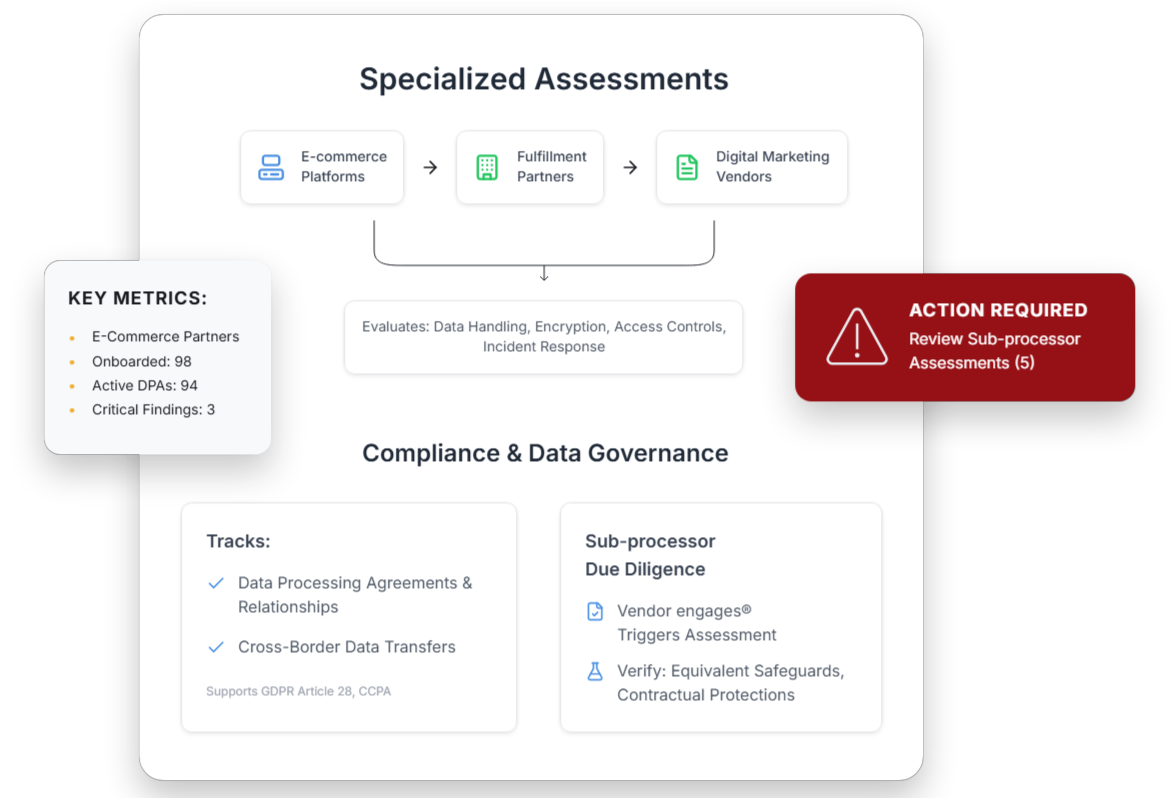
E-Commerce Partner Security and Data Protection
Specialized questionnaires assess e-commerce platform providers, fulfillment partners, and digital marketing vendors evaluating customer data handling practices, encryption standards, access controls, and incident response capabilities. The platform tracks data processing agreements, sub-processor relationships, and cross-border data transfers supporting GDPR Article 28 and CCPA service provider requirements. When e-commerce vendors engage sub-processors, ComplyScore® triggers assessments evaluating whether equivalent data protection safeguards and contractual protections apply.
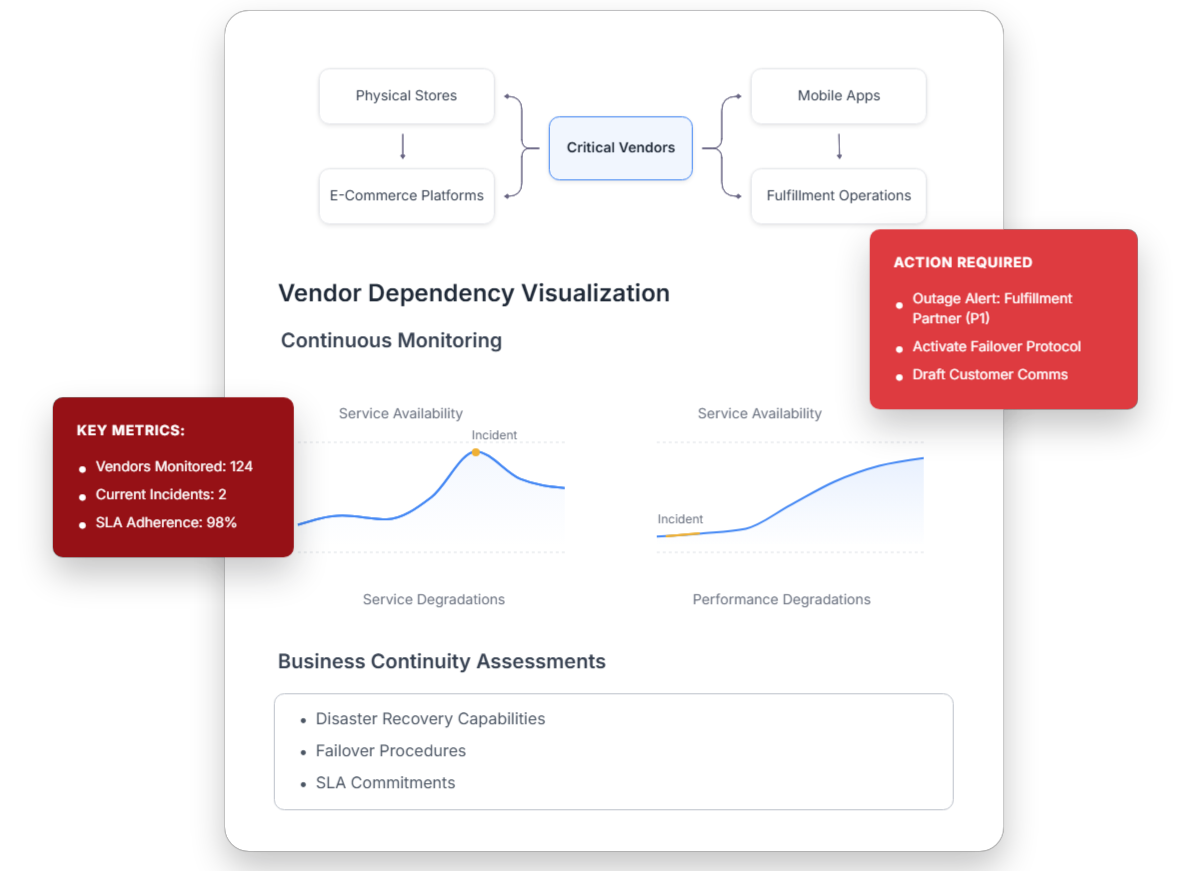
Omnichannel Operational Resilience
Executive dashboards visualize vendor dependencies across physical stores, e-commerce platforms, mobile apps, and fulfillment operations. Continuous monitoring tracks vendor service availability, performance degradations, and security incidents affecting customer experiences. Business continuity assessments evaluate vendor disaster recovery capabilities, failover procedures, and SLA commitments. When critical vendors experience outages, alert workflows route findings to operations teams with customer communication templates and alternative vendor activation procedures.
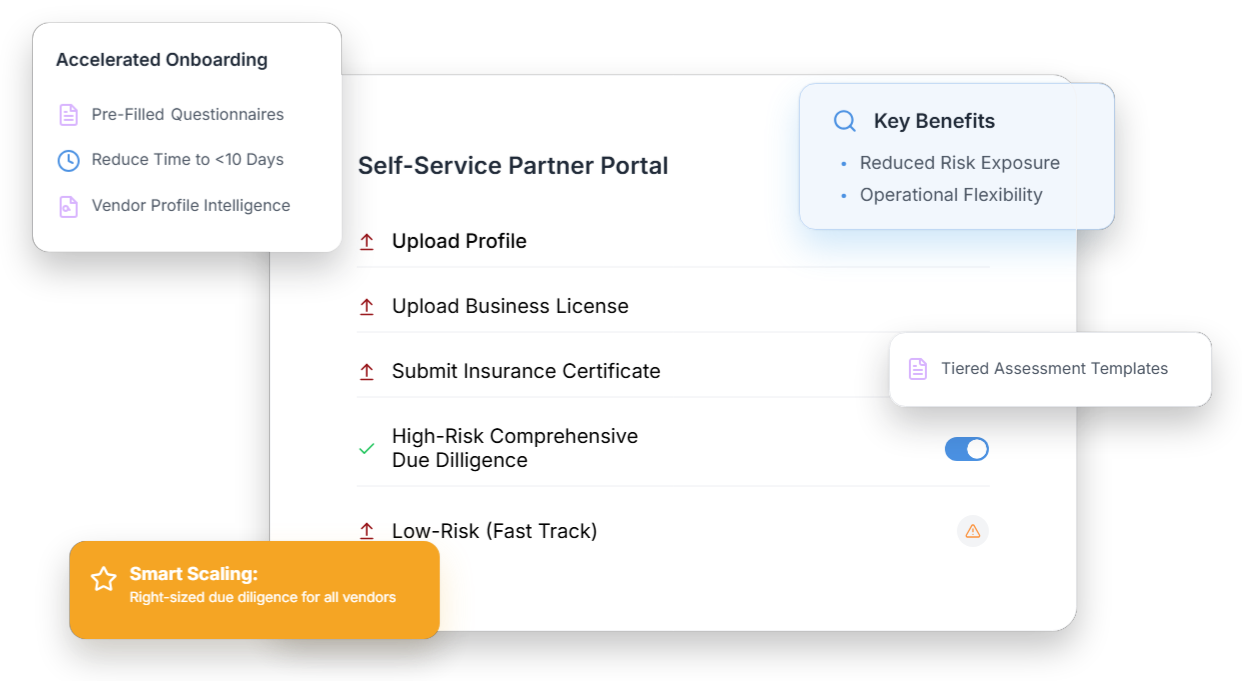
Rapid Seasonal and Marketplace Vendor Onboarding
AI-prefilled questionnaires and vendor profile intelligence reduce seasonal vendor assessment time from 30-45 days to under 10 days. Marketplace sellers and pop-up partners access self-service portals uploading business licenses, insurance certificates, and security documentation. Tiered assessment templates scale due diligence to vendor risk levels ensuring comprehensive oversight for high-risk vendors while enabling fast onboarding for lower-risk seasonal partners.