ComplyScore® Launches World’s First Headless TPRM, Bringing Conversational AI to Compliance Management.   Read More

NIST CSF Compliance for Third-Party Risk Management

Automated supplier assessments, supply chain risk management, and controls mapped to Identify, Protect, Detect, Respond, Recover functions.

NIST CSF Compliance with ComplyScore®

The NIST Cybersecurity Framework provides voluntary guidance for managing cybersecurity risk across supply chains and third-party relationships. Organizations adopting NIST CSF must identify, assess, and continuously monitor vendor cybersecurity practices throughout the relationship lifecycle. 

ComplyScore® automates vendor cybersecurity assessments aligned to NIST CSF functions, maintains continuous monitoring of supplier security posture, and generates documentation demonstrating framework implementation across your third-party ecosystem. 

How ComplyScore® Accelerates NIST CSF Compliance 

Group 1000008274-1

ID.SC: Supply Chain Risk Management

NIST Cybersecurity Framework Identify function requires organizations to manage cybersecurity risks within supply chains, including priorities, constraints, risk tolerances, and assumptions. 

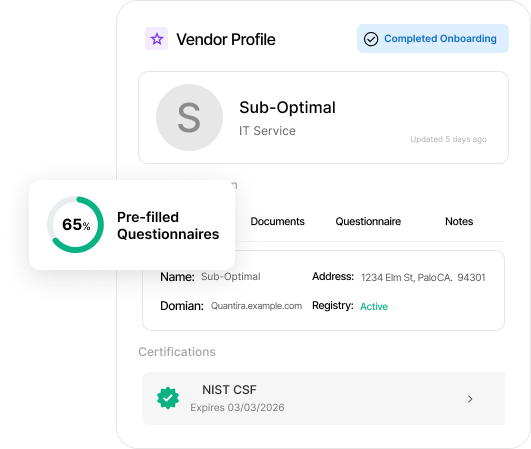
  • Automated supplier risk assessments aligned to NIST CSF categories
  • Supply chain risk identification across Identify, Protect, Detect, Respond, Recover functions
  • Risk-based supplier classification tied to criticality and data access
  • Complete documentation proving systematic supply chain risk management
Group 1000008276

ID.SC-2: Supplier Security Requirements

NIST CSF requires organizations to establish and manage supplier security requirements aligned to organizational risk tolerance. 

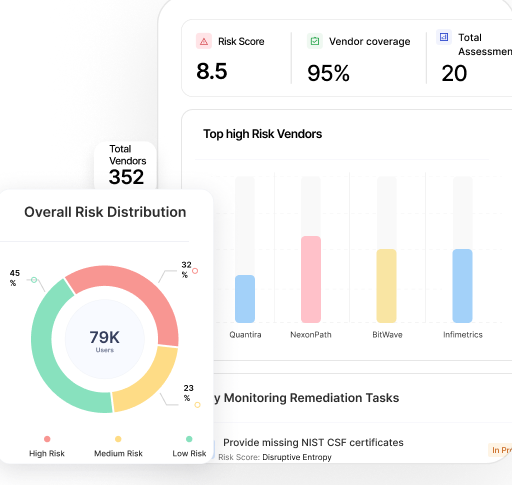
  • Pre-built questionnaires mapped to NIST CSF subcategories
  • Evidence collection validating supplier controls across CSF functions
  • Gap tracking when supplier security falls below organizational requirements
Group 1000008278

ID.SC-3 & ID.SC-4: Contracts and Assessments 

NIST CSF mandates contracts with suppliers reflecting appropriate security requirements and periodic assessments of supplier cybersecurity practices. 

  • Contract compliance tracking ensuring security requirements in supplier agreements 
  • Automated assessment scheduling based on supplier risk tier
  • Continuous monitoring supplementing periodic assessment cycles
Monitor Continuously

PR.IP-12 & DE.AE-5: Supply Chain Event Management

NIST CSF Protect and Detect functions require vulnerability and incident information sharing with suppliers and supply chain event detection. 

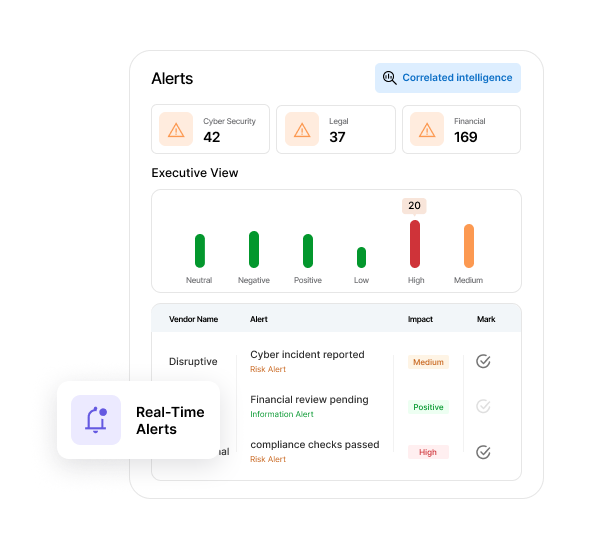
  • Real-time supplier security incident alerts and vulnerability notifications
  • Alert-to-action workflows routing supply chain events to responsible owners
  • Incident coordination capabilities supporting supplier breach response

Built for ISO 27001 and Multi-Framework Compliance

ComplyScore® integrates with your cybersecurity stack and supports multiple security frameworks simultaneously. 


Every vendor assessment includes complete audit trails with CSF category mappings, security control evidence, and remediation tracking. Support for ISO 27001, SOC 2, CIS Controls, and other cybersecurity frameworks means one platform handles multi-standard vendor security management.

Connects across your GRC and ISMS tools

  • GRC Platforms: ServiceNow, Archer, LogicGate
  • Security Tools: CrowdStrike, Palo Alto, Microsoft Defender for threat correlation
  • Risk Intelligence: SecurityScorecard, RiskRecon, BitSight for vendor security ratings 

Results Organizations Achieve with ComplyScore

Project-completed

4-6X

faster vendor onboarding

Project-completed

90%+

vendor coverage

Project-completed

40%

less audit prep effort

Project-completed

Continuous

compliance monitoring

FAQs

Does NIST CSF require third-party or vendor risk assessments?

NIST CSF is voluntary, so nothing in it is legally mandatory. But if you adopt the framework, Category GV.SC obligates you to run a formal, resourced program that identifies, prioritizes, assesses, and monitors supplier cybersecurity risk throughout the relationship. 

How does NIST CSF 2.0 want you to prioritize which vendors to assess first?

Subcategory GV.SC-04 requires you to know your suppliers and rank them by criticality before you assess. Start with vendors that touch sensitive data, support essential systems, or have deep access into your environment, and assess lower-impact vendors on a lighter cycle. 

What should buyers require in vendor contracts under NIST CSF 2.0?

Subcategory GV.SC-05 expects cybersecurity requirements to be written into every supplier contract and agreement. Subcategory GV.SC-06 expects you to complete due diligence and risk evaluation before signing, so the assessment happens ahead of access, during procurement, rather than after onboarding. 

Does NIST CSF cover what happens after a vendor relationship ends?

Yes. Subcategory GV.SC-10 requires cybersecurity supply chain risk plans to include provisions for offboarding, covering access revocation, data return or destruction, and other steps needed once a supplier partnership or service agreement concludes.