ComplyScore® Launches World’s First Headless TPRM, Bringing Conversational AI to Compliance Management. 







.webp?width=387&height=387&name=headless-tprm%20(1).webp)





























Supplier Risk Management for Manufacturing Companies
Onboard suppliers across regions and ERPs, track certifications and compliance, and monitor financial and operational risk continuously to keep production on schedule.









.png?width=600&height=63&name=download%20(1).png)
TPRM Challenges Facing Manufacturing Companies
Supply chain visibility and multi-tier risk
Understanding risk beyond Tier 1 suppliers requires visibility into sub-suppliers providing critical materials and components that directly affect production continuity.
Single-source dependencies and concentration risk
Reliance on sole-source suppliers for critical components creates direct exposure to disruptions, quality failures, and capacity constraints with no qualified alternative on standby.
Supplier financial instability
Credit downgrades, bankruptcy filings, and ownership changes at key suppliers cause production disruptions when alternative sources cannot be qualified in time.
Supply chain regulatory compliance
CSDDD, the German Supply Chain Act, UK Modern Slavery Act, and UFLPA require documented human rights and environmental due diligence across your full supplier base, not just direct vendors.
Multi-ERP data fragmentation and duplicate vendor records
Separate ERP systems across business divisions create duplicate supplier records, inconsistent risk profiles, and manual reconciliation work that slows procurement teams down.
How ComplyScore® Addresses Third-Party Risks in Manufacturing Organizations
Multi-Tier Supply Chain Visibility
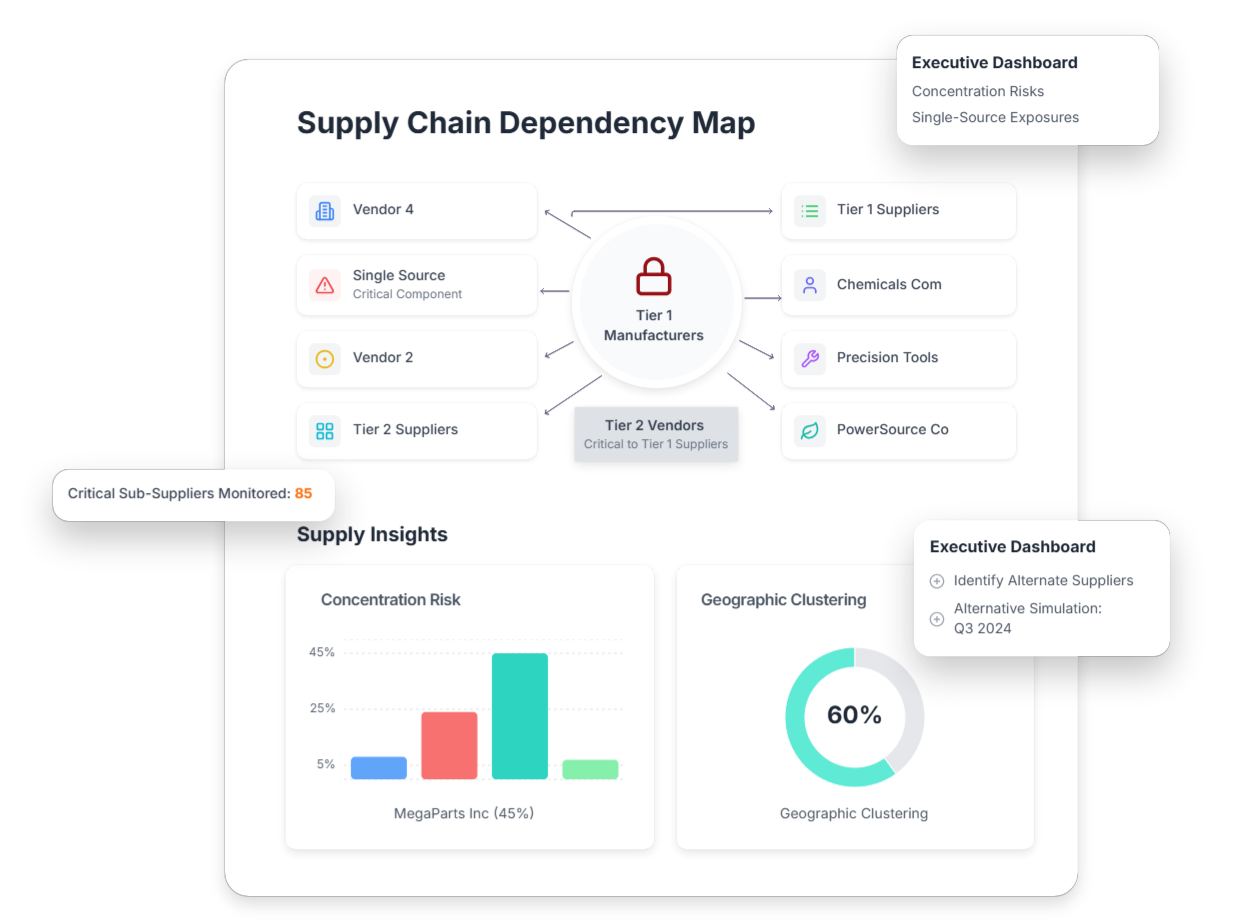
ComplyScore® syncs supplier data across ERP environments so your vendor master stays consistent across divisions, and tracks sub-supplier relationships across Tier 1 and Tier 2. When a Tier 1 supplier subcontracts critical manufacturing work, the platform triggers assessments evaluating capabilities, quality certifications, and financial health. Executive dashboards surface concentration risks, single-source exposures, and geographic clustering so procurement teams can build alternatives before a disruption occurs.
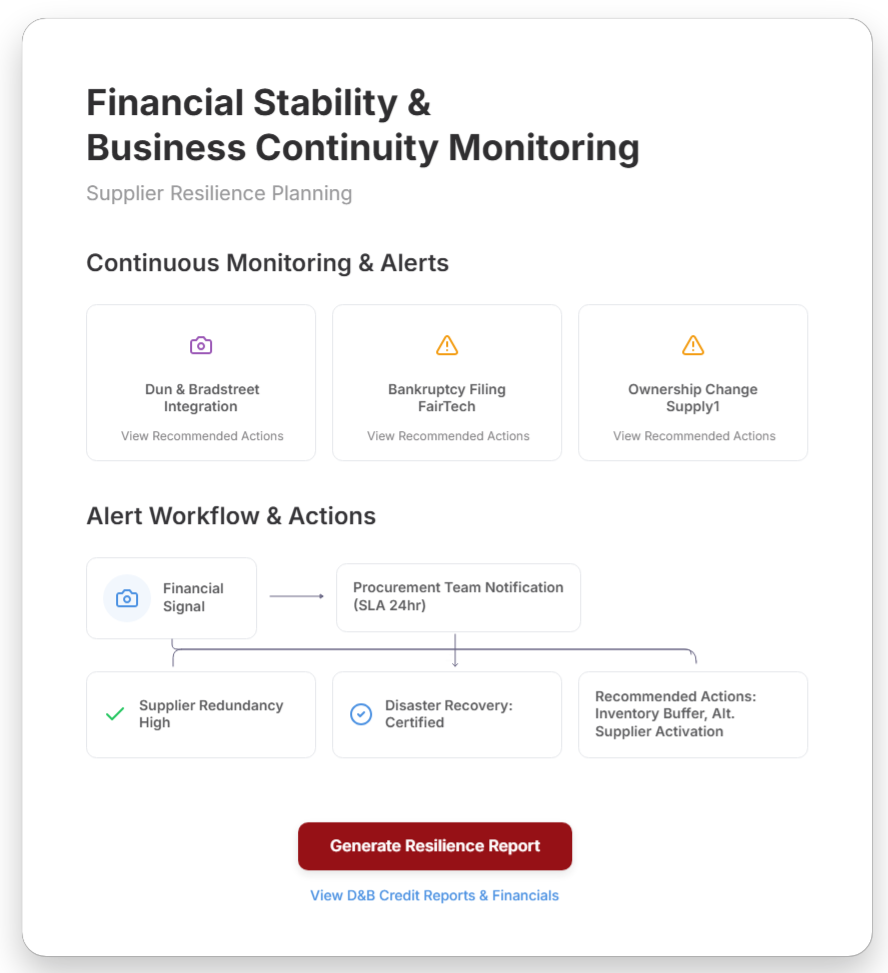
Financial Stability and Business Continuity Monitoring
Continuous monitoring integrates Dun and Bradstreet credit data, financial statement signals, and corporate event tracking to detect supplier distress early. When a supplier receives a credit downgrade, files for bankruptcy, or changes ownership, automated alert workflows route findings to the responsible procurement team with recommended actions including payment term adjustments, inventory buffers, or alternative supplier activation. Business continuity assessments track supplier redundancy, disaster recovery plans, and insurance coverage.
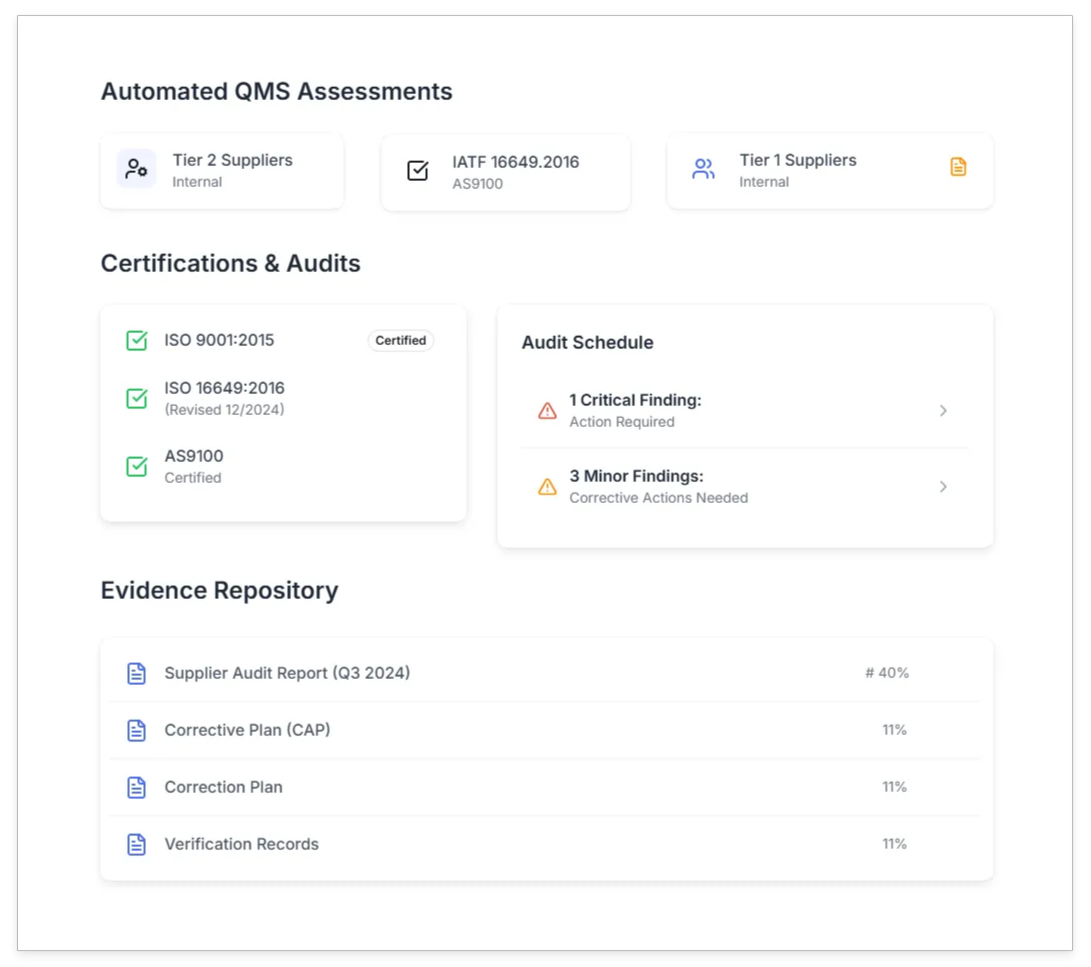
Supplier Quality Management and Certification Tracking
Automated assessments validate supplier quality systems against ISO 9001, IATF 16949, AS9100, and ESG requirements including environmental management and labor practices. The platform tracks certification expiry dates and audit schedules, alerting both suppliers and internal teams before a lapse occurs. A centralized evidence repository holds audit reports, corrective action plans, and verification records supporting customer audits and regulatory inspections.
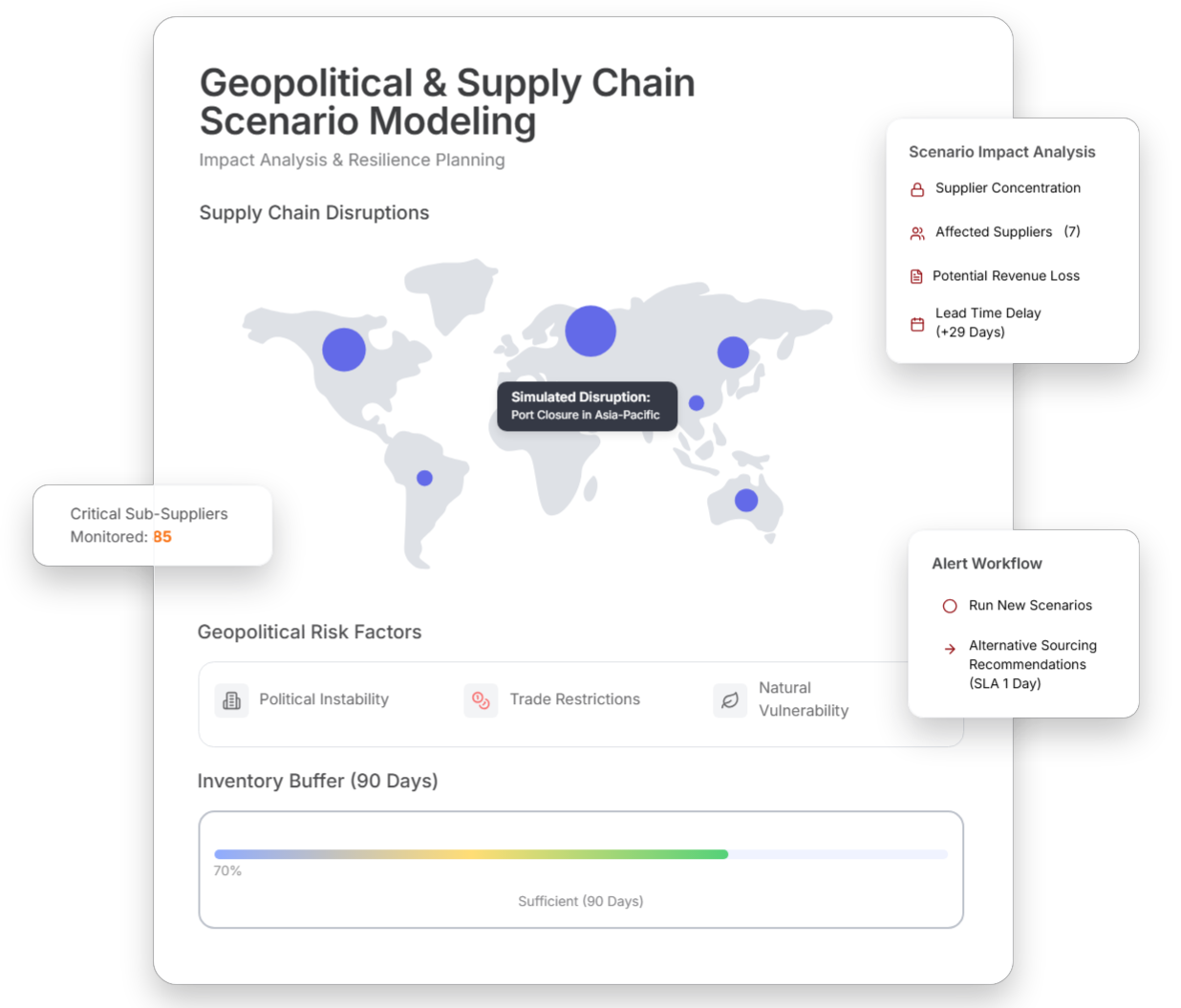
ESG and Supply Chain Regulatory Compliance
CSDDD, the German Supply Chain Act, UK Modern Slavery Act, and UFLPA require manufacturers to conduct documented due diligence on human rights and environmental practices across their supplier base. ComplyScore® maps your suppliers against each regulation's specific obligations, identifies evidence gaps, and produces the documentation your legal and compliance teams need for annual reporting. Pre-built assessment templates cover forced labor screening, conflict minerals sourcing, and environmental management practices.