CCPA Compliance for Third-Party Risk Management
Automated service provider assessments, contract compliance tracking, and continuous security monitoring for California data protection.
CCPA Compliance with ComplyScore®
The California Consumer Privacy Act (CCPA) requires businesses to conduct due diligence on service providers and contractors processing California consumer data. CCPA mandates written contracts, documented assessments, and ongoing monitoring ensuring service providers protect consumer information appropriately.

ComplyScore® automates service provider risk assessments aligned to CCPA requirements, maintains continuous monitoring of data protection practices, and generates audit-ready documentation proving appropriate safeguards throughout vendor relationships.
How ComplyScore® Accelerates CCPA Compliance
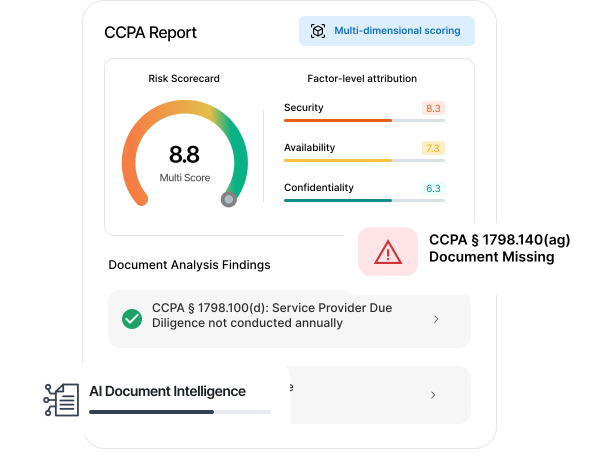
CCPA § 1798.100(d): Service Provider Due Diligence
CCPA requires businesses to enter contracts with service providers and ensure they understand restrictions on retention, use, and disclosure of California consumer personal information.
- Automated service provider assessments evaluating data handling practices and security controls
- Contract compliance tracking validating CCPA service provider agreement terms
- Data flow mapping showing where California consumer information moves
- Gap identification when service provider practices conflict with CCPA restrictions
CCPA § 1798.140(ag): Service Provider vs. Third Party Classification
CCPA distinguishes between service providers (subject to contractual restrictions) and third parties (triggering disclosure obligations), requiring accurate classification.
- Automated vendor classification based on data usage and contractual terms
- Monitoring for service provider activities that trigger third-party reclassification
- Alert workflows when vendors exceed service provider authority
Continuous Security Monitoring
CCPA's "reasonable security" standard requires ongoing monitoring of service provider security posture protecting California consumer data.
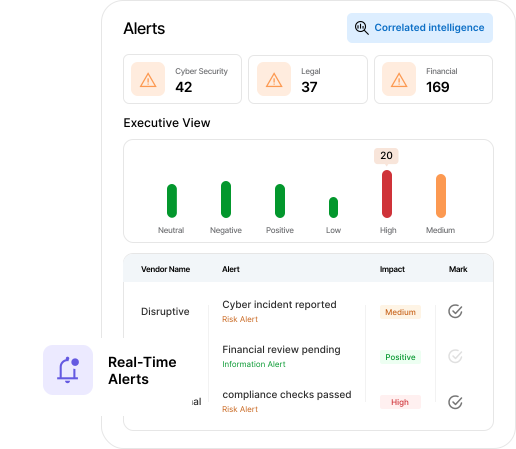
- Real-time security alerts on service provider incidents and vulnerabilities
- Continuous security posture tracking across service providers handling personal information
- Breach notification workflows coordinating California consumer notification requirements
Audit-Ready Documentation
CCPA enforcement investigations require evidence proving systematic service provider oversight and contractual compliance.
- Centralized evidence repository linking assessments to CCPA requirements
- Complete audit trails documenting due diligence and monitoring activities
- One-click compliance packs for California Attorney General inquiries
Built for GDPR and Global Privacy Regulations
ComplyScore® integrates with your privacy compliance stack and supports multiple state data protection frameworks simultaneously.
Every service provider assessment includes complete audit trails with timestamps, contract validation evidence, and approval workflows. Support for CPRA, VCDPA, CPA, GDPR, and other privacy regulations means one platform handles multi-jurisdiction data protection compliance.
Connects across your GRC and ISMS tools
-
GRC Platforms: ServiceNow, Archer, LogicGate
-
Privacy Tools: OneTrust, TrustArc, DataGrail for consumer rights management
-
Risk Intelligence: SecurityScorecard, RiskRecon for service provider security monitoring
Results Organizations Achieve with ComplyScore
4-6X
faster CCPA readiness
90%+
supplier coverage
40%
Less audit prep
Continuous
compliance maintenance
FAQs
Does CCPA require vendor risk assessments before sharing consumer data?
CCPA never uses the term "risk assessment." To treat a vendor as a service provider instead of a third party, you need a compliant contract in place, which means evaluating the vendor's data practices before you share anything.
What should a CCPA vendor risk assessment cover?
Confirm the vendor will use consumer data only for the purpose you specify, won't sell, share, or combine it with other sources, and can meet CCPA obligations like honoring deletion and access requests. Also verify the vendor's security practices, since inadequate safeguards create liability for you too.
Who's liable if a vendor mishandles California consumer data?
You can be. If you have reason to believe a vendor is misusing consumer data and don't act, you lose the protection that keeps the transfer from counting as a sale, which exposes your business to the same obligations and penalties as a direct sale.
How often should you reassess vendor risk under CCPA?
CCPA sets no fixed interval. Regulators expect ongoing oversight beyond the initial contract signature, so take reasonable, periodic steps, such as reviews or audits, to confirm the vendor still handles data as agreed, and reassess sooner if its role or data access changes.