ComplyScore® Launches World’s First Headless TPRM, Bringing Conversational AI to Compliance Management. 



.webp?width=387&height=387&name=headless-tprm%20(1).webp)




















Third-Party Risk Management Built for Technology Companies
Rapid vendor onboarding, SOC 2 compliance, and sub-processor transparency for SaaS platforms and technology providers.










.png?width=600&height=63&name=download%20(1).png)

TPRM Challenges Facing Technology & SaaS Organizations
Rapid vendor onboarding without sacrificing security
Product launches and infrastructure scaling require fast vendor decisions while enterprise sales depend on demonstrating thorough security due diligence.
SOC 2 and ISO 27001 vendor control requirements
Auditors expect documented vendor risk assessments, ongoing monitoring, and evidence that sub-processors maintain appropriate security controls.
Sub-processor transparency for customer trust
Enterprise customers require detailed sub-processor lists, data flow documentation, and evidence of equivalent security safeguards before contract execution.
API and integration partner security
Third-party integrations access customer data through APIs creating security risks that traditional assessment questionnaires fail to address adequately.
Customer security questionnaire response burden
Sales teams spend excessive time responding to customer TPRM questionnaires requesting sub-processor details and vendor management evidence.
How ComplyScore® Addresses Technology & SaaS Third-Party Risks
Accelerated Vendor Onboarding for Product Velocity
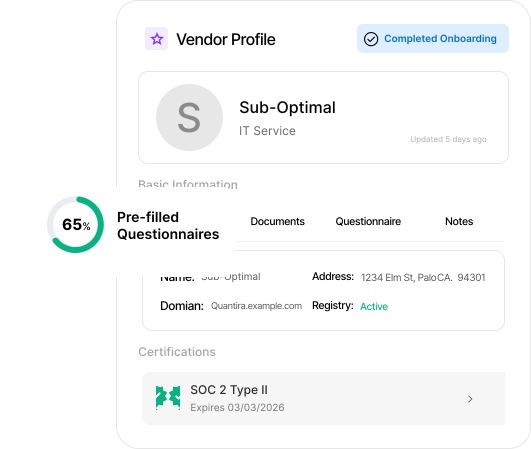
AI-prefilled questionnaires and vendor profile intelligence reduce security assessment time from 30-45 days to under 10 days. Cloud providers and infrastructure vendors access self-service portals where they upload SOC 2 reports, security certifications, and penetration test results. Automated evidence review validates controls immediately enabling rapid procurement decisions while maintaining audit-ready documentation for SOC 2 and ISO 27001 compliance.
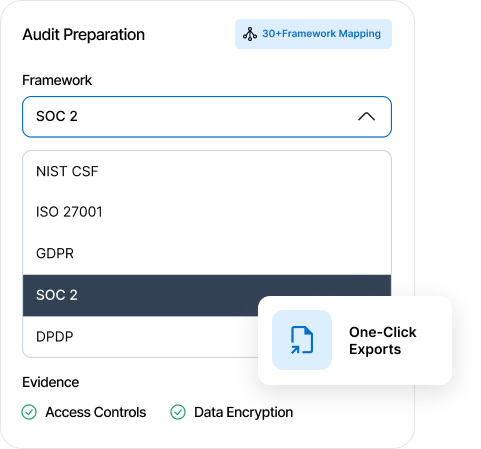
SOC 2 and ISO 27001 Vendor Control Documentation
ComplyScore® generates audit evidence satisfying SOC 2 CC9.2 (vendor risk management) and ISO 27001 A.15 (supplier relationships) requirements. Every vendor assessment includes documented risk evaluation methodology, control validation evidence, ongoing monitoring activities, and remediation tracking. When auditors request vendor management documentation, the platform exports comprehensive reports showing complete TPRM lifecycle coverage with timestamps and approval workflows.
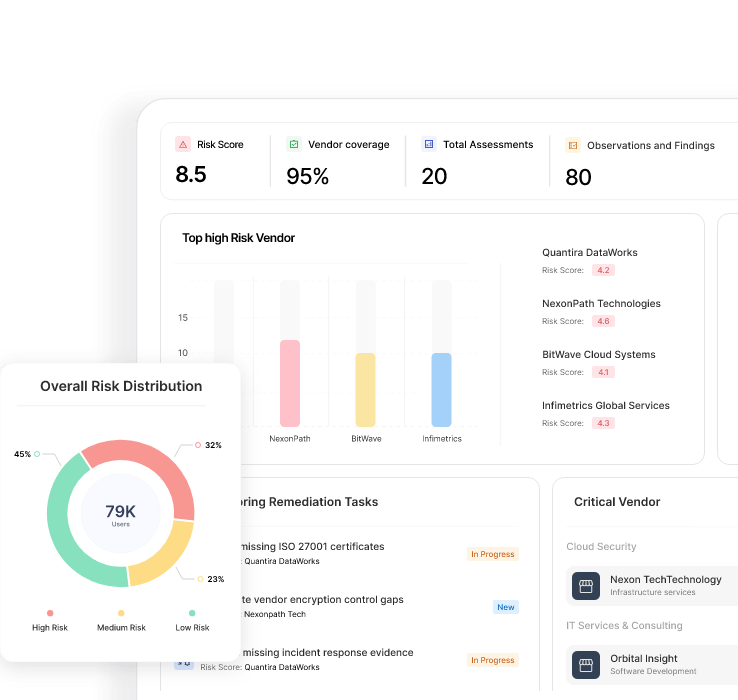
Sub-Processor Transparency and Customer Trust
Centralized sub-processor registry tracks which vendors process customer data, what data categories they access, where processing occurs geographically, and what security controls they maintain. When enterprise customers request sub-processor lists and security documentation, ComplyScore® generates customer-ready reports showing sub-processor details, data flow mappings, and evidence of equivalent security safeguards. This transparency accelerates enterprise sales cycles and satisfies contractual disclosure obligations.
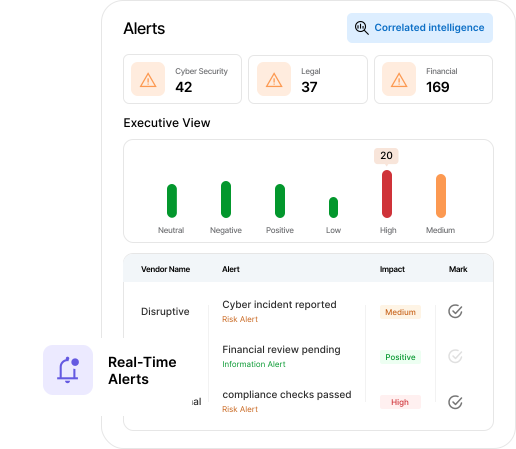
API Partner Security and Integration Risk
Specialized questionnaires assess API partner security practices including authentication mechanisms, rate limiting, encryption standards, logging capabilities, and incident response procedures. Continuous monitoring tracks API partner security incidents, vulnerability disclosures, and service availability. When API partners experience breaches or outages, alert workflows route findings to engineering teams with SLA tracking ensuring rapid customer communication and mitigation.