ComplyScore® Launches World’s First Headless TPRM, Bringing Conversational AI to Compliance Management. 










.webp?width=387&height=387&name=headless-tprm%20(1).webp)







































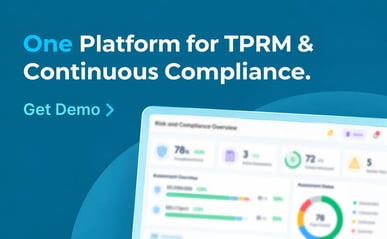
Third-Party Risk Management for Banks, Fintechs & Financial Institutions
Automated vendor assessments, real-time monitoring, and regulatory compliance across DORA, SAMA, and MAS TRM guidelines.












TPRM Challenges Facing Financial Services Organizations
Regulatory compliance across jurisdictions
DORA Article 28, SAMA ERM framework, MAS TRM guidelines, and OCC guidance impose overlapping but distinct third-party risk requirements demanding coordinated compliance.
Concentration risk and operational resilience
Heavy reliance on cloud providers, payment processors, and core banking vendors creates single points of failure requiring documented mitigation strategies and alternative provider analysis.
Fourth-party and sub-contractor visibility
Critical vendors engage their own sub-contractors creating extended risk chains that manual assessment programs cannot effectively monitor.
Rapid fintech partnership onboarding
Digital banking initiatives require fast vendor onboarding while maintaining thorough due diligence, creating tension between business speed and risk management.
Continuous monitoring at scale
Annual vendor reviews cannot detect emerging risks in real-time, leaving institutions exposed to vendor incidents between assessment cycles.
How ComplyScore® Addresses Third-Party Risks in Financial Services
Regulatory Compliance Across Frameworks
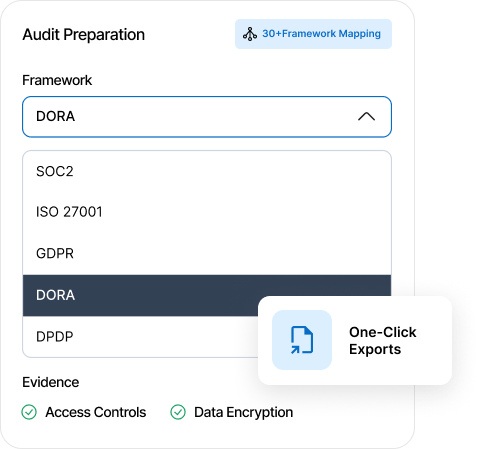
ComplyScore® maintains pre-mapped assessment templates for DORA, SAMA, MAS TRM, GLBA, SOX 404, and Federal Reserve guidance. When regulators update requirements, the platform updates questionnaires and control mappings automatically. Audit-ready compliance packs generate with one click showing complete evidence of due diligence, continuous monitoring, and remediation tracking aligned to each framework's specific requirements.
.svg)
Concentration Risk and Resilience Management
Executive dashboards visualize vendor concentration across service categories, geographies, and criticality tiers. The platform identifies single points of failure where multiple business units depend on one vendor. Scenario modeling simulates vendor failure impact on operations, and exit strategy documentation tracks alternative provider analysis and transition plans required by DORA Article 28(9) and similar regulations.
Fourth-Party Visibility and Control
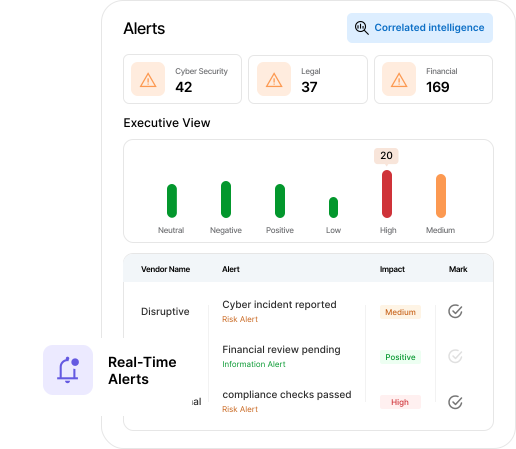
ComplyScore® tracks sub-contractor relationships with visibility into data flows and control implementation throughout vendor chains. When critical vendors engage sub-contractors, the platform triggers assessments evaluating whether equivalent safeguards and contractual protections apply. Automated monitoring alerts you when sub-contractors experience security incidents or compliance status changes affecting your risk exposure.
.png?width=1511&height=792&name=Selection%20(49).png)
Accelerated Fintech Onboarding
AI-prefilled questionnaires and vendor profile intelligence reduce assessment completion time from 30-45 days to under 10 days. Fintech vendors access self-service portals where they upload evidence, delegate questions to internal experts, and track progress in real-time. Automated evidence review flags gaps immediately rather than after manual analyst review, eliminating back-and-forth delays.