ComplyScore® Launches World’s First Headless TPRM, Bringing Conversational AI to Compliance Management. 







.webp?width=387&height=387&name=headless-tprm%20(1).webp)





















Continuous Compliance Automation Software That Keeps You Audit-Ready
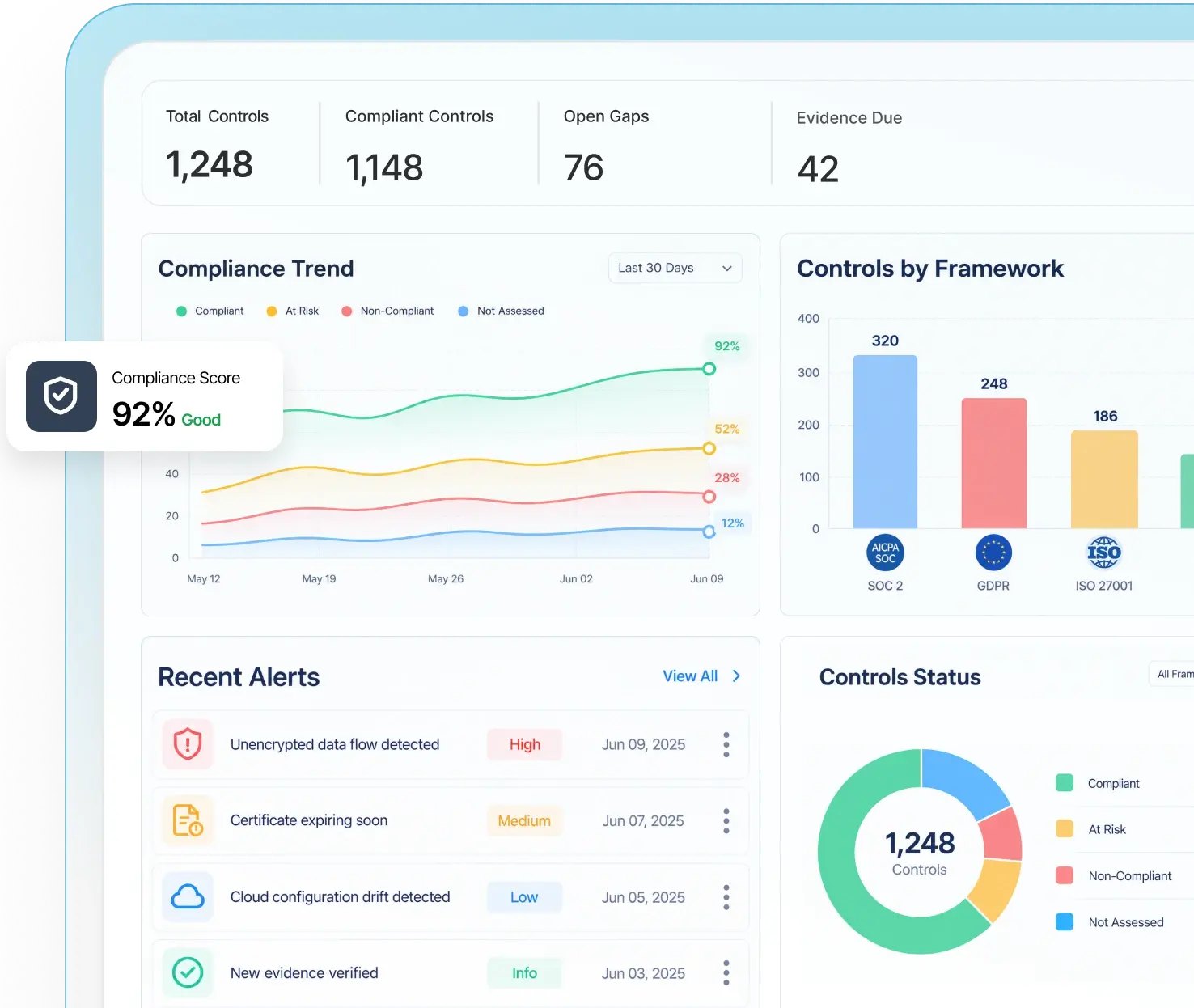
Verify your cloud controls, internal data flows, and breach readiness continuously, so your evidence is always current when a regulator, auditor, or customer asks for it.
<30 Days
Audit readiness
70-80%
Less manual effort
40-60%
Lower assessment costs
Trusted partner to market-leading brands







How ComplyScore® Keeps You Audit-Ready, Always
.png?width=20&height=19&name=Vector%20(6).png)
Continuous control verification

Chat and voice access
Verify Your Cloud Environment
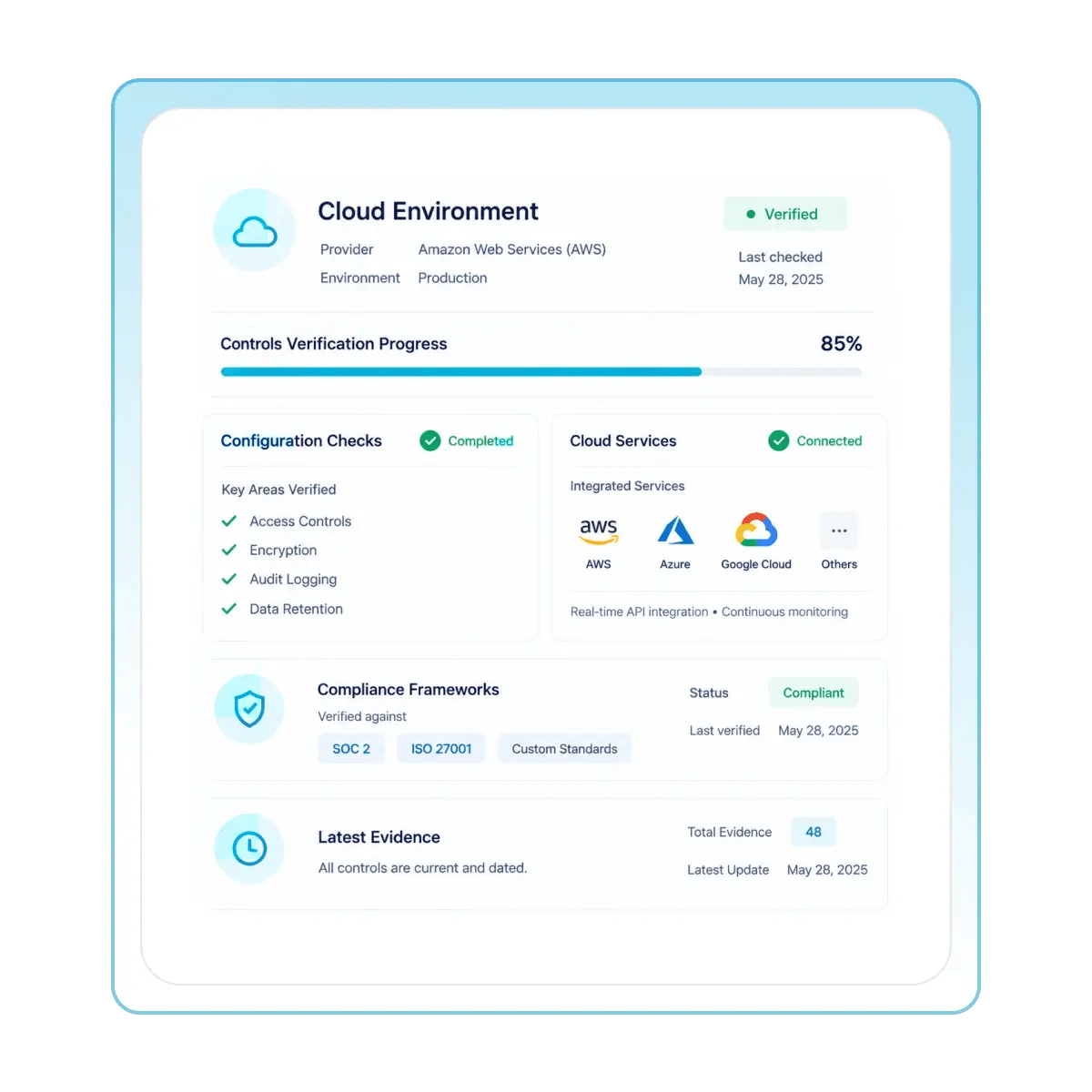
Policy documents describe intended configurations. ComplyScore® verifies what's actually deployed, checking access controls, encryption, audit logging, and retention against SOC 2, ISO 27001, or your own standards. Evidence stays current and dated, ready for examination anytime.

70-80% reduction in manual evidence gathering.
.png?width=15&height=19&name=Vector%20(7).png)
Internal data flow mapping
.png?width=19&height=19&name=Vector%20(8).png)
Living record, continuously updated
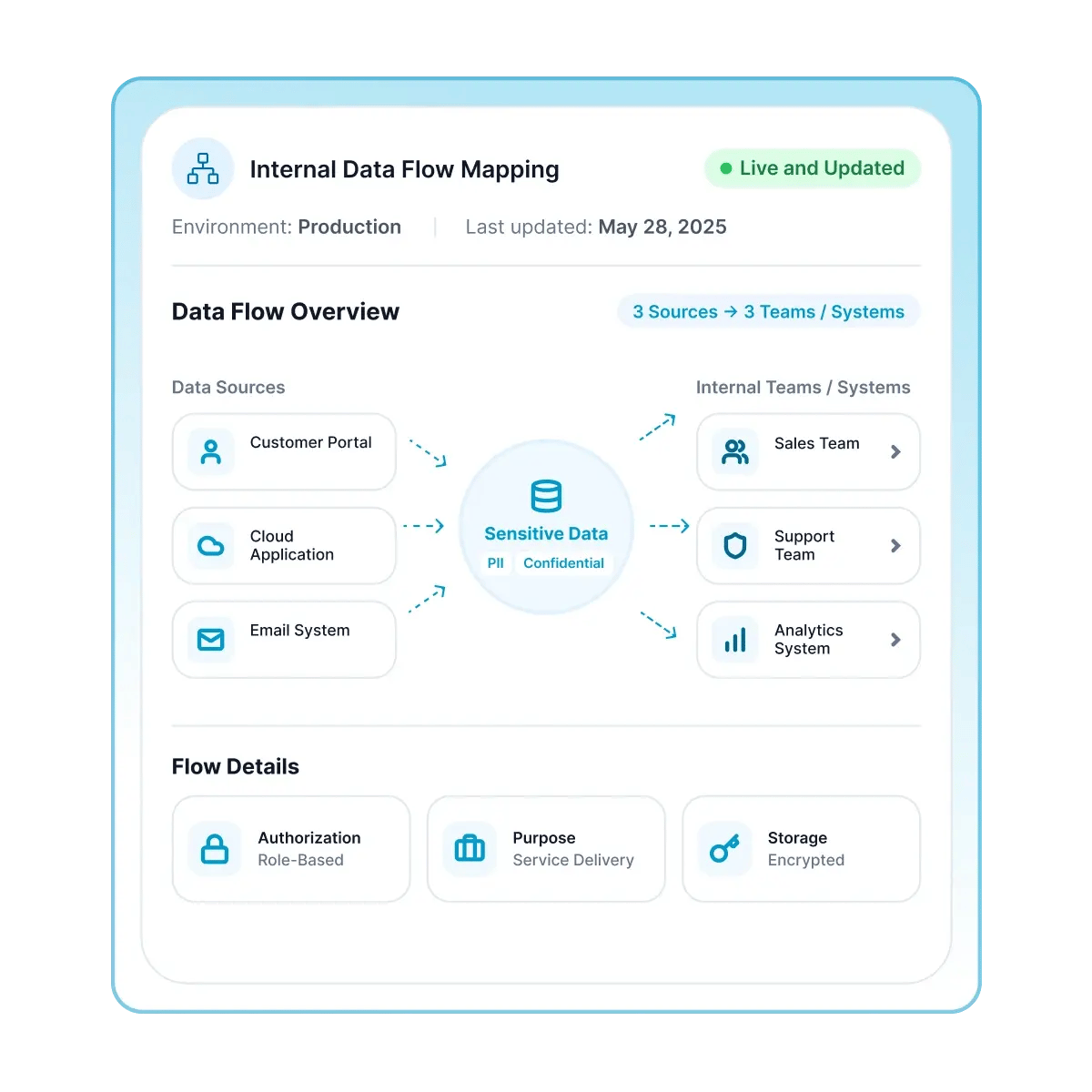
Keep Internal Data Flows Accurate
ComplyScore® maintains internal data flows as a continuously updated system of record. It tracks which teams handle sensitive data, under what authorization, and for what purpose, reflecting your environment as it exists today.

<30 Days to produce a current, evidence-based audit pack.
.png?width=21&height=19&name=Vector%20(13).png)
SLA-enforced escalation
.png?width=20&height=19&name=Vector%20(10).png)
Owned remediation tasks
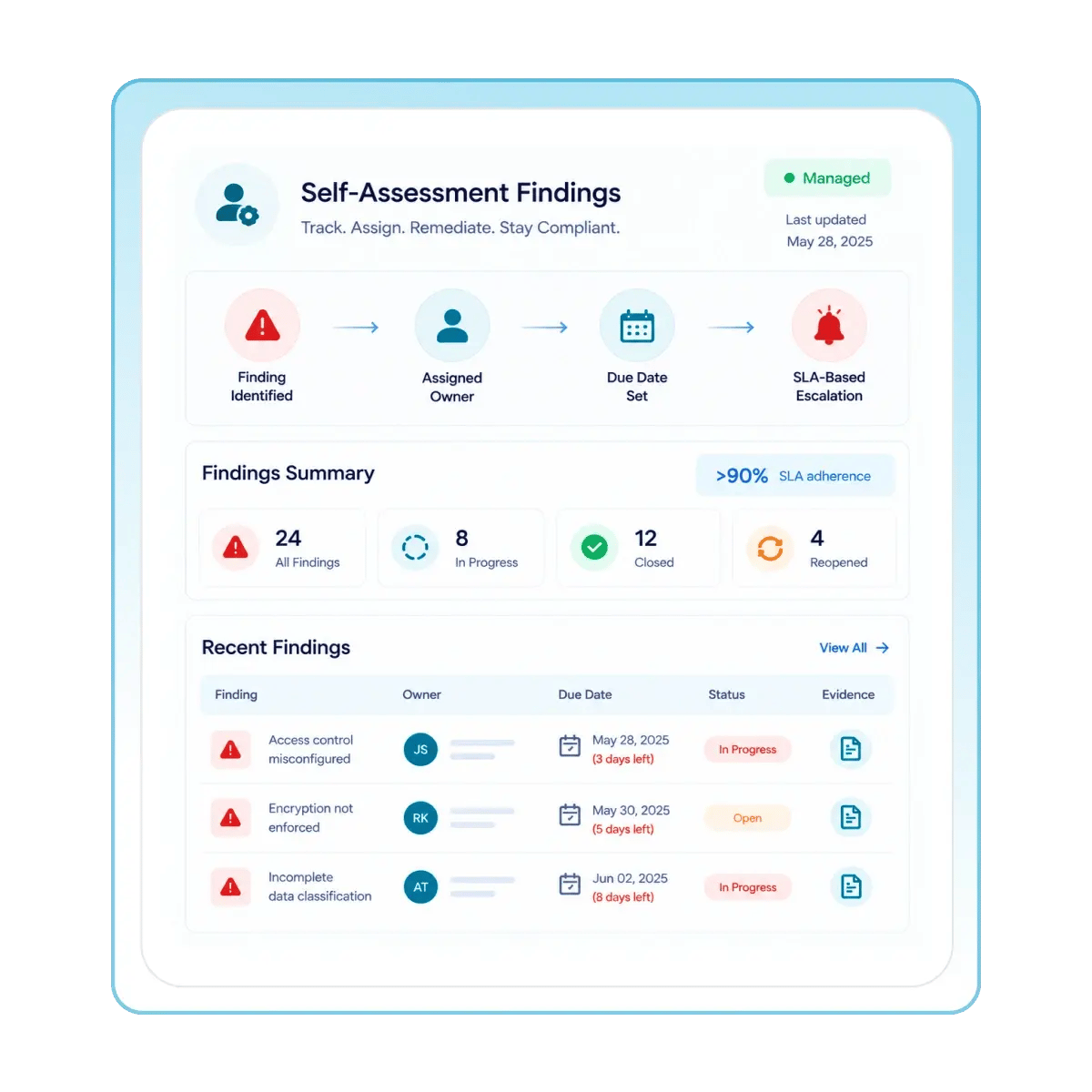
Close Self-Assessment Findings
Verifying your posture only matters if gaps get closed. Every finding routes to an assigned owner with a deadline and automatic escalation. Status, remediation evidence, and reopened items live on one dashboard.
>90% SLA adherence on findings tracked through ComplyScore® governed workflows.
.png?width=19&height=19&name=Vector%20(11).png)
Breach readiness documentation
.png?width=19&height=19&name=Vector%20(12).png)
Tested response procedures
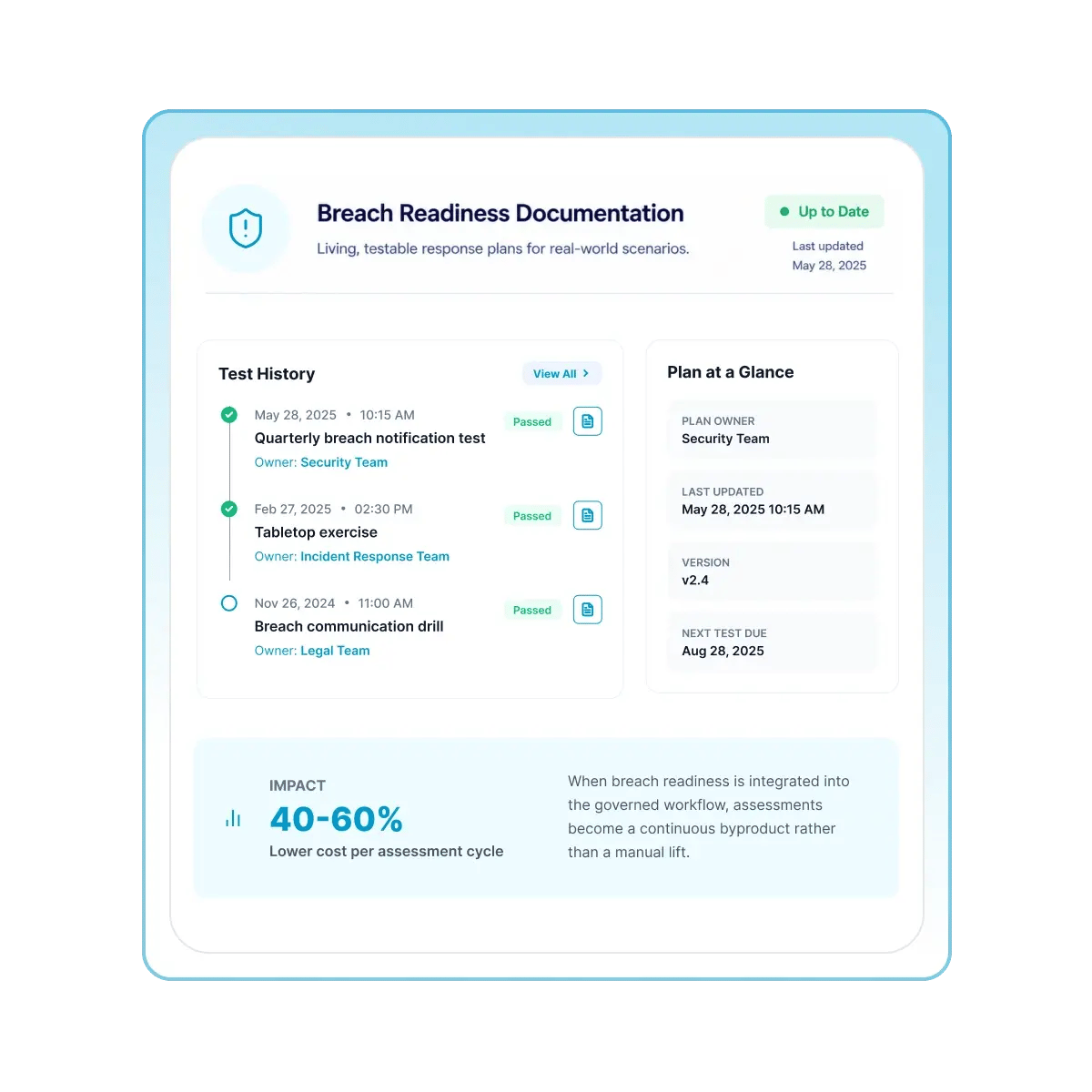
Document Readiness
A response plan only becomes a compliance asset once it's tested. ComplyScore® keeps breach notification procedures as living, testable documentation, timestamped with assigned owners and proof of execution. That gap between intent and demonstrated capability is where programs fail under pressure.

40-60% lower cost per assessment cycle when breach readiness is integrated into the governed workflow.
AI-prefilled questionnaires
AI evidence review
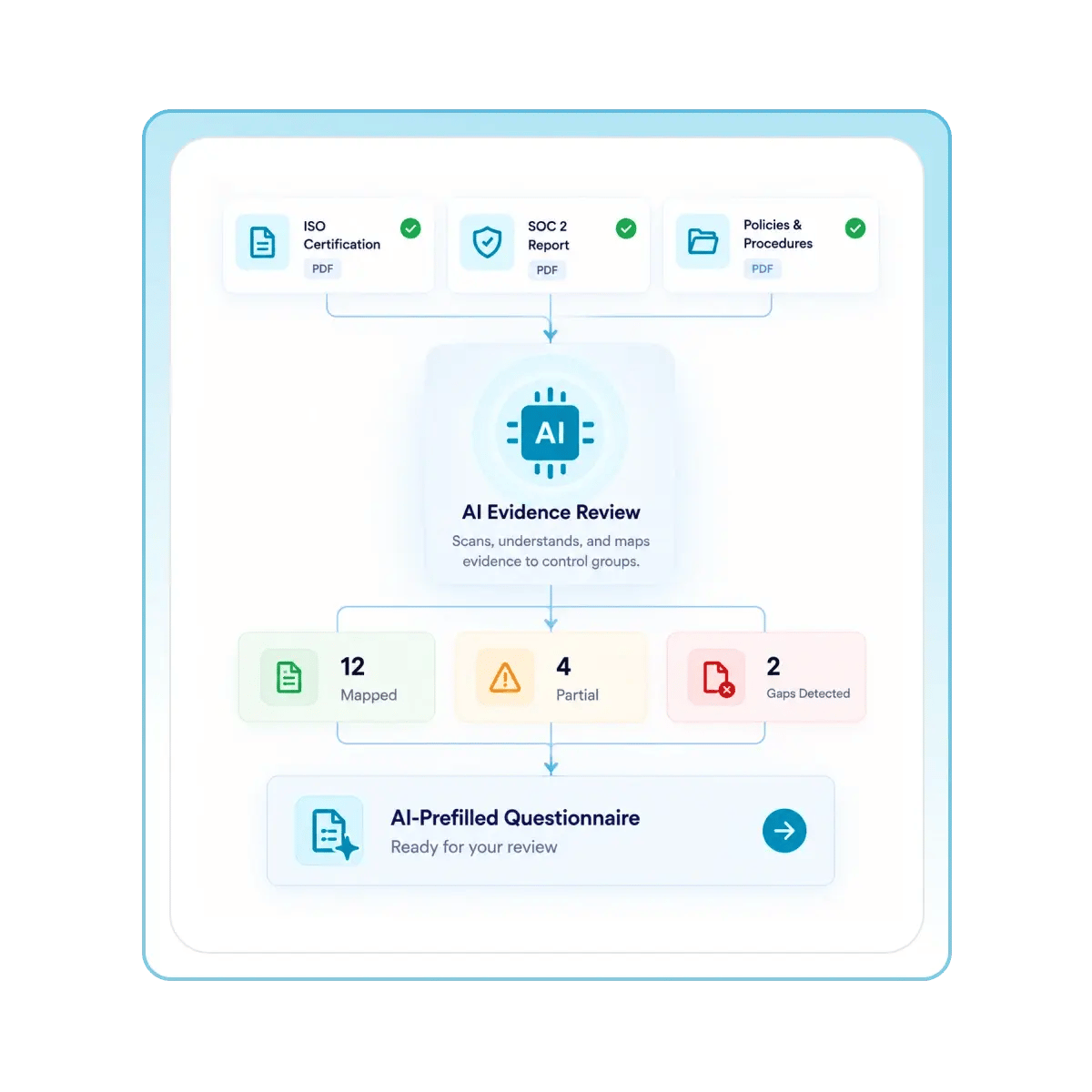
AI Does the First Pass, You Make the Call
ComplyScore®'s AI scans uploaded evidence like ISO and SOC 2 certifications, maps it to the right control groups, and flags gaps automatically. ComplyScore® also runs on a headless architecture, meaning the interface isn't limited to a dashboard you have to open and navigate. Ask and act on what's flagged or what's still open, in chat or by voice.
Close-out reports generate from the workflow itself, already structured and dated for examination.
Transform Your Compliance Self-Assessment
.svg)
.svg)
.svg)
.svg)
.svg)
Proven Results Across Industries
Trusted partner to market-leading brands






Atlas far exceeds our requirements...
One of the key differentiators between Atlas and other governance, risk and compliance and 3rd party risk management tools is the ease of use of the Atlas solutions. Also from a total cost of ownership perspective, Atlas far exceeds those requirements in terms of being very cost efficient in delivering all this.
ComplyScore is highly responsive and adaptable
ComplyScore is highly responsive and adaptable to our evolving processes and requirements, proving to be a trusted partner at every step. Their security analysts were knowledgeable, flexible, and delivered exceptional services that consistently exceeded our expectations.
My experience has been largely positive
I have been using ComplyScore for several months and my experience has been largely positive. The platform provides comprehensive solutions for compliance management and streamlines our operations efficiently.
As our business grew across geographies
As our business grew across geographies, we needed a more scalable approach to vendor lifecycle management. ComplyScore® provides the governance, flexibility & visibility to support our global operations while strengthening compliance and risk management across our vendor ecosystem.
Trusted by Industry Leaders for TPRM and Self Assessments

Representative Vendor | Listed in 2025 Market Guide for TPRM Technology Solutions

Active partner member of the Third Party Risk Association
