






.webp?width=387&height=387&name=Medtech%20Breakthrough%20Award%20Winner%20(1).webp)



























Provider Lifecycle Management


TL;DR
- 137 terabytes daily data: Healthcare creates 137 terabytes of data daily, growing 47% yearly; PLM breaks down silos creating unified collaboration space.
- Five core capabilities: Centralized data repository, automated credentialing/onboarding, integrated compliance tools, seamless ERP/PMS integration, real-time performance monitoring.
- Major silo challenges: Manual data entry across disconnected systems causes errors/delays, lack of real-time updates disrupts accountability, fragmented care creates mistrust.
- PRIME automation advantage: AI-powered verification enhances data accuracy, centralizes provider information minimizing delays, delivers better cost control for payers.
Summarize This Article With
Collaboration between payers and providers is important to improve care quality in the healthcare industry. However, they face challenges like inefficiencies, miscommunication, and data silos. Provider lifecycle management (PLM) solutions streamline collaboration between payors and providers throughout their entire lifecycle.
HealthTech estimates that 137 terabytes of data are created daily, and this is increasing by 47% every year. Electronic Health Records (EHRs) and Patient-Generated Health Data (PGHD) support product decisions and demonstrate patient value in real-life settings. Unlike outdated, disconnected systems, PLM solutions break down silos and create a unified space for healthcare teams to collaborate and share data effortlessly.
This article discusses the implications of provider lifecycle management for life sciences companies and how it helps healthcare providers collaborate and increase efficiency.
Siloed Systems in Life Sciences
Life sciences companies rely on separate, disconnected systems for key functions like credentialing, contracting, and compliance. They create information silos where data is stored separately without any integration. Lengthy and manual data management processes delay the onboarding of healthcare providers, leading to service disruptions.
Challenges with Silos
Providers and payers functioning in silos and using disconnected IT systems or clunky manual processes create challenges like:
- Inefficiencies and Errors: Healthcare teams have to manually enter data multiple times in different systems, leading to errors, delays, and increased costs. They spend too much time reconciling data sources and handling administrative tasks.
- Regulatory Risks: A lack of end-to-end traceability and audit trails risks non-compliance during inspections. Silos make tracking and documenting data changes difficult, complicating regulation compliance.
- Lack of Transparency: Providers focus on high-quality patient care while payers prioritize controlling costs during treatments. If they work in silos, it creates mistrust and fragmented care, leaving patients stuck in the middle.
- Misaligned Information: Provider contracts, streamlined provider lifecycle workflows, and patient interaction data are dynamic, but legacy systems fail to update them in real time. Outdated data disrupts provider accountability mechanisms, like performance-based incentives, and can lead to treatment disputes.

The Role of PLM in Breaking Down Silos
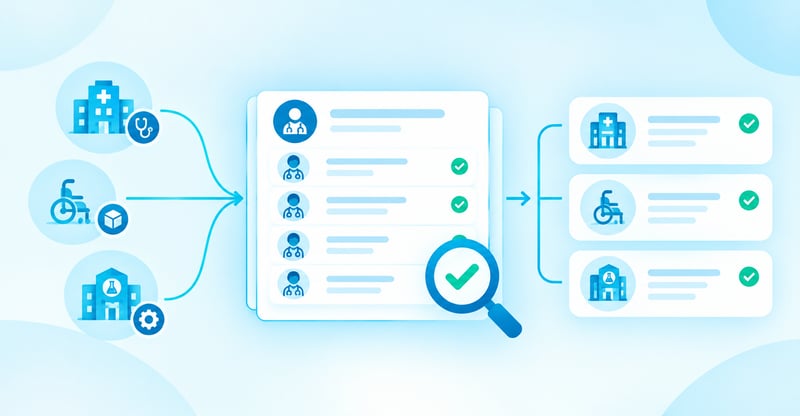
PLM solutions create a single source of truth by centralizing provider data from all departments. With everything in one place, payors and providers can collaborate easily without managing multiple systems or reconciling data.
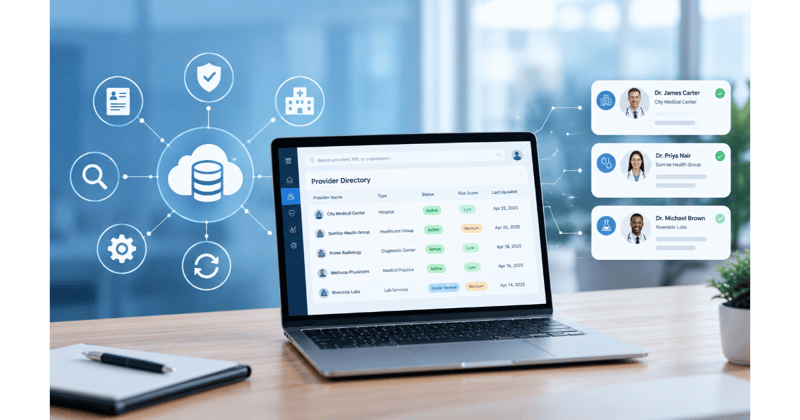
Purpose-built PLM platforms reduce data duplication and errors, enabling better regulatory compliance. Real-time access to unified data provides insights into performance metrics and contract statuses for better decision-making. Core capabilities of modern PLM systems include: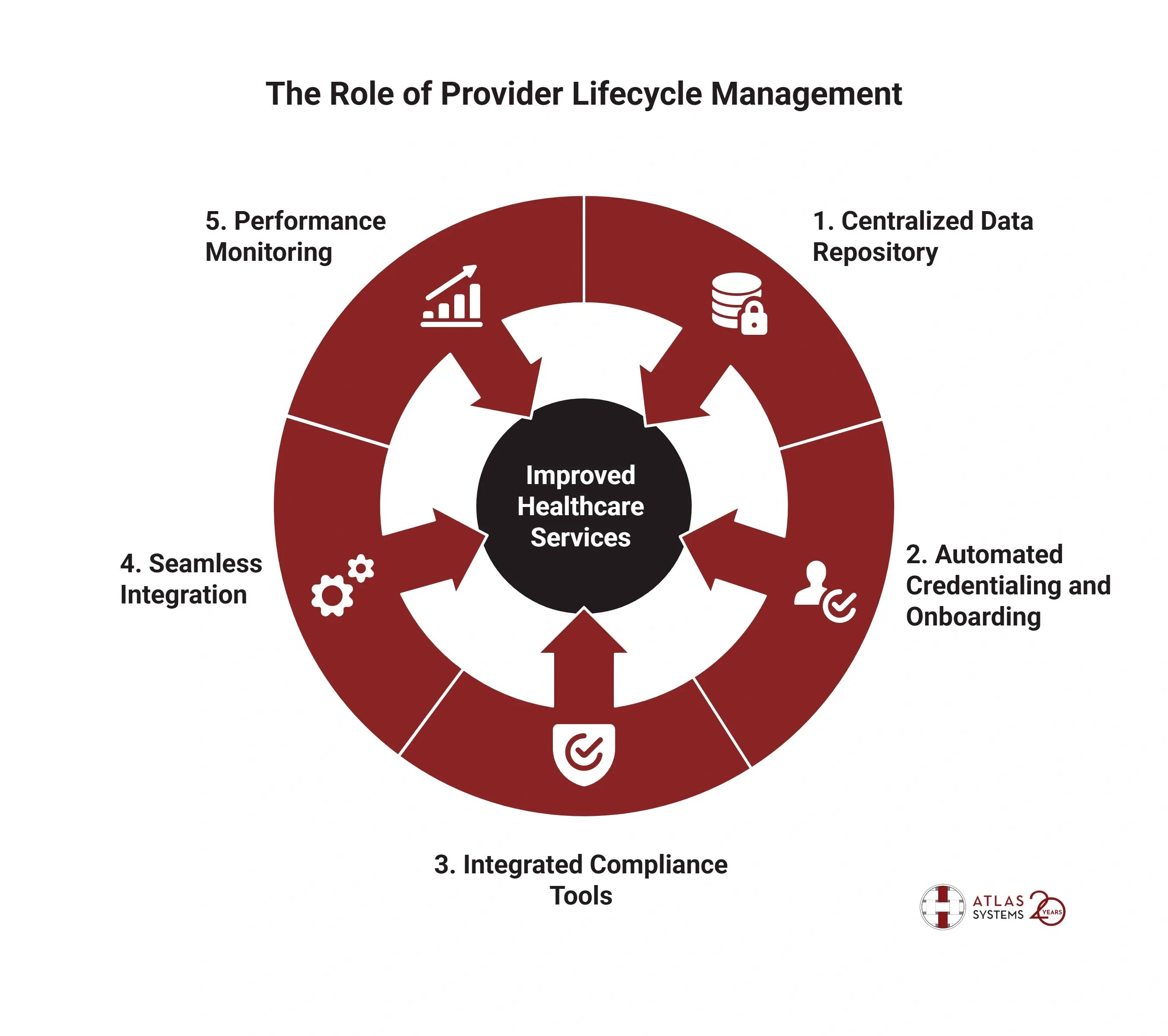
1. Centralized Data Repository
A secure and centralized data repository for provider information improves accessibility across departments.
2. Automated Credentialing and Onboarding
PLM automates verification of the provider's background, licenses, and certifications to speed up provider onboarding and deliver uninterrupted healthcare services.
3. Integrated Compliance Tools
PLM tools reduce manual work and the risk of penalties through real-time regulatory updates and automated compliance monitoring,
4. Seamless Integration
PLM platforms connect with enterprise resource planning (ERP), medical electronic systems (MES), practice management systems (PMS), quality management systems (QMS), and other enterprise systems to enable real-time data sharing.
5. Performance Monitoring
PLM solutions track provider productivity, patient outcomes, and areas for improvement. Real-time analysis helps providers improve efficiency and care quality.
Benefits of provider lifecycle management adoption
A PLM framework for provider and payer management offers a wide range of benefits across departments, including: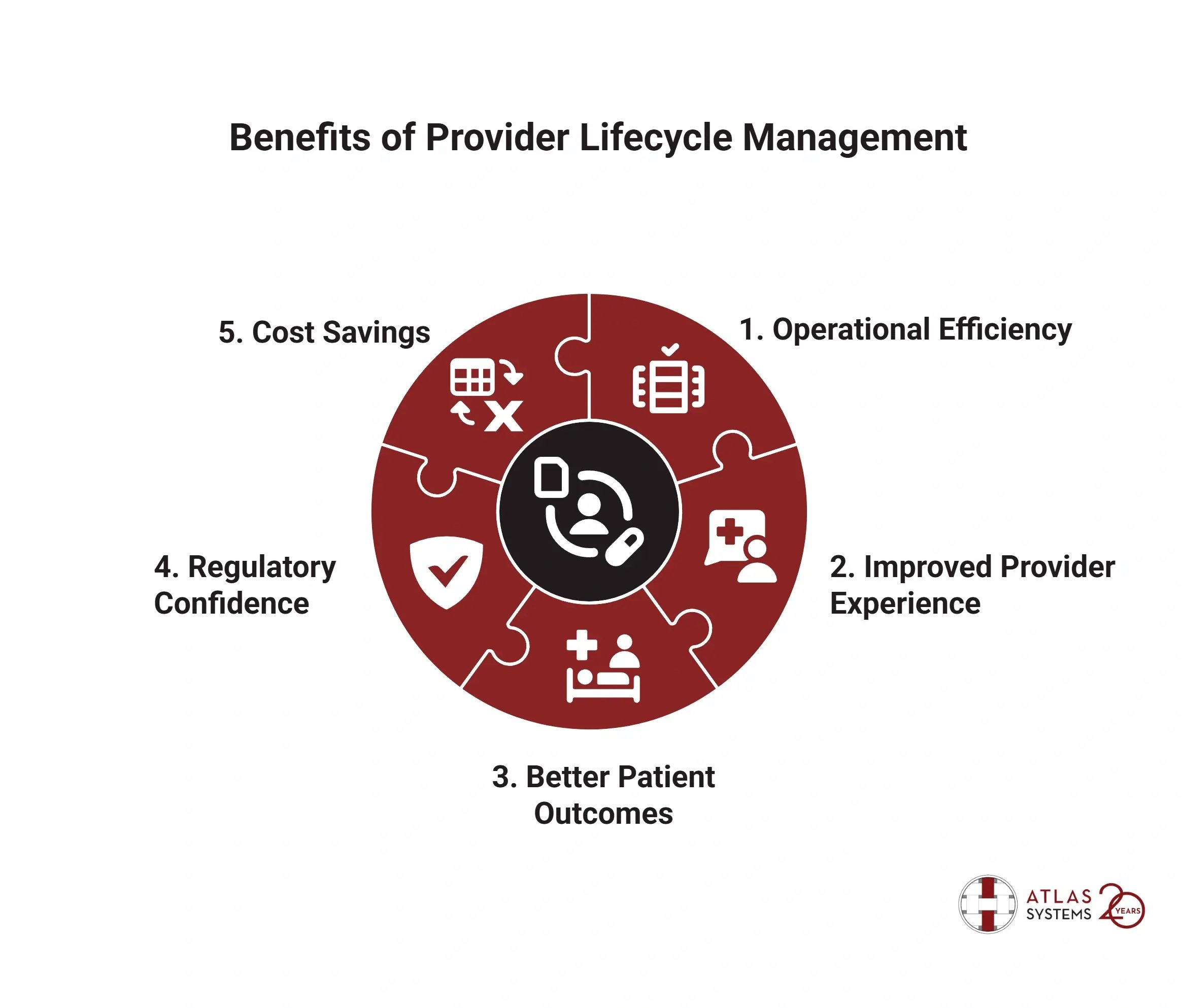
- Operational Efficiency: Centralized data and automated workflows reduce the administrative burdens of everyday processes like credentialing, compliance tracking, and contract management. Healthcare providers, administrative teams, and patients benefit from smoother operations and quicker service delivery.
- Improved Provider Experience: Streamlined processes, such as faster onboarding and real-time access to support, make interactions between providers and payors more efficient and less frustrating. A supportive operational experience increases provider satisfaction and retention.
- Better Patient Outcomes: Improved care coordination between providers and payers reduces treatment delays, errors, and redundancies, leading to better health outcomes. Providers and payers build a strong reputation by consistently delivering quality services and adhering to regulatory standards.
- Regulatory Confidence: Automated compliance tracking minimizes risks and ensures adherence to evolving regulations. Healthcare providers can improve patient care without worrying about facing regulatory repercussions or compliance challenges.
- Cost Savings: PLM solutions minimize inefficiencies and errors to reduce operational costs and enhance ROI. Reduced overheads allow for better investment in patient care infrastructure or other growth initiatives.
Empowering Payers and Providers with Atlas Prime
Provider lifecycle management solutions unify collaboration and data sharing by dismantling silos. Healthcare companies can automate workflows to speed up onboarding, increase transparency, and reduce regulatory risks. Providers can focus on quality care while payers gain better cost control.
Using PLM solutions from leading providers like Atlas Systems keeps you ahead. Our Provider lifecycle management solutions use AI-powered verification to enhance provider data accuracy and speed up onboarding.
PRIME® centralizes provider information to minimize delays and errors for efficient network management. Advanced tools help deliver innovative therapies and high-quality patient care while reducing costs.
Contact us to schedule a consultation.
%20(1).jpg)

Related Reading
Provider Lifecycle Management
Automated Provider Data Management: A Practical Playbook
Read the blog →
Provider Lifecycle Management
The Complete Guide to Provider Data Management Automation
Read the blog →
Provider Lifecycle Management
Why Behavioral Health Providers Are the Hardest AWT Surveys to Close
Read the blog →
Provider Lifecycle Management
Best Provider Network Management Platforms for Payers and Providers in 2026
Read the blog →
Provider Lifecycle Management