





.webp?width=387&height=387&name=Medtech%20Breakthrough%20Award%20Winner%20(1).webp)
























Ad-Hoc Provider Directory Audits That Find Compliance Gaps Before Regulators Do
Zero Findings
Pass CMS audits
70% Faster Fixes
Guided remediation
Complete Proof
Regulatory documentation
Reactive Data Validation Leaves You Exposed to CMS Findings

Gaps Surface Only During CMS Reviews
Directory issues often appear during secret shopper audits, when remediation windows are already closed and findings are locked in.

Sampling Misses Systemic Issues
Small sample checks fail to detect patterns across regions, specialties, or delegated groups that regulators consistently uncover.
Findings Trigger Real Consequences
CMS audits lead to CAPs, penalties, and Star Rating impact; NCQA findings affect accreditation, all avoidable with early detection.
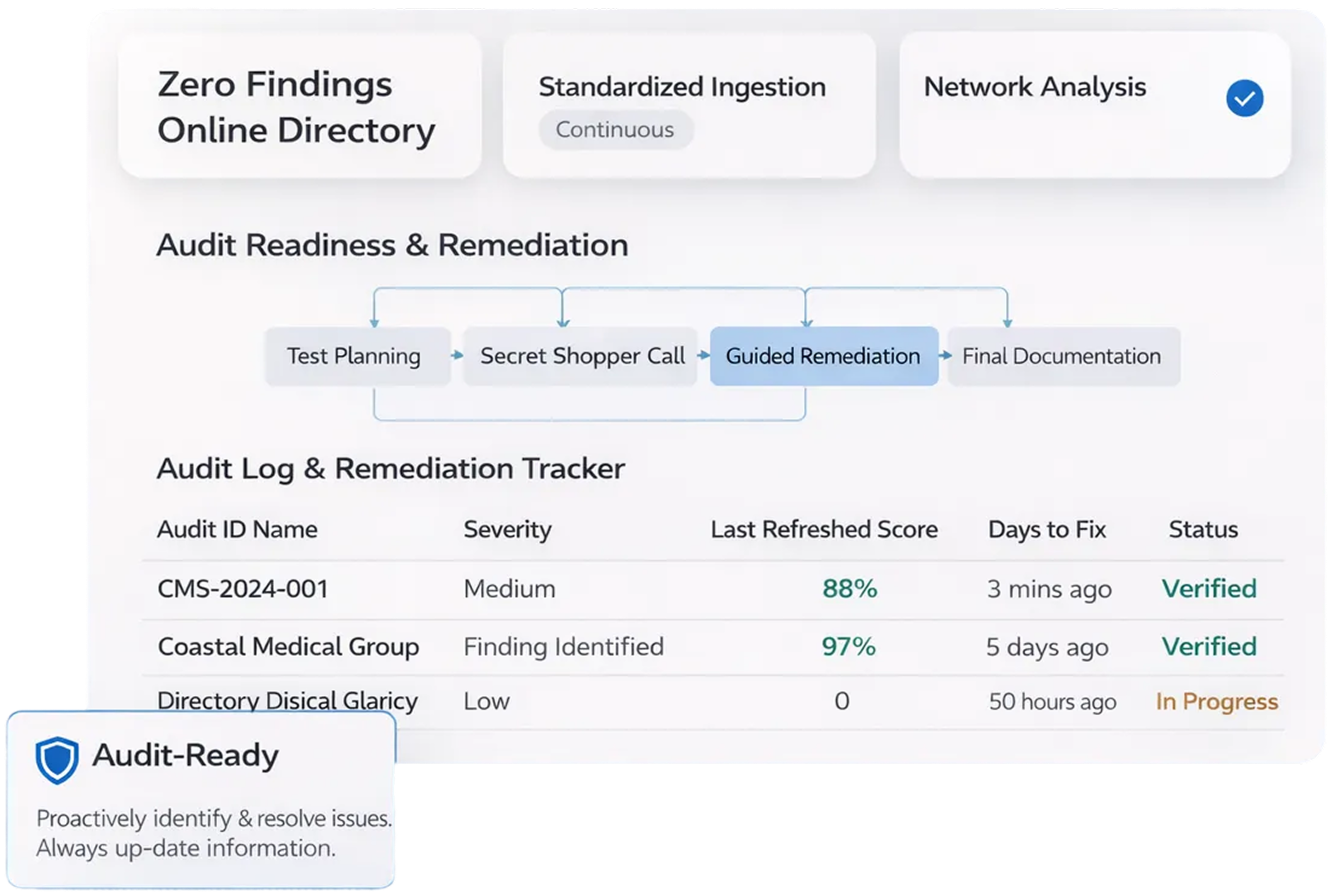
PRIME® Simulates CMS, NCQA, and State Audit Methodology, On Demand
Identify compliance gaps with enough time to remediate, document, and demonstrate readiness before any formal review.
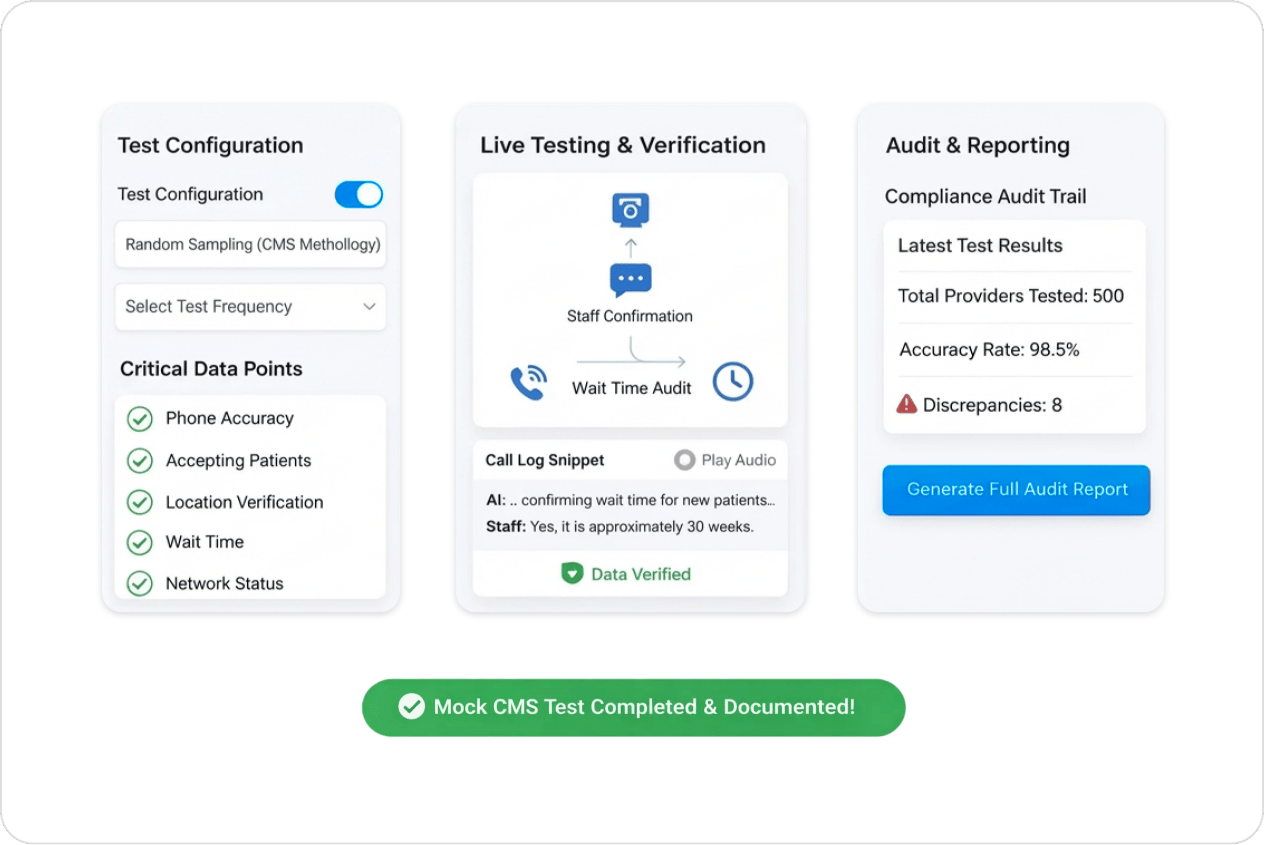
[01] Mock CMS Testing
Replicate Exactly What Regulators Test
- Random sampling methodology matches CMS secret shopper approach and statistical requirements
- Phone accuracy testing verifies provider connectivity and office responsiveness
- Acceptance status confirmed directly with office staff during outreach
- Wait time, location accuracy, and network participation status verified per CMS standards
[02] Network Gap Analysis
See the Patterns a Random Sample Cannot Reveal
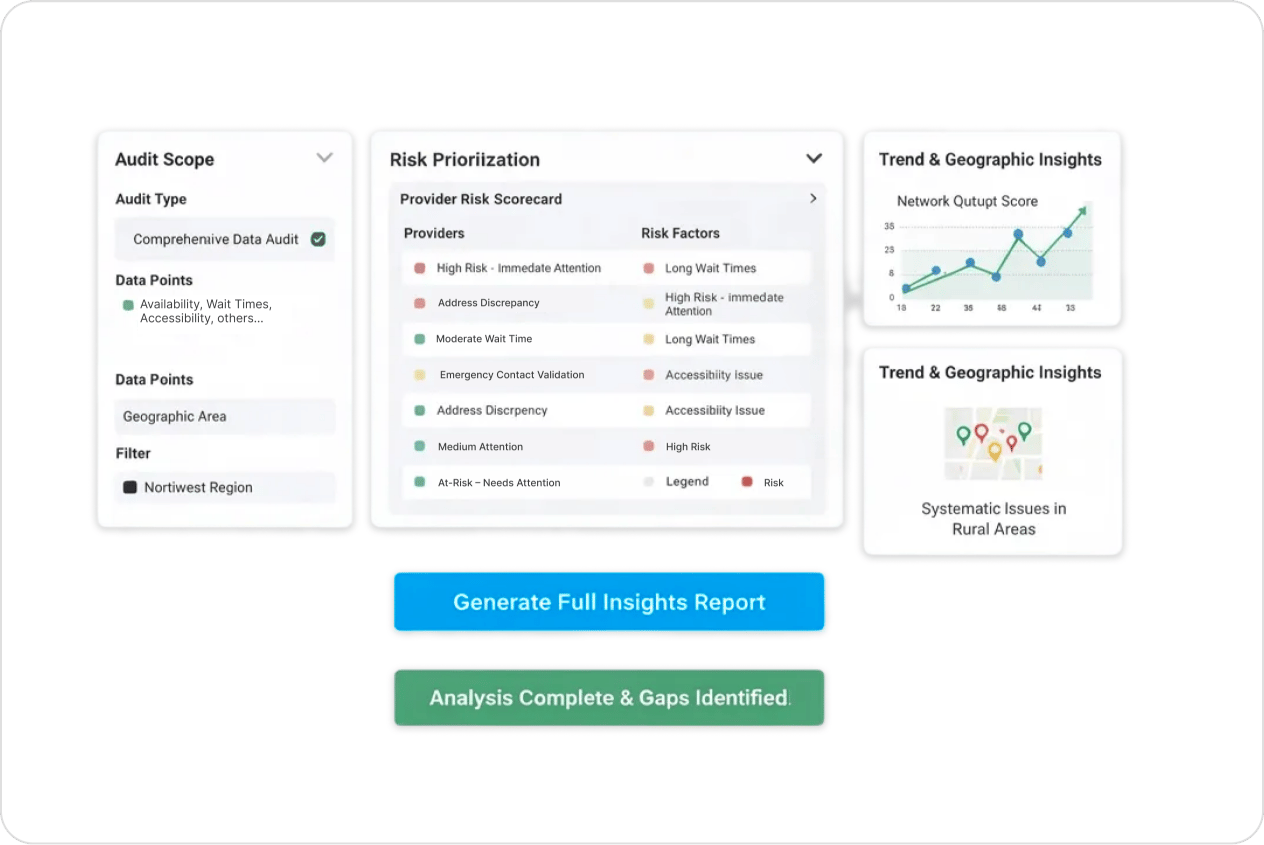
- Comprehensive testing across provider types, specialties, geographic regions, and delegated groups
- Risk scoring prioritizes providers requiring immediate attention before the next audit window
- Trend analysis identifies whether network accuracy is improving or deteriorating over time
- Geographic analysis surfaces systematic issues concentrated in specific markets or service areas
[03] Guided Remediation
Fix Findings on Your Schedule, Not a Regulator's
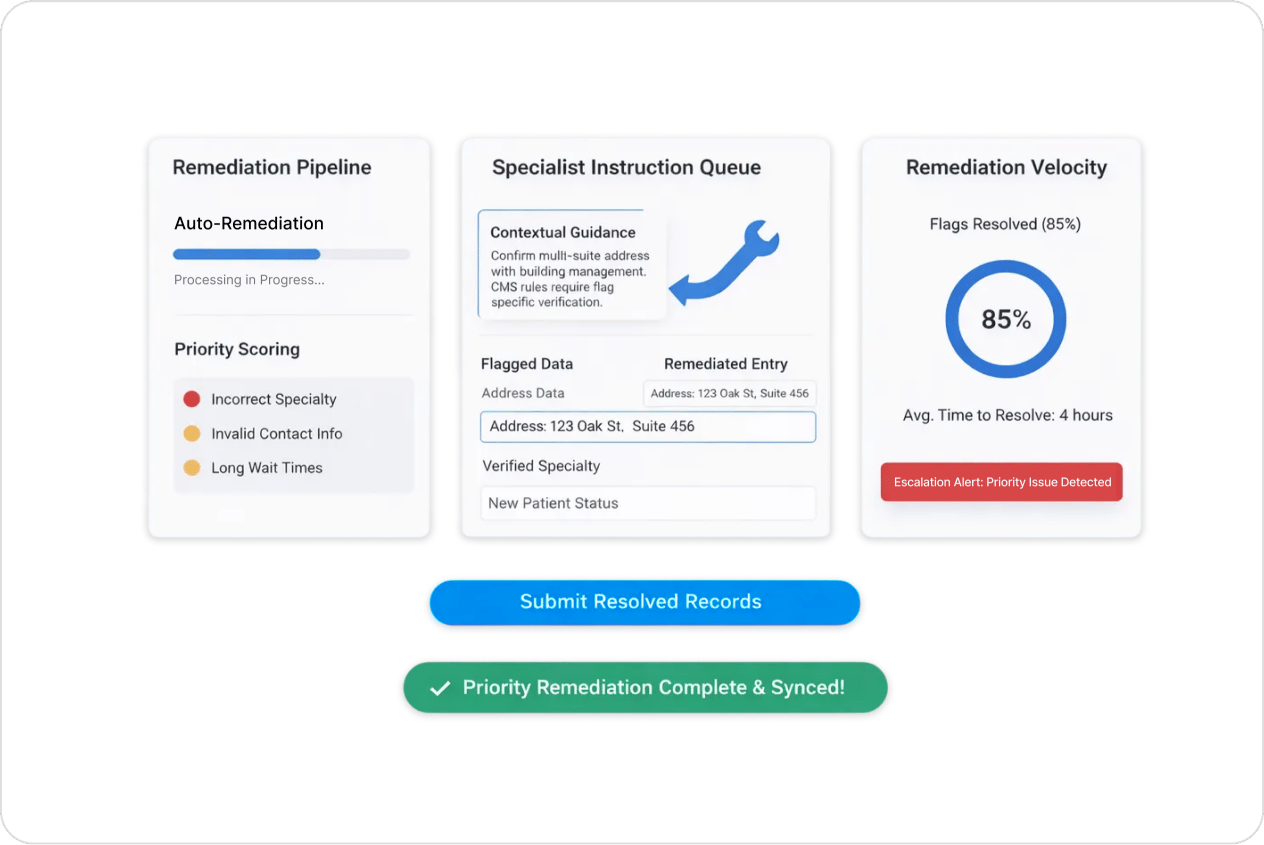
- Automated re-validation workflows trigger immediately for every flagged provider record
- Exception queues route complex cases with specific resolution instructions to the right team
- Real-time progress tracking shows remediation status across every open finding simultaneously
- Escalation protocols ensure high-priority issues receive immediate leadership visibility
[04] Regulatory Documentation
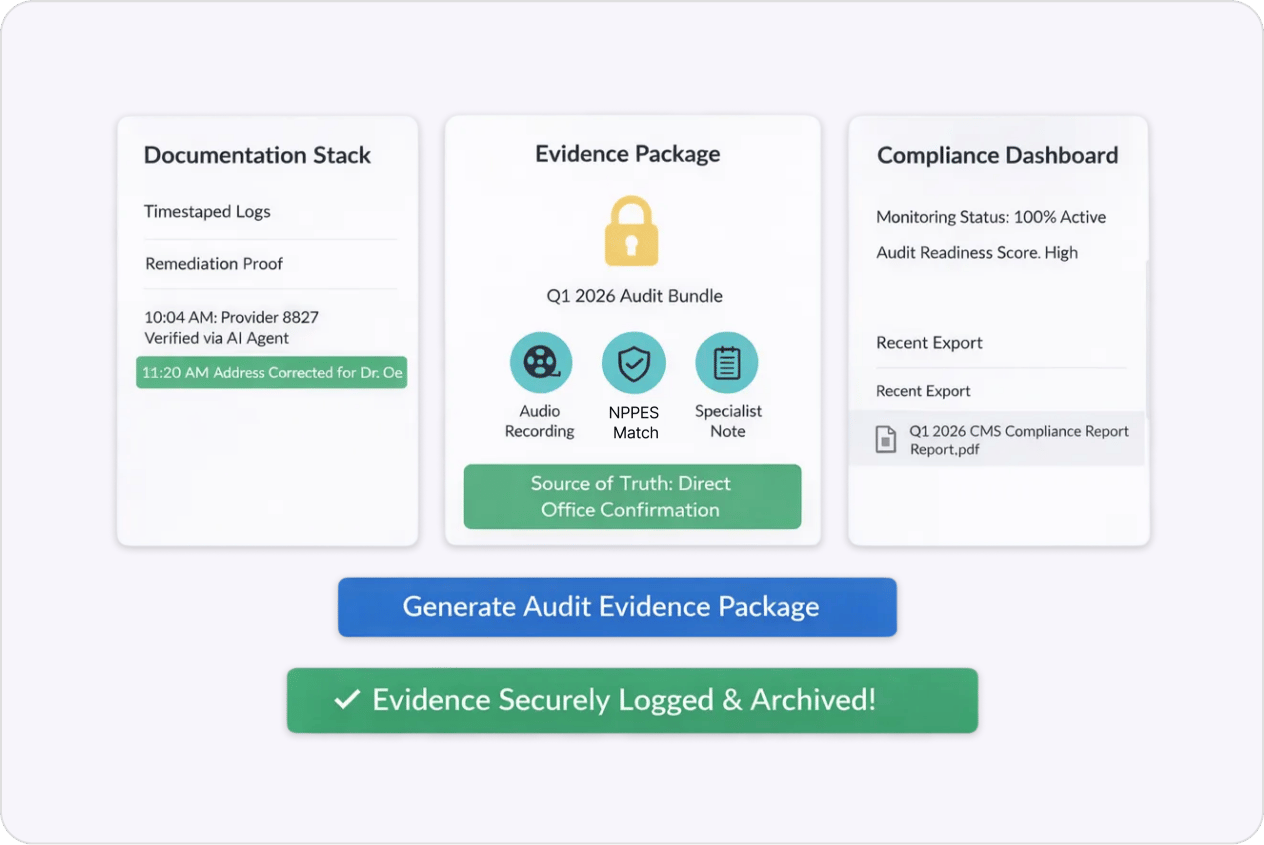
Walk Into Every Audit With Evidence Already Assembled
- Timestamped logs document every test conducted, finding identified, and action taken
- Evidence packages include call recordings, verification sources, and methodology records
- Remediation records show original finding, correction made, and re-validation confirmation
- Compliance reports demonstrate continuous proactive monitoring for CMS, NCQA, and state reviewers