








.webp?width=387&height=387&name=Medtech%20Breakthrough%20Award%20Winner%20(1).webp)
























Accurate Provider Data Across Your Entire Health System
Credential providers faster, submit accurate rosters, and eliminate the administrative drag that delays revenue.








Provider Data Challenges Facing Health Systems
Credentialing Delays That Hold Up Revenue
Providers cannot bill until they are credentialed and enrolled. Manual primary source verification across state boards, DEA, OIG, and specialty certifications takes 90 to 120 days. Every week of delay is revenue the system cannot recover.
Payer Enrollment Bottlenecks
Each payer requires the same provider data in a different format. Without automation, enrollment teams manually complete and submit applications across dozens of payer portals, creating backlogs that push time to billable status out by months.
Roster Submissions That Require Constant Rework
Provider data changes constantly: new hires, terminations, specialty updates, location changes. Submitting accurate, payer-formatted roster updates on the required schedule without a governed system means perpetual manual effort and persistent errors.
Claim Denials From Data Mismatches
When the provider information your system holds does not match what a payer has on file, claims deny. Reconciling those discrepancies after the fact costs more time and money than preventing them at the roster submission stage.
No Visibility Between Credentialing Cycles
A provider's license lapses. A sanction is issued. An affiliation changes. Without ongoing monitoring, these events surface through a denied claim or a compliance audit rather than through a proactive alert that gives your team time to act.
How PRIME® Addresses Provider Data Challenges for Health Systems
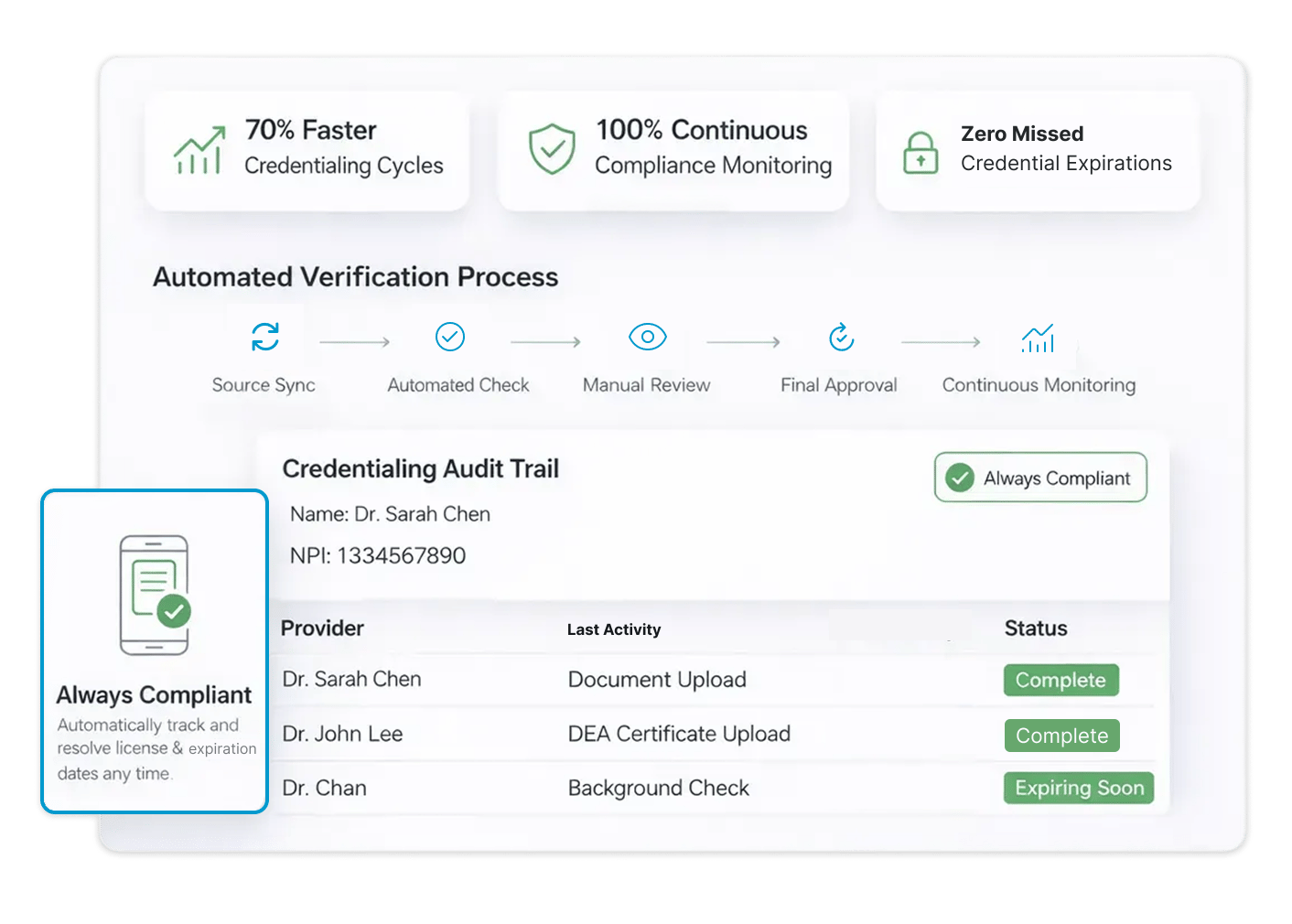
Credential Providers and Reach Billable Status Faster
PRIME® automates primary source verification against state medical boards, DEA registries, OIG exclusion lists, NPDB, and specialty certification databases simultaneously. Credentialing cycles that take 90 to 120 days manually complete in 30 to 45 days with PRIME®. Payer enrollment workflows trigger automatically when credentialing is complete, so providers move from verification to billing without a manual handoff between teams.
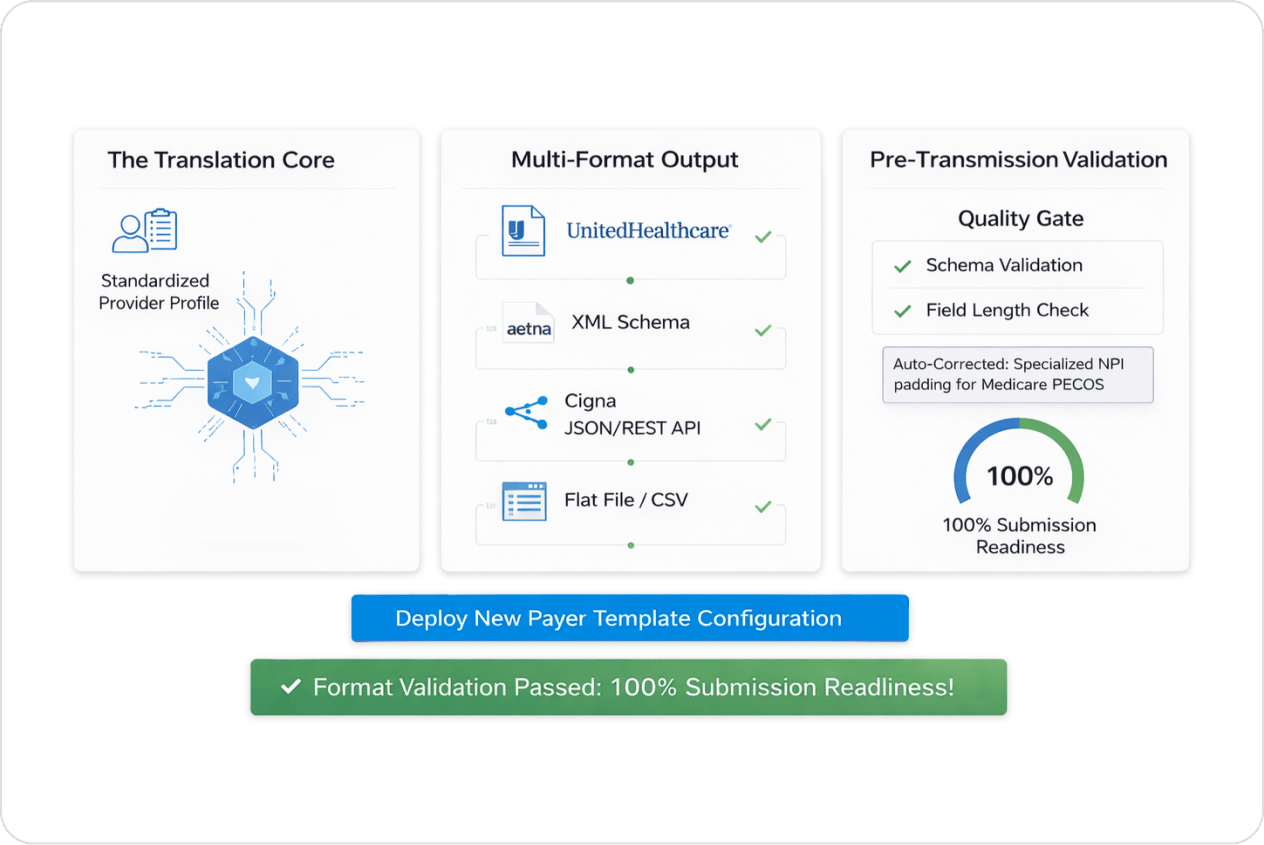
Submit Accurate Rosters to Every Payer Without Manual Formatting
PRIME® auto-generates payer-specific rosters from your governed provider data record and formats submissions to each payer's required structure. Address changes, specialty updates, and terminations flow to payer systems automatically on your submission schedule. Pre-submission validation catches format errors before transmission so rejections become the exception rather than the default.
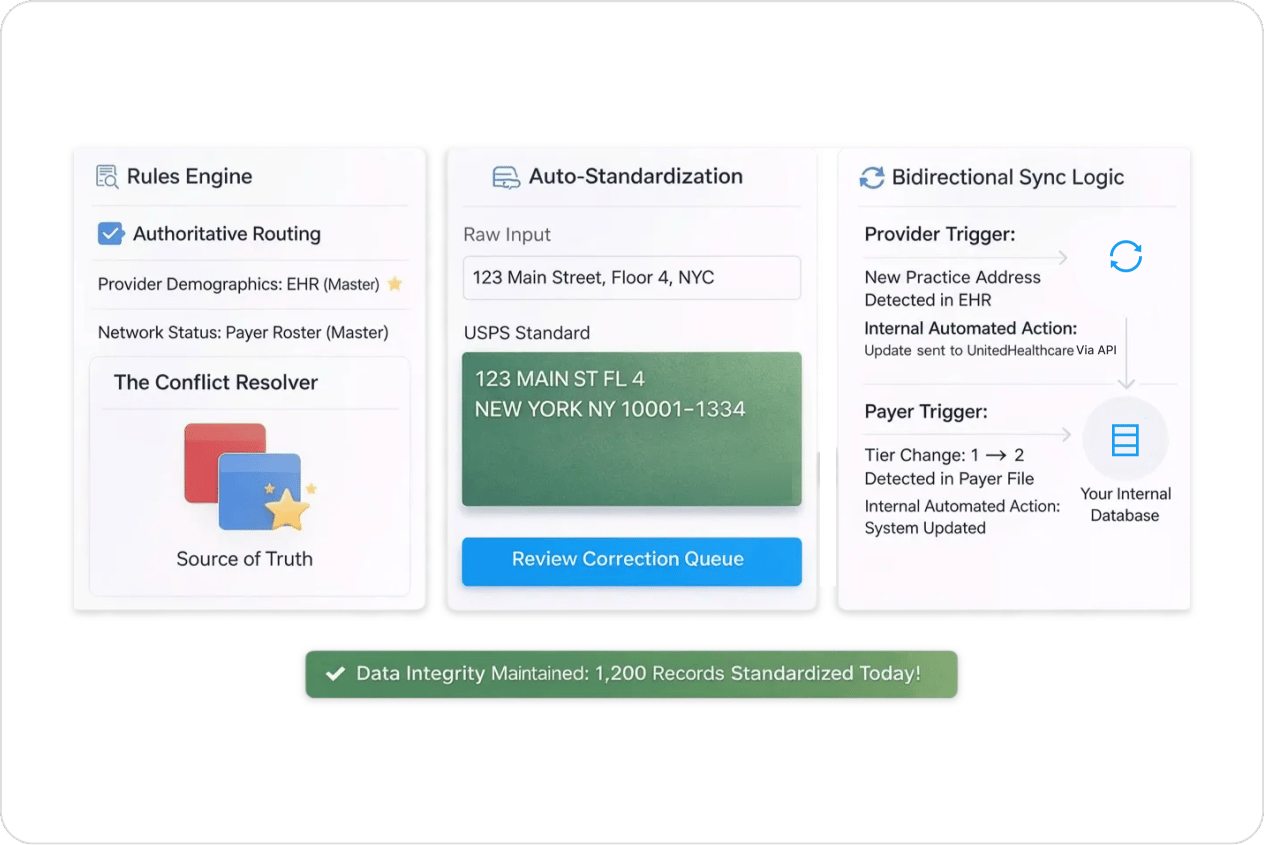
Reconcile What Payers Send Back Against Your Own Records
When payers return roster files, PRIME® compares them against your Provider Data Engine record and identifies every discrepancy, whether a missing active provider, a terminated provider still listed, or a specialty or address mismatch. Corrections queue for automatic resubmission without manual spreadsheet work. The result is a payer roster that reflects your actual provider network, not a version that drifted over months of unmanaged submissions.
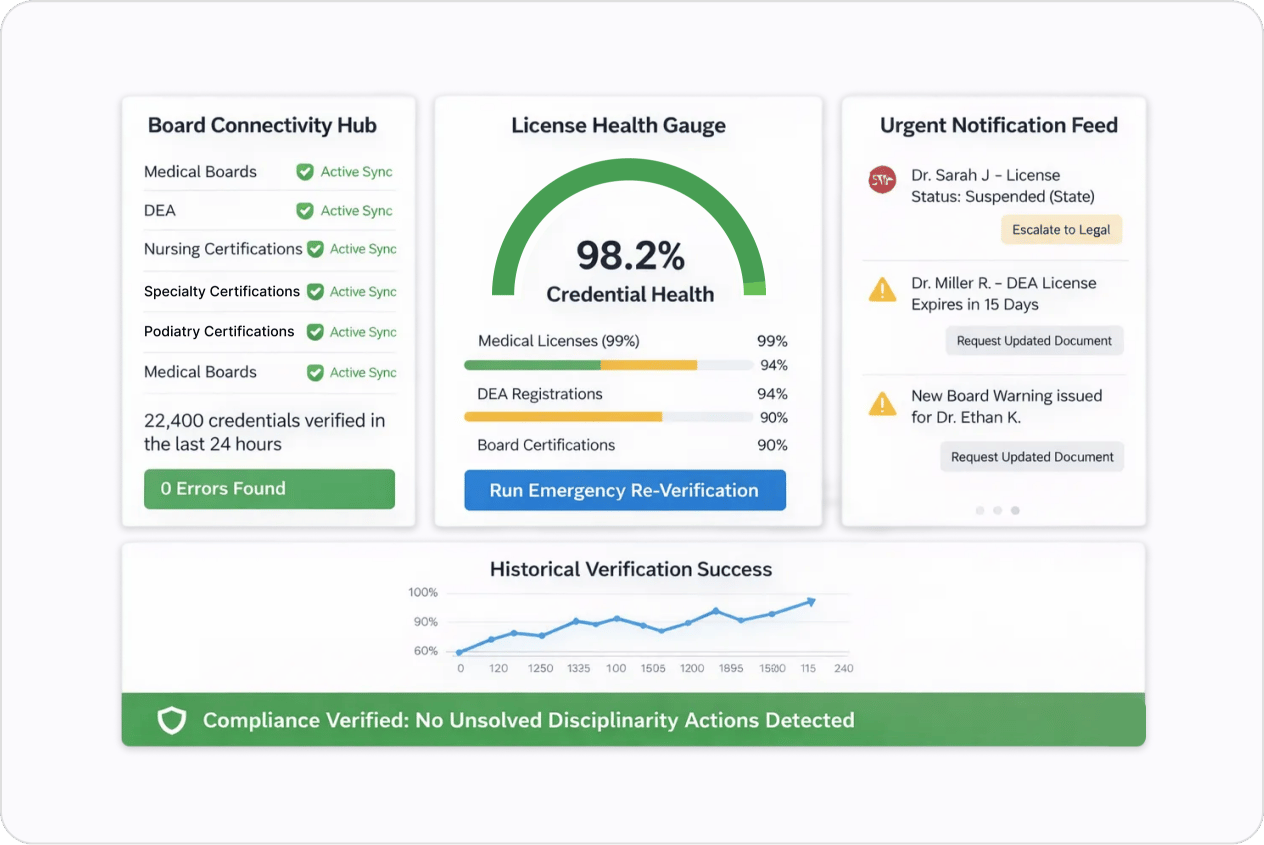
Monitor Every Provider Between Credentialing Cycles
Re-credentialing happens on a cycle. Provider changes happen every day. PRIME® monitors license status, sanctions, DEA registrations, and demographic data continuously between cycles and flags issues the moment they appear. Your compliance team knows about a lapsed license or a new OIG exclusion before it affects patient care, payer standing, or claims processing.
Track Payer Response Times and Maintain Audit-Ready Records
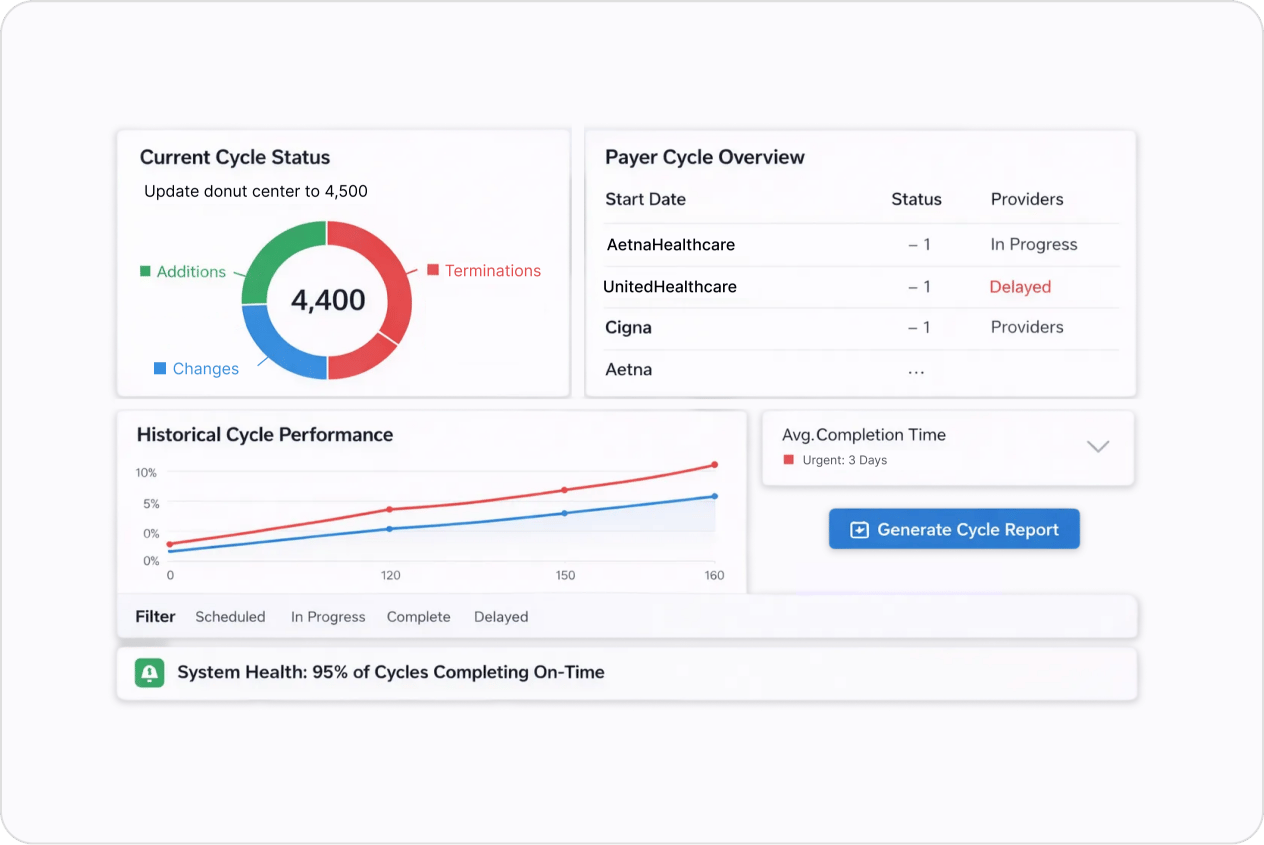
PRIME® gives your operations team visibility into submission status, payer response times, and enrollment approval stages across all payer relationships from one dashboard. Every submission, reconciliation, and correction is logged with timestamps and source attribution, producing the documentation your compliance team needs for NCQA reviews, state audits, and Joint Commission surveys without manual assembly.