






.webp?width=387&height=387&name=Medtech%20Breakthrough%20Award%20Winner%20(1).webp)
























Payer Enrollment Automation That Moves Providers From Credentialed to Billable Faster
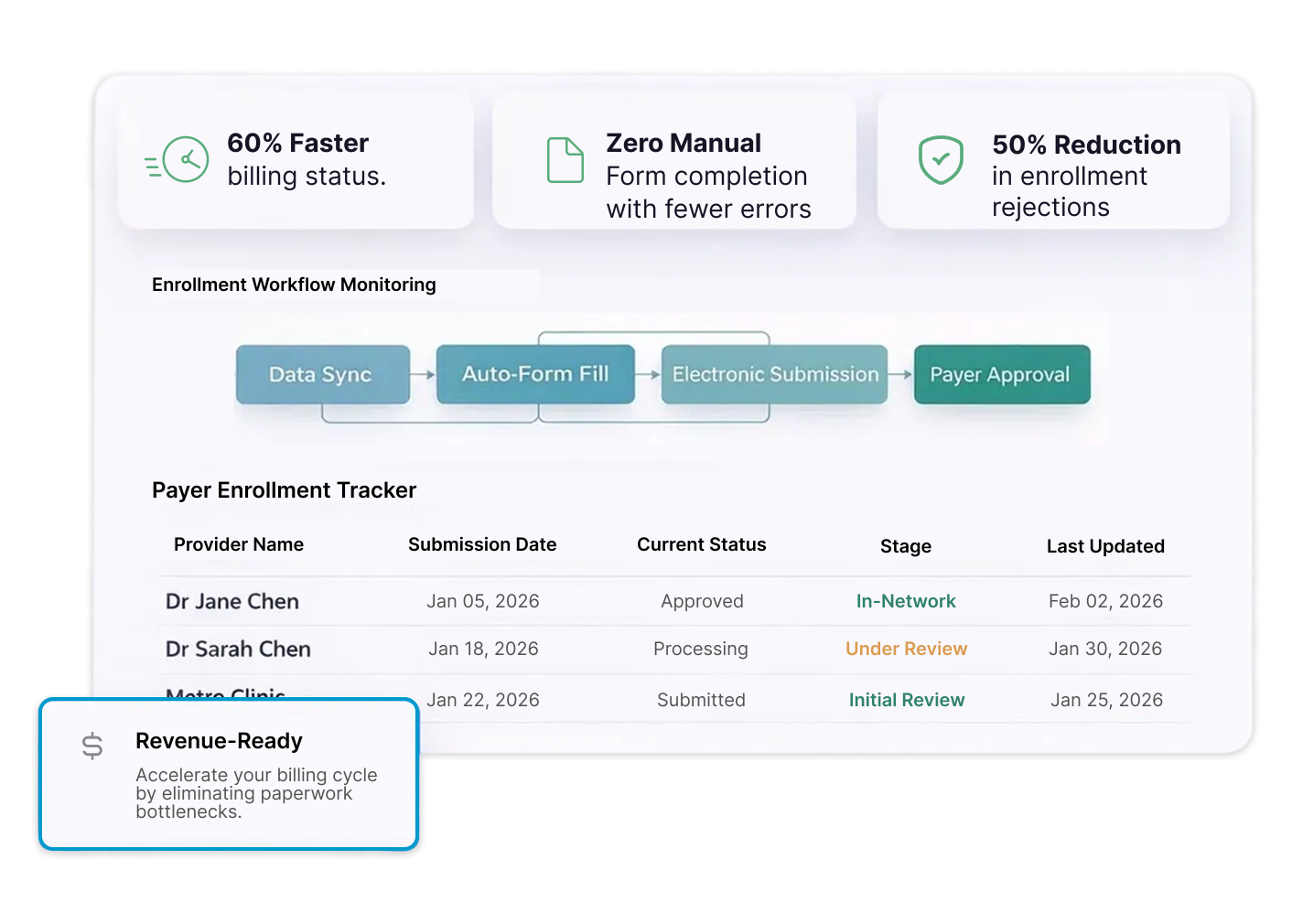
60% Faster
Time to billable status
Zero Manual
Form completion and formatting
One View
All payer relationships tracked centrally
Where Enrollment
Breaks Down
After Credentialing

Same Data. Different Payers. Repeated Work.
The same provider data must be submitted in different formats across every health plan, forcing teams to repeat manual work for each payer relationship.

60–90 Days to Billable Status
Enrollment delays prevent providers from billing for months, holding back revenue and increasing administrative follow-ups.

Rejections Restart the Process
Without structured correction workflows, rejected applications often require full resubmission, extending delays and adding operational strain.
PRIME® Streamlines Payer Enrollment Alongside Credentialing Workflows End-to-End.
One governed workflow connects provider records directly to payer submissions, so enrollment runs in parallel with credentialing rather than after it.
[01] Automated Application Generation
Payer-Specific Submissions Without Manual Formatting
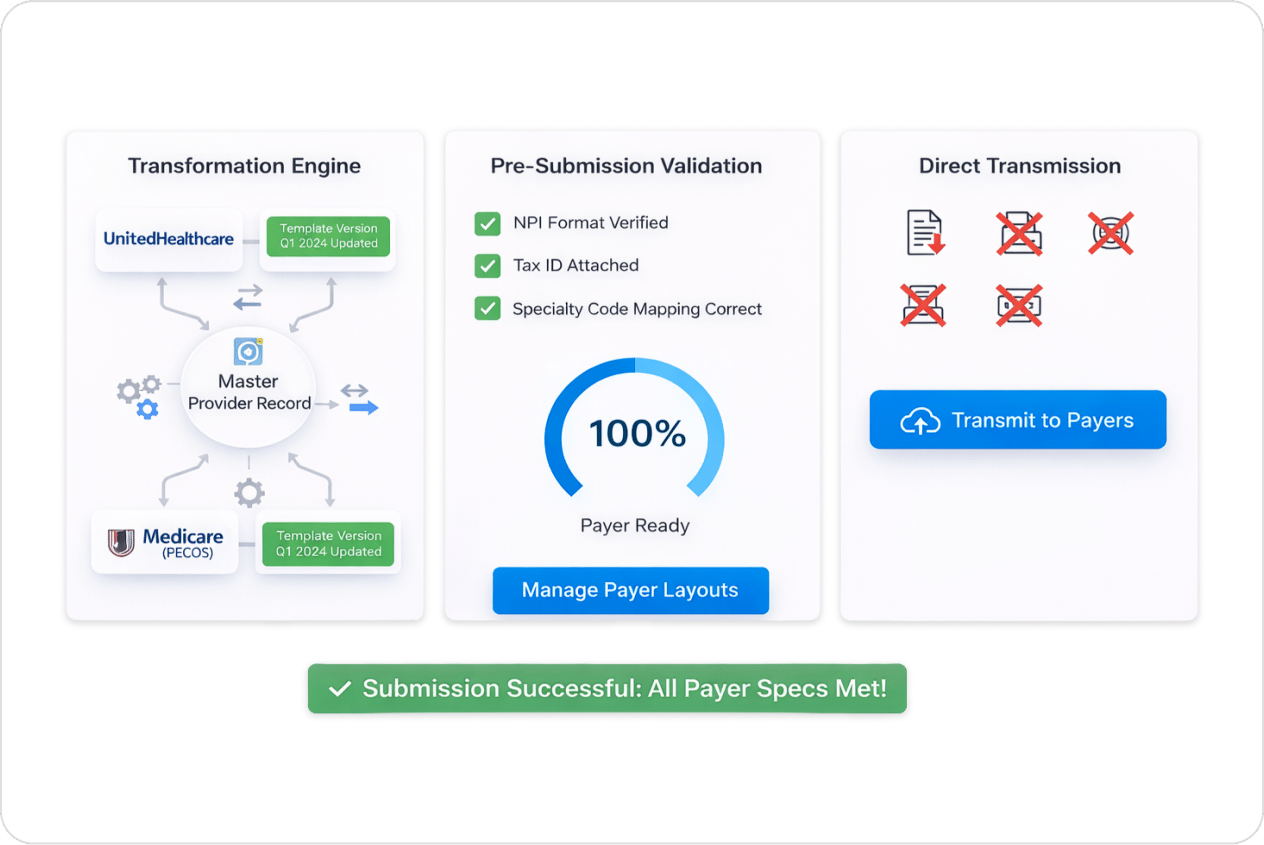
- Pulls verified provider data directly from the PRIME® Provider Data Engine for each application
- Formats applications automatically to each payer's required structure, EDI, portal, or flat file
- Covers major commercial payers, Medicare PECOS, state Medicaid portals, and managed care programs
- Pre-submission validation catches missing fields and format errors before transmission
[02] Simultaneous Multi-Payer Submission
Submit to All Payers at Once, Not One at a Time
- Triggers enrollment submissions to all relevant payers as soon as credentialing is complete
- Tracks each submission independently with payer receipt confirmation and processing stage
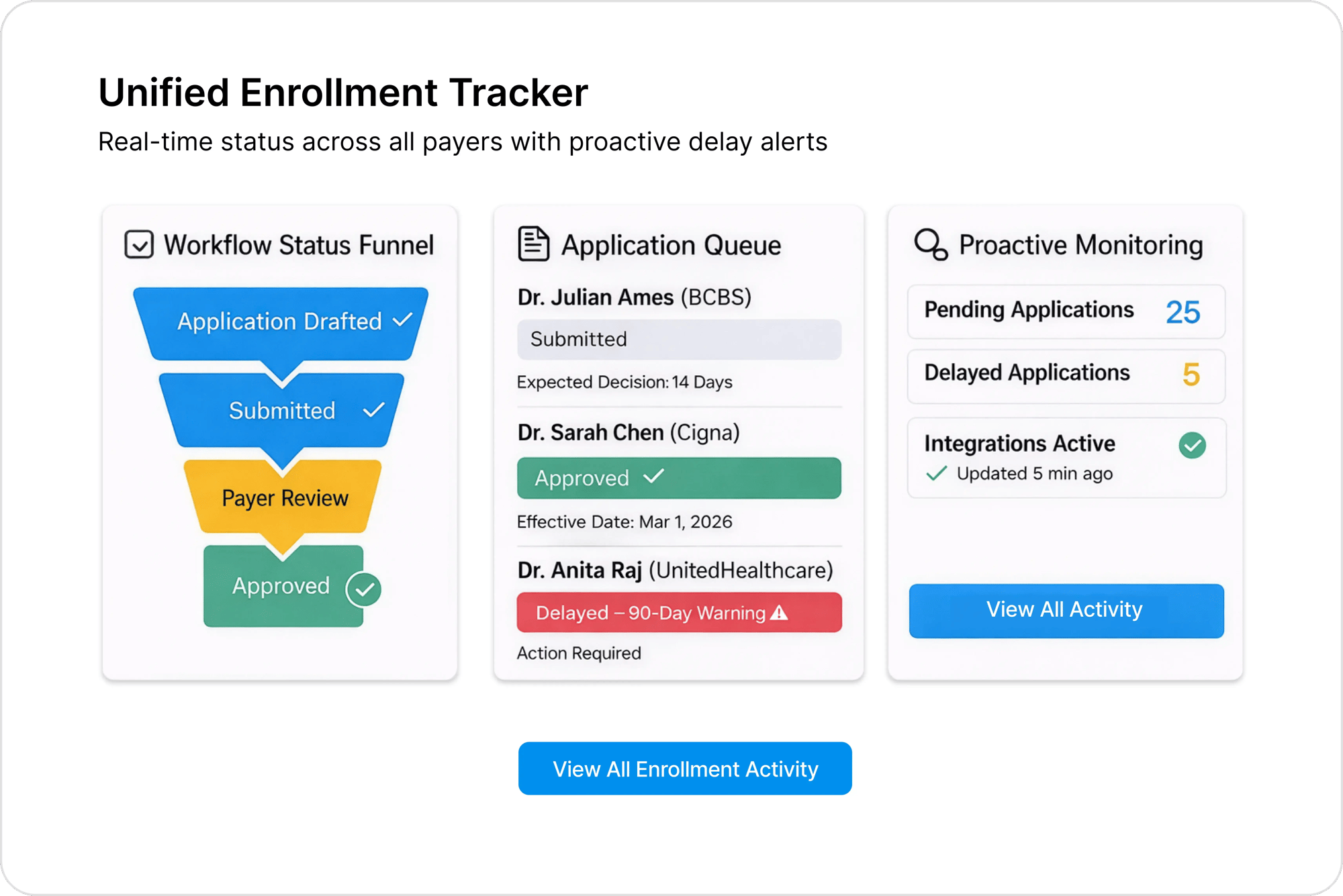
- Alerts on delayed applications approaching 90 days without a decision for proactive follow-up
- Submission date, expected decision timeframe, and current status visible in one centralized view
[03] Rejection Resolution
Correct and Resubmit Without Rebuilding
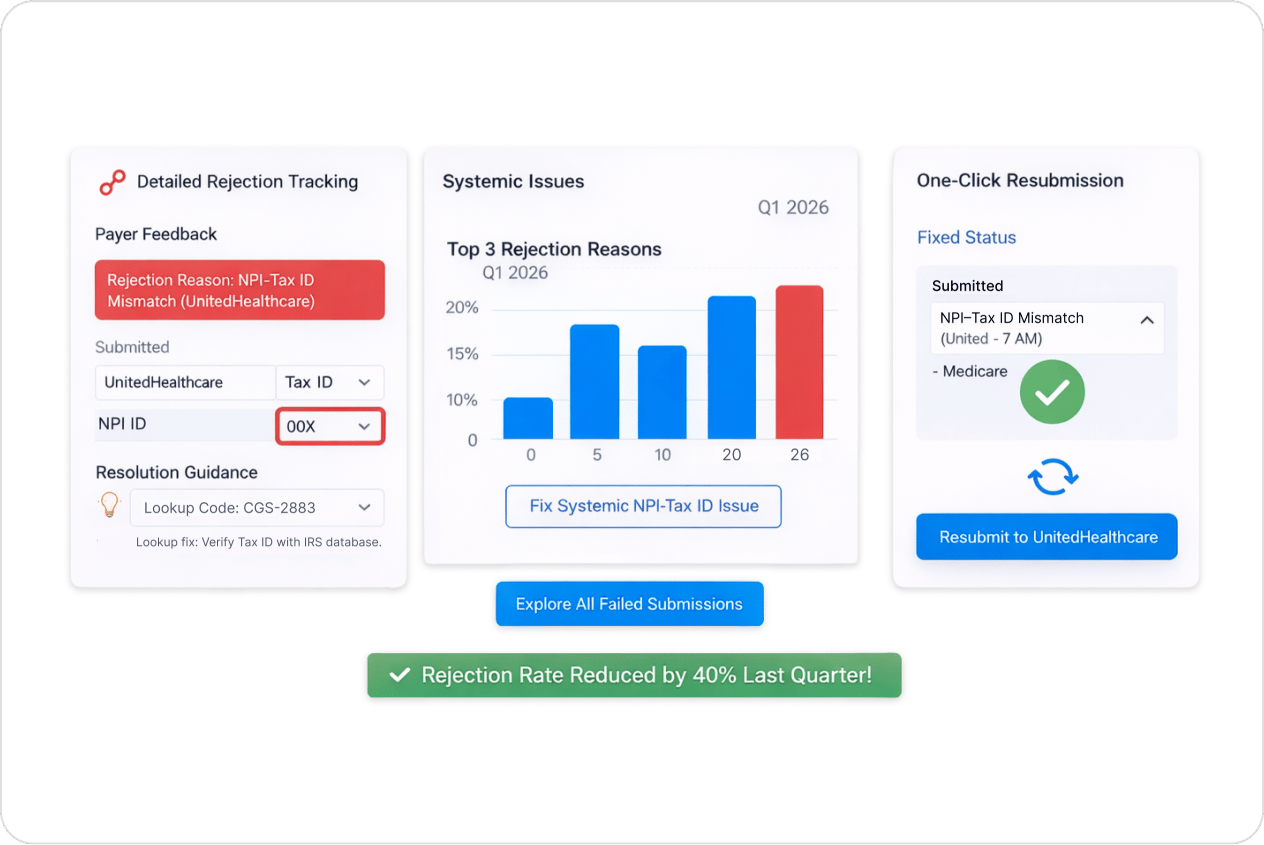
- Captures specific payer rejection reasons with full submission context automatically
- One-click resubmission sends corrected applications without rebuilding the entire record
- Surfaces rejection patterns across multiple providers with the same payer for systemic fixes
- Tracks rejection rates and resolution times per payer to identify recurring bottlenecks
[04] Enrollment Status Visibility
Every Payer Relationship, One Dashboard
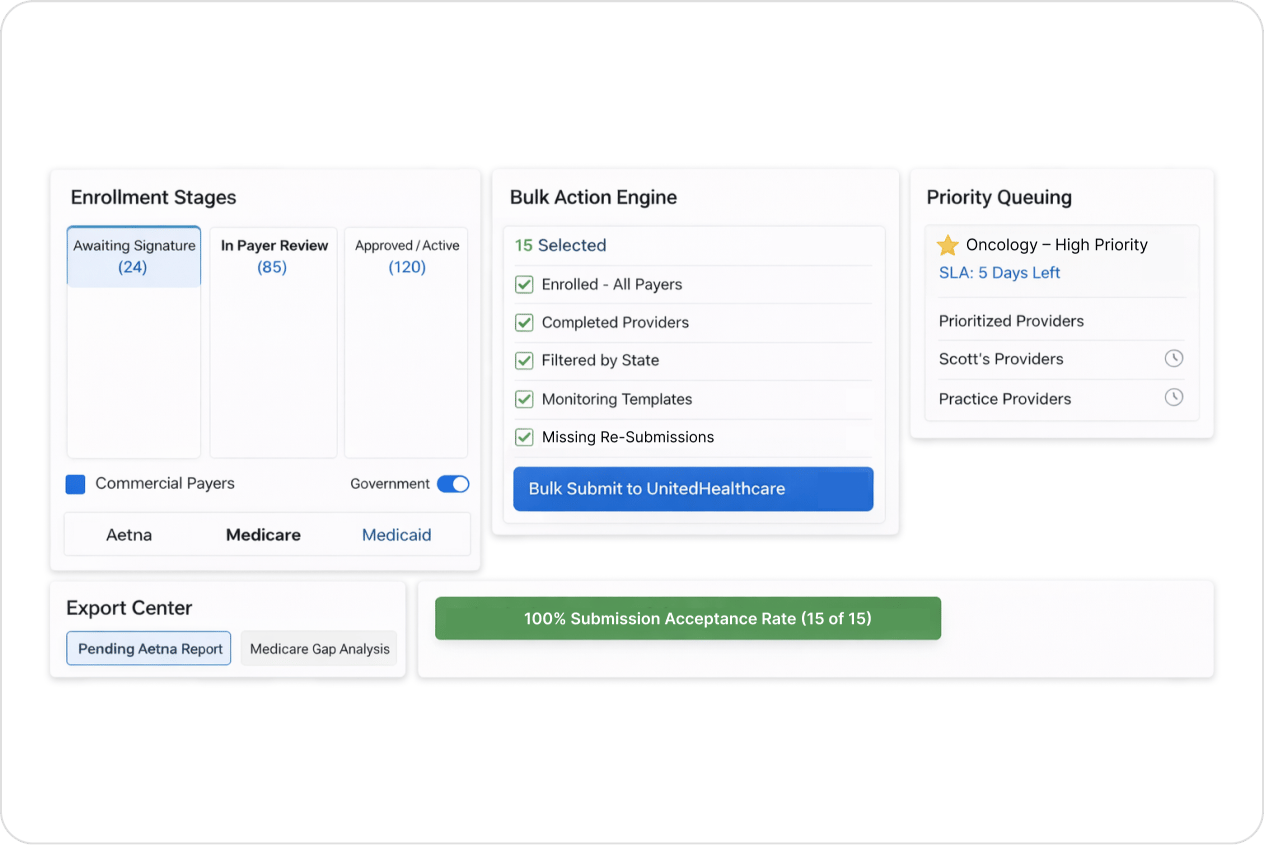
- Centralizes enrollment status across all providers and all payers in a single view
- Filter by provider, payer, enrollment stage, submission date, or product line
- Payer performance dashboard tracks response times, load turnaround, and approval cycle KPIs
- Exportable reports give leadership visibility into overall enrollment pipeline health at any point