










QHP Secret Shopper Surveys That Meet CMS Appointment Wait Time Standards
PRIME® runs your CMS appointment wait time survey from sample to final report, with validated scripts and CMS-ready results.
90%
Required compliance threshold
Third-party execution
Required for medical QHP issuers in FFEs
Jan 1 to May 31
CMS survey window
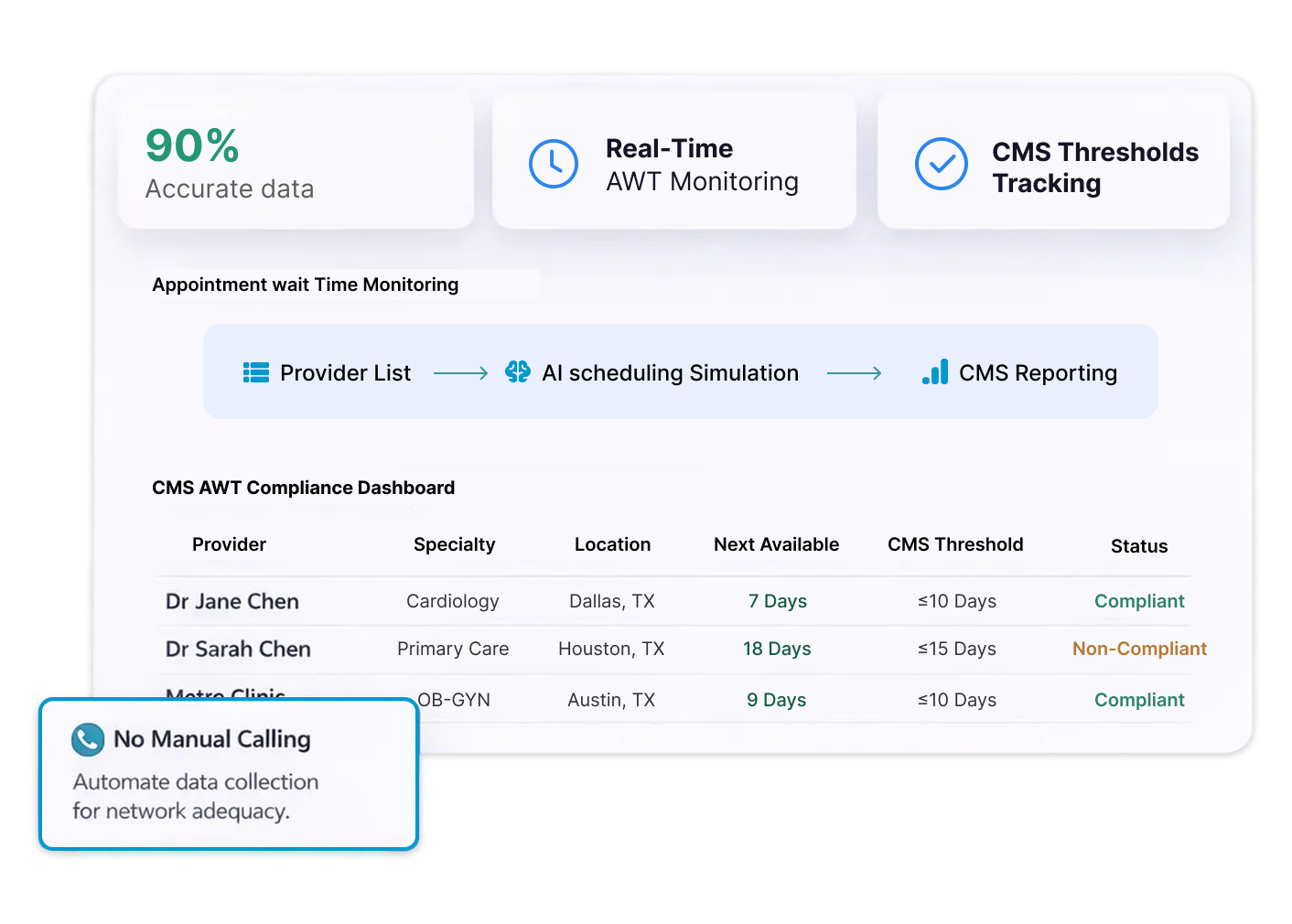
What CMS Expects From FFE Issuers Each Plan Year

A Survey Your Team Cannot Run Internally
CMS requires medical QHP issuers in the FFEs to use a third party separate from the issuer, so affiliates and sister subsidiaries cannot run the survey.

Three Standards, Two Surveyed Today
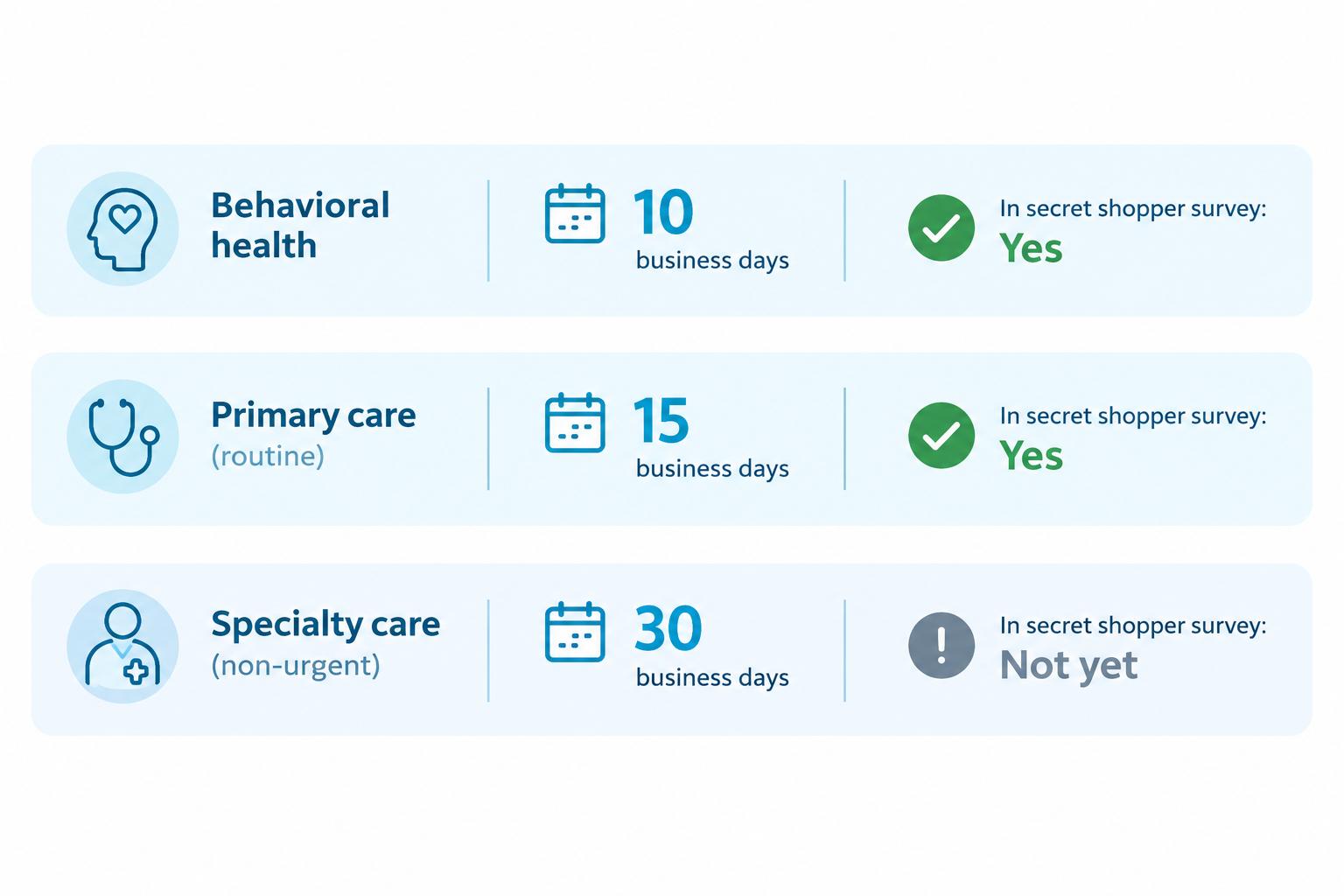
CMS sets standards for behavioral health, routine primary care, and non-urgent specialty care. Secret shopper surveys cover the first two today, with specialty care expected in future plan years.
A Fixed Window Every Plan Year
Secret shopper calls run January 1 to May 31, with results due by the second Friday of June. Issuers that miss the survey or fall below 90% must add contracted providers.
CMS Appointment Wait Time Standards for QHPs
Issuers in the FFEs must meet these standards at least 90% of the time. CMS confirmed in the 2027 Letter to Issuers that the approach is unchanged from 2025.
PRIME® Runs Your Secret Shopper Survey, Fully Managed
Over two decades of provider outreach for health plans, applied to the CMS secret shopper methodology.
[01] Survey Design
Tailored Scripts and Outreach Protocols
- New-patient scripts for primary care and behavioral health, with specialty scripts ready
- In-person and telehealth availability, as CMS requires
- Separate protocols for QHP and voluntary access surveys
- Scripts validated against CMS requirements before launch

[02] Independent Outreach
Third-Party Execution for Medical QHP Issuers
- A separate entity with no corporate ties to your plan
- Verifies network status, new-patient acceptance, and wait times
- Calls January 1 to May 31, in each provider’s local business hours
- Every attempt logged with outcome and timestamp

[03] Wait Time Measurement
How Your Wait Times Are Measured
- Business days from request to first available appointment
- Primary care at 15 business days, behavioral health at 10
- Ineligible providers replaced from the same-specialty reserve
- Results tracked by provider type and geography

[04] Analysis and Reporting
CMS-Ready Results and Documentation
- Statistical analysis that meets CMS sampling requirements
- Results in CMS reporting fields, with compliance rates by provider type
- Methodology, outreach evidence, and contract documentation for CMS
- Delivered with review time before the June deadline
