ComplyScore® Launches World’s First Headless TPRM, Bringing Conversational AI to Compliance Management. 








.webp?width=387&height=387&name=headless-tprm%20(1).webp)





























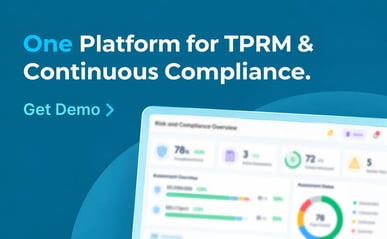
AI-Powered TPRM Software That Scales Without Adding Headcount
Automate your vendor onboarding, accelerate evidence review, and maintain continuous oversight across your entire portfolio with AI driven TPRM.
<10 Days
Risk
assessments
Up to 95%
Vendor
coverage
40-60%
Lower
assessment costs
Trusted partner to market-leading brands







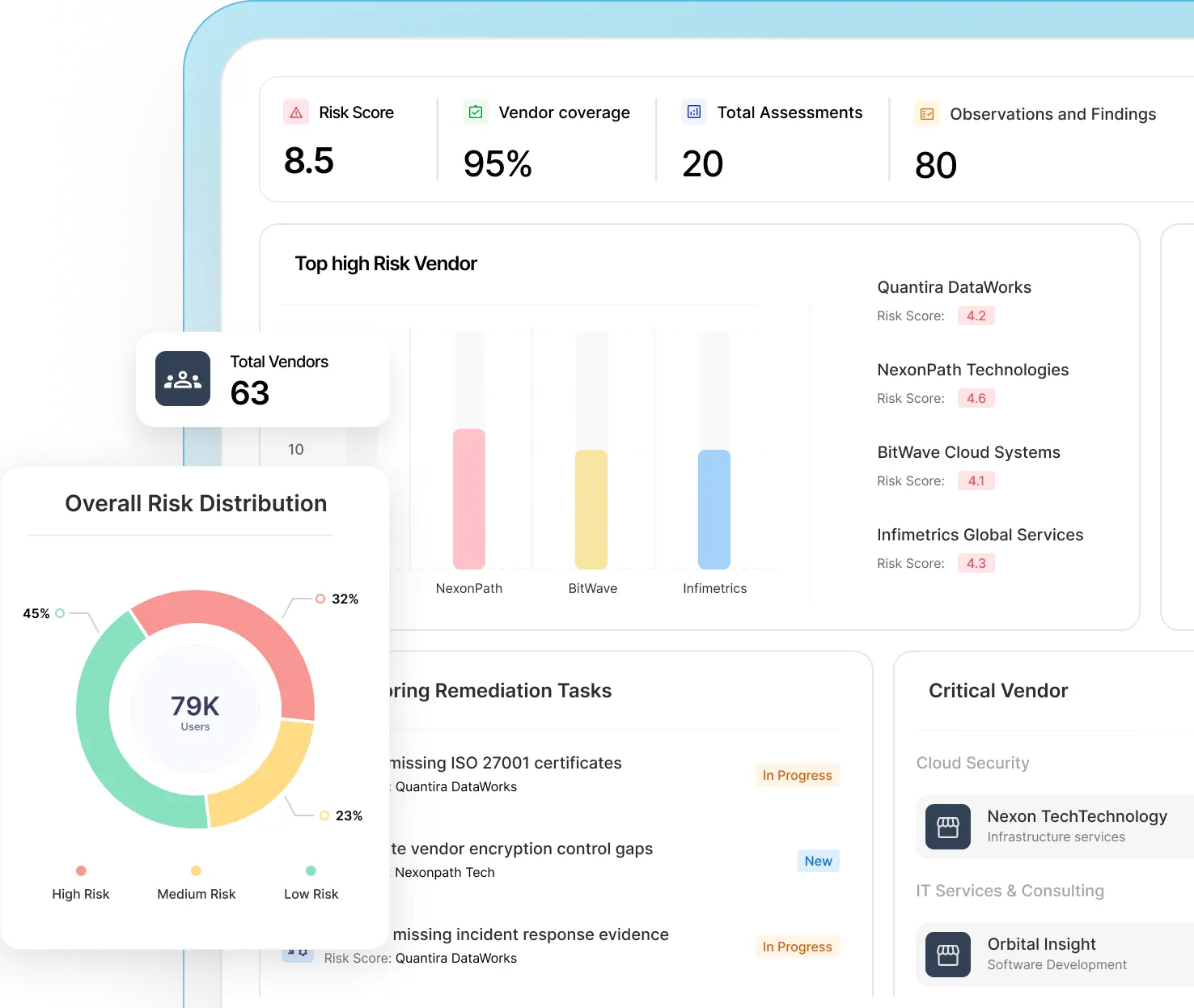
How ComplyScore® Outperforms Traditional TPRM Software
.png?width=20&height=19&name=Vector%20(6).png)
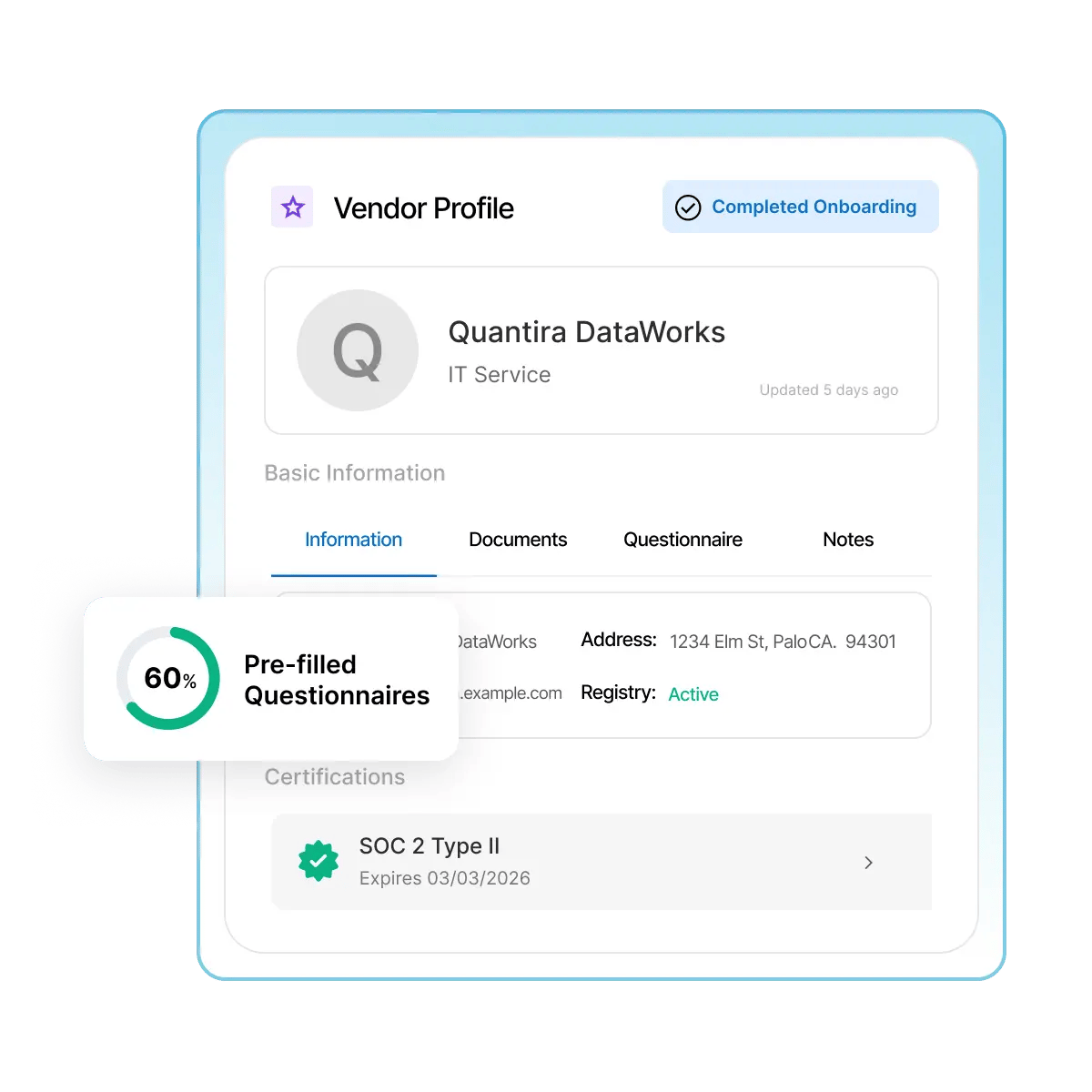
Auto-enriched profiles

Pre-filled questionnaires
Onboard Vendors in Days with AI TPRM
Your vendor profiles arrive pre-populated from registries, certifications, and domain intelligence and your assessments are ready in minutes. Questionnaires start 60% complete with real-time guidance showing vendors which controls need documentation.

Complete onboarding in under 10 days vs. the industry average of 45-60 days.
.png?width=15&height=19&name=Vector%20(7).png)
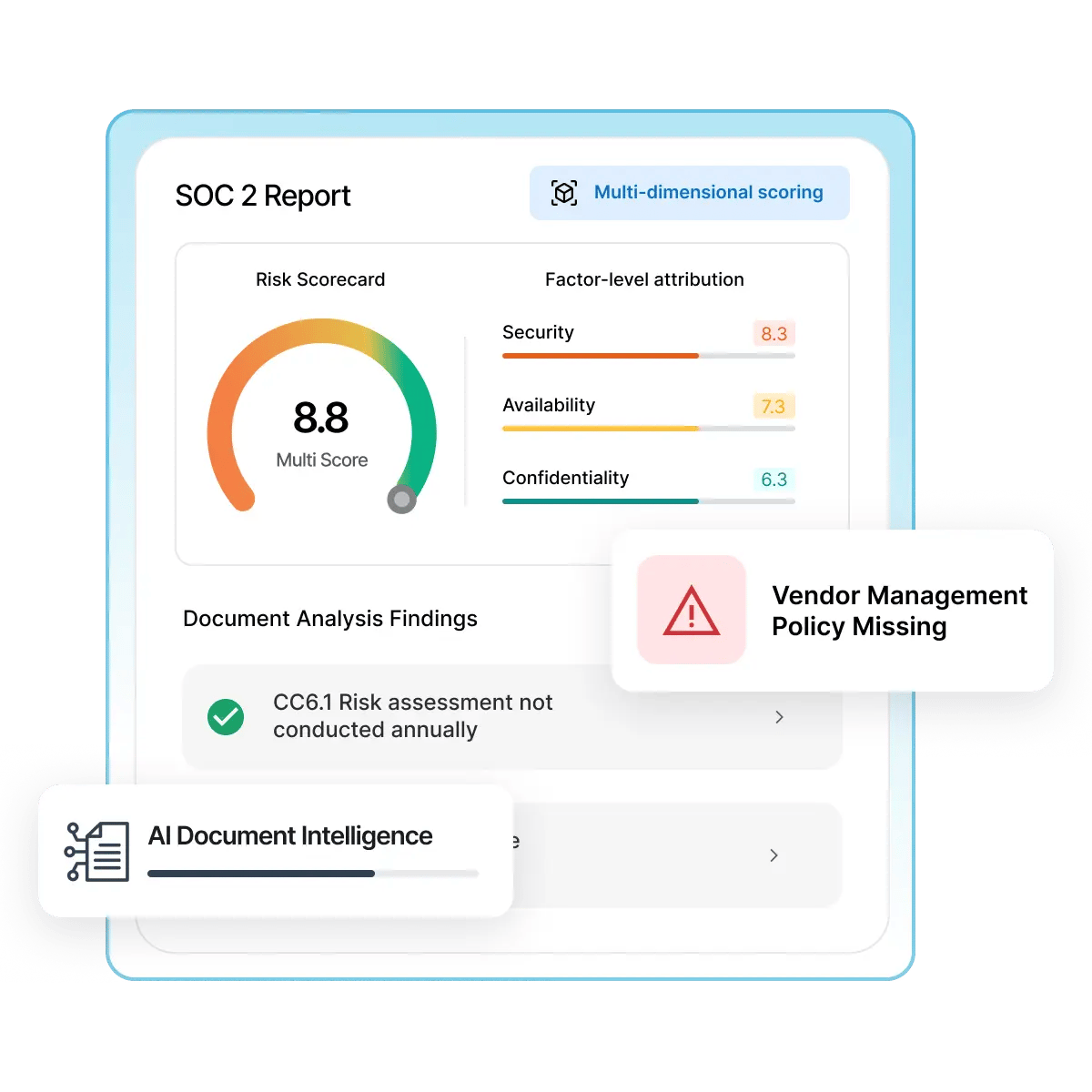
AI document intelligence
.png?width=19&height=19&name=Vector%20(8).png)
Multi-dimensional scoring
Review Compliance Faster
ComplyScore® scans your vendors' SOC 2 reports, policies, and certificates to flag missing controls, check response consistency, and auto-suggest remediations. You get multi-dimensional risk scores with transparent factor-level attribution for audit defense.

Your team completes assessments in <10 days vs. the industry average of 30-45 days.
.png?width=21&height=19&name=Vector%20(13).png)
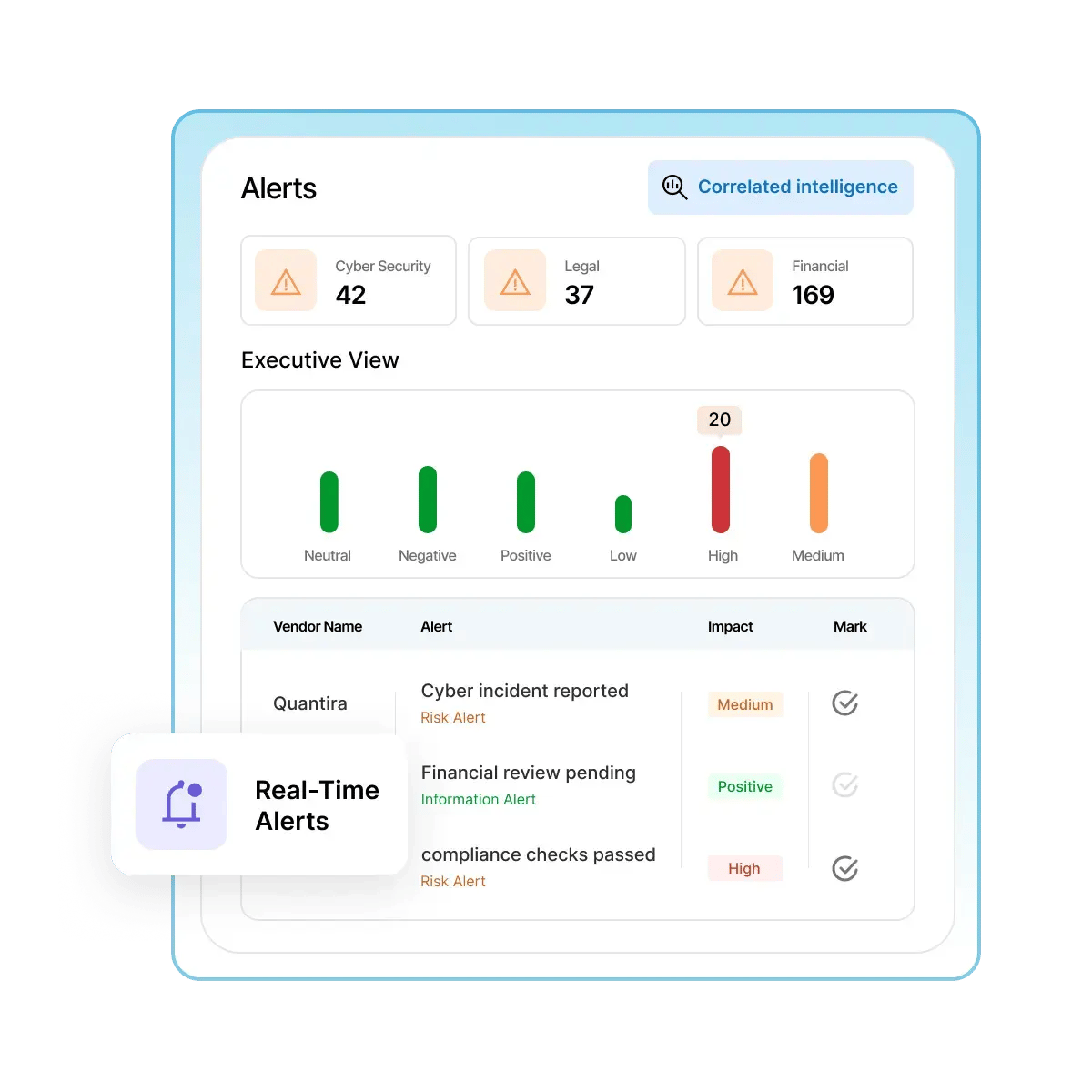
Real-time alerts
.png?width=20&height=19&name=Vector%20(10).png)
Correlated intelligence
Monitor Continuously
Pull intelligence from D&B, RiskRecon, SecurityScorecard, Shodan, and more to detect meaningful risk shifts. ComplyScore® correlates signals, removes noise, and routes material risks as work items with SLAs and auto-escalation.
Your team achieves >90% adherence vs. the industry avg of 50-65%.
.png?width=19&height=19&name=Vector%20(11).png)
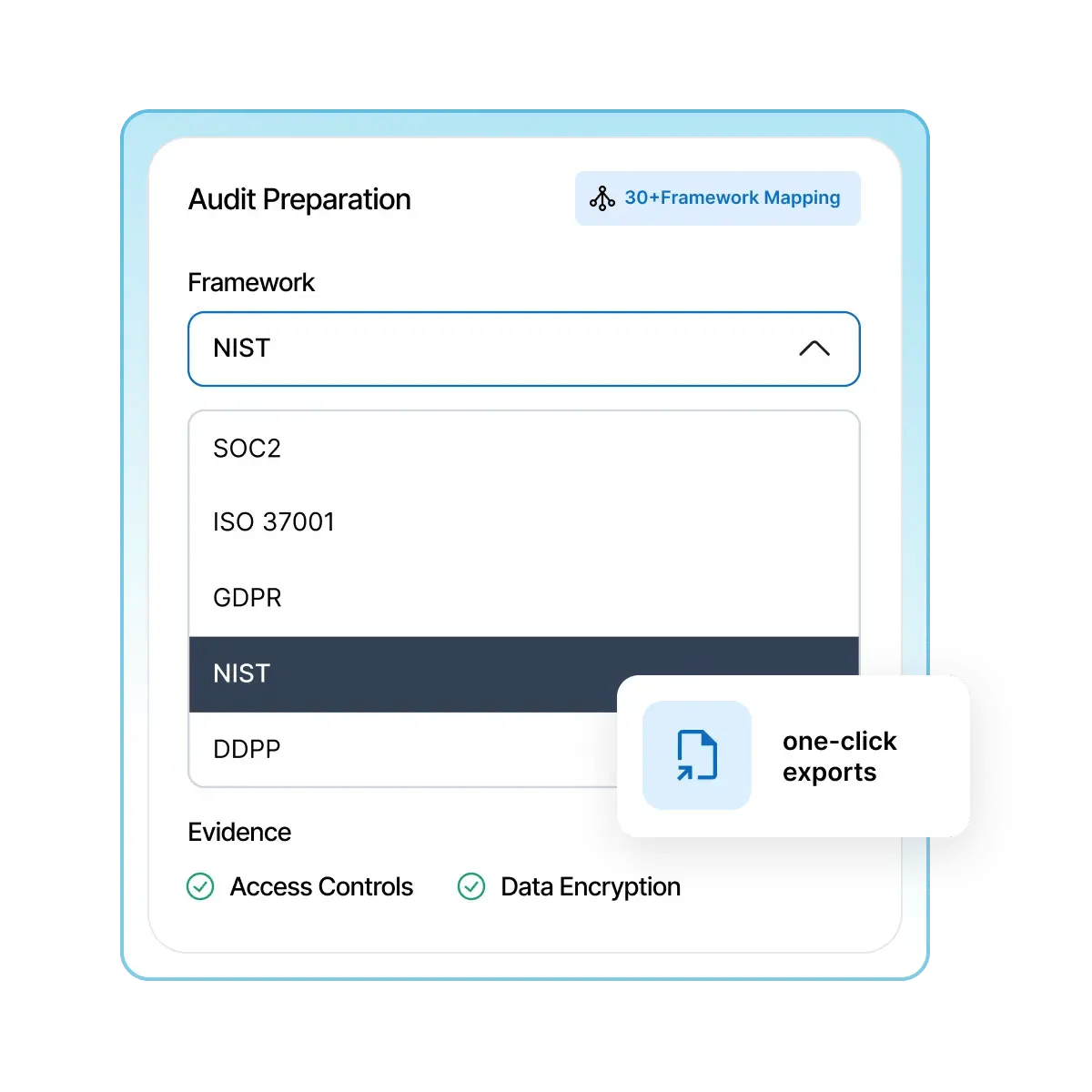
30+ framework mappings
.png?width=19&height=19&name=Vector%20(12).png)
One-click exports
Pass Audits On Demand
Your controls auto-map to HIPAA, SOC 2, ISO 27001, GDPR, NIST, DPDP as you execute assessments. Export framework-aligned evidence packs in seconds. Your audit preparation effort drops by 40% through automated mapping.

You achieve 2-3X faster compliance report readiness compared to industry average.
Transform Your TPRM Program with AI
.svg)
Conduct Risk-Based Due Diligence
Right-size assessments based on vendor criticality and data exposure
.svg)
Accelerate Vendor Response Times
Reduce back-and-forth with collaborative assessment workspaces
.svg)
Integrate AI TPRM with Your Existing Stack
Connect risk feeds, GRC systems, and enterprise applications seamlessly
.svg)
Gain Real-Time
Risk Visibility
Give leadership live KPIs and drill-through access to evidence
.svg)
Manage
Vendor Lifecycle
End-to-End
Govern vendors from contract signature through offboarding
Proven Results Across Industries
Trusted partner to market-leading brands






Atlas far exceeds our requirements...
One of the key differentiators between Atlas and other governance, risk and compliance and 3rd party risk management tools is the ease of use of the Atlas solutions. Also from a total cost of ownership perspective, Atlas far exceeds those requirements in terms of being very cost efficient in delivering all this.
ComplyScore is highly responsive and adaptable
ComplyScore is highly responsive and adaptable to our evolving processes and requirements, proving to be a trusted partner at every step. Their security analysts were knowledgeable, flexible, and delivered exceptional services that consistently exceeded our expectations.
My experience has been largely positive
I have been using ComplyScore for several months and my experience has been largely positive. The platform provides comprehensive solutions for compliance management and streamlines our operations efficiently.
As our business grew across geographies
As our business grew across geographies, we needed a more scalable approach to vendor lifecycle management. ComplyScore® provides the governance, flexibility & visibility to support our global operations while strengthening compliance and risk management across our vendor ecosystem.
Trusted by Industry Leaders for AI TPRM

Representative Vendor | Listed in 2025 Market Guide for TPRM Technology Solutions

Active partner member of the Third Party Risk Association
