ComplyScore® Launches World’s First Headless TPRM, Bringing Conversational AI to Compliance Management. 









.png?width=387&height=387&name=Platform%20(1).png)




































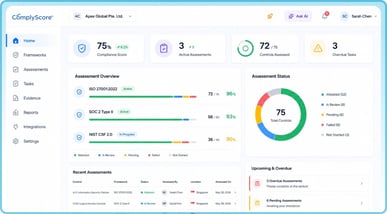
ComplyScore® › Templates › NESA Cybersecurity Vendor Risk Management Template
Template
NESA Cybersecurity Vendor Risk Management Template
Assess, monitor, and escalate critical infrastructure vendor risk against NESA standards in one framework
- Twelve-point critical infrastructure vendor assessment (NESA IA control alignment, data residency, incident response, and more)
- Annual/periodic monitoring checklist with findings and risk-level tracking
- Escalation trigger matrix with severity, timeline, and notification path
- Board notification flags for critical and high-severity events
- Owner and target completion fields on every assessment area
- Sub-contractor and supply-chain risk tracking
Download the NESA Cybersecurity Vendor Risk Management Template

By submitting this form, you consent to Atlas Systems sending you marketing communications in accordance with the privacy policy.
If a vendor touches a designated critical or government information asset, NESA expects more than a one-time security review. This template covers the full lifecycle: a twelve-point vendor assessment against NESA's Information Assurance Standards, an annual monitoring checklist to catch what's changed since onboarding, and an escalation matrix that tells you exactly what triggers a two-hour notification versus a five-day remediation window. It also tracks sub-contractor risk, since a vendor's supply chain is usually where critical infrastructure exposure hides.
If a vendor touches a designated critical or government information asset, NESA expects more than a one-time security review. This template covers the full lifecycle: a twelve-point vendor assessment against NESA's Information Assurance Standards, an annual monitoring checklist to catch what's changed since onboarding, and an escalation matrix that tells you exactly what triggers a two-hour notification versus a five-day remediation window. It also tracks sub-contractor risk, since a vendor's supply chain is usually where critical infrastructure exposure hides.
Why consistency matters
Vendor risk assessment is foundational to everything downstream: tiering decisions, monitoring priorities, remediation focus, board reporting. If your assessment is ad-hoc, everything else is unreliable.
A solid assessment framework gives you:
- Comparable vendor scores - actually compare vendors against each other
- Audit-ready documentation - show auditors exactly how you assessed and why
- Faster cycles - standardized questions mean less customization
- Clear escalation triggers - when a score drops, you know what to do
How to use this:
You have two paths forward. You can build this yourself using the template. Start by customizing it for your specific industry and risk profile, then send it to vendors to complete. As responses come in, you'll track them in a spreadsheet and score them manually. It takes time and effort to coordinate, but you own the entire process and can adjust it whenever you need.
Alternatively you can use ComplyScore®.
Instead of vendors filling out spreadsheets and you doing manual scoring, vendors answer once in the platform and scoring happens automatically. Risk trends appear in real-time, so you're not waiting weeks for data. Every vendor gets assessed using the exact same framework without shifting criteria or inconsistencies.
And here's the key difference: monitoring continues automatically without you having to rebuild the framework every quarter.