ComplyScore® Launches World’s First Headless TPRM, Bringing Conversational AI to Compliance Management. 










.png?width=387&height=387&name=Platform%20(1).png)






































ComplyScore® › Templates › PDPL Compliance Template
Template
PDPL Compliance Template
Stop tracking PDPL obligations in scattered spreadsheets with this vendor assessment template
- Data Controller / Processor information section
- 11-obligation compliance table mapped to PDPL articles
- Security safeguards checklist under Article 20
- Cross-border data transfer checklist under Articles 22–23
- Compliance status and risk-level tracking per obligation
- DIFC/ADGM applicability flag to avoid regulatory mismatch
Download the PDPL Compliance Template

By submitting this form, you consent to Atlas Systems sending you marketing communications in accordance with the privacy policy.
Every vendor touching UAE personal data creates PDPL exposure, and most teams find out how much only after something goes wrong. This template fixes that. It maps Federal Decree-Law No. 45 of 2021 to eleven concrete obligations — consent, purpose limitation, data subject rights, retention, and breach notification — each tied to the article that governs it. A dedicated section covers Article 22–23 cross-border transfer requirements, and a built-in flag tells you when a vendor actually falls under DIFC or ADGM instead of federal PDPL. Score each obligation, attach evidence, assign a risk level, and you have an audit trail instead of a guess.
Every vendor touching UAE personal data creates PDPL exposure, and most teams find out how much only after something goes wrong. This template fixes that. It maps Federal Decree-Law No. 45 of 2021 to eleven concrete obligations — consent, purpose limitation, data subject rights, retention, and breach notification — each tied to the article that governs it. A dedicated section covers Article 22–23 cross-border transfer requirements, and a built-in flag tells you when a vendor actually falls under DIFC or ADGM instead of federal PDPL. Score each obligation, attach evidence, assign a risk level, and you have an audit trail instead of a guess.
Why consistency matters
Vendor risk assessment is foundational to everything downstream: tiering decisions, monitoring priorities, remediation focus, board reporting. If your assessment is ad-hoc, everything else is unreliable.
A solid assessment framework gives you:
- Comparable vendor scores - actually compare vendors against each other
- Audit-ready documentation - show auditors exactly how you assessed and why
- Faster cycles - standardized questions mean less customization
- Clear escalation triggers - when a score drops, you know what to do
How to use this:
You have two paths forward. You can build this yourself using the template. Start by customizing it for your specific industry and risk profile, then send it to vendors to complete. As responses come in, you'll track them in a spreadsheet and score them manually. It takes time and effort to coordinate, but you own the entire process and can adjust it whenever you need.
Alternatively you can use ComplyScore®.
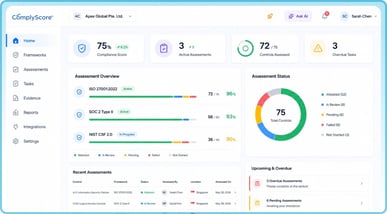
Instead of vendors filling out spreadsheets and you doing manual scoring, vendors answer once in the platform and scoring happens automatically. Risk trends appear in real-time, so you're not waiting weeks for data. Every vendor gets assessed using the exact same framework without shifting criteria or inconsistencies.
And here's the key difference: monitoring continues automatically without you having to rebuild the framework every quarter.