





.webp?width=387&height=387&name=Medtech%20Breakthrough%20Award%20Winner%20(1).webp)



























Provider Lifecycle Management
%20-%20-Provider-lifecycle-management%20-%20-Provider-data-validation%20(1).png?width=800&name=Service-Detail-Page-(what-we-do)%20-%20-Provider-lifecycle-management%20-%20-Provider-data-validation%20(1).png)
Summarize This Article With
The health industry loses billions of dollars annually due to improper data management and delayed reimbursements. Claim denial rates have significantly increased in recent years, and hospitals lose $262 billion annually.
Streamlined provider data exchange improves patient care and optimizes healthcare delivery by ensuring clinicians access all relevant information. In this blog, we take a deeper look at provider data exchange to help you see why it’s vital for your organization.
Definition of Provider Data Exchange
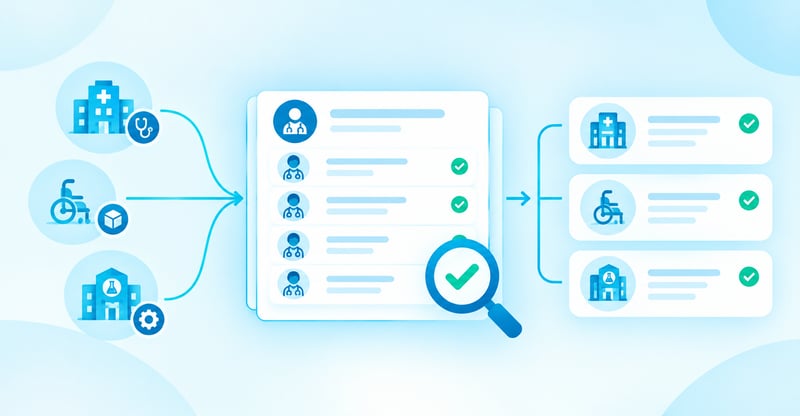
Provider data exchange is the secure sharing of healthcare provider information, such as specialties, credentials, and practice details, between providers, payers, and other stakeholders. The different entities also share administrative data like patient records, treatment notes, and claims. Provider data exchange software minimizes administrative burdens to improve care coordination and enhance patient outcomes.
Importance of Provider Data Exchange in Healthcare
Provider data exchange ensures seamless care coordination, efficient claims processing, and regulatory compliance. Payers have timely access to accurate provider and patient information and make informed decisions. Seamless data sharing on treatments, claims, and outcomes promotes value-based care.

Provider data exchange software like PRIME PPC can reduce claim denials by 95% and administrative overhead by 50%.
The Drawbacks of Traditional Provider Data Exchange
Traditional provider data exchange methods are inefficient and prone to errors. Manual data entry, inconsistent formats, and slow updates lack interoperability, leading to administrative bottlenecks, claim denials, and care delays. Traditional methods also make patients pay the price. A delay in transferring records could lead to misdiagnosis, and patients end up paying both physically and financially.
The existing traditional methods are also more susceptible to security risks, as unsecured files or physical documents can be lost, stolen, or mishandled. This increases operational costs, affects care coordination, and compromises patient outcomes.

The Role of Provider Data Exchange in Healthcare
Provider data exchange in healthcare ensures accurate, real-time sharing of provider information across payers, providers, and regulatory bodies. It streamlines compliance, provider credentialing, claims processing, and network management, reducing administrative inefficiencies. Care coordination is seamless; patients access the right healthcare provider solutions, which improves healthcare outcomes.
Key Technologies Enabling Provider Data Exchange
Lost records and delays can be frustrating and hinder operations in healthcare institutions. Modern data exchange technologies, like secure APIs and standardized data formats like FHIR do away with this. They ensure payers and providers seamlessly share accurate, up-to-date information, reducing administrative burdens and improving patient outcomes. Let’s explore the key technologies driving provider data exchange.
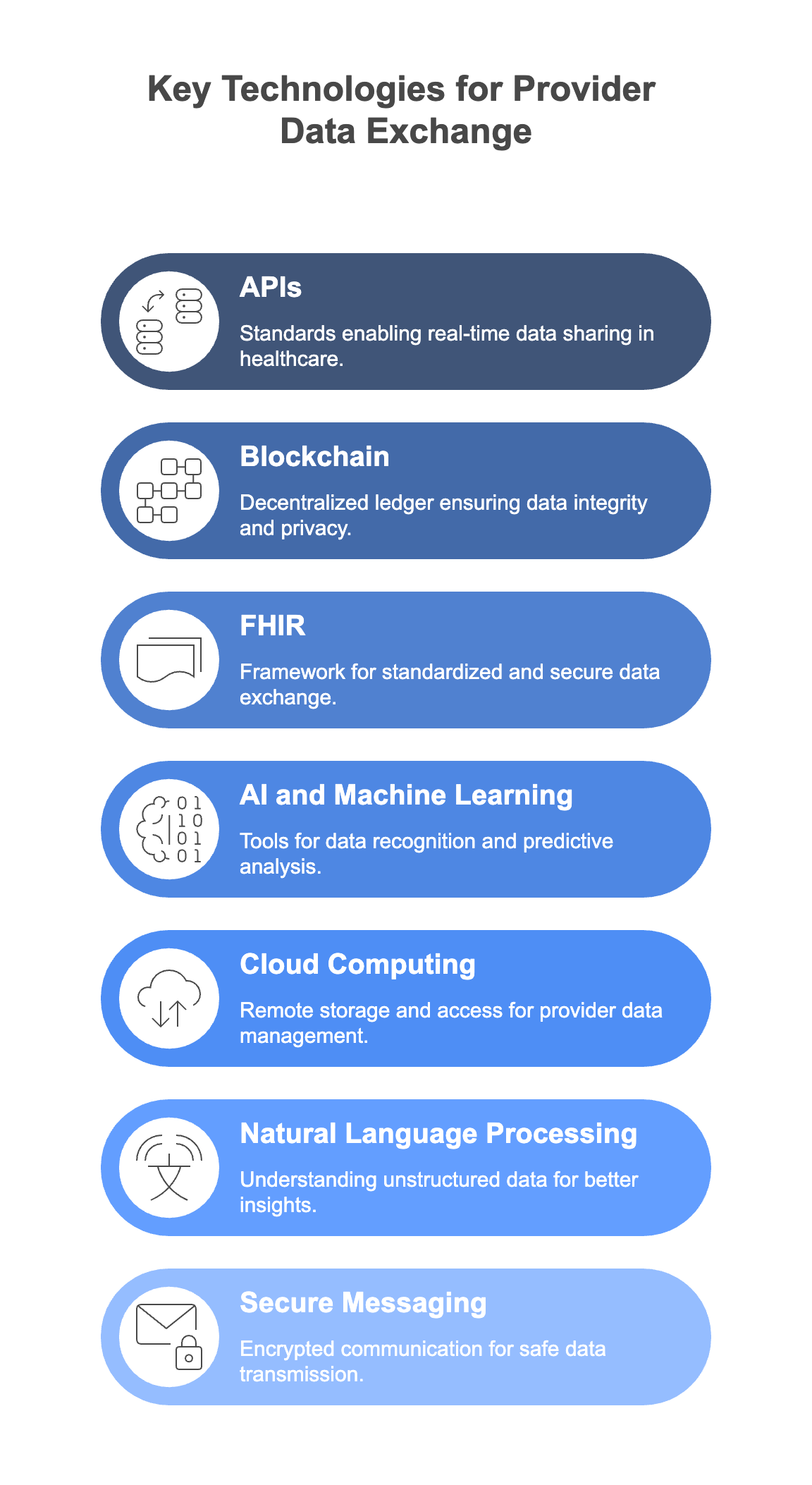
- APIs (Application Programming Interfaces): Standards like HL7 FHIR and X12 allow different healthcare systems, such as EHRs, payer systems, and provider networks, to communicate and share data in real time according to defined rules and protocols.
- Blockchain technology: The technology creates a decentralized and transparent ledger, allowing authorized entities to access and share patient information while maintaining data integrity and privacy.
- FHIR (Fast Healthcare Interoperability Resources): Uses modern web technologies like RESTful APIs to establish a standardized framework that ensures seamless and secure data exchange between different systems.
FHIR-based roster management is the operational layer that makes bi-directional data exchange usable in practice, moving roster updates, terminations, and additions between provider groups and health plans without manual file transfers. - AI and Machine Learning: AI can automatically recognize and modify data, enabling seamless exchange between different software. Machine learning tools can analyze historical data to identify patterns and trends, helping healthcare stakeholders predict future outcomes and make informed decisions.
- Cloud Computing: Enables secure and scalable storage and access to provider data management through remote servers, enhancing collaboration and streamlining workflows across different locations and organizations. There’s no need for extensive on-premises hardware.
- Natural Language Processing (NLP): Makes computers understand and process unstructured data, like clinical notes, for the extraction of key insights, information standardization, and improved communication, ultimately leading to better patient care.
- Secure messaging systems: These provide a compliant, encrypted channel for safe provider data transmission, ensuring confidentiality and security and facilitating efficient communication between healthcare professionals.
Key Components of Provider Data Exchange
The key features of provider data exchange software ensure information accuracy, security, and efficiency. Here are the components that enable smooth and reliable provider data transmission.
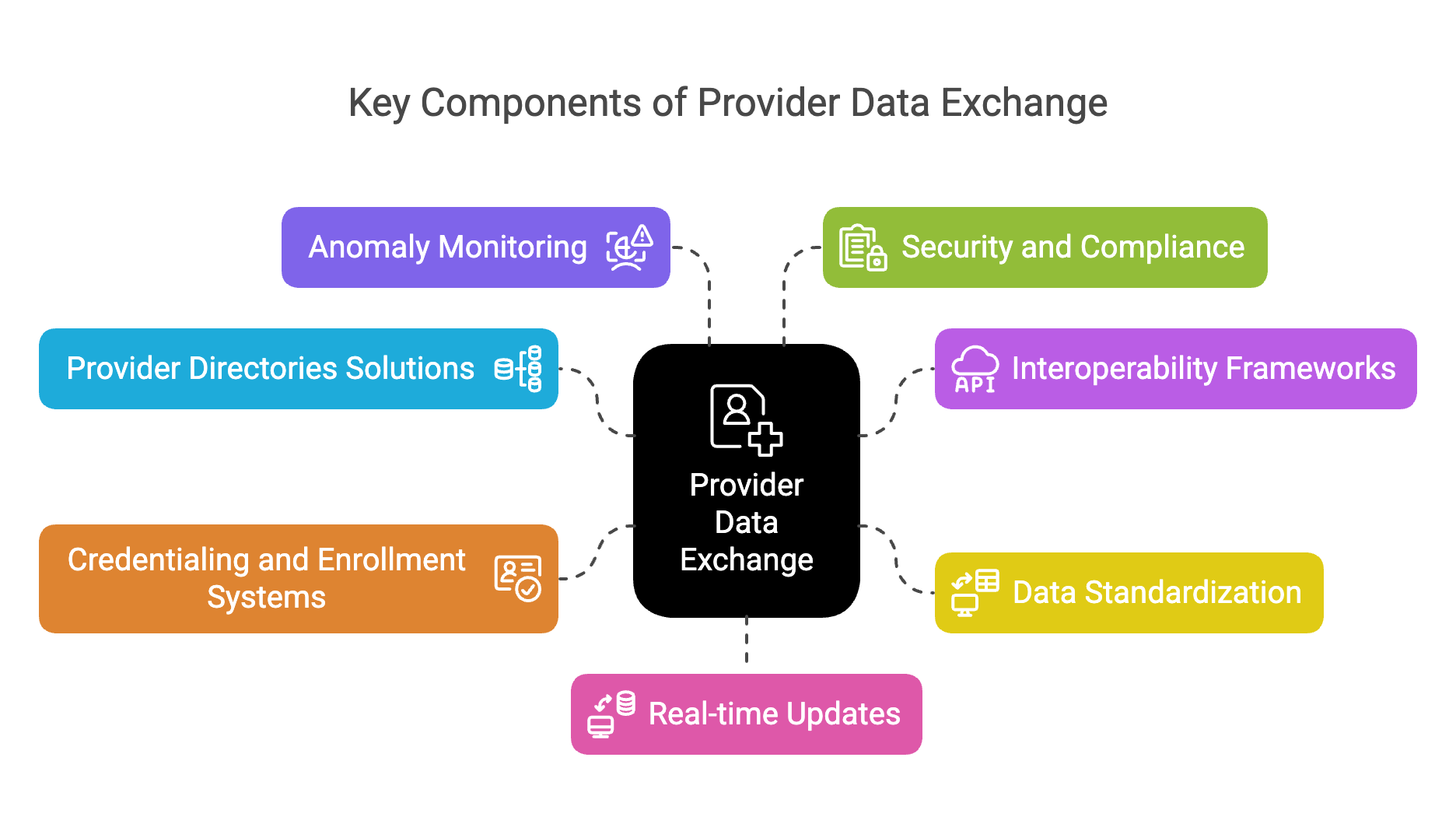
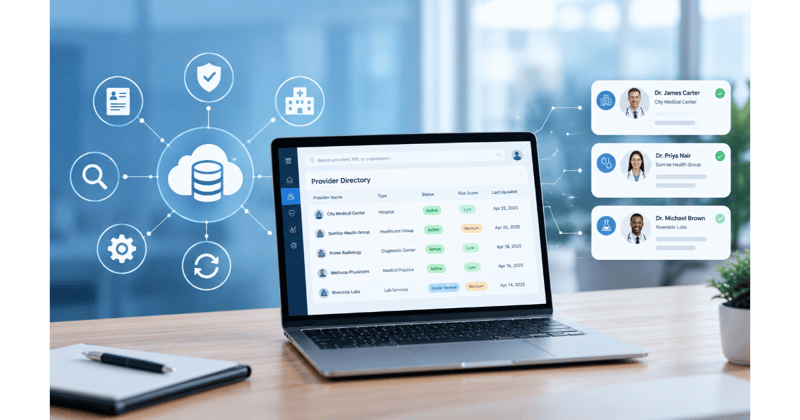
- Provider directories solutions: These centralized databases store and manage provider data, ensuring it is up-to-date and accessible.
- Interoperability frameworks: APIs, HIEs, and EHR integrations facilitate seamless data sharing between healthcare systems.
- Data standardization: Using formats like X12 and HL7 FHIR ensures provider data is formatted consistently across systems for seamless interoperability.
- Credentialing and enrollment systems: Credentialing and enrollment validate providers’ qualifications, allowing them to join insurance networks and receive payment for services
- Anomaly monitoring: AI-powered systems detect and prevent errors, fraud, and inconsistencies in real time. They can identify irregularities in provider credentials, billing patterns, and data submissions
- Security and compliance: Tracks adherence to regulatory requirements and industry standards like HIPAA to protect provider data and prevent penalties. The software also uses encryption, role-based access control, and multi-factor authentication for secure and compliant data sharing
- Real-time updates: Automates updates to provider information (such as credentials, network participation, or availability) in real time to prevent delays and ensure accuracy
Best Practices for Effective Provider Data Exchange
Successful provider data exchange has many moving parts, and businesses need a strategic approach to ensure data remains accurate, secure, and accessible. Healthcare providers and payers must apply these best practices to reduce errors and streamline operations.
- Adopt data standardization: Adopting industry-standard formats like X12, HL7 FHIR, JSON, and XML ensures providers, payers, and regulators exchange information without compatibility issues. Lack of standardization leads to errors, misinterpretations, and inefficiencies
- Automate data entry and updates: AI, Machine Learning, Robotic Process Automation, and other modern technologies can reduce administrative burdens and ensure timely updates. Manual data entry is time-consuming and prone to human error
- Enhance security: Strong encryption, access controls, and multi-factor authentication prevent unauthorized access and safeguard sensitive provider data. AI algorithms can detect and mitigate potential breaches
- Monitor compliance: Non-compliance can result in hefty fines, legal action, and reputational damage. Payers and providers must keep up with evolving regulations and state-specific credentialing mandates to ensure data exchanges follow legal standards.
- Centralize data management: A cloud-based data repository makes it easier to manage, update, and share data across payers, providers, and regulatory entities. There’s no risk of outdated or conflicting data, which can lead to claim denials or wrong referrals
- Leverage interoperability tools: Interoperability tools like APIs allow different healthcare systems (such as EHRs, HIEs, and payer systems) to communicate seamlessly. They provide standardized ways to share complex healthcare data, ensuring it is interpreted and utilized effectively
- Perform regular audits: Audits and data quality checks help maintain the accuracy and integrity of provider data. They ensure issues are rectified before they impact patient care or lead to compliance violations.
- Optimize continuously: Healthcare payers and providers should use machine learning and predictive analytics tools to identify inefficiencies in provider data exchange processes and refine them over time
Challenges and Barriers to Effective Provider Data Exchange
The challenges in healthcare provider data exchange significantly affect healthcare delivery and compliance. They must be addressed for healthcare institutions to maintain the integrity of their operations. Here are the top challenges:
- Inaccurate data: Incorrect or outdated information can lead to misdiagnoses, incorrect treatments, patient care delays, and billing errors. Healthcare providers’ data has a dynamic nature, and constant vigilance ensures it stays accurate
- Lack of standardization: Many health information systems use different formats (HL7, X12, JSON), leading to non-interoperable data. Lack of universal standards hinders integration and increases costs
- Privacy and security issues: Protecting sensitive provider data while complying with industry regulations like HIPAA requires robust encryption and other security measures, which can be challenging to implement. Healthcare data is highly sensitive, and security breaches can lead to serious consequences
- High implementation costs: Implementing automated provider data exchange systems can be expensive and resource-intensive, which is difficult for smaller or local healthcare providers
Read more: Overcoming Provider Data Management Challenges
The Solution: PRIME PPC by Atlas Systems Ensures Streamlined Provider Data Exchange
Inefficient provider data exchange impacts accuracy and compliance. PRIME PPC by Atlas Systems streamlines provider data exchange by offering an FHIR-compatible platform that automates the submission and management of medical provider data.
Organizations that have installed PRIME PPC have seen a 95% reduction in claim denials and a 50% reduction in administrative overhead.
PRIME PPC simplifies roster management by centralizing provider data in a single platform, ensuring it remains accurate and compliant. The platform also automates provider enrollment for faster approvals and network participation. Data exchange is seamless as PRIME PPC integrates with healthcare payer solution systems via FHIR-compatible APIs for real-time data synchronization. Automated credential verification, renewal tracking, and payer-specific compliance ensure credentialing documents are complete and up-to-date.
What PRIME PPC by Atlas Systems offers:
- 20+ years of healthcare compliance expertise
- Seamless integrations
- Experience managing 1,000s of providers and plans
- 85% faster roster updates with 95% data accuracy
Reduce your administrative burdens and improve efficiency with provider data exchange software that’s designed just for you. Try PRIME PPC by Atlas Systems today. Contact us for a demo.
FAQs about Provider Data Exchange
1. How can AI and automation enhance provider data exchange processes?
When used together, AI and automation boost the interoperability, accuracy, and efficiency of provider data exchange processes. AI supports better decision-making by unlocking insights from large datasets. Automation tools facilitate migration between legacy and modern systems and streamline data integration.
2. How do hospitals and insurance companies share provider data securely?
Hospitals and insurance companies use technologies like Health Information Exchanges (HIEs), APIs, and blockchain to share provider data securely. Encryption methods protect data in transit, while multi-factor authentication and role-based access control restrict unauthorized access.
3. How does provider data exchange impact patient care and outcomes?
Efficient provider data exchange ensures accurate and current provider information, reducing referral delays and improving care coordination. Claims are processed quickly, and providers can focus on patient care instead of administrative tasks. Ultimately, this leads to better clinical decisions and enhanced patient experiences.
4. What is the role of APIs in provider data exchange?
APIs (Application Programming Interfaces) enable secure and real-time communication between healthcare systems (like EHRs), payers, and providers. They ensure secure, real-time sharing of patient information, improving care coordination and operational efficiency.
5. How can small healthcare providers participate in provider data exchange networks?
They can use standardized, affordable solutions like cloud-based EHR systems, APIs that integrate with larger networks, or health information exchanges (HIEs). Many HIEs offer affordable subscription models customized for smaller practices and provide shared infrastructure for data transmission. Some government-supported initiatives, like the Trusted Exchange Framework and Common Agreement (TEFCA), promote fair access to data exchange networks.
%20(1).jpg)

Related Reading
Provider Lifecycle Management
Automated Provider Data Management: A Practical Playbook
Read the blog →
Provider Lifecycle Management
The Complete Guide to Provider Data Management Automation
Read the blog →
Provider Lifecycle Management
Why Behavioral Health Providers Are the Hardest AWT Surveys to Close
Read the blog →
Provider Lifecycle Management
Best Provider Network Management Platforms for Payers and Providers in 2026
Read the blog →
Provider Lifecycle Management