Cyber Resilience Act Compliance for Third-Party Risk Management
Automated supplier security assessments, component vulnerability tracking, and coordinated disclosure workflows for EU cybersecurity compliance.
Cyber Resilience Act Compliance with ComplyScore®
The EU's Cyber Resilience Act (CRA) requires manufacturers of products with digital elements to ensure cybersecurity throughout the supply chain. CRA mandates supplier due diligence, vulnerability handling processes, and coordinated disclosure proving systematic oversight of component and service provider relationships.
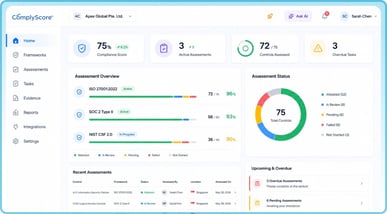
ComplyScore® automates supplier security assessments aligned to CRA requirements, maintains continuous monitoring of component vulnerabilities, and generates audit-ready documentation proving appropriate cybersecurity measures throughout the product lifecycle.
How ComplyScore® Accelerates CRA Compliance
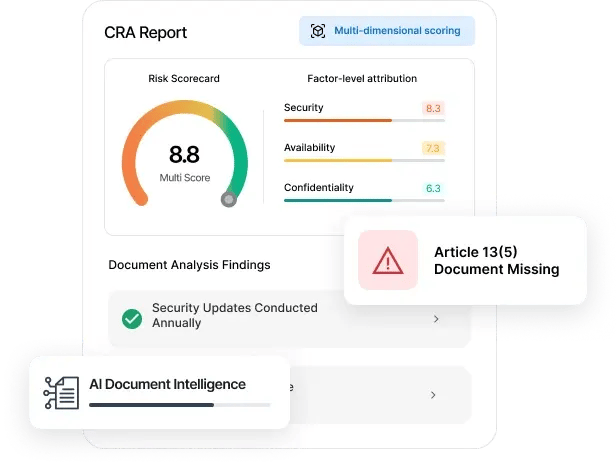
Article 13(5): Supply Chain Cybersecurity Due Diligence
CRA requires manufacturers to perform due diligence on suppliers and components ensuring cybersecurity properties throughout the supply chain.
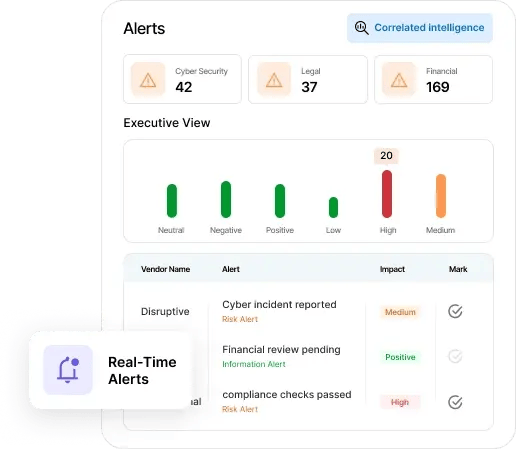
- Supplier security assessments evaluating component providers and development service relationships
- Component risk profiling tracking third-party software libraries, hardware components, and integrated services
- Security baseline validation ensuring suppliers meet minimum cybersecurity requirements for critical components
- Supplier certification tracking maintaining records of component security attestations and compliance documentation
Article 11: Vulnerability Handling
CRA mandates manufacturers to establish processes for handling vulnerabilities in their products, including those originating from suppliers or components.
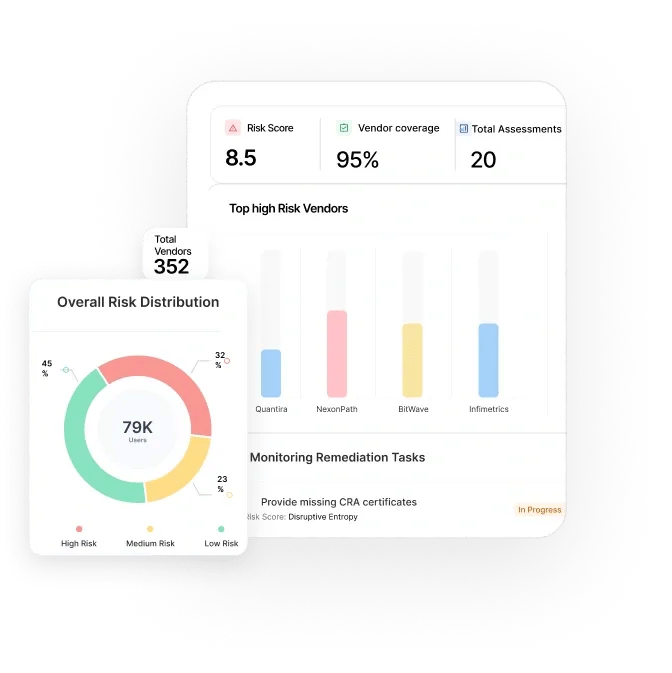
- Supplier vulnerability disclosure coordination managing component provider security advisories and patches
- Component dependency tracking identifying products affected by third-party vulnerability disclosures
- Coordinated disclosure workflows routing supplier vulnerabilities through internal security review and customer notification
- Remediation timeline management ensuring compliance with CRA vulnerability response timeframes
Article 10(2): Security Updates Throughout Product Lifecycle
CRA requires manufacturers to provide security updates addressing vulnerabilities, including those in third-party components and dependencies.
- Component update tracking monitoring supplier security patches and dependency version releases
- Update distribution workflows coordinating supplier patches with product security update releases
- End-of-support coordination managing component lifecycle against product support commitments
- Customer notification automation generating security update advisories when supplier patches are integrated
Audit-Ready Documentation
CRA market surveillance authorities require evidence proving systematic supplier due diligence and vulnerability handling throughout the product lifecycle.
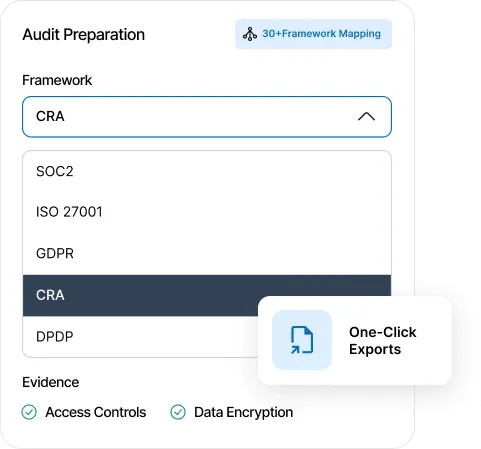
- Centralized evidence repository mapping supplier assessments to CRA essential cybersecurity requirements
- Complete audit trails documenting component security validation and vulnerability response activities
- One-click compliance packs generating supplier risk summaries and vulnerability handling reports for market surveillance
Built for CRA and EU Product Security Regulations
ComplyScore® integrates with your product security and supply chain platforms supporting multiple EU regulatory frameworks simultaneously.
Every supplier assessment includes complete audit trails with timestamps, component security validation, and vulnerability coordination workflows. Support for GDPR, NIS2, and other EU regulations means one platform handles multi-jurisdiction product security compliance.
Connects across your GRC and ISMS tools
- GRC Platforms: ServiceNow, Archer, LogicGate, MetricStream
- Vulnerability Management: Integration with CVE databases, supplier security advisories, and SBOM tools
- Security Monitoring: SecurityScorecard, RiskRecon for continuous supplier security posture tracking
Results Organizations Achieve with ComplyScore
4-6X
Faster supplier assessments
90%+
Component coverage
40%
Less audit prep
Continuous
Vulnerability tracking
FAQs
Does the Cyber Resilience Act require supplier or component risk assessments?
Yes. Article 13(5) requires manufacturers to exercise due diligence when integrating third-party components, including open-source components, so those components don't compromise the product's cybersecurity. This applies at market placement and continues throughout the support period.
What should you check before sourcing a component from a supplier?
Confirm the supplier can identify known vulnerabilities in what they provide, commit to security updates for as long as your product's support period requires, and cooperate under Article 13(6), which obligates you to report any flaw you find back to the component's own maker.
How do you get visibility into a supplier's vulnerability history before integrating its component?
Request the supplier's SBOM, known-vulnerability disclosures, and past patch turnaround times before you integrate anything. CRA due diligence under Article 13(5) is an ongoing obligation, so this evaluation should continue as continuous monitoring throughout the supplier relationship rather than a single intake check.
Should all component suppliers get the same level of CRA risk scrutiny?
No. Weight your scrutiny toward suppliers providing components for important or critical products under Annex III and IV, since those carry stricter conformity requirements. Suppliers of components in default-risk products can generally receive lighter, less frequent due diligence.