Consider this scenario - A financial services firm discovered their document processing vendor had been training its AI model on customer data, including Social Security numbers and transaction details. The vendor's AI service agreement never mentioned training data usage. Six months later, that model was breached. The data wasn't encrypted at rest because "it was just training data."
This scenario illustrates a growing category: AI third-party risk. AI introduces threats in vendor relationships that traditional security frameworks and third-party cyber risk assessments weren't designed to catch.
The Dual Nature of AI Third-Party Cyber Risk
When we talk about AI third-party cyber risk, we're actually discussing two distinct but interconnected threats.
- The first is external: attackers weaponizing AI to compromise your vendors faster and at greater scale.
- The second is internal: your vendors adopting AI technologies that introduce data leakage, model vulnerabilities, or compliance gaps into your ecosystem.
AI as an attack vector against your vendors
Attackers now use AI-powered tools to accelerate reconnaissance, craft hyper-personalized phishing campaigns, and develop exploits at speeds that outpace traditional defenses. AI-generated deepfakes have proven particularly effective in recent attacks against finance teams.
Your vendors face these evolving threats, potentially with weaker defenses than your organization maintains. The speed and sophistication of AI-enabled attacks compress the time available to detect and respond to vendor compromises.
AI as a risk within vendor products and services
The quieter risk emerges when vendors incorporate AI into their offerings without adequate security, testing, or transparency. Many organizations are rapidly deploying AI capabilities without establishing proper governance frameworks, a pattern that extends to vendor ecosystems where speed to market often takes priority over security considerations.
Traditional security assessments like SOC 2 reports and ISO 27001 certifications don't typically evaluate AI-specific vulnerabilities like model extraction, data poisoning, or prompt injection. This creates blind spots in vendor risk programs.
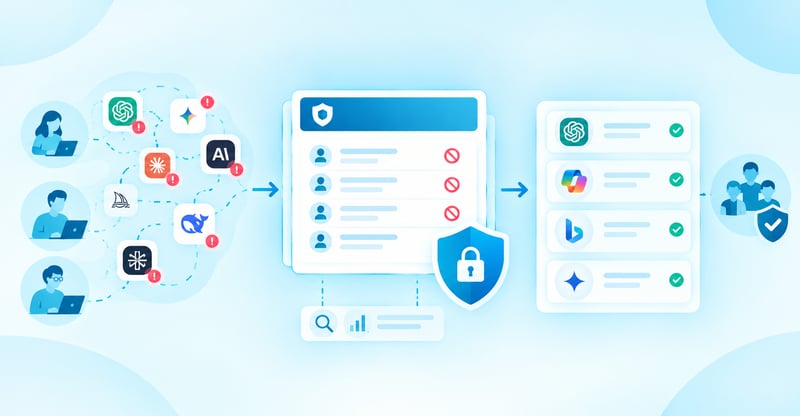
Vendor AI Adoption: Hidden Risks in Your Supply Chain
Understanding the specific AI vendor risks helps you ask better questions during due diligence.
Data privacy and sovereignty concerns
When vendors use AI, critical questions arise: What data trains these models? Where does training occur? Is your data isolated from other customers' data? Many vendors train AI models on customer data to "improve service quality" without explicit consent or adequate safeguards.
The European Union's AI Act, which took effect in stages starting in 2024, specifically addresses data governance for AI systems. High-risk AI applications, including those processing employment data or making credit decisions, face strict requirements. If your vendors use AI in these contexts and serve EU customers, their compliance gaps become your compliance gaps.
AI model security vulnerabilities
AI systems introduce attack surfaces that traditional applications don't have. Model poisoning attacks manipulate training data to corrupt AI behavior. Prompt injection attacks trick AI systems into revealing sensitive information or bypassing security controls. Model inversion techniques can potentially reconstruct training data from model outputs.
A practical example: Research has demonstrated that chatbots can be manipulated through carefully crafted prompts to leak information they were explicitly designed to protect. If your vendor's customer service chatbot operates on similar technology, your data might be vulnerable to extraction through these techniques.
Fourth-party AI dependencies
Most vendors don't build AI from scratch. They integrate AI services from providers like OpenAI, Anthropic, or Google. This creates concentration risk: many of your vendors might depend on the same AI infrastructure.
When your document processing vendor, customer service platform, and fraud detection system all use the same large language model API, a single point of failure creates correlated risk across your entire vendor ecosystem.
Lack of AI governance and testing
Most vendors aren't performing AI-specific security testing. When you ask "Do you conduct security testing?" they'll say yes, but that testing likely doesn't cover AI-specific threats like prompt injection, model extraction, or training data leakage.
A significant portion of third parties represent high-risk relationships, and proactive management of changing vendor capabilities can substantially improve risk outcomes. As vendors add AI capabilities, they're potentially moving into higher-risk categories without adequate controls.
Here are three questions to ask your AI-using vendors:
- Where does your AI train and infer data, and in which jurisdictions?
- What AI services or models do you depend on, and who provides them?
- How do you test AI systems for security vulnerabilities like prompt injection or model extraction?
Regulatory Spotlight: AI Vendor Oversight Requirements Emerging
Regulators globally recognize AI as a distinct risk category requiring specific oversight. Several regulatory developments from 2024-2025 address AI security risks in third parties:
EU AI Act: The AI Act requires conformity assessments for high-risk AI systems. If your vendors provide AI-powered services in categories like credit scoring or employment decisions and serve EU customers, you need to verify their compliance.
US SEC Guidance: The SEC's cybersecurity disclosure rules require disclosure of material cybersecurity risks and incidents. Material vendor AI incidents may trigger disclosure obligations.
NYDFS Cybersecurity Regulation: The New York Department of Financial Services updated its regulation to require covered entities to assess emerging vendor AI cybersecurity risks, including those related to new technologies like AI, in third-party service providers.
DORA (EU): The Digital Operational Resilience Act, which became fully applicable in January 2025, mandates continuous monitoring of critical third-party service providers, including monitoring for material system changes that could affect operational resilience.
These regulatory developments translate into practical requirements: vendor questionnaires must include AI-specific questions, due diligence needs to evaluate vendor AI governance maturity, and contracts should address AI usage rights, data handling, and liability.
See how AI-powered TPRM platform handles continuous vendor monitoring without manual effort.
Assessing AI Third-Party Cyber Risks in Your Ecosystem
Traditional vendor AI cybersecurity assessments weren't designed for AI. Here's a framework for incorporating AI risk evaluation into your TPRM program.
Discovery: Identify which vendors use AI
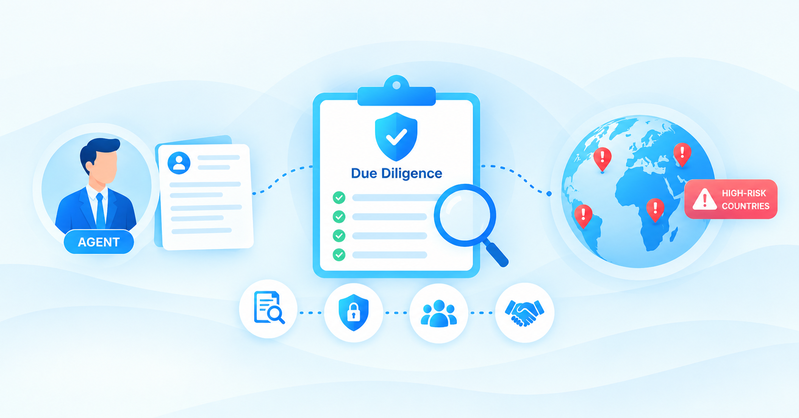
Update vendor questionnaires to explicitly ask: Does your solution incorporate AI, machine learning, or large language models? If yes, in what capacity? Do you rely on third-party AI services or models, and which ones? Where does AI training and inference occur geographically?
Data governance: Understand AI data practices
Assess their data practices: What data trains the AI? Do they have explicit permission to use your data for AI training? How is sensitive data protected in AI workflows? How do they prevent cross-contamination between customers' data?
Security controls: Evaluate AI-specific protections
Verify key controls: Has the AI system been tested against prompt injection, model poisoning, or adversarial inputs? How does the vendor sanitize AI inputs to prevent malicious prompts? Are AI outputs scanned for sensitive data leakage? Who can access, modify, or retrain AI models?
Transparency and explainability: Demand AI accountability
For high-risk decisions, AI reasoning should be traceable. Require that vendors disclose material changes to AI systems. Vendor contracts should preserve your right to conduct third-party AI security audits or receive detailed AI audit reports.
Regulatory alignment: Verify compliance for AI use cases
If the vendor's AI processes regulated data, verify they maintain AI-specific controls that address relevant regulations. Validate that the vendor maintains audit trails for AI processing activities.
Implementation tip: Start with your highest-risk vendors, i.e., those accessing sensitive data or providing critical services. Build AI assessment modules into existing questionnaires rather than creating a separate process.
Continuous Monitoring: Detect AI Risks in Real Time
AI systems evolve rapidly. A vendor might pass a point-in-time assessment but deploy new AI features or change AI providers between assessments. Continuous monitoring catches these changes.
Monitor for vendor AI cybersecurity incidents, new AI capability announcements, regulatory enforcement actions for AI violations, and vulnerabilities specific to AI frameworks your vendors use.
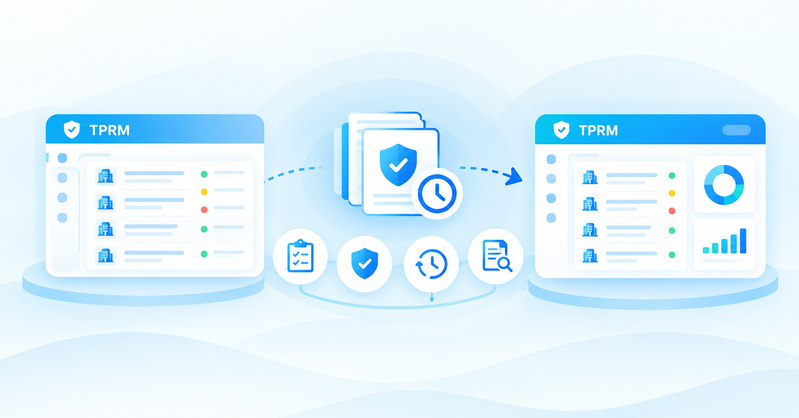
Modern TPRM platforms like ComplyScore® can automate much of this monitoring by ingesting vendor announcements, security advisories, and threat intelligence, then correlating these signals to your vendor inventory.
Building AI Risk Awareness into Vendor Contracts
Contracts need to evolve to address AI-specific risks. Key provisions to include:
AI disclosure requirements: Vendors must disclose all AI usage, including third-party AI dependencies, before contract signing and whenever material changes occur.
Data usage restrictions: Explicitly prohibit or carefully permit the vendor's use of your data for AI training, with specific safeguards.
Security commitments: Require AI-specific security controls, including adversarial testing, prompt sanitization, and output filtering.
Change notification: Material AI system changes require advance notification.
Liability and indemnification: Clarify liability when AI systems cause harm or make erroneous decisions.
Audit rights: Preserve your right to audit AI security controls and data handling practices.
Work with legal teams to create an AI addendum template that can be incorporated into new vendor contracts and negotiated into existing agreements during renewal.
The Path Forward: Third-Party AI Risk Management
AI fundamentally changes the third-party risk landscape. Adapting your TPRM program doesn't require rebuilding from scratch. It means evolving your questionnaires to ask AI-specific questions, training your analysts to recognize AI risks, updating contracts to address AI usage, and ensuring your continuous monitoring catches AI-related changes.
Modern TPRM platforms are building AI risk assessment into their workflows. ComplyScore®, for example, uses AI to accelerate vendor due diligence while maintaining human oversight on high-risk decisions, using the "responsible AI" model that vendors themselves should follow.
Get a demo to explore responsible third-party AI risk management in action. The AI era of third-party risk is here. Make sure your vendor oversight evolves with it.
Frequently Asked Questions
1. What makes AI third-party cyber risk different from traditional vendor cyber risk?
Traditional cyber risk focuses on network security and access controls. AI risk adds concerns like training data handling, model poisoning, prompt injection attacks, cross-contamination between customers, and fourth-party AI dependencies. Additionally, regulatory frameworks specifically addressing AI create distinct compliance obligations beyond traditional cybersecurity standards like ISO 27001 or SOC 2.
2. How do I know if my vendors are using AI in their products or services?
Start with direct inquiry by updating vendor questionnaires to explicitly ask about AI usage, including purpose, data sources, and third-party AI dependencies. Review vendor contracts, privacy policies, and product documentation for mentions of artificial intelligence, machine learning, or automated decision-making.
3. What questions should I ask vendors about their AI security practices?
Key questions include: What data does your AI train on, and do you have explicit consent? Where does AI training and inference occur geographically? What third-party AI services do you rely on? How do you prevent training data leakage between customers?
4. Are there specific regulations requiring AI vendor risk assessments?
Yes, though the landscape is evolving rapidly. The EU AI Act requires conformity assessments for high-risk AI systems, impacting vendors serving EU customers. New York's cybersecurity regulation requires covered entities to assess emerging AI security risks in third parties. DORA mandates continuous monitoring of digital service providers, including material system changes. The SEC requires disclosure of material cybersecurity risks, which can include AI-related vendor incidents.
5. How often should I reassess vendor AI risks?
AI systems evolve faster than traditional technology, requiring more frequent assessment. For critical vendors using AI with sensitive data access, conduct quarterly reviews alongside continuous monitoring for AI-related incidents. For important vendors with moderate AI usage, perform semi-annual assessments.





.webp?width=387&height=387&name=headless-tprm%20(1).webp)



































%20(1).jpg)