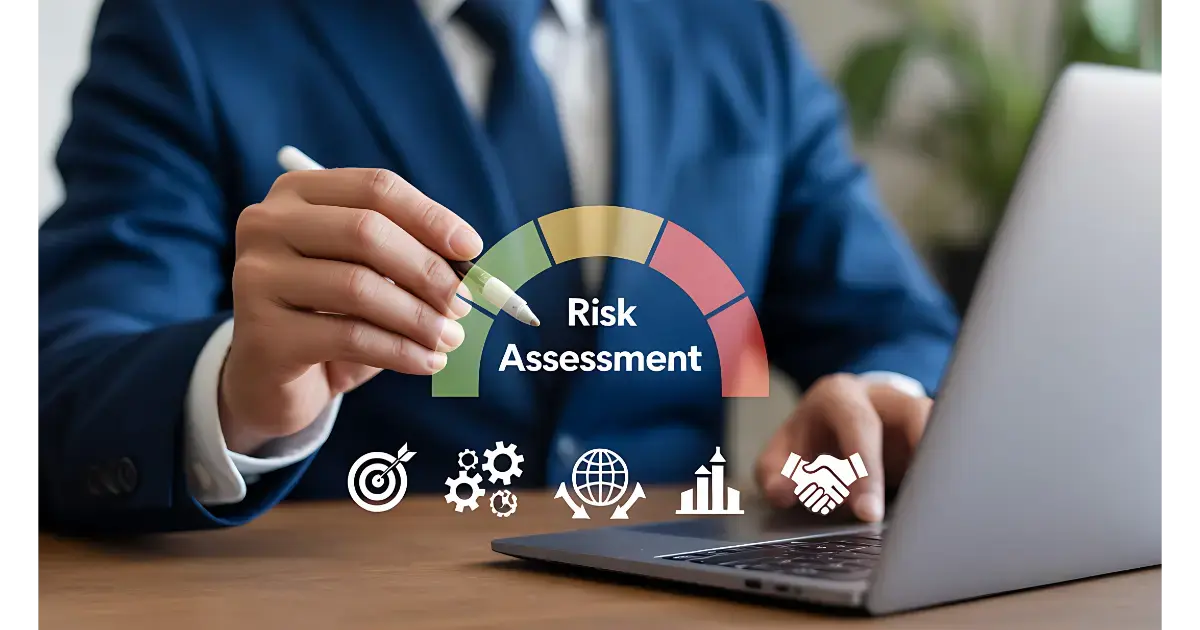
Most vendor risk programs operate on a fixed calendar. Annual reviews. Quarterly checks. Refreshed certifications every 12 months. The problem is that risk doesn't move on a calendar. A vendor's security posture can shift in weeks. A data breach can happen overnight. A change in ownership or geography can change your exposure profile completely.
Effective vendor risk management responds to changes as they happen rather than waiting for the next scheduled review cycle. It builds processes that detect when something has changed and require reassessment rather than assuming nothing has moved since last quarter.
These vendor risk management best practices scale across a vendor portfolio and keep pace with how risk behaves in reality, not a fixed review calendar.
Vendor risk management best practices include tiering vendors by risk level, scaling due diligence to match that tier, monitoring posture continuously instead of annually, governing remediation with clear ownership, and keeping evidence audit-ready year-round instead of scrambled together before an audit.
The Five Pillars of Vendor Risk Management That Actually Reduce Exposure
1. Risk-Based Tiering:
Not all vendors are created equal. A cloud provider handling sensitive data deserves different scrutiny than an office supply vendor. Tiering lets you apply effort where exposure is highest.
Score vendors on:
- Data sensitivity: Do they access personal, financial, or health data?
- Business criticality: What happens if they fail?
- Regulatory footprint: Are they in a regulated geography or industry?
- Integration depth: How tightly are they embedded in your operations?
A vendor high on all four factors? Tier 1. Medium on two? Tier 2. Low overall? Tier 3. This simple exercise cuts unnecessary work and focuses rigor where it matters.
2. Engagement-Aware Assessment Scope:
Assessments should scale to the risk. A Tier 1 vendor needs deep due diligence: financial audits, security assessments, incident history, supply chain health. A Tier 3 vendor needs lightweight intake: basic credentials, reference checks, and data handling scope.
Most programs either over-assess low-risk vendors (waste) or under-assess high-risk vendors (exposure). Right-sizing is the discipline.
3. Continuous Monitoring:
Not Calendar-Based Reviews. Annual assessments miss the middle. A vendor's security posture can shift in weeks - breach, regulatory action, ownership change. Continuous monitoring via external feeds (cyber posture, credit ratings, news, domain registrations) surfaces material changes in real time, not at your annual review.
This is where dedicated supplier risk management software earns its value — ingesting those external signals continuously and converting material changes into governed actions, rather than leaving alerts sitting in an inbox.
4. Governed Remediation and Exception Handling:
Finding a control gap is step one. Closing it is where most programs stumble. Effective remediation requires clear ownership, documented deadlines, escalation paths, and evidence of closure. Exceptions (accepting residual risk) require explicit approval and business justification, not informal conversations.
5. Audit Readiness as Default:
Your vendor risk program should produce audit-ready evidence continuously, not in a last-minute scramble, especially when preparing for SOC 2 vendor management audits and third-party compliance reviews. Document risk decisions, tie evidence to frameworks, and track remediation closure. When a regulator asks, "Show us your third-party risk management," you answer immediately with facts, not promises.
Why Most Programs Fall Short
They're process-heavy but insight-poor:
Teams conduct assessments, check boxes, move on. They collect data but don't synthesize it into decisions. Questionnaire responses sit in email. Audit findings scatter across spreadsheets. No one sees the pattern.
They treat monitoring as optional:
"We do annual reviews" is the refrain. Once-a-year visibility is almost useless in a threat landscape that moves daily. A vendor's security posture can degrade or an unexpected regulatory action can hit between reviews. Continuous monitoring catches these shifts.
They siloed remediation:
A finding gets logged. Months pass. No one knows if it's resolved. Leadership doesn't see overdue items. The vendor assumes nothing changed. Accountability dissolves.
For programs that have the platform but lack the analyst capacity to close findings consistently, TPRM as a service fills that execution gap without requiring new hires or restructuring how oversight is governed.
They don't link risk to business context:
A vendor risk program exists to protect the business. But if risk assessments don't map to business KPIs (revenue impact, regulatory penalty risk, customer trust), they feel abstract to leadership. You lose executive sponsorship.
A Practical Playbook: Vendor Risk Management End-to-End
Phase 1: Intake & Tiering (Week 1–2)
New vendor onboards. Capture basic info: business name, services, data access scope, geography, criticality to operations. Score against your tiering criteria. Assign to Tier 1, 2, or 3.
-
Tier 1 vendors move to deep due diligence immediately.
-
Tier 2 get a standard questionnaire.
-
Tier 3 get a light intake form and a reference check.
Real example: A healthcare provider onboarded a new EHR vendor (Tier 1), a cloud backup provider (Tier 2), and a janitorial service (Tier 3). Each got a different assessment pathway. The Tier 1 assessment took 4 weeks; the Tier 2 took 2 weeks; the Tier 3 took 3 days. Same rigor applied appropriately.
Phase 2: Assessment & Evidence (Week 3–8 for Tier 1; Week 3–5 for Tier 2; completed in intake for Tier 3)
-
Tier 1 vendors complete a comprehensive questionnaire, provide certifications (SOC 2, ISO, HIPAA attestation), submit financial statements, and grant audit access. Your team reviews, clarifies, and documents findings.
-
Tier 2 vendors complete a standard questionnaire and provide basic certifications.
-
Tier 3 vendors provide references and sign a standard data processing agreement.
Phase 3: Scoring & Risk Acceptance (Week 9 for Tier 1; Week 6 for Tier 2; ongoing for Tier 3)
Score vendors using a standardized model (e.g., 0–100 scale across security, financial, operational, regulatory dimensions). Identify gaps. Decide: Does the vendor meet your baseline risk tolerance, or do they need remediation before go-live?
If gaps exist, determine if they're blockers (contract on hold) or manageable (documented exceptions). Document the decision.
Phase 4: Contracting with Risk Terms
Ensure the contract includes:
- Audit rights (annual minimum for Tier 1)
- SLAs for availability and security
- Incident notification timelines
- Data handling and confidentiality terms
- Termination and data return clauses
Phase 5: Continuous Monitoring (Ongoing)
Subscribe to monitoring feeds:
- Cyber posture (SecurityScorecard, RiskRecon)
- Credit ratings (D&B)
- News and breach databases (news feeds, CISA alerts)
- Domain/ownership changes
Configure alerts. If a Tier 1 vendor's credit rating drops by two levels or a breach chatter surfaces, an alert fires. Your risk team triages and decides: Is this a material change that warrants escalation?
Phase 6: Incident Response & Re-Tiering
A monitored alert arrives: the vendor experienced a data breach. Immediately:
- Notify leadership and legal
- Assess impact to your data
- Demand incident details from the vendor
- Review your contract for notification requirements
- Determine if re-tiering is needed (lower the tier if the breach shows control gaps)
Phase 7: Annual Review & Continuous Improvement
Year-end, conduct a full re-assessment for Tier 1 vendors, lighter reviews for Tier 2, and spot-checks for Tier 3. Update risk scores. Identify trends (rising risk across vendors? Regulatory changes requiring assessment updates?).
Common Pitfalls and How to Avoid Them
Pitfall: Tiering once and forgetting. Vendors don't stay static. A Tier 3 vendor that gains access to sensitive data should move to Tier 2. Re-tier annually or event-driven (after a breach, ownership change, or new service scope).
Pitfall: Accepting questionnaire responses without verification. A vendor claims "ISO 27001 certified." Verify the certificate. Many vendors cite certifications that have expired or don't cover the services you're using.
Pitfall: No escalation for overdue remediation. A finding is logged: "Implement MFA by Q2." Q3 arrives; the vendor hasn't acted. Leadership doesn't know. Escalate. Set consequences (contract review, payment holdback) if the vendor doesn't move.
Pitfall: Siloed monitoring. Cyber posture alerts flood in. Risk team gets overwhelmed. No formal triage process. Alerts get ignored. Solution: Document your process. Who sees the alert? Who decides if it's actionable? What's the turnaround time to escalate?
How ComplyScore® Operationalizes These Practices
Managing vendor risk across intake, assessment, monitoring, remediation, and reporting is complex—especially across dozens or hundreds of vendors. Spreadsheets and disparate tools create gaps, duplicate work, and missed alerts.
ComplyScore® brings the entire vendor lifecycle into one governed platform:
- Intelligent tiering automatically scores vendors on data sensitivity, criticality, and regulatory footprint, then routes them to the right assessment depth
- Prefilled questionnaires reduce vendor friction and onboarding time
- Evidence repository centralizes all vendor documentation (certifications, policies, audit reports)
- Continuous monitoring integrates with cyber intelligence feeds, flags material changes, and auto-routes alerts to owners
- Remediation workflows assign findings to owners with due dates and escalation paths
- Executive dashboards show real-time risk posture, overdue items, and signal-to-action conversion
- Audit-ready reporting generates compliance packs automatically mapped to HIPAA, SOC 2, ISO 27001, GDPR, and other frameworks
Schedule a demo to see how ComplyScore® helps you build a vendor risk program that's proactive, transparent, and defensible to regulators.
FAQs
1. How many vendors does a typical organization need to manage actively?
It depends on your industry and size, but most firms have 50–500+ active vendors. For those, a risk-based approach is essential: you can't assess all 500 equally. Focus deep rigor (Tier 1) on your top 10–20 critical vendors; standard assessment (Tier 2) on 50–100 medium-risk vendors; and lightweight intake (Tier 3) on the rest.
2. What's the minimum assessment frequency for vendor risk management?
For Tier 1: annual formal assessment + continuous monitoring. For Tier 2: every 18 months + periodic spot-checks. For Tier 3: every 24 months or event-driven (post-breach, after a major change). Continuous monitoring should flag material changes across all tiers between formal assessments.
3. How do we ensure vendors take remediation seriously?
Make consequences real. Include language in your contract: "Failure to remediate critical findings within 30 days may result in service suspension or contract termination." Document overdue items and escalate to vendor leadership (not just their security team). Track remediation evidence; don't accept "we fixed it" without proof.
4. Should we conduct our own vendor audits or rely on third-party certifications like SOC 2?
Both. SOC 2 and similar certifications validate a vendor's controls but don't tell you how those controls apply to your specific data and use case. For Tier 1 vendors, supplement certifications with your own risk assessment (questionnaire + document review + annual audit). For Tier 2, certifications + questionnaire often suffice. For Tier 3, certifications alone may be enough.
5. What's the right governance structure for vendor risk management?
Ownership should sit with your Chief Risk Officer, GRC function, or CISO—someone with authority to escalate. Operational responsibility can be shared: procurement (onboarding/contracting), security (assessment/monitoring), and compliance (regulatory alignment). Quarterly governance reviews (risk committee) ensure decisions are made and accountability is clear.
6. How do we handle vendor acquisitions or major leadership changes?
Treat these as re-tiering events. Schedule a risk reassessment. New ownership or acquisition can signal control changes. Ask: How will the acquisition affect data handling? Are there subcontractor changes? What's the new parent company's security posture? Update your vendor profile and adjust monitoring if needed.
7. What are some effective best practices for vendor management?
The most effective practices are risk-based tiering, assessment scope matched to each vendor's tier, continuous monitoring instead of annual-only reviews, governed remediation with clear deadlines, and audit-ready evidence maintained continuously rather than compiled reactively.





.webp?width=387&height=387&name=headless-tprm%20(1).webp)































%20(1).jpg)