





























Atlas Systems Named a Representative Vendor in 2025 Gartner® Market Guide for TPRM Technology Solutions → Read More

In this blog

Jump to section

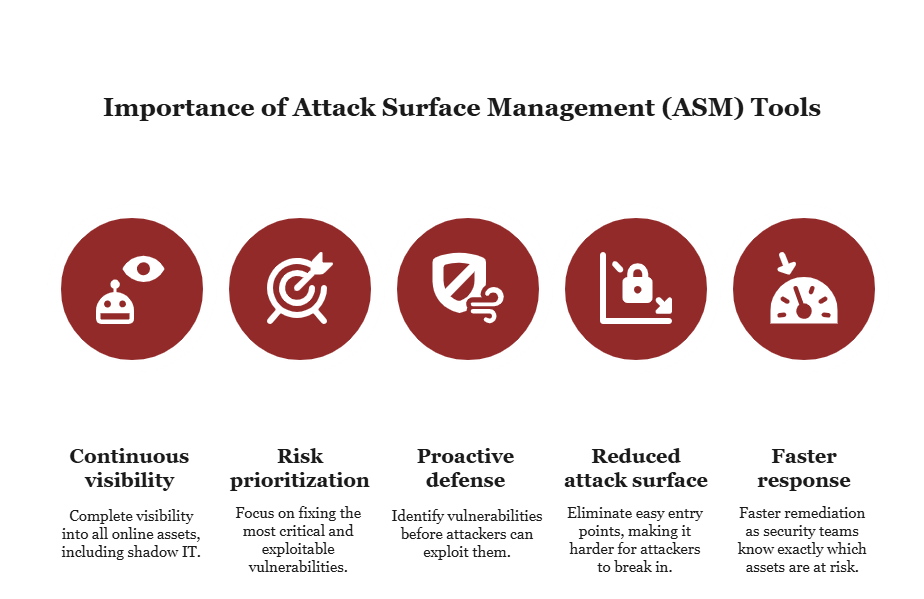
    According to PwC, the average cost of a data breach is US$3.3 million. A single breach can halt operations, destroying everything you’ve worked hard for. You can only stay ahead of cybercriminals by being proactive about security.

    It’s worth investing in an attack surface management tool because the threat landscape is constantly evolving. ASM software gives organizations real-time visibility into exposed assets and entry points, ensuring risks are identified and mitigated early.

    This article breaks past the static to deliver clarity on the best attack surface management tools.

    What Is Attack Surface Management (ASM) Tool?

    Attack surface management is the continuous process of identifying, evaluating, and monitoring a company’s digital assets to protect them against potential cyber threats. It combines vulnerability management, asset discovery, and breach and attack simulation, applying them to an organization’s entire IT environment to address both internal and external risks.

    9 Best Attack Surface Management Tools for 2026

    This curated list of 9 top attack surface management tools for 2026 Delivers compliance-first solutions for finance, healthcare, and manufacturing CISOs.

    ComplyScore® by Atlas Systems leads for GRC teams managing third-party risk, NIST/PCI audit remediation, and continuous external attack surface monitoring in regulated environments.

    Name

    Best For

    Standout Feature

    Pricing

    ComplyScore® by Atlas Systems

    Medium or large enterprises in highly regulated industries like finance, healthcare, and manufacturing

    Integrates external attack surface management into its risk assessments to detect vulnerabilities and potential access points that attackers might exploit

    Custom pricing

    Microsoft Defender XDR

    Organizations with complex threat profiles that need advanced detection and extended response 

    Provides visibility across the full cyberattack chain and automatically disrupts attacks in real time.

    Custom pricing

    Google Cloud Security by Mandiant

    Organizations with a multi-cloud or hybrid-cloud setup in high-risk sectors

    Combines Mandiant's threat hunting and incident response expertise with Google Cloud’s security operations platform

    Custom pricing

    CrowdStrike Falcon Surface

    Companies that want a scalable, cloud-native platform for advanced endpoint protection, threat detection, and response

    The Threat Graph, a cloud database and analytics engine, collects and correlates multiple security events in real-time

    Falcon Go ($59.99/device/year), Falcon Pro ($99.99/device/year), Falcon Go ($184.99/device/year)

    Palo Alto Cortex Xpanse

    Large enterprises that want to  continuously discover and protect their entire digital presence

    Continuously scans the entire internet to identify and monitor exposed assets and vulnerabilities

    Custom pricing

    UpGuard

    Organizations in highly regulated industries with many third-party dependencies

    Uses AI-powered tools to accelerate assessment and find security gaps

    Free ($0/month), Starter ($1599/month), Professional ($1599/month), Enterprise (customized pricing)

    CyCognito

    Enterprises with complex digital ecosystems, such as assets across various cloud providers

    Its attack surface management platform sees an organization’s digital assets from an attacker’s point of view

    Custom pricing

    BitSight 

    Companies looking to assess and manage the cybersecurity risks of their partners and third parties

    Daily security ratings give an evidence-based score of an organization's cybersecurity performance

    Custom pricing

    Qualys 

    Companies looking for a unified platform to manage their cybersecurity and compliance programs 

    The Enterprise TruRisk Platform provides continuous, real-time security across the entire IT landscape

    Custom pricing

    1. ComplyScore® by Atlas Systems


    ComplyScore® by Atlas Systems performs attack surface management through direct scanning and integration with third-party tools. It works together with Tenable to deliver web application scans, vulnerability scans, and dedicated attack surface management scans. ComplyScore® pairs ASM scans with compliance and vendor risk management processes, helping organizations understand their external exposure and how to address risks.

    Key features

    • Attack surface scanning: Provides internal and external self-service or assisted scanning of web apps and assets 
    • Automated triggers for remediation: When certain risk thresholds are exceeded internally or externally, the system triggers remediation workflows
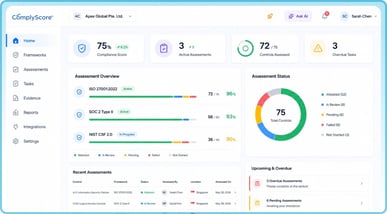
    • Powerful dashboards with real-time risk insights: You can easily see functions like risk criticality, overdue remediations, and engagement-level risk trends for data-driven decisions
    • Supply chain monitoring: Keeps an up-to-date inventory of supply chain vendors and continually assesses their security postures, helping you to manage third-party risks.

    Pros

    • Targeted risk intelligence: You can run third-party risk intelligence only for key partners, reducing assessment costs by 40–60%.
    • Seamless integration with third-party feeds: ComplyScore® integrates well with tools like RiskReckon and SecurityScorecard to help companies quickly detect emerging risks, breaches, or posture changes.
    • Faster onboarding: Most attack surface tools we’ve reviewed here take a long time to set up. With ComplyScore®, setup takes less than 10 days. The industry average is 45-60 days.
    • Quicker risk assessments: These are completed in less than 10 days, so it’s easier to prioritize remediation efforts.

    Testimonial

    "I have been using ComplyScore® for several months, and my experience has been largely positive. The platform provides comprehensive solutions for compliance management, streamlining our operations efficiently."

    Reviewer: IT Security & Risk Management Associate

    Industry: IT Services

    Source: Gartner

    2. Microsoft Defender XDR


    This ASM software is ideal for organizations already using Microsoft security solutions, as it integrates seamlessly with the larger Microsoft ecosystem. It offers visibility into a company’s public-facing endpoints by identifying unknown or forgotten assets that could become points of attack. 

    Key features

    • Asset discovery: Automates asset discovery by searching the internet and network, then provides a list of actionable items for security teams
    • Automatic Disruption: Microsoft Defender XDR can automatically take actions to reduce threat spread, like locking down user accounts and isolating devices

    Pros

    • Scalable: Scales with your organization as it grows, adapting to changes in the digital landscape without requiring additional resources
    • Microsoft integration: It’s ideal for organizations already using Microsoft tools like Azure and Microsoft 365, and reduces overhead in deployment and identity management

    Cons

    • Steep learning curve: Businesses without a lot of security expertise may find it hard to set up policies, hunt queries, and tune alerts
    • Limited third-party integration: The ASM software doesn’t integrate seamlessly with non-Microsoft third-party solutions

    3. Google Cloud Security by Mandiant


    Mandiant’s suite of threat intelligence, detection, and response services and products is integrated into Google Cloud's security offerings to combat advanced cyber threats for both cloud and on-premises environments. The platform provides insights to strengthen a company’s cybersecurity posture.

    Key features

    • Advanced threat hunting: Uses Mandiant’s renowned threat intelligence and forensic expertise for proactive threat hunting and quick incident response
    • Attack surface management: Automatically discovers cloud, on-prem, and third-party external assets to identify exposures, misconfigurations, and over-privileged services

    Pros

    • Improves cyber resiliency: The attack surface management tool monitors cloud environments and makes organizations aware of their exposure to new vulnerabilities
    • Merger and acquisition assessment: Assesses the security posture of potential acquisition companies to prevent “buying hidden cyber problems” 

    Cons

    • Vendor lock-in: The ASM tool is tightly integrated with Google Cloud, and fully leveraging its capabilities can be difficult if you use a different cloud provider
    • Complex setup: Mandiant’s toolset is large, and configuring what to monitor, defining acceptable exposures, excluding irrelevant assets, and other setup processes take time

    4. CrowdStrike Falcon Surface


    Falcon Surface is part of CrowdStrike’s ASM cybersecurity tools. It gives a complete picture of an organization’s attack surface, covering cloud, on-premise, and hybrid assets. 

    Key features

    • Real-time risk assessment: Falcon Surface continuously assesses the risks associated with a company’s assets and provides actionable insights on how to limit exposure
    • Remediation suggestions: The ASM software gives automated suggestions for risk remediation, reducing a security team’s workload

    Pros

    • Scalable: The platform is built for growing organizations and adjusts as your digital landscape evolves
    • Lightweight footprint: Falcon Surface uses minimal CPU / memory / disk and reduces performance impact on endpoints

    Cons

    • Limited customizations: Users say that report exports can be inflexible, and dashboard delays can prevent remediated issues from being reflected on time
    • False positives: Sometimes, the ASM software flags legitimate apps or processes, generating alerts and detections that need manual validation

    5. Palo Alto Cortex Xpanse


    Cortex Xpanse is an attack surface management tool that provides organizations with continuous, automated visibility into their external digital assets and the associated risks. It also gives insights into what attackers target and how to defend against them.

    Key features

    • Threat intelligence-powered detection: The ASM software identifies risks using threat intelligence and highlights which ones to prioritize
    • Attack surface management: Cortex Xpanse continuously discovers internet-facing assets (domains, IPs, services), maps your external exposure, and identifies exposed security risks 

    Pros

    • Enterprise-scale reporting: The platform offers customizable reports with different data visualizations, including graphs and pie charts, allowing companies to create and schedule reports for on-demand or recurring views 
    • Real-time attack surface monitoring: Cortex Xpanse continuously monitors over 500 billion internet ports daily to identify vulnerabilities in real time

    Cons

    • Occasional false positives: Sometimes the software misclassifies assets or flags exposures out of an organization’s control
    • Lengthy setup: The tool is not plug-and-play and requires extensive configuration and integrations to filter out irrelevant data 

    6. UpGuard


    Organizations use UpGuard for internal and third-party attack surface monitoring. By continually evaluating the security postures of external entities, they protect themselves against supply chain vulnerabilities and potential data breaches.

    Key features

    • Attack surface scanning: UpGuard continuously scans an organization’s public/external attack surface, including domains, IPs, and open services
    • AI-powered workflows: These streamline processes like document analysis and report generation, reducing the workload for security teams

    Pros

    • Easy setup: The platform makes it easy for new users to get started and onboard vendors, use dashboards, and get risk data 
    • Comprehensive visibility: UpGuard provides a complete view of an organization’s internal and external attack surface, helping them identify and prioritize risks 

    Cons

    • Advanced features are complex: More advanced functions like configuring control frameworks require technical expertise and time
    • Notifications can be overwhelming: Some users report that the platform can send many alerts, leading to notification fatigue

    7. CyCognito


    CyCognito discovers potential risks by modeling adversary tactics, techniques, and procedures (TTPs). It also discovers shadow IT and hidden assets, helping organizations address hidden risks that are not discoverable by traditional tools. 

    Key features

    • Attack simulation: Simulates attacks by cybercriminals to identify vulnerabilities that might be exploited
    • Risk scoring: Assigns a score to each vulnerability based on its potential business impact to help organizations know which risks to prioritize

    Pros

    • Strong external visibility: BitSight gives organizations a clear picture of what attackers see from the outside
    • Enhances patch management: The ASM software helps companies to identify which vulnerabilities need urgent patching, boosting remediation efficiency

    Cons

    • Learning curve: For organizations with many digital assets, interpreting results, setting up filters, and integrating with workflows takes significant effort
    • Limited remediation guidance: The remediation steps provided by the platform aren’t detailed enough, and sometimes users must perform additional research to fully resolve vulnerabilities

    8. BitSight


    This is one of the top attack surface monitoring tools in the marketplace. It uses analytical forecasting to estimate an organization’s future security performance. It helps organizations mitigate cyber risks by tracking vulnerabilities and prioritizing critical issues.

    Key features

    • Asset discovery and risk analysis: BitSight automatically discovers assets, analyzes risks, and sends remediation suggestions
    • Threat intelligence: The ASM software integrates with threat data from the deep web, dark web, and other places to provide real-time alerts on potential threats 

    Pros

    • Rapid response to new vulnerabilities: Continuous monitoring and instant alerts ensure security teams respond quickly to vulnerabilities before attackers act
    • Visibility into external vulnerabilities: BitSight helps users spot issues on internet-facing applications, open ports, and things they might have missed

    Cons

    • Slow in reflecting remediated issues: Some users say the ASM security tool takes time to reflect patches or fixes, and scores don’t update quickly
    • Limited "outside-In" security view: BitSight largely uses external data for security assessments and may not capture internal monitoring, internal controls, and policy enforcement well

    9. Qualys


    This cloud-based ASM tool provides asset discovery and continuous monitoring of digital assets. It helps organizations to secure their external digital footprint by running vulnerability assessments and prioritizing threats to allow for timely mitigation.

    Key features

    • External attack surface monitoring: The platform gives businesses an "outside-in" view, continuously monitoring for vulnerabilities, security risks, and misconfigurations
    • Risk assessment and prioritization: The Enterprise TruRisk™ platform provides a unified view of cyber risks, prioritizes vulnerabilities and risk factors, to ensure organizations address the most critical threats first

    Pros

    • Powerful asset discovery: Qualys does a good job of discovering assets (servers, cloud workloads, endpoints) and maintains an updated inventory
    • Highly accurate scanning: Users say the attack surface monitoring tool has a very accurate vulnerability scanning engine with very few false positives

    Cons 

    • Occasional performance issues: The platform can be quite slow when scanning large networks or take a long time to process results 
    • Learning curve: The ASM software lacks an intuitive interface, and new users find the setup process to be complex and challenging

    Enhance Your Attack Surface Visibility with Atlas Systems

    If you lack visibility into your complete attack surface, you won’t know the risks you’re exposed to, and malicious actors will launch an attack when you least expect it. 

    ComplyScore® by Atlas Systems automates the process of identifying, prioritizing, and remediating risks before they can be exploited. It enhances your company's security posture, making it resilient against threats and protecting its data, operations, and reputation. 

    ComplyScore® offers complete visibility into your company’s IT infrastructure and identifies potential vulnerabilities, securing your digital assets. It’s crucial for maintaining a strong security posture in the face of evolving cyber threats.

    See it in actionbook a demo call today.

    Attack Surface Management FAQs

    1. What is ASM in cybersecurity?

    Attack Surface Management (ASM) is the ongoing process of discovering, analyzing, and monitoring all digital assets internal and external to spot vulnerabilities, misconfigurations, and shadow IT from a hacker's outside-in view.

    2. ASM process vs vulnerability management?

    ASM delivers 24/7 monitoring of known and unknown assets, while traditional scanners run scheduled internal checks. ComplyScore® uncovers shadow IT and real-time exposures others miss.

    3. ASM vs EASM explained?

    ASM covers internal + external assets. EASM focuses only on internet-facing exposures like APIs and cloud buckets. ComplyScore® combines both for regulated industries.

    4. Key features to prioritize when choosing ASM?

    Look for asset discovery, continuous monitoring, risk prioritization, and GRC integration. ComplyScore® shines with NIST/PCI compliance reporting.

    5. Top challenges in ASM adoption?

    Cloud sprawl, shadow IT discovery, and vulnerability prioritization. Atlas Systems automates compliance mapping for finance and healthcare teams.

    idc-image
    Read More
    Widgets (2)
    Read More

    Related Reading

    Blogs

    Vendor Risk Assessment Checklist: Key Questions for 2026

    Blogs

    Third-Party Risk Audit Readiness Checklist: 2026 Compliance Guide

    Blogs

    SOC 2 Vendor Management: A Complete Compliance Guide

    Blogs

    HIPAA Risk Assessment Guide for Security & Compliance

    Blogs

    MAS TRM Compliance Guide: Singapore Financial Services 2026

    Blogs

    Digital Personal Data Protection Act India: Compliance Guide

    Blogs

    Continuous Vendor Risk Monitoring for Real-Time Security

    Blogs

    120+ Third-Party Risk Management Statistics

    Blogs

    AI Vendor Risk Questionnaire: Template, Sample & Assessment (2026)

    Blogs

    How AI Is Changing Third-Party Cyber Risk Management

    Blogs

    HIPAA: Third-Party Risk Management Requirements

    Blogs

    SOX 404 Third-Party Vendor Requirements: Your Compliance Guide

    Blogs

    AI-Driven Third-Party Risk Management: Automating Vendor Oversight at Scale

    Blogs

    Choosing TPRM Software: 2026 Buyer's Guide

    Blogs

    Continuous Vendor Monitoring in Healthcare: Risk, Compliance & TPRM

    Blogs

    How to Manage Third-Party Risks with an ISO 27001 Vendor Assessment Template

    Blogs

    What is Vendor Security Management(VSM) - Challenges, Tools and Best Practices

    Blogs

    Attack Surface Management vs Vulnerability Management

    Blogs

    What is Vendor Relationship Management(VRM) - Definition, Best Practices and Challenges

    Blogs

    What Is Contract Risk Management? - Best Practices, Risks, Tools and Software

    Blogs

    10 Automated Vendor Risk Assessment (Reporting+Detection) Tools in 2026

    Blogs

    What is Robotic Process Automation(RPA) - Best Practices and Why does it matter

    Blogs

    Vendor Selection Process: Why Does it Matter, Steps and Key Criteria for 2026

    Blogs

    TPRM in Banking: Navigating Compliance and Securing Your Supply Chain

    Blogs

    Why Vendor Offboarding Matters and How to Do It Right?

    Blogs

    Third-Party Cyber Security Risk Management Guide

    Blogs

    CCPA vs GDPR: Differences, User Rights, Scope, and Penalties

    Blogs

    Top 15 Best Operational Risk Management Tools

    Blogs

    Understanding Inherent Risk and Its Role in Business Auditing and Compliance

    Blogs

    Best Compliance Tracking & Monitoring Software in 2026 (+ 10 Tools)

    Blogs

    What is Vendor Assessment? - Importance, Objective, and Framework

    Blogs

    Supplier/Vendor Onboarding Software (+ Top 10 Tools in 2026)

    Blogs

    What Is Third‑Party Due Diligence (TPDD)?-Checklist & Templates, and Its Importance

    Blogs

    What Is Continuous Compliance Monitoring? - Key Components & Challenges

    Blogs

    Compliance Testing Explained: Importance, Process & Benefits

    Blogs

    Supplier Onboarding Process: Explained in 2026 (+6 Checklist)

    Blogs

    Third-Party Data Breaches: Key Examples and Mitigation Strategies

    Blogs

    Inherent Risk vs Residual Risk

    Blogs

    Risk Mitigation: Strategies, Steps, and Real-World Examples

    Blogs

    What is Operational Efficiency: Best Practices, Challenges and Key Metrics

    Blogs

    Fourth-Party Risk Management Strategies to Reduce Hidden Risk (FPRM)

    View all blogs