






.webp?width=387&height=387&name=headless-tprm%20(1).webp)





































Third-Party Risk Management
ComplyScore® Launches World’s First Headless TPRM, Bringing Conversational AI to Compliance Management. 
ComplyScore® Launches World’s First Headless TPRM, Bringing Conversational AI to Compliance Management.



Singapore's Monetary Authority (MAS) has established some of the world's most comprehensive technology risk management requirements for financial institutions. The Technology Risk Management Guidelines set clear expectations for how banks, insurers, and capital markets entities must govern technology and cybersecurity risks.
Non-compliance carries significant consequences. MAS has issued directives requiring financial institutions to strengthen technology risk controls, imposed restrictions on business growth for institutions with inadequate risk management, and publicly disclosed regulatory actions.
MAS TRM compliance applies broadly across Singapore's financial services sector.
Banks licensed under the Banking Act must comply, including full banks, wholesale banks, and merchant banks. Both locally incorporated banks and foreign bank branches operating in Singapore fall under these requirements.
Insurers licensed under the Insurance Act face TRM compliance obligations, covering life and general insurers, reinsurers, and insurance brokers.
Capital markets entities include capital markets services licensees, approved exchanges, clearing houses, and recognized market operators.
Payment service providers licensed under the Payment Services Act and digital banks must implement technology risk management appropriate to their scale.
The TRM Guidelines apply regardless of institution size, though MAS expects risk management proportionate to scale, complexity, and risk profile.
MAS TRM Guidelines establish comprehensive requirements across governance, risk management, and operational resilience.
MAS treats cybersecurity as fundamental to technology risk management with specific expectations.
Cyber hygiene fundamentals include timely patching, endpoint protection, secure configurations, and regular security assessments.
Threat detection and response requires security operations monitoring, tested incident response plans, and threat intelligence integration.
Access security extends to multi-factor authentication for privileged access, zero-trust principles where appropriate, and behavioral analytics.
Data protection requires encryption of data at rest and in transit, data loss prevention controls, and secure data disposal.
Third-party cyber risk must be assessed throughout vendor relationships with security requirements in contracts, continuous monitoring, and incident response coordination.
Cybersecurity testing includes regular penetration testing, red team exercises for larger institutions, and vulnerability assessments.
Cyber resilience planning addresses response and recovery from incidents, communication protocols, and restoration of critical services.
Third-party risk management receives substantial attention given financial institutions' extensive reliance on technology vendors.
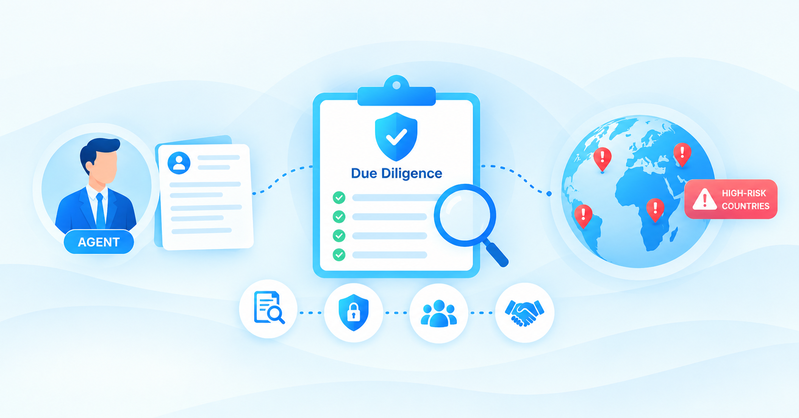
Pre-engagement due diligence requires comprehensive assessment of security controls, financial stability, business continuity capabilities, and regulatory compliance.
Contractual protections must include security obligations, audit rights, incident notification requirements, and data handling provisions.
Ongoing monitoring tracks SLA compliance, security posture changes, financial stability, and business continuity testing results.
Concentration risk management addresses over-reliance on single vendors with assessments of critical dependencies, alternative sourcing strategies, and exit planning.
Cloud-specific requirements include data residency considerations, shared responsibility model understanding, and cloud security posture management.
Critical service provider oversight intensifies for vendors supporting systemically important functions with enhanced due diligence and more frequent monitoring.
Incident management for vendor issues requires notification protocols, coordination on response, and maintenance of business continuity.
Financial institutions remain accountable to MAS for outsourced functions.
MAS expects comprehensive documentation demonstrating systematic technology risk management.
Documentation must be current, accessible for regulatory review, and demonstrate continuous improvement.
Financial institutions implementing MAS TRM compliance encounter several recurring obstacles.
Rapid regulatory evolution creates challenges as MAS regularly updates guidance and introduces new expectations. Organizations struggle to adapt quickly.
Third-party risk management at scale becomes complex with hundreds or thousands of vendors requiring due diligence, monitoring, and reassessments.
Cloud adoption complications arise while satisfying data residency requirements, maintaining audit rights, and managing shared responsibility models.
Legacy system risks persist where aging technology poses vulnerabilities but business-critical functions prevent immediate replacement.
Talent shortages limit compliance efforts as cybersecurity and risk professionals are scarce and expensive.
Cross-border complexity affects regional institutions balancing MAS requirements with other jurisdictions' regulations.
Documentation burden overwhelms teams as compliance requires extensive policies, procedures, reports, and evidence.
Organizations benefit from structured implementation.
Step 1: Conduct gap assessment comparing current practices against TRM Guidelines. Identify gaps in governance, policies, controls, and documentation. Prioritize based on regulatory risk.
Step 2: Establish governance structure defining board and senior management oversight, creating risk committees, and assigning accountability.
Step 3: Develop policy framework addressing all TRM Guidelines requirements with board approval and organization-wide communication.
Step 4: Implement operational controls for access management, data security, network security, monitoring, system development, change management, and incident response.
Step 5: Build vendor risk management capabilities by inventorying vendors, conducting due diligence on critical vendors, and establishing monitoring processes.
Step 6: Enhance cybersecurity posture through threat detection, vulnerability management, encryption, and penetration testing.
Step 7: Test business continuity and disaster recovery by developing BC/DR plans, conducting exercises, and addressing gaps.
Step 8: Create documentation compiling policies, procedures, risk assessments, testing results, and audit findings.
Step 9: Conduct internal audit to evaluate compliance, identify remaining gaps, and validate control effectiveness.
Step 10: Establish continuous improvement to monitor regulatory updates, conduct periodic assessments, and track remediation.
Implementation typically requires 12-24 months for comprehensive compliance programs.
MAS exercises substantial enforcement authority when institutions fail to meet obligations.
Regulatory directives compel institutions to remediate deficiencies within specified timelines and enhance oversight.
Business restrictions may prohibit customer acquisition, limit new technology initiatives, or restrict market expansion.
Additional capital requirements increase buffers to account for elevated operational risk.
Public disclosure of regulatory actions damages reputation as MAS publishes enforcement actions.
Civil penalties for severe or repeated violations can reach substantial amounts.
License revocation in extreme cases removes authorization to operate.
Individual accountability extends to senior management for failures in oversight.
The severity depends on deficiency severity, systemic impact, institution's response, and compliance history.
Technology platforms significantly reduce manual compliance effort.
Automated policy management maintains current policies with version control, distributes updates, and tracks acknowledgments.
Continuous control monitoring validates controls through automated testing of access controls, configuration checks, and vulnerability scanning.
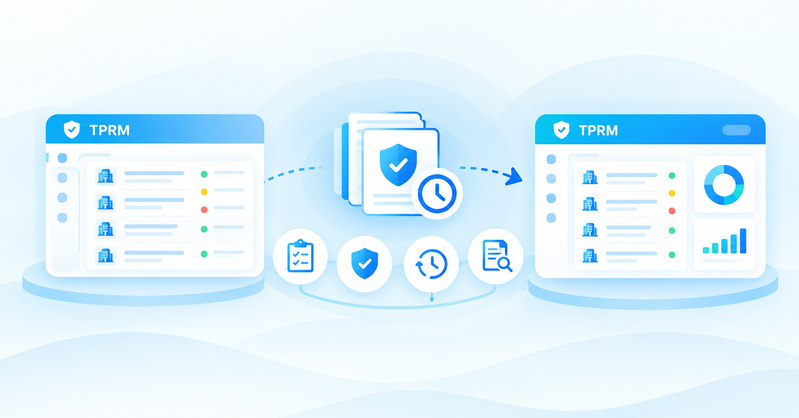
Third-party risk automation streamlines vendor management with centralized inventory, automated due diligence workflows, continuous monitoring, and alerting for vendor incidents.
Risk assessment automation uses standardized templates aligned to TRM Guidelines with automated risk scoring and workflow routing.
Audit readiness improves through centralized evidence repositories, automated report generation, and compliance dashboards.
Regulatory change tracking monitors MAS guidance updates, maps requirements to controls, and flags gaps.
Incident management automation supports cybersecurity obligations with automated detection, workflow-driven response, and documentation.
ComplyScore® provides comprehensive technology and third-party risk management aligned to MAS TRM Guidelines. The governance framework maps MAS requirements to policies and controls with board-level reporting showing compliance status.
Technology risk assessment capabilities include automated risk identification, control effectiveness monitoring, and risk treatment tracking with approval workflows. Third-party risk management addresses MAS requirements through centralized vendor inventory with criticality classification, automated due diligence, continuous vendor monitoring, and contract management with audit rights tracking.
Cybersecurity capabilities support TRM compliance with vulnerability and patch management, incident response workflow automation, and threat intelligence integration. Business continuity management documents BC/DR plans with test scheduling and results tracking.
Audit and regulatory readiness features include pre-built MAS TRM compliance reports, evidence repositories organized by TRM Guidelines sections, and continuous compliance monitoring. Organizations using ComplyScore® for MAS TRM compliance reduce assessment cycles by 60%, achieve 90%+ vendor coverage, and maintain continuous regulatory readiness.
See how ComplyScore® streamlines MAS TRM compliance for Singapore financial institutions.
MAS TRM Guidelines are regulatory requirements specific to Singapore financial institutions with legal enforceability, while SOC 2 and ISO 27001 are voluntary frameworks. The underlying control objectives overlap significantly. Organizations with strong ISO 27001 or SOC 2 programs have a solid foundation for MAS TRM compliance but will need to address MAS-specific requirements around governance, third-party risk, and operational resilience.
Yes. MAS does not prohibit cloud adoption but requires institutions to manage associated risks including thorough due diligence on cloud providers, maintaining audit rights, addressing data residency requirements, understanding shared responsibility models, and ensuring business continuity. MAS has published specific guidance on cloud computing adoption.
MAS expects risk-based reassessment frequency. Critical vendors should be reassessed annually or when significant changes occur. Less critical vendors may be reassessed on extended cycles. All vendors should be subject to continuous monitoring for security incidents, financial changes, or service disruptions triggering immediate reassessment.
MAS requires financial institutions to ensure data can be retrieved and made available to MAS when required, regardless of storage location. For critical systems and data, MAS may require local storage or rapid data repatriation to Singapore. Specific requirements depend on the institution's systemic importance and the outsourced function's criticality.
MAS applies proportionate expectations based on size, complexity, and risk profile. Fintech startups and smaller institutions may implement less extensive programs than major banks. However, fundamental requirements around risk governance, cybersecurity, third-party risk management, and business continuity apply to all regulated entities.
%20(1).jpg)