




.webp?width=387&height=387&name=headless-tprm%20(1).webp)
































Third-Party Risk Management
ComplyScore® Launches World’s First Headless TPRM, Bringing Conversational AI to Compliance Management. 
ComplyScore® Launches World’s First Headless TPRM, Bringing Conversational AI to Compliance Management.



Audit rights are your contractual permission to examine how a vendor actually operates. You get to see their controls, their processes, and their security practices directly rather than relying on what they tell you. Most organizations negotiate audit rights into contracts and then never exercise them, which means they don't actually have a working audit right.
The issue surfaces when regulators ask for proof or when an incident forces investigation. That's when vague language like "reasonable access for audit purposes" either protects you or doesn't. The specificity of what you can audit, when you can audit it, and what cooperation looks like makes the difference between having a functional control and having a liability.
Here's what you need to know about audit rights, how they actually work in practice, and why the details matter more than most teams realize.
Regulators don't care if your vendor is trustworthy. They care if you can prove you looked.
When the SEC, HIPAA auditors, or GDPR enforcement teams arrive, they want to see evidence that you have ongoing line of sight into critical third-party controls. Audit rights are your legal foundation. Without them, you're admitting you can't verify what your vendors claim.
Consider this: In 2023, a mid-sized financial services firm failed a compliance exam because it couldn't produce evidence of vendor security assessments for Tier 1 suppliers. The auditors asked a simple question: "Show us your audit reports." The answer: "We don't have formalized audit rights with most of them." That gap cost them a compliance remediation plan and senior leadership attention.
The stakes are straightforward:
Audit rights typically fall into three categories:
The vendor permits your team (or a third-party auditor) to visit facilities, interview staff, and observe processes. This is the gold standard—you see security controls in action.
The vendor provides SOC 2 reports, ISO certifications, pen test summaries, or other third-party attestations that show control maturity. No visit required, but scope is limited to what the vendor chooses to share.
Some vendors grant portal access to security dashboards, patch logs, or incident reports. This is rare with smaller vendors but increasingly common in SaaS relationships.
What audit rights typically don't cover: the vendor's upstream supply chain. If your cloud provider subcontracts data processing to another company, your audit rights usually stop at your direct vendor, unless you negotiate a "right to audit subcontractors" clause.
Start with your contract template. Does it include an audit rights clause? If not, add one before signing. Once signed, renegotiating is friction-heavy.
The clause should include:
Annual minimum for Tier 1 vendors; every 18-24 months for Tier II. Event-driven audits (post-breach, after a security incident) should also be permitted.
Be specific. "Information security controls" is vague. Instead: "network architecture, access controls, incident response procedures, data encryption methods, and vendor personnel vetting."
"Vendor will respond to audit requests within 30 days and provide access within 60 days."
Clarify that your audit team can access sensitive information without the vendor using confidentiality as a shield against oversight.
Who pays for third-party audits? (Usually the requestor, but negotiate if the vendor has poor controls.)
"Vendor will provide audit rights for any critical subcontractor processing our data."
Practical example: A healthcare organization negotiating with a new EHR vendor asked for annual on-site audits focused on HIPAA-relevant controls. The vendor initially pushed back, citing "operational disruption." The organization countered with: "We can do a virtual audit with your IT team and compliance officer, three days per year, with two weeks' notice."
The vendor agreed. That compromise gave the healthcare org real visibility without derailing the vendor's operations.
If your vendor list has grown but your audit schedule hasn't, you're flying blind on newer, lower-tier relationships. Conduct light-touch audits (document review) on a rolling basis.
If the vendor picks who audits them, you're outsourcing due diligence to someone with no stake in your compliance. You choose the auditor (internal team or third-party firm with no commercial tie to the vendor).
Type I is a point-in-time snapshot, valid for six months. Type II (twelve months) is better. But neither replaces your own audit; they're supplementary. Regulators expect you to validate the vendor's claims yourself.
If the vendor stalls requests, limits scope, or hides behind lawyers when you ask for evidence, that's a sign of weak governance on their end. Escalate. A healthy vendor welcomes compliance scrutiny.
Pivoted focus from audit methodology to implementation outcomes.
I want to transition here from "how to audit" to "what to do with the results." This is where most teams fail; they get findings and then lose track.
Audit findings are only valuable if they trigger action. Here's the discipline most teams skip:
Your internal audit function should own the vendor audit program, or at minimum, oversee it. Why? Because when regulators ask, "Who validated that vendor's controls?" internal audit's involvement signals rigor.
Additionally, audit rights are a linchpin of regulatory readiness. Examiners ask:
Organizations with documented, regular audit programs answer confidently. Those without tend to scramble.
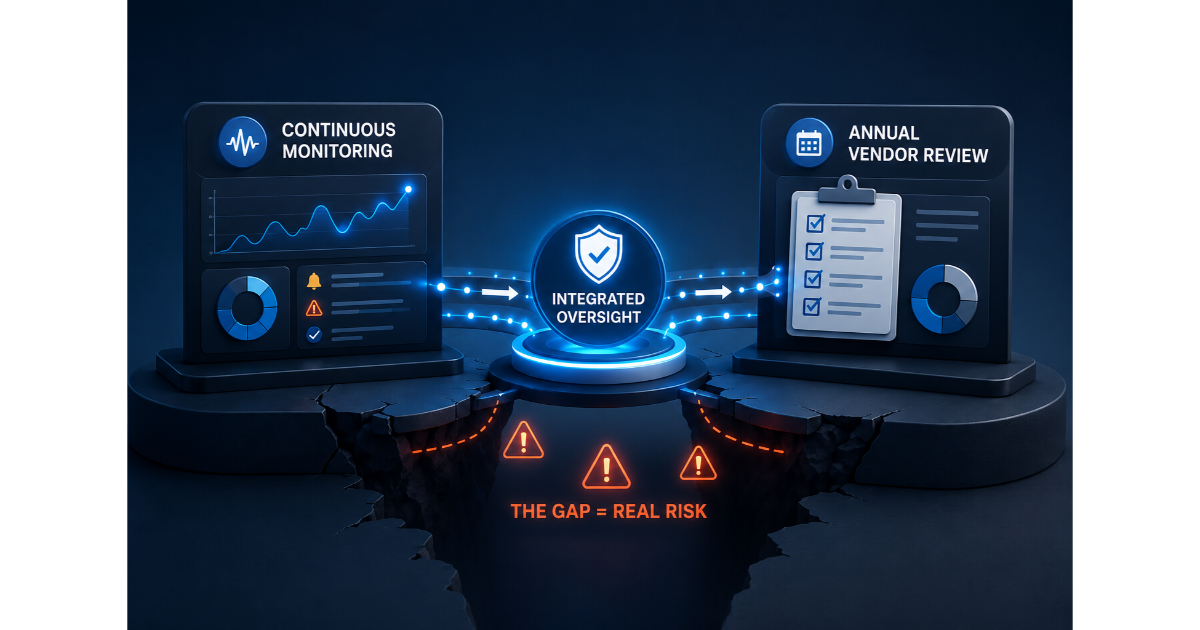
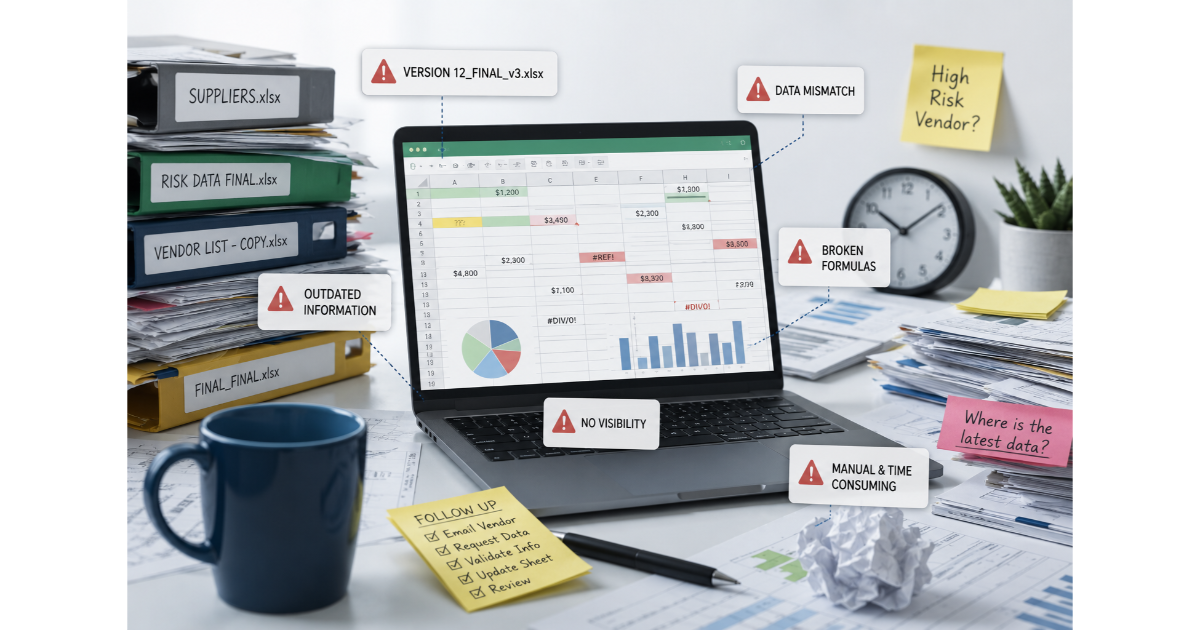
If your audit program is fragmented with spreadsheets, email trails, no central repository for vendor audit reports, you're creating risk. Once you've established audit rights and are conducting regular reviews, you need a system to track findings, remediation, and closure.
ComplyScore® brings continuous monitoring and audit tracking into one governed workflow. Instead of ad-hoc audits followed by months of lost context, the platform:
Schedule a demo to see how ComplyScore® helps you manage your TPRM program end-to-end with defensible audit trails.
At minimum, annually for Tier 1 vendors. For vendors handling sensitive data or critical operations, consider semi-annual audits or continuous monitoring via portal access. Medium-risk vendors: every 18 months. Low-risk: every 24 months. Adjust based on audit findings; if you uncover control gaps, increase frequency.
Audit rights are contractual permissions to examine vendor controls. Audit readiness is whether the vendor is prepared to show evidence when you ask. A vendor with strong audit readiness welcomes requests and has documentation organized. Weak audit readiness means delays, incomplete records, or defensive responses.
First, escalate internally (your procurement and legal teams). Then escalate with the vendor—executive to executive, if necessary. Frame it as shared risk: "We need this to stay compliant with our regulators. Let's find a workable approach." If resistance continues, consider whether that vendor is worth the risk. You may need to exit the relationship.
SOC 2 reports are valuable as a starting point, but they're not a substitute for your own audit. They're audits of the vendor's controls, not an audit of how those controls apply to your data. A SOC 2 Type II + your own document review or light audit is a balanced approach for many vendors.
Add it to the next contract renewal. In the meantime, ask the vendor directly: "Who processes our data downstream, and can you share their security documentation or audit reports?" Vendors often have access to subcontractor attestations; you're just asking to see them.
%20(1).jpg)