The people running your operations understand their environment better than anyone else. They know where systems are stretched, where manual workarounds happen, where control failures are caught before they become disasters, and where the discipline is slipping.
That understanding is valuable, but only if you've created a structured way to surface it and put it to use.
Most risk management approaches start with auditors or compliance professionals identifying risks from the outside. That's a necessary perspective, but it's incomplete. You're missing the view from people closest to the work.
RCSA bridges that gap by creating formal space where operations management documents their risk assessment systematically rather than letting that knowledge stay embedded in conversations.
Structured self-assessment doesn't replace audit. It informs audit and accelerates it by surfacing where management and auditors should expect to find disagreement.
What Risk and Control Self-Assessment Actually Is
1. The Process
RCSA is a formal framework where operations management:
-
Documents operational risks unique to their area
-
Rates severity and likelihood of each risk
-
Evaluates how well controls address those risks
-
Identifies control gaps they see but haven't fixed
-
Shares assessment with risk management and audit for validation
The process forces management to think through risk systematically rather than reactively. It surfaces areas where they're confident in their controls and areas where they know they're exposed.
2. Why Management Perspective Matters
Management is closer to operational risk than anyone else. They:
- See where controls fail in practice
- Know what workarounds people use
- Understand when volumes spike or staffing is stretched
- Know the difference between "control on paper" vs "control in practice"
Why Self-Assessment Works When Done Right
RCSA creates partnership instead of audit scrutiny. Management becomes a partner in identifying issues rather than the subject of audit interrogation. That changes the dynamic entirely.
1. The Psychological Difference
Audit approach: "We're coming to find what you're doing wrong."
Self-assessment approach: "Help us understand your risk so we can support you."
Management is more likely to be honest and thorough when the conversation feels like partnership rather than investigation.
2. Documentation of Point-in-Time Understanding
The assessment also documents management's understanding of their control environment at a specific moment. If the control environment deteriorates later, that documentation helps you:
- Understand when things changed
- Identify why they changed
- Assess whether the change was sudden or gradual
The Components of an Effective RCSA Process
A solid RCSA has five components:
1. Risk Identification
What could go wrong in this operation? Management lists risks based on their experience running the area. Don't constrain them; let them list what they actually worry about.
2. Risk Evaluation
For each risk identified:
- Likelihood: How often would this occur if controls weren't in place?
- Impact: What would the business consequence be?
Management rates both on a consistent scale (e.g., 1-5).
3. Control Identification
What controls are in place to address each risk? Management documents:
- Automated controls (system-enforced)
- Manual controls (people-executed)
- Detective controls (catch problems after they occur)
- Preventive controls (stop problems from occurring)
4. Control Evaluation
For each control:
- Is it operating effectively?
- Is it applied consistently?
- Is it monitored?
Management rates each control's effectiveness.
5. Gap Identification
Where does risk exceed control? Where does management see:
- Missing controls
- Weak controls
- Inconsistently applied controls
- Controls that have broken down
How to Implement RCSA Without Creating Compliance Burden
RCSA fails when it becomes a form-filling exercise and management spends hours. The process becomes something they do for compliance rather than something that improves their risk management.
The Better Approach: Focused and Conversational
Start with specificity, not comprehensiveness:
- Define a specific set of operational risks rather than asking "identify every possible risk"
- Guide the conversation with examples and questions
- Rate risks on a simple scale rather than complex models
- Keep the assessment to risks that matter most
Make the purpose clear:
- "Will you adjust your audit scope based on this?"
- "Will we follow up on gaps you've identified?"
- "Will we help you design controls for areas you're concerned about?"
If the assessment drives action, management will engage seriously. If it goes into a filing system, they'll treat it as busywork.
Common Challenges in Risk and Control Self-Assessment
Challenge 1: Overconfidence
Management believes their controls are more effective than they actually are. They think a control exists and is working when testing reveals it's inconsistently applied or has broken down.
Solution: Validate self-assessments through your own testing. Don't assume management's confidence is warranted.
Challenge 2: Incomplete Identification
Management doesn't identify all relevant risks because they don't think about certain scenarios or because certain risks are outside their normal thinking.
Solution: Provide guidance on risk categories and examples rather than leaving it completely open-ended. Prompt them with "What about X? What about Y?"
Challenge 3: Inconsistency Across Teams
When dozens of management teams complete RCSA, they're not using the same criteria. What one team rates as high risk, another rates as moderate.
Solution: Run calibration sessions where teams discuss their ratings and align on definitions.
Challenge 4: Time Burden
RCSA takes time away from operational work. Management views it as an audit exercise, not an operational priority.
Solution: Do assessments during slower periods. Keep the process streamlined. Integrate self-assessment into regular management meetings rather than treating it as separate.
How Organizations Modernize Their RCSA Programs
From Annual to Continuous
Old approach: One big self-assessment exercise per year.
Modern approach: Continuous assessment where management reflects on risk regularly throughout the year.
Risk doesn't wait for an annual self-assessment. It changes throughout the year. Continuous assessment means management is reflecting on risk regularly rather than cramming once a year.
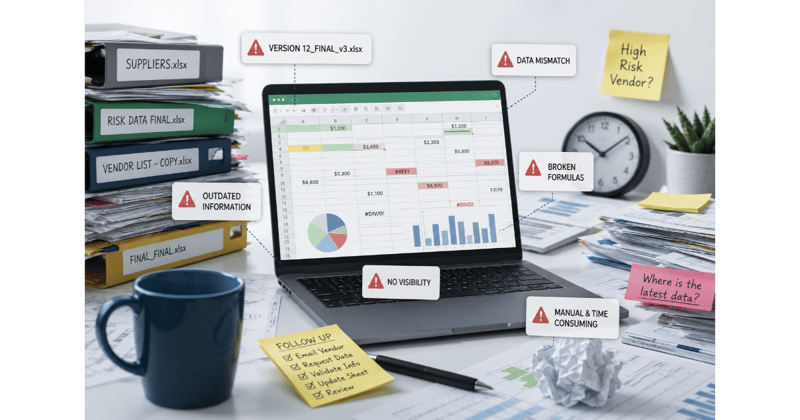
From Spreadsheets to Digital Tools
Old approach: Email forms around, consolidate in spreadsheets, manually track results.
Modern approach: Management updates risk assessments in a central system continuously.
Benefits:
- System aggregates results automatically
- Flags inconsistencies between teams
- Makes it easy to monitor how risk posture is changing
- Creates audit trail of assessment changes
From Separate Exercises to Embedded Governance
Risk conversations happen in regular management meetings rather than as separate audit exercises. Risk and control topics are part of how operations are discussed and decided on.
From Documentation to Action
When management identifies a gap:
- Decision process for whether to fix the control or accept the risk
- Documentation of that decision
- Follow-up to ensure the decision is implemented
- Management sees results rather than just completing a form
How Self-Assessment Complements Audit Activity
RCSA and audit should reinforce each other, not duplicate.
The Validation Loop
- Self-assessment tells you where management sees risk
- Your audit tests whether management's confidence is warranted
- When you find gaps: You have a conversation about what changed and why their initial assessment missed it
That conversation itself is valuable. It surfaces blind spots in how management thinks about risk. It helps management develop a more realistic view of their control environment over time.
Turn Your RCSA Insights From Documentation Into Action
The hardest part of RCSA isn't identifying risks. It's ensuring that what management surfaces actually drives decisions, remediation, and continuous improvement.
That challenge gets compounded when your risk exposure extends beyond internal operations to third parties: vendors, suppliers, and service providers who sit outside your direct oversight but inside your risk perimeter.
If your RCSA program has reached its limits with spreadsheets, email chains, and one-cycle-a-year reviews, that's the wall most teams hit before they modernize into a full operational risk management platform.
ComplyScore® by Atlas Systems is built for exactly that transition. It replaces manual consolidation with a centralized risk workspace where assessments, control evaluations, and gap remediation all happen continuously in one governed system.
Teams using ComplyScore® report up to 80% reduction in manual effort, with monitoring that routes every material signal to an owner, a due date, and an audit trail.
Whether you're formalizing your RCSA methodology or scaling it across a complex third-party ecosystem, the principles stay the same. The infrastructure needs to keep up.
See how ComplyScore® supports continuous risk assessment → Book a Demo Today!
FAQs: Risk and Control Self-Assessment
1. How frequently should RCSA be updated?
At minimum annually. In practice, quarterly or event-driven updates are more valuable. When there are staffing changes, new regulatory requirements, significant process changes, or control breakdowns, you must reassess rather than waiting for the annual cycle.
2. Who should complete the self-assessment?
The person responsible for running the operation, usually a director or manager who understands day-to-day reality. For larger operations, multiple people might complete the assessment and consolidate their responses.
3. What's the difference between self-assessment and management certification?
Self-assessment: Management's evaluation of risk and control effectiveness (exploratory, honest about gaps).
Certification: Management's formal statement that controls are operating as designed and risks are being managed (requires validation, stronger claim).
Self-assessment is more flexible and exploratory. Certification is stronger but requires more validation.
4. How do you validate self-assessments?
- Test controls to see whether they're operating as management says
- Look at data to see whether issues are actually happening
- Interview staff to see whether they experience the operation as management describes
- Compare results across similar operations to identify outliers
5. What do you do when self-assessment identifies gaps that management hasn't fixed?
- Assess the risk: Is the gap manageable? Is the risk acceptable to leadership?
- Determine the status: Is management already working on a fix?
- Make a decision: If the risk is unacceptable and nothing is planned, escalate. If the risk is manageable or a fix is underway, document your agreement on timeline.






.webp?width=387&height=387&name=headless-tprm%20(1).webp)





































%20(1).jpg)