A vendor risk program is only as strong as the process behind it. You can have the right policies, the right people, and the right governance model. But if the process has broken handoffs, undefined triggers, or no exit logic, risk accumulates in the gaps between steps.
According to a 2023 EY survey, most organizations take 30 to 90 days to conduct a thorough risk assessment of a single new vendor. Across a portfolio of hundreds, that lag is not a timeline inconvenience. It is a structural exposure. This guide covers every stage of the TPRM process, where each stage typically breaks down, and what a high-performing process looks like in practice.
What Is the TPRM Process?
The TPRM process is the end-to-end sequence of activities your organization follows to identify, assess, monitor, and manage the risks posed by third-party vendors throughout the lifecycle of each relationship. It starts before a vendor is selected and ends after the relationship is terminated.
It is not a one-time vendor assessment. It is a continuous, structured workflow that applies consistently across your entire portfolio, from a critical cloud provider processing regulated data to a low-risk facilities services supplier.
7 Core Stages of the TPRM Process
Here are the seven stages every complete TPRM process must include, in the order they occur.
Stage 1: Vendor identification and scoping
Before any assessment runs, your team needs to know the vendor exists and why they're being brought in. This stage captures who the vendor is, what service they provide, what data they will access, and which regulatory frameworks apply. The output is an inherent risk profile that determines the level of scrutiny the vendor receives before onboarding.
Where it breaks: Business units engage vendors operationally before the intake process is triggered. By the time risk management is involved, the contract is signed, and access is already live.
Stage 2: Inherent risk scoring and tiering
Based on the intake profile, the vendor gets assigned a risk tier, typically critical, high, medium, or low. That tier drives everything downstream: assessment depth, evidence requirements, monitoring frequency, and remediation timelines.
Where it breaks: When tiers are assigned inconsistently or not at all, every step thereafter becomes a judgment call rather than policy execution. That’s when you get the highest-risk vendors assessed the same way as the lowest-risk ones.
Stage 3: Due diligence and assessment
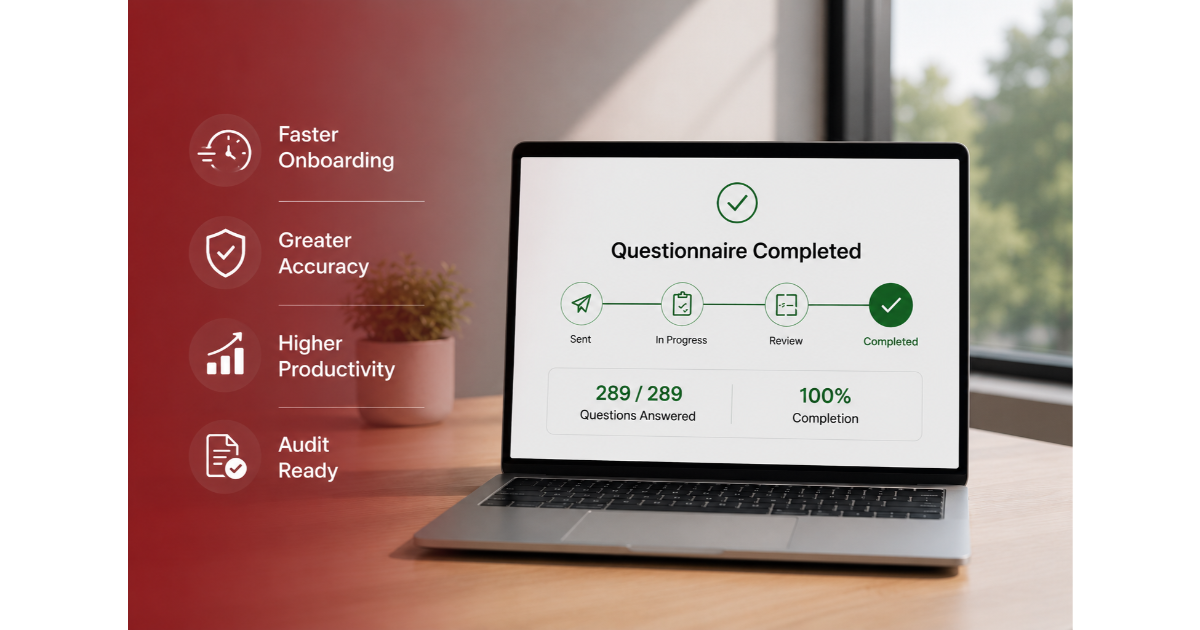
Third-party due diligence assessment is where active risk evaluation happens. Questionnaires go out, evidence is collected, certifications are verified, and findings are documented. The output is a risk profile with identified gaps that require either remediation or formal risk acceptance.
Where it breaks: Data collection and vendor back-and-forth account for the largest share of total assessment time. The actual analysis gets rushed because the front end of the process is so manual. For example, a vendor that could turn around a questionnaire in three days takes three weeks because nobody’s tracking it, nobody’s following up, and the assessment sits in someone’s inbox while risk accumulates.
Stage 4: Risk-based onboarding decision
Once the assessment is complete, a documented decision is made: onboard the vendor, onboard with remediation conditions, or decline. Contracts are finalized to include security requirements, audit rights, breach notification timelines, and remediation obligations identified during assessment.
Where it breaks: The decision happens informally, with no documented rationale. When a regulator asks why a high-risk vendor was onboarded without compensating controls, there is no record of it.
Stage 5: Continuous monitoring
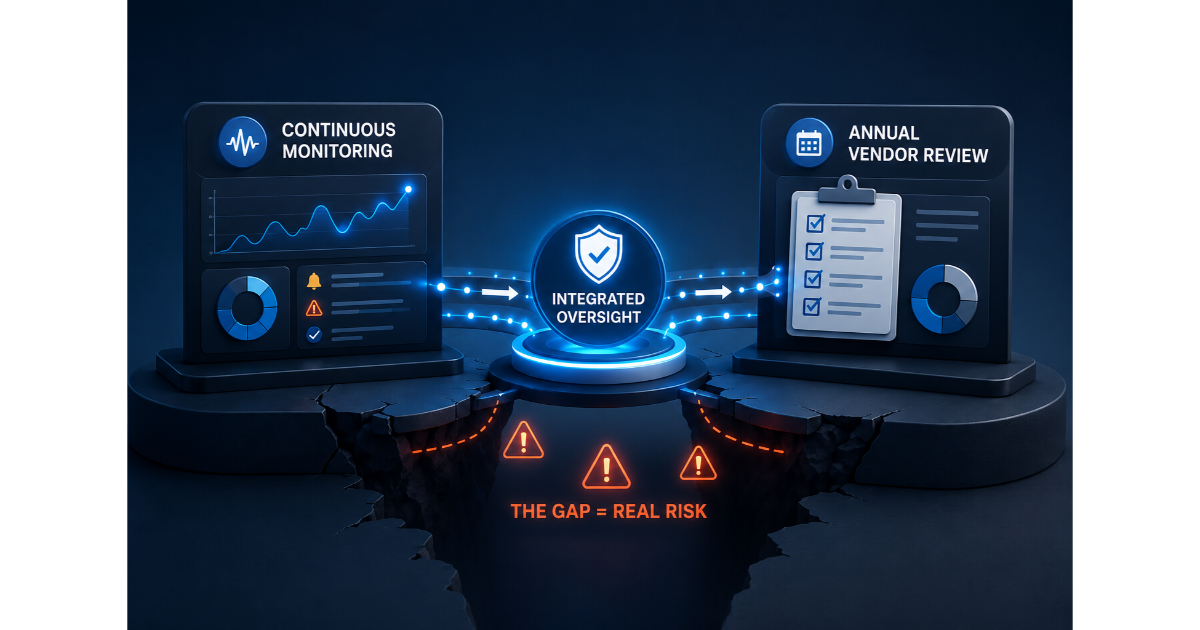
Monitoring is where the widest gap between policy and practice typically lives. The policy states that vendors are continuously monitored. In practice, they are reviewed at the next scheduled assessment cycle, unless something dramatic happens in the meantime.
Effective continuous monitoring combines external signals (security ratings, financial feeds, regulatory sanction alerts) with internal triggers (contract renewal dates, scope changes).
Where it breaks: When changes to a vendor's risk profile don’t trigger an automatic re-tiering evaluation and instead wait for the annual cycle.
Stage 6: Reassessment and ongoing due diligence
Critical-tier vendors need formal reassessment at least annually and immediately after any material risk event. Lower-tier vendors can follow longer cycles, provided continuous monitoring is active. Reassessment is a delta review: what has changed, and does the current tier and access level still match the risk profile?
Where it breaks: Reassessment is scheduled but deprioritized when bandwidth is tight. Only 43% of organizations say their TPRM program is adequately staffed, and more than 62% of TPRM practitioners say understaffing is the single biggest obstacle to protecting their organizations from third-party breaches. Without automation, the queue grows faster than teams can work through it.
Stage 7: Offboarding and termination
Offboarding is the most neglected stage in most programs. When a vendor relationship ends, the exit plan should already exist because it should have been documented at onboarding. Access revocation, data deletion or return, contract closure, and final documentation must follow a defined sequence with named owners.
Where it breaks: Offboarding is treated as a procurement task rather than a risk process. Vendor access credentials persist, data-handling obligations remain unconfirmed, and no termination record exists in the TPRM system. And nobody finds out until an audit or an incident makes it visible.
Why Most TPRM Processes Fail Before They Start
The failure most organizations experience is not at a single stage. It is in the connective tissue between them.
Nearly 90% of organizations track vendor risks during sourcing and selection, but fewer than 80% track risks at offboarding. That statistic reflects a process designed for a smaller, slower portfolio being applied to one that has long since outgrown it.
Three structural failure patterns account for most of what goes wrong:
No intake trigger. Business units onboard vendors outside the TPRM process because the intake mechanism is unclear, slow, or not enforced. By the time the risk team is involved, leverage to set conditions is gone.
Handoff gaps between stages. Each stage is owned by a different function. When handoffs are not documented and enforced, findings, documentation, and context are lost between steps.
No process for the tail. Most processes are built around onboarding and periodic reassessment. Continuous monitoring and offboarding are included in policy, but are never fully operationalized. Vendors accumulate without active oversight, and terminations happen without formal closure.
What a High-Performing TPRM Process Looks Like in Practice
Three characteristics distinguish an effective TPRM process from one that is merely documented.
Every stage has a defined trigger and output. Stage 1 is triggered when a business unit submits a vendor intake request. Its output is a completed inherent risk profile. Stage 2 begins when that profile is complete. No stage starts without a defined predecessor, and none ends without a defined deliverable.
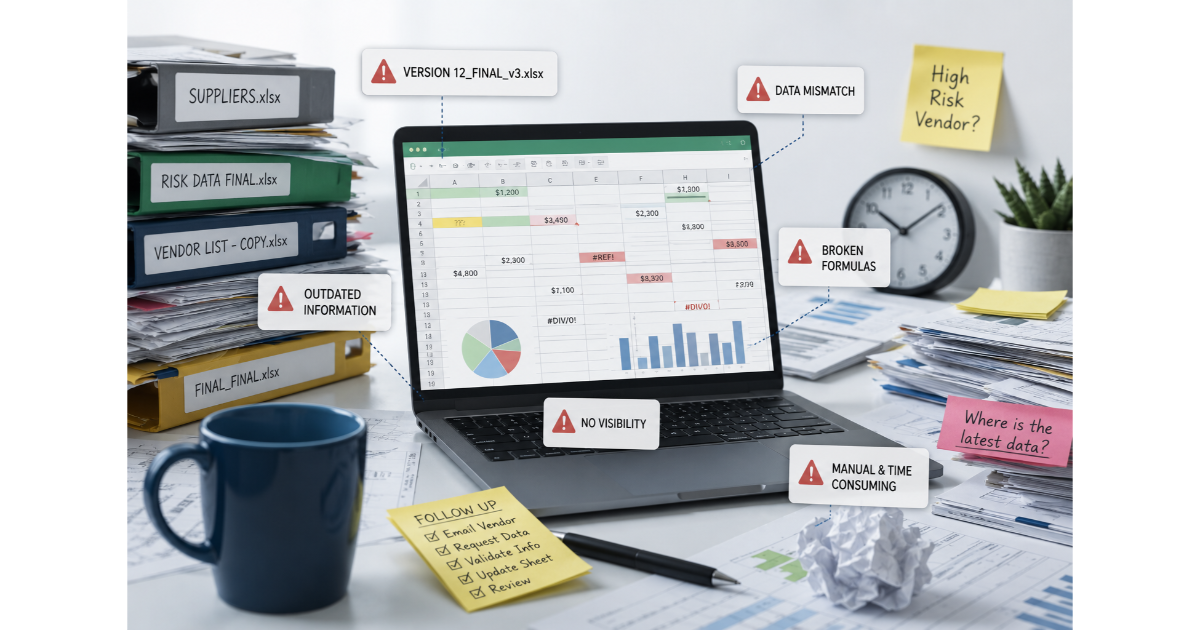
The process lives in your tooling, not your policy document. A process that’s described in policy but runs in email and spreadsheets is a set of aspirations, not a process. When the workflow enforces stage sequencing, assigns owners, and automatically escalates overdue actions, the process runs consistently regardless of who’s managing it that week.
Offboarding is built into onboarding. Before a vendor goes live, the exit plan is documented: how the relationship ends, what happens to data, who is responsible for access revocation, and the termination timeline. That’s the only way offboarding doesn’t become a scramble when the relationship actually ends.
TPRM Process Best Practices That Actually Work
Automate intake, not just assessment. Most automation investment goes into questionnaire distribution. The higher-leverage point is intake automation: a structured vendor request form that automatically triggers inherent risk scoring, tier assignment, and assessment initiation without manual intervention from the risk team.
Separate the assessment from the onboarding decision. Assessment produces findings. The decision requires judgment about whether those findings are acceptable, remediable, or disqualifying. Keeping these as separate steps with separate owners improves both assessment quality and decision accountability.
Build reassessment cadence into your monitoring tool, not your calendar. Due dates set in a calendar get missed. Embedded due dates in your TPRM platform surface in dashboards and automatically escalate when overdue. The difference in execution rate between the two is consistent and significant.
How ComplyScore® Connects Every Stage of the TPRM Process
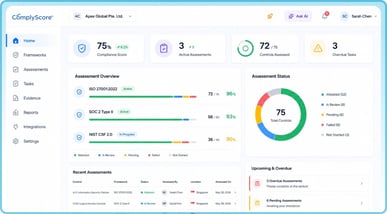
Most programs run each stage in a different tool or via email, which is exactly the gap the right third party risk management tools are built to close. That's where handoffs break, and findings go missing . ComplyScore® runs every stage of the vendor lifecycle in a single connected workflow, so nothing gets lost between steps.
At intake, vendor profiles auto-enrich with data from public registries and security feeds before anyone manually enters a field. Engagement-aware tiering then assigns assessment depth based on what the vendor actually does for your organization, not a generic tier applied to every new relationship. AI pre-fills over 70% of questionnaire responses from past data and public signals, cutting the average assessment cycle from 30 to 45 days to under 10.
For ongoing monitoring, ComplyScore® routes material risk signals as owned tasks rather than unactioned alerts. At close-out, audit-ready reports are automatically generated at each cycle, so Stage 7 is a structured process with a paper trail, not a last-minute scramble before an examiner arrives.
Organizations running on ComplyScore® achieve 90-95% vendor coverage with assessment cycles of 10 days or less.
Most TPRM process failures occur during handoffs between stages, not within them. ComplyScore® connects every stage in a single workflow so nothing gets lost between steps. See it for your vendor portfolio.
FAQs
What are the main steps in the TPRM process?
Vendor identification and scoping, inherent risk scoring and tiering, due diligence and assessment, risk-based onboarding decision, continuous monitoring, reassessment, and offboarding with formal closure. Each stage needs a defined trigger, a defined output, and a named owner.
How is the TPRM process different from a one-time vendor assessment?
A one-time assessment gives you a point-in-time view. The TPRM process is a continuous lifecycle. A vendor that passes the initial assessment can deteriorate within months due to a breach, a certification lapse, or a financial change. Without a continuous process, that deterioration goes undetected until the next scheduled review.
Who is responsible for managing the TPRM process?
Ownership is distributed across stages: business units trigger intake, IT and compliance own assessment execution, legal owns contract closure, and the TPRM Program Lead owns overall process design and escalation authority. A process without named owners at each stage runs on goodwill, not governance.
How long should the TPRM process take for a new vendor?
For critical-tier vendors, the industry average is 30 to 90 days from initiation to onboarding decision. Best-in-class programs using AI-assisted assessment complete the same cycle in under 10 days. For low-risk vendors, a streamlined intake and a light-touch assessment can be completed within days. Tier-appropriate depth is what keeps timelines from becoming a reason business units bypass the process.
What frameworks should guide the TPRM process?
Design your process to satisfy your most demanding applicable regulatory framework. DORA and MAS TRM for financial services, HIPAA for healthcare, ISO 27001 and NIST CSF across industries, and CSDDD or equivalent supply chain due diligence regulations for manufacturing organizations with cross-border supplier networks.










































%20(1).jpg)