
































Headless TPRM
ComplyScore® Launches World’s First Headless TPRM, Bringing Conversational AI to Compliance Management. 
ComplyScore® Launches World’s First Headless TPRM, Bringing Conversational AI to Compliance Management.




6 min read | Last Updated: 21 Oct, 2026
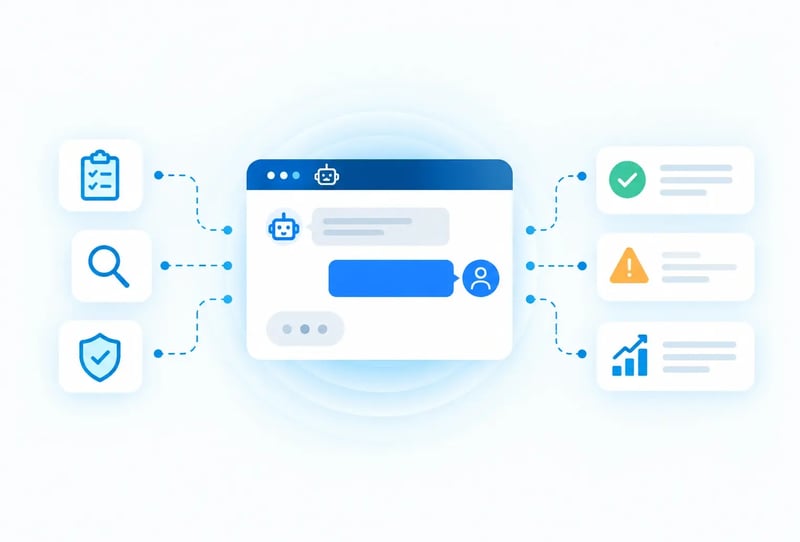
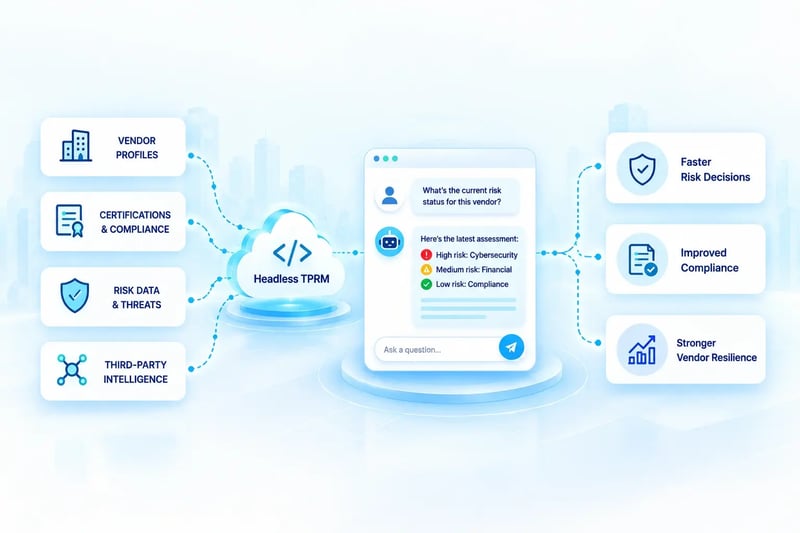
Headless TPRM use cases generally fall into three categories: answering unscheduled questions the moment they come up, routing risk signals to the right person without waiting on a login, and pulling portfolio-wide answers that would otherwise take a manual report. Each is grounded in the same underlying capability, a chat and API interface connected to live, governed vendor data, applied to a different kind of moment.
Most vendor risk programs are built around a rhythm: intake, scheduled assessment, periodic monitoring, renewal. That rhythm covers the bulk of the work well. What it doesn't cover are the moments that fall outside it entirely, a question with no warning, a signal that needs attention outside business hours, a request for information that spans dozens of vendors at once rather than one. These are the situations where the gap between having an answer and reaching it costs the most, because there's rarely time to close that gap manually.
Unscheduled questions are where a fixed dashboard shows its limits most clearly. Someone needs an answer right now, mid-conversation, with no time to open a platform, search a record, and read through it before responding.
Picture a legal counsel finalizing a data processing agreement who gets asked, in the same call, whether the vendor in question uses any subprocessors that haven't been disclosed. That's not a question she can answer from memory, and it's not one worth ending the call to go research. Through headless TPRM, she asks the system directly, in the same window she's using to review the agreement, and gets the current subprocessor list for that vendor immediately. The call continues without a follow-up meeting required just to close one open question.
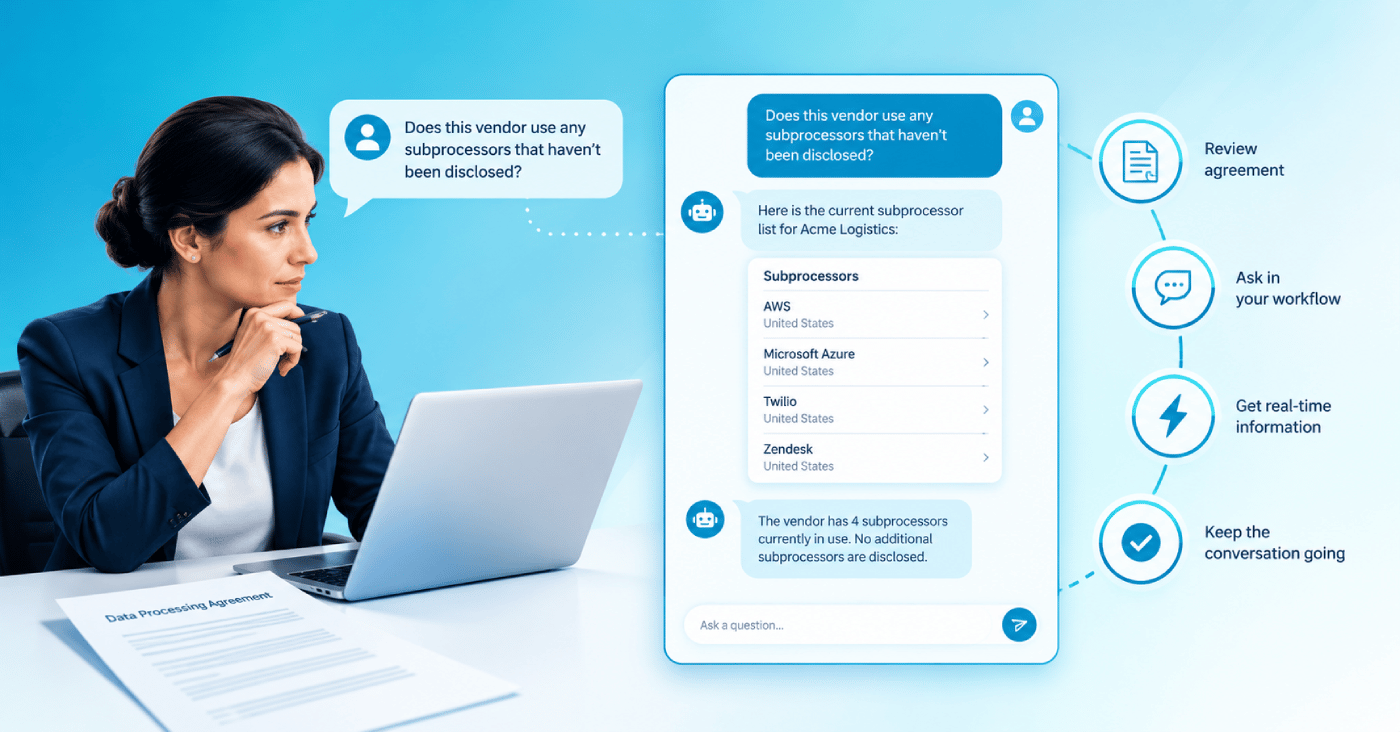
The pattern here isn't unique to legal counsel specifically. It shows up anywhere someone outside the risk team needs a fact fast enough that "I'll check and get back to you" isn't a real option.
Continuous monitoring already flags material changes in a vendor's risk posture, a downgraded security rating, a new regulatory action, a lapsed certification. It converts that flag into a routed task with an owner and a deadline, and pushes a notification to wherever that person already works, automatically. That part of the problem, getting the signal to the right person, was already solved before headless architecture existed.
Consider a vendor's security rating dropping sharply on a Friday evening, caught immediately by continuous monitoring and pushed to the assigned risk owner's messaging channel. Under the old model, that notification is where the automation stopped. The owner still had to log into the platform Monday morning to understand the specifics and decide on a response, by which point three days had passed with an alert sitting seen but unactioned. Through headless TPRM, the owner asks the system directly, in the same conversation the alert arrived in, what specifically changed and what the recommended remediation looks like, and gets a working answer immediately rather than a task to go research one.
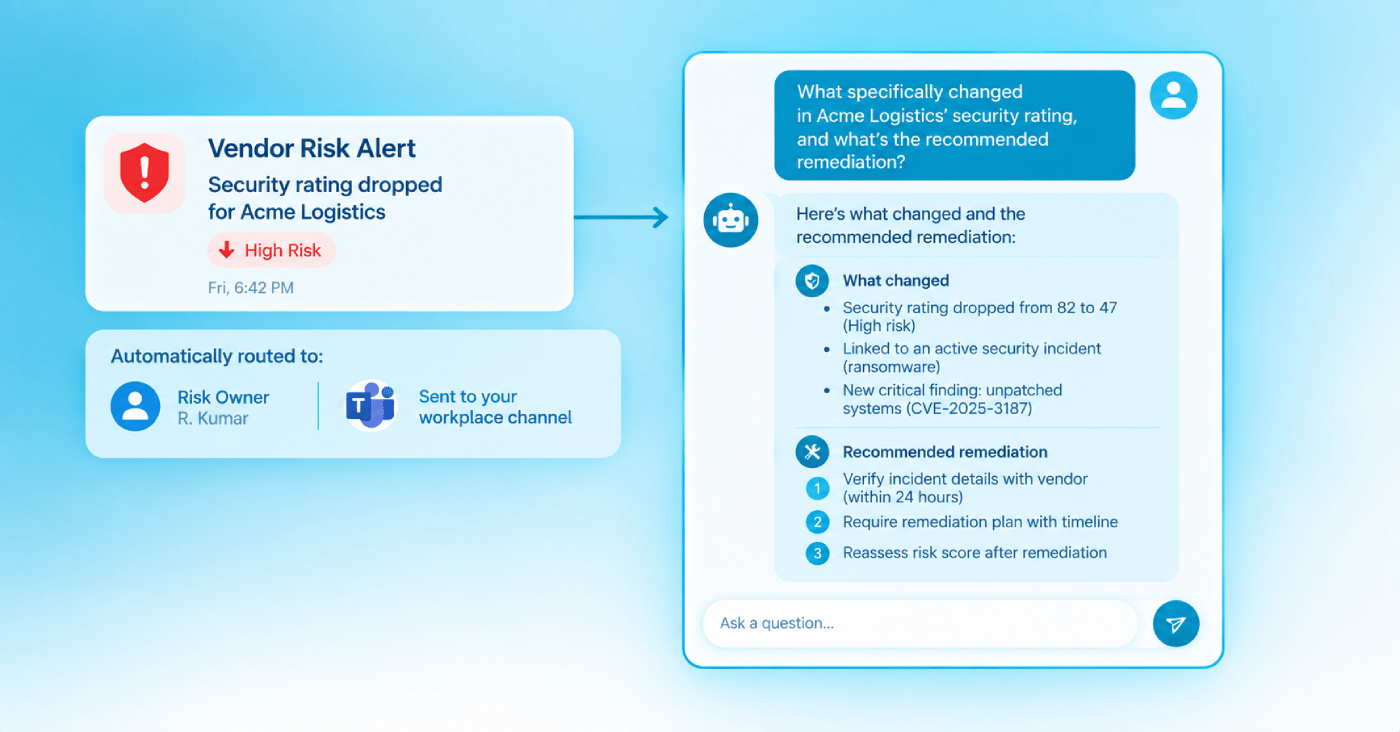
This matters most for signals that are genuinely time-sensitive. A rating drop tied to an active security incident at the vendor isn't something where the response should wait on someone finding time to open a dashboard.
Not every useful question is about one vendor. Some of the most useful ones span the whole portfolio, and those are exactly the questions a dashboard built around individual vendor records handles worst, usually requiring a manual export and a spreadsheet before anyone can actually answer them.
A compliance officer preparing a quarterly report for the board needs to know how many vendors above a certain risk tier are currently missing updated security documentation. Historically, that meant requesting a pull from the risk team, waiting for someone to build the query, and receiving results days later, often close to whatever deadline made the request urgent in the first place. Through headless TPRM, she asks the question directly and gets the actual count and vendor list back immediately, current as of that moment rather than whenever the last manual export happened to run.
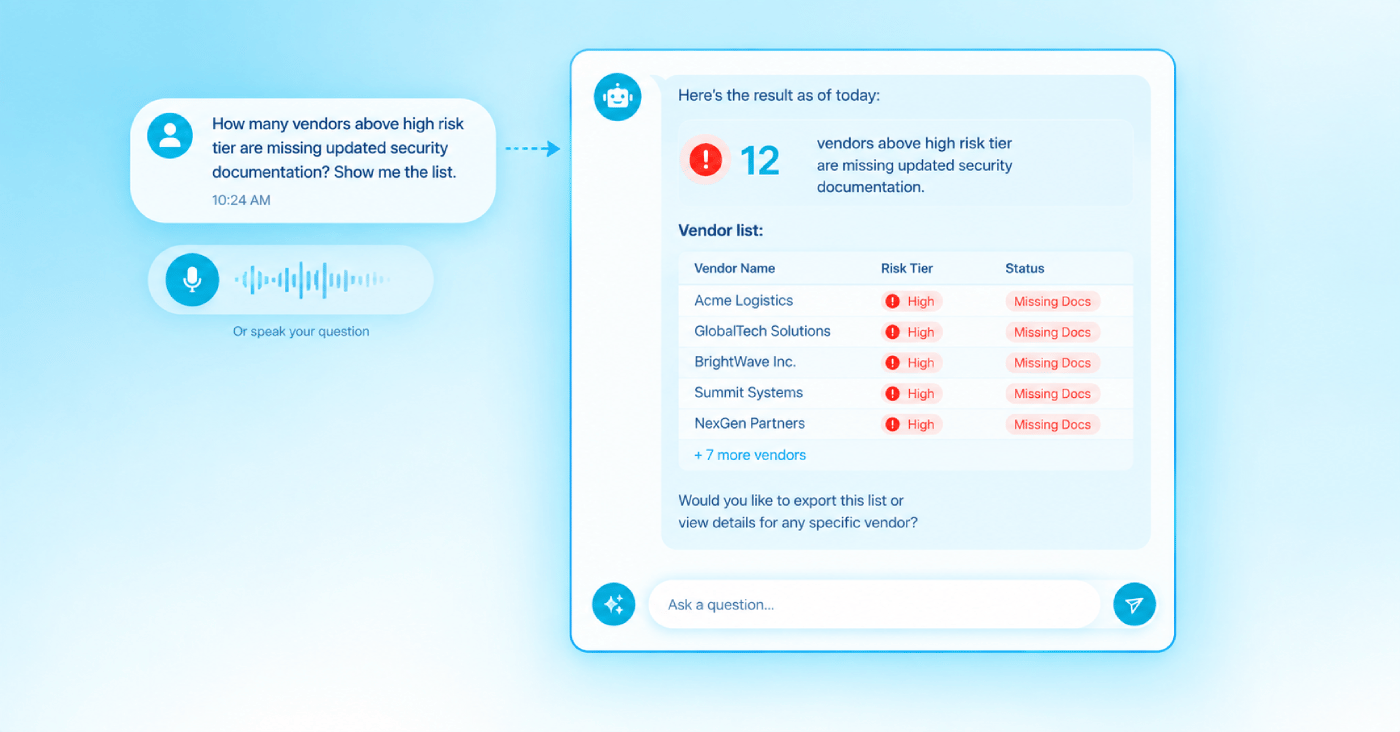
This kind of aggregate query is where the difference between a chat interface that only answers simple lookups and one genuinely connected to live portfolio data becomes obvious. A system that can only handle "what's the status of vendor X" hasn't solved the harder, more common version of the same problem, which is usually framed around groups of vendors, not one.
|
Use case |
What made it hard before |
What changes |
|
Unscheduled question mid-conversation |
No time to search a dashboard before answering |
Direct answer in the same conversation, no detour |
|
Off-hours risk signal |
Alerts reach the owner, but understanding the details still meant opening the platform |
Owner asks what changed and what to do next in the same conversation the alert arrived in, and gets a working answer immediately |
|
Portfolio-wide query |
Required a manual export or a request to the risk team |
Direct answer, current as of the moment asked |
Different as these three scenarios are, all three share the same underlying limitation they're solving for: the amount of manual work standing between a question and a governed answer. That's true whether the manual work was a login, a wait for someone else to check something, or a request that would have taken days to fulfill through a spreadsheet.
Portfolio-wide queries deserve a specific note on access, since pulling data across many vendors at once might sound like a bigger exposure risk than a single-record lookup. It isn't, structurally. The same role-based permissions apply regardless of scope. A person authorized to see risk data for a specific set of vendors can query across that same set in aggregate, and no further. Someone without portfolio-level access can't get around that boundary just by asking a broader question instead of a narrow one.