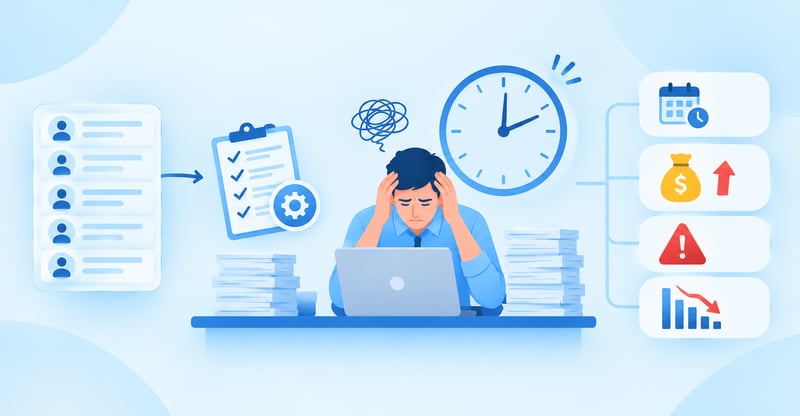
Choosing between Bitsight and UpGuard usually starts with the same gap: your security team can see which vendors look exposed, yet nobody owns what happens next. A score on its own does not tell you which vendor to question, who chases the fix, or what evidence an auditor will want.
Both platforms build on outside-in cyber data and add workflow around it. You will see where each one leads, how they price, and where ComplyScore® fits when your program needs due diligence, regulatory evidence, and vendor onboarding at scale alongside the ratings.
Bitsight vs UpGuard: Which One Should You Choose?
Bitsight leads on rating depth and analytics for enterprise programs, while UpGuard leads on ease of use, setup speed, and bundled attack surface monitoring. Teams that want one workflow from onboarding to close-out, with ratings as an input, should add ComplyScore® to their shortlist.
Your priority decides the answer:
|
Your priority
|
Best fit
|
Why
|
|
External security ratings and benchmarking
|
Bitsight
|
The deepest rating analytics of the three, built on daily outside-in scoring
|
|
Vendor security monitoring with a fast start
|
UpGuard
|
A 9.0 ease-of-setup score on G2 and attack surface monitoring through Breach Risk
|
|
End-to-end third-party risk management
|
ComplyScore®
|
One workflow from onboarding through assessment, remediation, and close-out, with Bitsight and other rating feeds plugged in
|
What Does Each Platform Do Best?
Each platform has a clear strength and a spot where reviewers push back.
Bitsight
Bitsight sells cyber risk intelligence, and its vendor risk product is one line within it. The company reports more than 3,500 customers and says Forrester named it a Leader in The Forrester Wave: Cybersecurity Risk Ratings Platforms, Q2 2026. Each vendor receives Impact, Trust, and Risk scores, and the platform connects to ServiceNow, ProcessUnity, Prevalent, OneTrust, and Archer.
G2 reviewers rate Bitsight’s support at 9.1 out of 10 and its ease of use at 8.5, while listing missing features, unclear scoring, and slow performance among the drawbacks. Its vendor risk page leaves remediation workflows undescribed, which makes that a question for your demo.
UpGuard
UpGuard sells a cyber risk posture suite that spans vendor risk, attack surface monitoring, human risk, and a trust exchange. Every Vendor Risk plan includes questionnaires, instant risk assessments, remediation tracking, and API access. UpGuard says its AI completes questionnaires from vendor evidence and cuts completion time by up to 95%, so test that claim during your trial.
G2 reviewers score UpGuard 9.0 for both ease of use and ease of setup. They flag price, limited reporting and workflow customization, and rising costs as vendor counts grow. Fourth-party visibility starts on the Corporate plan.
Both platforms show you which vendors look exposed from the outside, and the next question is what each one helps you do about it.
How Do Bitsight and UpGuard Compare Feature by Feature?
Gaps marked “Not described” are worth pressing in a demo.
|
Category
|
Bitsight
|
UpGuard
|
|
Core focus
|
Cyber risk intelligence and ratings
|
Cyber risk posture suite with vendor risk, attack surface, and human risk products
|
|
Security ratings
|
Daily ratings from outside-in data
|
0 to 950 rating plus the Breach Risk attack surface product
|
|
Vendor assessments
|
Tiered question sets validated against ratings
|
Instant assessments mapped to ISO 27001 and NIST CSF 2.0 (vendor claim)
|
|
Questionnaire automation
|
SOC 2 summaries and AI questionnaire analysis
|
AI completes questionnaires from vendor evidence (vendor claim)
|
|
Continuous monitoring
|
Daily ratings; monitoring detail not described on its vendor risk page
|
Continuous monitoring with custom alerts and webhooks
|
|
Remediation workflows
|
Not described
|
Included on every plan
|
|
Fourth-party visibility
|
Listed as a feature
|
Corporate plan and above
|
|
Compliance mapping
|
Framework Intelligence maps to SIG, NIST, ISO 27001, SOC 2, GDPR, and HIPAA
|
Compliance reporting against standard frameworks
|
|
Integrations
|
ServiceNow (certified), ProcessUnity, Prevalent, OneTrust, Archer, Okta; open API
|
100+ native integrations, REST API, webhooks, Zapier
|
|
Reporting
|
Dashboard and audit trail
|
Recurring and executive reports; reviewers cite limited customization
|
|
Support (G2 score)
|
9.1
|
9.0
|
Two rows deserve a closer look. Remediation appears as a plan feature at UpGuard and goes undescribed on Bitsight’s vendor risk page, so confirm how each tool assigns, tracks, and closes a finding. Reporting is the other, because G2 reviewers describe UpGuard’s reports as hard to customize, so bring your board report template to the demo.
Test remediation and reporting with your own data, since those two rows decide how much manual work remains after the score arrives.
How Much Do Bitsight and UpGuard Cost?
UpGuard publishes its entry pricing. The Vendor Risk Standard plan costs $1,750 a month billed annually, which is $21,000 a year for 50 vendors, or $420 per vendor. Each additional vendor adds $79 a month, and the Professional, Corporate, and Enterprise plans require a sales quote.
Bitsight does not publish prices. The company says pricing depends on company size, the number of vendors you monitor, and the features you need, and it directs buyers to request a demo. A ratings subscription can look inexpensive until you add assessments, fourth-party visibility, API access, and a support tier.
Pro tip: Ask each vendor to quote the same scope: vendor count, modules, fourth-party coverage, API access, and support tier. Compare the Year 1 all-in figure, including implementation, because an entry plan that leaves out assessments or API access understates real cost.
UpGuard gives you a number to start from, while Bitsight requires a quote, so build your comparison on identical scope.
Where Does ComplyScore® Fit Between Bitsight and UpGuard?
A rating shows what an outsider can see from the internet. It cannot show that a vendor’s ISO certificate lapsed last month, that a director landed on a sanctions list, or that the vendor has no DORA exit plan.
ComplyScore® by Atlas Systems picks up where the rating stops. It runs the vendor lifecycle from onboarding and risk tiering through due diligence, assessment, remediation, and close-out, so every finding ends with an owner and a deadline.
It also respects the rating source you already trust. Monitoring pulls cyber signals from Bitsight, SecurityScorecard, RiskRecon, and Shodan, and financial and legal signals from Dun & Bradstreet, Dow Jones, and LexisNexis, so a Bitsight subscription slots straight into the workflow.
When intake should take a vendor name and nothing else
Zero-touch assessments let you start a review with a vendor name and country, and the rest happens without anyone lifting a finger. Vendor profile intelligence fills in the record from open databases, business registries, and sources such as D&B and RiskRecon, so each profile is ready for tiering and assessment on day one.
When due diligence has to reach beyond cyber
One ComplyScore® report brings together financial stability, sanctions and watchlist hits, legal filings, adverse media, ESG indicators, and cybersecurity. It draws on sources such as D&B, World-Check, and the OFAC, UN, and EU lists, so your procurement and compliance leads read one report per vendor and skip the manual stitching.
When regulators ask for evidence
ComplyScore® maps assessments to more than 30 frameworks, including DORA, NIS2, DPDP, MAS TRM, HIPAA, and ISO 27001, and it exports framework-aligned evidence packs. When an examiner asks how you assessed a particular vendor against a particular rule, you open the pack and answer.
When your vendor base runs on ERP data
ComplyScore® connects to the ERP systems where your vendor data already lives, including SAP S/4HANA, Oracle, JD Edwards, Infor LN, and NetSuite. Enviri Corporation selected it to manage 45,000+ vendors across 30+ countries and three ERP systems.
ComplyScore® keeps the ratings you already trust and takes on the work that follows them. Looking for an end-to-end TPRM platform? See how it covers the full vendor risk management lifecycle.
How Do ComplyScore®, Bitsight, and UpGuard Compare Side by Side?
|
Dimension
|
Bitsight
|
UpGuard
|
ComplyScore®
|
|
Starting point
|
Outside-in ratings and cyber intelligence
|
Outside-in ratings and attack surface suite
|
Vendor lifecycle workflow, with ratings as an input
|
|
Due diligence beyond cyber
|
External feeds for financial, geopolitical, and credential risk
|
Not described
|
Reports covering financial, sanctions, legal, ESG, and cyber signals
|
|
Assessment depth by vendor tier
|
Tiered question sets; machine learning Tier Recommender
|
Automatic tiering from questionnaire answers (vendor claim)
|
Tier-driven depth with human sign-off on high-risk decisions
|
|
Regulatory mapping
|
SIG, NIST, ISO 27001, SOC 2, GDPR, HIPAA
|
ISO 27001 and NIST CSF 2.0 templates
|
30+ frameworks including DORA, NIS2, DPDP, MAS TRM
|
|
Remediation
|
Not described
|
Included on every plan
|
Owners, SLAs, and audit trail through closure
|
|
ERP and system integrations
|
ServiceNow, ProcessUnity, Prevalent, OneTrust, Archer
|
100+ native, including Jira, ServiceNow, Slack
|
SAP S/4HANA, Oracle, JD Edwards, Infor LN, NetSuite, ServiceNow
|
|
Analyst-led service
|
Advisory services
|
Not described
|
TPRM as a Service
|
Bitsight vs UpGuard: What Is the Final Verdict?
In the Bitsight vs UpGuard decision, Bitsight suits enterprise programs that value rating depth and analytics, and UpGuard suits lean teams that want a fast start and bundled attack surface monitoring. Either one will show you which vendors look exposed from the outside, and ComplyScore® covers the lifecycle stages that follow.
Pro tip: Run a 30-day proof with 10 vendors across your risk tiers. Measure the hours to finish one assessment, the share of alerts your analysts act on, and the days to close one finding. If the numbers lag, adjust your tiering rules before you blame the tool.
Before you decide, see how ComplyScore® stacks up against both in the ComplyScore® vs Bitsight comparison and the ComplyScore® vs UpGuard comparison. Or book a 30-minute demo with TPRM experts and see it on your own vendor data.