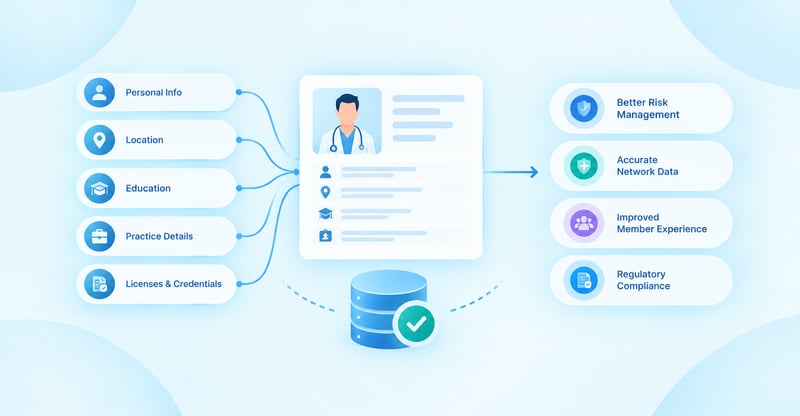
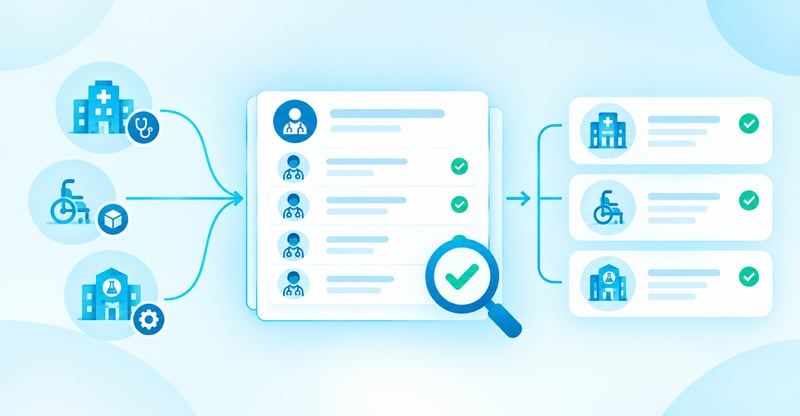
Starting in plan year 2028, the REAL Health Providers Act requires Medicare Advantage directories to carry verified information on the languages a provider offers, whether the office is accessible to people with disabilities, and whether telehealth is available. Those fields used to sit at the edge of directory operations, filled in once at credentialing and rarely checked again, and they are about to be verified on the same 90-day cycle as addresses and phone numbers.
Language and accessibility are only part of the picture. NCQA's accreditation standards ask plans to understand the race, ethnicity, and language profile of their networks, and some states now require carriers to report on network diversity. Each of those requirements depends on demographic data that providers report voluntarily, change over time, and expect you to protect.
What Is Provider Demographic Data?
Provider demographic data covers the attributes that describe who a provider is and how they deliver care, such as languages spoken, office accessibility, telehealth availability, race, ethnicity, and gender. Health plans use it in directories, member matching, and network adequacy and accreditation reviews.
It helps to separate the data into two groups, because each carries different rules:
- Access attributes: languages offered by the provider or an interpreter at the office, physical accessibility, accommodations and auxiliary aids, and telehealth availability. Directory rules increasingly require these, and members rely on them to choose care
- Identity attributes: race, ethnicity, gender identity, and similar personal characteristics. These are almost always voluntary for providers and are used mainly in network analysis and accreditation, with tighter privacy expectations
Which Rules Drive the Collection of Provider Demographic Data?
Federal directory rules, accreditation standards, and state laws each ask for different fields, and the overlap is where most plans get confused.
|
Requirement
|
What it asks for
|
Who it applies to
|
|
Medicaid managed care directory rule (42 CFR 438.10(h))
|
Languages offered by the provider or a skilled interpreter, including American Sign Language, cultural competence training, and office accommodations for people with physical disabilities
|
Medicaid and CHIP managed care plans
|
|
REAL Health Providers Act
|
Verified directory fields including language, disability access, and telehealth capability, starting plan year 2028
|
Medicare Advantage organizations
|
|
Medicare Plan Finder directory submission (CMS-4208-F2)
|
A populated language field on every provider record submitted to CMS
|
Medicare Advantage organizations
|
|
NCQA Health Outcomes Accreditation (formerly Health Equity Accreditation)
|
Practitioner race, ethnicity, and language data, plus care site accessibility, to assess whether the network meets member needs
|
Plans seeking or holding the accreditation
|
|
State culturally responsive network rules, such as Colorado Regulation 4-2-80
|
Aggregate reporting on provider demographics and on cultural competency or anti-bias training
|
Carriers offering Colorado Option plans
|
Two details in this table deserve emphasis:
- NCQA renamed Health Equity Accreditation to Health Outcomes Accreditation in 2026, so older internal documents and vendor materials may still use the previous name.
- And under Colorado's rules, demographic reporting is voluntary for providers, while the obligation to ask, collect, and report sits with the carrier.
Which Fields Should You Capture, and How Should You Ask for Them?
Collect what your directory rules require, what your accreditation and state obligations call for, and nothing you cannot protect or use. The way you ask matters as much as what you ask.
Languages and interpreter access
Capture each language the provider speaks with patients, separately from languages available through office staff or interpreters, since members and regulators read those differently. For Medicaid directories, record American Sign Language explicitly, and use a standard language code list so every system stores the same value.
Accessibility and accommodations
Ask about entrances, exam rooms, accessible equipment, and auxiliary aids, and record them at the location level rather than the provider level. A provider who practices at two sites may have full accessibility at one and none at the other.
Race, ethnicity, and gender, self-identified
Ask providers to self-identify, offer a "prefer not to answer" option on every question, and explain how you will use and protect the data. Use the federal race and ethnicity categories that OMB revised in 2024, which combine race and ethnicity into one question and add a Middle Eastern or North African category, so your data lines up with accreditation and public reporting.
Handling declined or missing answers
Store "declined to answer" as its own value, separate from "not yet asked." The difference tells your team whether to follow up and prevents analysts from treating a provider's choice as a data gap.
How Do Health Plans Use Provider Demographic Data?
Health plans use provider demographic data to help members find care that fits them and to show regulators and accreditors that the network can serve the population enrolled in it.
- Directory search: Members filter by language, accessibility, and telehealth, so an outdated value sends them to the wrong office
- Member matching: Care management and member services teams use language and focus areas to connect members with providers who meet their needs
- Network analysis: Comparing provider language and demographics against member demographics shows where the network falls short
- Accreditation and state reporting: NCQA reviews and state filings draw on the same records, so inconsistencies surface in audits
Consider a plan whose directory lists a primary care provider as Spanish-speaking because a bilingual front desk once answered a survey. A member who chooses that provider expecting a conversation in Spanish may find the provider speaks only English, and the error damages trust in the directory as a whole.
How Should You Protect Provider Demographic Data?
Treat identity attributes as sensitive personal information, with access limited to the people who need them and uses limited to what you told providers when you collected them.
|
Practice
|
What it looks like in operation
|
|
Purpose limitation
|
Use race and ethnicity data for network analysis and reporting, and keep it out of the member-facing directory unless the provider explicitly opts in
|
|
Role-based access
|
Limit who can view identity fields, separate from those who maintain addresses and languages
|
|
Consent and disclosure
|
Tell providers how the data will be used and get written consent before sharing anything identifiable, as Colorado requires
|
|
Aggregate reporting
|
Report to regulators in aggregate, never at the individual level, unless a rule requires otherwise
|
|
Refresh cadence
|
Re-confirm access attributes on your directory verification cycle and invite updates to identity attributes at least annually
|
The refresh cadence differs by group. Access attributes change when a provider adds a location, hires an interpreter, or starts offering telehealth, so they belong in your regular verification cycle. Identity attributes change rarely, and repeated requests can feel intrusive, so an annual invitation to review is usually enough.
How PRIME® Captures and Validates Demographic Data Alongside Directory Records
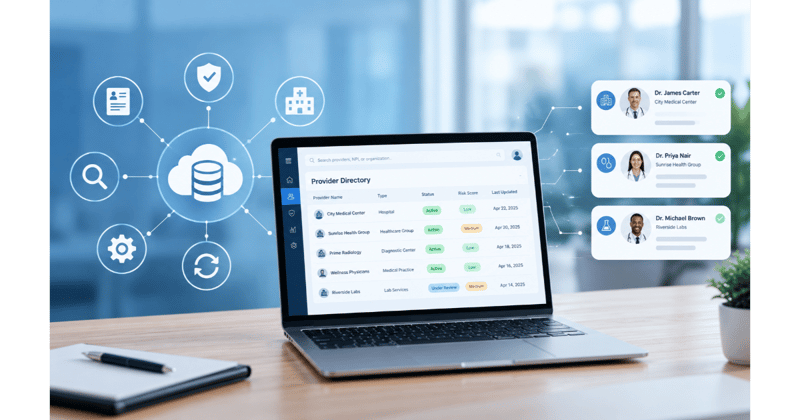
PRIME® stores languages, accessibility, telehealth availability, and other demographic attributes as effective-dated fields on the same provider record that drives your directory, so each value carries its history and can be traced to the source that confirmed it.
Within PRIME® Provider Directory Data Validation and the Provider Data Management Engine, your team can:
- Verify access attributes such as languages, accessibility, and telehealth on the same cycle as addresses and phone numbers, with the date, method, and source stored for each field
- Hold location-level accessibility details separately from provider-level attributes, so multi-site providers are represented correctly
- Add plan-specific custom fields for self-reported identity data that your source systems do not capture
- Restrict access to sensitive fields through role-based permissions, with every view and change recorded in the audit trail
- Publish validated values to member-facing directories in multiple languages, including indicators for accessibility and telehealth
For the directory rules that sit around these fields, see our overview of CMS provider directory requirements and network adequacy requirements for 2026.
If your network includes behavioral health clinicians, our guide to behavioral health provider data management covers the added complexity, and the PRIME® provider data management platform shows how one record supports all of it.
Get a demo today!