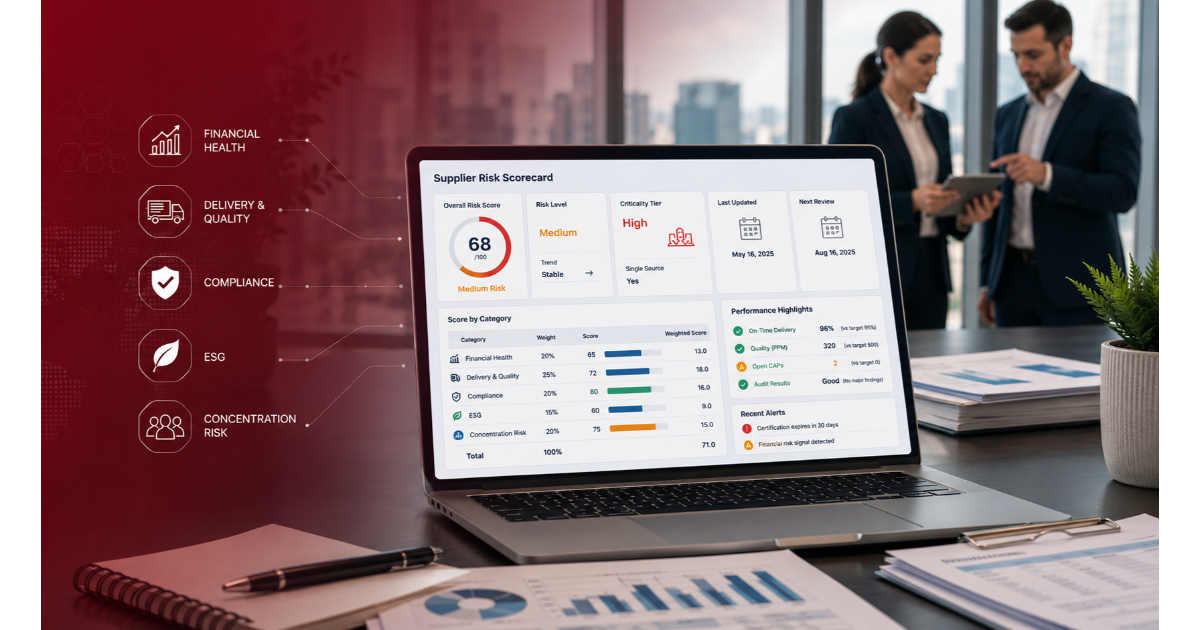
Most supplier risk programs run on the same broken assumption: that a questionnaire sent once a year tells you anything about a vendor's risk today. It doesn't. A vendor can pass a security review in March and leak your data in September, and the standard annual-cycle tool won't flag it until the next scheduled assessment rolls around.
Supplier risk management software exists to close that gap. It centralizes vendor data, automates assessments, and monitors your supplier base continuously instead of once a year. What's changed the buying decision recently is AI-assisted evidence review, which cuts assessment cycles from weeks to days, and a new category of headless, API-first platforms that let risk teams run assessments and pull vendor risk data through a conversational interface instead of a rigid dashboard.
We evaluated these ten platforms on assessment automation, how they monitor risk after onboarding, lifecycle coverage from intake through offboarding, compliance framework depth, and how well each integrates into the procurement systems you already run.
What Does a Supplier Risk Management Tool Actually Need to Do?
Before comparing platforms, it helps to know what you're actually buying. Most supplier risk programs fail not because the software lacks features, but because the software doesn't match how the risk team actually works day to day.
A supplier risk management tool needs to cover five things at minimum:
- Centralized vendor inventory. One system of record for every supplier, not a spreadsheet per department or region.
- Risk-based tiering. The depth of a review should match the vendor's actual exposure, not a fixed template applied to every supplier regardless of criticality.
- Assessment automation. Questionnaire prefill, evidence review, and scoring that don't require a human to re-key the same data every cycle.
- Continuous monitoring. Risk signals between assessment cycles, not just a report generated once a year.
- Remediation and audit trail. A clear owner, deadline, and record for every finding, so nothing sits unresolved and nothing disappears when an auditor asks for evidence.
Integration with your existing procurement or ERP system matters more than most buyers weigh it going in. A platform that can't talk to SAP or your onboarding workflow just becomes another silo your team has to update manually, which defeats the point of automating in the first place.
Best Supplier Risk Management Software Compared
|
Platform
|
Assessment automation
|
Continuous monitoring
|
Lifecycle coverage
|
ERP/procurement integration
|
|
ComplyScore®
|
AI-prefilled questionnaires, headless/chat access
|
Correlated signals routed to owned tasks
|
Full: onboarding to offboarding
|
Native: SAP, Oracle, JD Edwards, Infor LN; covers broad GRC suite
|
|
OneTrust
|
AI-assisted data collection
|
Rating-provider integrations
|
Full lifecycle, privacy-suite-first
|
Broad GRC suite integrations
|
|
Prevalent (Mitratech)
|
AI questionnaire completion
|
Threat monitoring + ESG scoring
|
Full lifecycle
|
GRC suite native
|
|
ProcessUnity
|
AI evidence review
|
Global Risk Exchange data
|
Full lifecycle
|
Configurable connectors
|
|
Venminder
|
Managed-service assessments available
|
Venmonitor (cyber, financial, ESG)
|
Full lifecycle
|
Limited native integration
|
|
BitSight
|
Not applicable, ratings-based
|
Continuous external ratings only
|
Monitoring only, not full lifecycle
|
Integrates into other TPRM tools
|
|
Panorays
|
Dynamic questionnaires
|
Attack-surface + questionnaire blend
|
Assessment and monitoring
|
REST API
|
|
SecurityScorecard
|
Not applicable, ratings-based
|
Continuous external ratings only
|
Monitoring only, not full lifecycle
|
ServiceNow, Splunk integrations
|
|
ServiceNow VRM
|
Smart Assessment Engine
|
Workflow-tied monitoring
|
Full lifecycle, GRC-suite-dependent
|
Native to Now Platform
|
|
MetricStream
|
Configurable assessments
|
GRC-integrated monitoring
|
Full lifecycle
|
Enterprise GRC connectors
|
ComplyScore®: The only headless, chat-driven TPRM and supplier risk platform
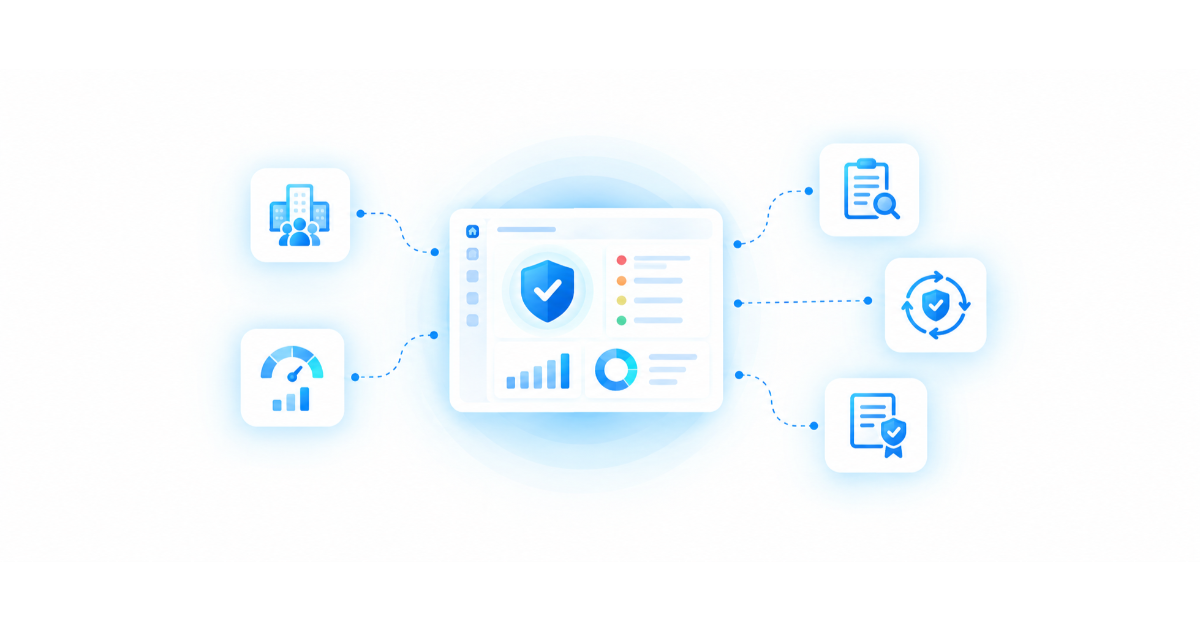
ComplyScore® governs supplier risk from a dual-module platform: continuous internal self-assessment paired with external third-party risk management, both running on the same API-first, headless architecture.
That headless layer is the part worth pausing on. Instead of forcing your team into a fixed dashboard, ComplyScore® lets you run assessments, pull vendor risk scores, and check compliance status through a conversational, chat-based interface.
If your procurement or risk team is drowning in tabs and separate logins for every vendor check, this matters more than another dashboard redesign. You get vendor risk data as a question you ask, not a report you go find, and that access works the same way whether you're checking supplier risk or your own internal compliance posture.
What it delivers:
- Headless, chat-based access to the full TPRM and self-assessment workflow, not just reporting
- AI-prefilled questionnaires against SIG, SOC 2, ISO 27001, and HIPAA baselines
- Engagement-aware tiering that sets assessment depth automatically based on scope, data sensitivity, and criticality
- Continuous monitoring that routes findings as owned tasks with deadlines, not just alerts
- Native integration with SAP, Oracle, JD Edwards, and Infor LN, with country-specific tax and compliance localization built in
Pros:
- Assessment cycles run in under 10 days versus the industry's typical multi-week cycle
- Vendor coverage reaches 90 to 95% of the portfolio, well above the 25 to 30% most spreadsheet-based programs manage
- Recognized as a Representative Vendor in the 2025 Gartner Market Guide for TPRM Technology Solutions
- A global manufacturer with 30K+ vendors across 31 countries and 3 ERPs went live division by division with no historical data migration required
OneTrust: Privacy-first GRC suite with third-party risk built in
OneTrust built its reputation on privacy and consent management, and its third-party risk module inherits that DNA: 25-plus built-in control frameworks, centralized vendor profiles, and ethics and compliance due diligence layered on top of security assessments.
If your organization already runs OneTrust for privacy operations or consent management, adding third-party risk to the same license keeps your data model unified. Teams evaluating TPRM as a standalone need often find the reverse true.
Key features:
- Centralized third-party inventory with editable profiles
- 25-plus built-in and custom risk-scoring frameworks
- PEP, sanctions, and watchlist screening
- Critical-event-triggered reassessment automation
Pros:
- Deep privacy and consent management overlap for organizations already on the platform
- Strong regulatory framework library
- Ethics and reputational risk screening beyond pure cybersecurity
Cons:
- Third-party risk is one module inside a much larger privacy and GRC suite, and buyers who only need TPRM often configure and pay for capability they don't use
- Implementation complexity scales with how much of the broader OneTrust suite you deploy alongside it
Prevalent (Mitratech): Enterprise TPRM with ESG depth
Mitratech's Prevalent platform unifies vendor management, risk assessment, and threat monitoring, backed by a library of standardized assessment templates. Recent updates added AI-generated incident summaries and ESG scoring across Scope 1, 2, and 3 emissions.
If your program needs ESG reporting alongside standard cyber and financial risk assessment, few platforms match this breadth in a single license.
Key features:
- AI-powered questionnaire completion from uploaded PDF evidence
- Technology Tags for software supply-chain visibility
- Analyst-curated emissions scores and ESG benchmarking
- Vendor Risk Assessment managed services as an add-on
Pros:
- Broad framework coverage spanning IT security, financial, anti-bribery, and ESG
- Managed-services option for teams without in-house assessment capacity
- Strong integration across Mitratech's wider GRC suite
Cons:
- Implementation services are recommended for large-scale deployments, which extends time to value
- The breadth that makes it comprehensive also raises the configuration burden for smaller teams
ProcessUnity: Workflow automation plus a shared vendor risk exchange
ProcessUnity pairs a configurable TPRM workflow engine with the Global Risk Exchange, a library of pre-completed vendor assessments built from its former CyberGRX acquisition. The exchange model means you're not always starting a security review from zero, particularly for widely-used vendors already profiled elsewhere in the exchange.
This matters most for teams that assess a high volume of common SaaS and infrastructure vendors, where redundant questionnaires waste real cycles.
Key features:
- Global Risk Exchange with pre-completed vendor profiles
- AI-driven evidence review
- Configurable risk-tiering and workflow builder
- Real-time reporting dashboards
Pros:
- Cuts due diligence time significantly for commonly-assessed vendors
- Highly configurable workflow without requiring custom code
- Strong dashboard and reporting depth
Cons:
- G2 reviewers cite slow loading times and limited contract lifecycle management functionality
- The exchange model adds less value once your vendor base skews toward niche or regional suppliers not already profiled
Venminder: TPRM software with managed-service assessments
Venminder combines a TPRM platform with the option to have Venminder's own analysts run the assessments for you, a model built specifically for regulated financial institutions.
If your compliance team is stretched thin and you'd rather hand off assessment labor than just the software, this is a genuinely different buying decision than the self-service platforms on this list.
Key features:
- Vendiligence due diligence and managed assessment service
- Venmonitor continuous monitoring across cyber, financial, and ESG signals
- Vendor risk assessment marketplace with nearly 30,000 assessments completed annually
- Purpose-built workflows aligned to OCC, FDIC, and FFIEC expectations
Pros:
- Managed-service option removes assessment labor from your team entirely
- Deep alignment with financial-services regulatory expectations
- Consistently strong customer support ratings across review platforms
Cons:
- Built specifically for TPRM, so organizations wanting broader enterprise GRC in the same system need a separate tool
- Recent acquisition by Ncontracts adds a layer of roadmap uncertainty
Bitsight: Outside-in security ratings for fast vendor triage
Bitsight rates vendor cybersecurity posture from a distance, using externally observable data across 23 risk vectors to generate a 250-to-900 score. It's less a full TPRM platform and more a fast-visibility layer many teams plug into a broader risk program, including through its Assessment Accelerator integration with tools like ServiceNow VRM.
This is the right fit when you need an immediate read on a vendor's external risk before or instead of sending a questionnaire.
Key features:
- Continuous, non-intrusive security ratings across 23 vectors
- Vendor Risk Matrix for remediation prioritization
- Historical ratings view for trend analysis
- Direct integration into other TPRM and GRC platforms
Pros:
- No vendor cooperation needed to get a first risk read
- Ratings update daily, not on an assessment cycle
- Established data set with over a decade of ratings history
Cons:
- Ratings come entirely from externally observable data, so an organization with strong internal controls can score lower than its actual posture warrants
- Not a lifecycle platform on its own; most buyers pair it with a workflow-first tool for onboarding and remediation tracking
Panorays: Questionnaire data blended with attack-surface scanning
Panorays combines automated security questionnaires with external attack-surface assessment and weights the result by the actual business context of the relationship, what it calls Risk DNA. It also automatically discovers fourth and n-th-party vendors your direct suppliers depend on, extending visibility a layer deeper than most platforms on this list.
Key features:
- Contextual Risk DNA scoring by business relationship criticality
- Automatic fourth-party and n-th-party vendor discovery
- REST API and webhook framework for custom integrations
- Compliance evaluation against global regulatory standards
Pros:
- Reconciles questionnaire and external scan data into a single risk view
- Good ease-of-use ratings from security teams
- Extended visibility into sub-tier vendor dependencies
Cons:
- Review sites consistently flag reporting customization as a limitation compared to workflow-first platforms
- Less procurement-native than platforms built around ERP integration first
SecurityScorecard: Security ratings at large scale
SecurityScorecard rates more than 12 million companies continuously using non-intrusive external scanning, and the resulting A-to-F grade has become a common reference point in cyber insurance underwriting and board reporting. Like Bitsight, it occupies the ratings-and-monitoring layer of a TPRM stack rather than the full workflow layer.
This is a strong add-on for continuous external visibility, but most buyers pair it with a separate assessment and remediation workflow tool.
Key features:
- Continuous non-intrusive security ratings, A through F
- Peer benchmarking against industry cohorts
- Cyber insurance underwriting support
- ServiceNow and Splunk platform integrations
Pros:
- Largest scored-company data set of the pure-ratings vendors on this list
- Ratings require zero vendor cooperation to generate
- Board-friendly reporting format
Cons:
- Same structural limit as any outside-in rating tool: it measures external exposure, not internal control maturity
- Some users report the platform leans toward a security-specialist audience rather than procurement or compliance generalists
ServiceNow Vendor Risk Management: Vendor risk inside a broader GRC suite
ServiceNow's Vendor Risk Management module lives inside its wider Governance, Risk, and Compliance suite on the Now Platform, and its value scales with how much of the rest of ServiceNow you've already deployed.
The Smart Assessment Engine automates much of the assessment cycle, and it accepts external ratings data from providers like Bitsight and SecurityScorecard as inputs.
Key features:
- Smart Assessment Engine for automated risk assessments
- Native integration with the rest of ServiceNow GRC
- Business impact analysis tied to enterprise risk scoring
- Accepts third-party ratings data as workflow inputs
Pros:
- Single system of record for organizations already on ServiceNow
- Strong cross-functional workflow between risk, audit, and compliance teams
- Mature platform with a large integration ecosystem
Cons:
- Vendor risk value depends heavily on existing ServiceNow GRC investment, so it's a weak standalone buy
- Configuration typically requires ServiceNow platform expertise, not just risk-team administration
MetricStream: Configurable GRC platform with third-party risk module
MetricStream serves complex, bespoke supplier risk programs inside a broader enterprise GRC platform, integrating supplier assessments, due diligence, and performance monitoring into one unified system. It's positioned for large organizations that want third-party risk managed alongside operational, financial, and compliance risk in a single governance layer.
This fits enterprises with a dedicated GRC team that wants deep configurability, not a fast out-of-the-box setup.
Key features:
- Configurable assessment workflows across multiple risk domains
- Integrated due diligence and performance monitoring
- Enterprise GRC connectors across finance, audit, and compliance systems
- Custom reporting and dashboard configuration
Pros:
- Strong fit for large enterprises managing multiple risk domains in one platform
- Deep configurability for complex, multi-division supplier programs
- Established presence in regulated industries
Cons:
- Configuration and implementation typically require dedicated GRC administration resources
- Less suited to mid-market teams wanting fast time to value over deep customization
How Did We Choose This List?
SERP results tell you what's ranking, not what buyers are actually shortlisting. So we started there, then checked it against something more reliable: the platforms that come up unprompted when TPRM and risk leaders talk to us on demo calls, whether as tools they're currently using, replacing, or evaluating alongside ComplyScore®.
That combination changed the list. A few platforms that rank well for supplier risk queries rarely come up in real buyer conversations, so we deprioritized them. A couple of platforms buyers mention constantly weren't as visible in search, so we made sure they made the cut anyway.
We also drew a boundary on scope. Several tools that rank for "supplier risk" queries are built for physical supply-chain resilience, disruption monitoring, and logistics, a different buying motion entirely from vendor cyber, compliance, and financial risk. We left those out, since including them would have meant comparing tools your team isn't actually choosing between.
From there, we scored each remaining platform against the same five criteria above: assessment automation, how monitoring actually works, how much of the vendor lifecycle it covers, how deep its compliance framework support goes, and how well it integrates into procurement systems. No vendor paid for placement or ranking on this list.
Choosing the Right Platform for Your Team
The right supplier risk management platform depends on what your program is missing today.
If you're evaluating a platform to replace spreadsheets and disconnected tools altogether, weigh how much of the full lifecycle each one actually owns, from intake through offboarding, not just how well it scores or assesses a vendor at a single point in time.
ComplyScore® covers that full lifecycle natively, with AI-assisted assessments, continuous monitoring tied to owned remediation tasks, and headless access that lets your team pull vendor risk data conversationally instead of hunting through a dashboard. It's built to handle both your external vendor risk and your internal compliance posture in one platform, which is worth factoring in if you're currently running separate tools for each.
See how it fits your specific vendor portfolio with a personalized demo.






.webp?width=387&height=387&name=headless-tprm%20(1).webp)



































%20(1).jpg)

.webp)
.webp)
.webp)