Two risk teams can look at the same vendor incident and log it under completely different categories, one calling it a cyber event and the other a third-party failure, and both would be defensible without a shared taxonomy to settle the question. That inconsistency is a real cost, and it is the reason risk aggregation reports across business units so often fail to add up to a coherent picture.
What Is an Operational Risk Taxonomy?
An operational risk taxonomy is a structured classification system that defines categories and subcategories of operational risk. It's a foundational piece of operational risk management, giving an organization a consistent language to identify, report, and aggregate risk across teams and business units.
It answers the basic question every risk register eventually runs into: which bucket does this specific risk actually belong in.
A working taxonomy has to do more than list categories. It needs clear inclusion and exclusion rules, so two people classifying the same event independently land in the same place. That same consistency is what makes a reliable operational audit risk assessment possible — auditors can't scope work around categories that shift depending on who's doing the classifying.
The ORX and Basel Event-Type Reference
Most organizations do not build a taxonomy from scratch. The industry reference point is the Basel Committee's seven Level 1 event types, later refined and maintained by ORX, the operational risk association whose Reference Taxonomy is used by more than 100 financial institutions worldwide.
The Basel structure originally treated categories like internal fraud, external fraud, and business disruption as largely separate from vendor relationships. That has changed. ORX's own guidance explicitly lists third party as one of the more contemporary risk categories added to the reference taxonomy alongside conduct and cyber risk, reflecting how much operational risk now originates outside the organization's own walls rather than inside it. The European Banking Authority's 2025 update to its regulatory event taxonomy went further, adding a dedicated cyber flag while retaining the seven Basel-aligned Level 1 categories underneath.
A Practical Taxonomy for Vendor-Driven Operational Risk
Applying a generic taxonomy directly often produces categories too broad to route work to the right owner, which is exactly the gap dedicated operational risk management tools with configurable categories are built to close. A practical version, built for organizations with meaningful vendor exposure, narrows the reference categories into five working domains.
Information security
Confidentiality, integrity, and availability failures tied to a vendor's systems or access, including breach events and credential exposure.
Operational resilience
Business continuity, incident response, and redundancy failures, whether the disruption originates internally or from a vendor's own outage.
Regulatory compliance
Failures to meet data privacy, financial services, or industry-specific regulatory requirements, including obligations that flow through to vendors under frameworks like DORA or RBI's outsourcing guidelines.
Financial stability
Risk that a vendor's financial distress disrupts continuity of a critical service, distinct from the organization's own financial risk.
Supply chain and fourth-party exposure
Risk introduced by a vendor's own subcontractors and suppliers, one layer removed from the direct relationship but still capable of causing a material disruption.
How ComplyScore® Structures Risk Classification
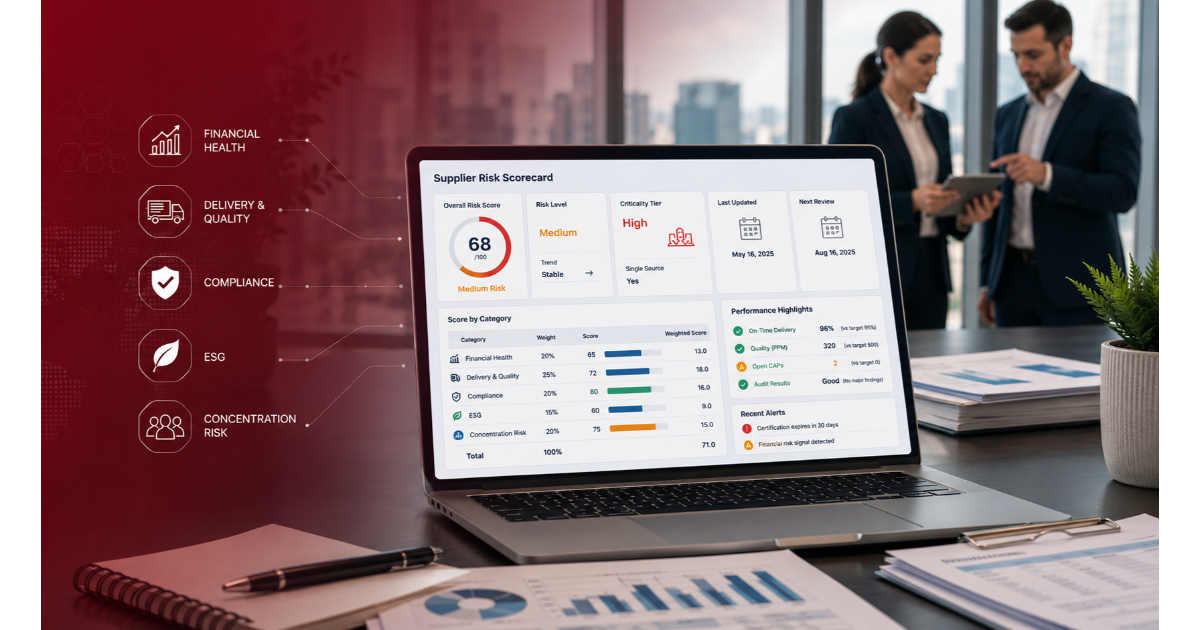
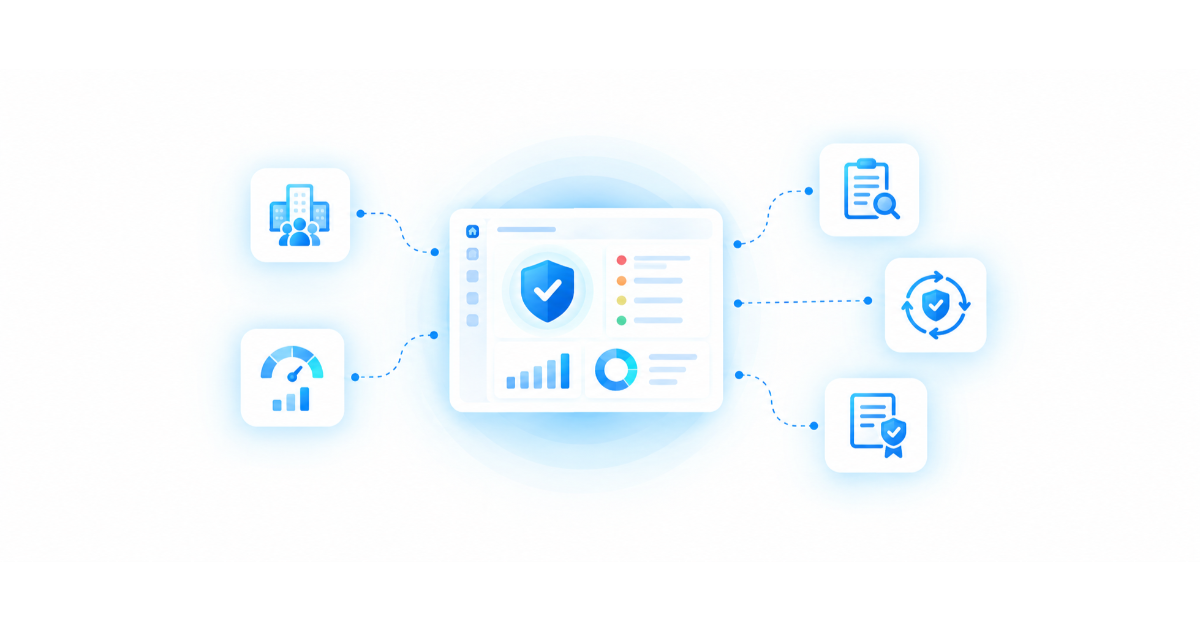
As part of its operational risk management platform, ComplyScore® scores inherent risk across these same five domains as part of every vendor assessment, rather than applying a single generic risk score that flattens distinct exposure types into one number. Continuous monitoring routes signals into the correct domain automatically, so a vendor's financial distress and a vendor's security incident surface as distinct, separately owned risks instead of one undifferentiated alert.
Because the taxonomy is consistent across assessment, monitoring, and reporting, executive dashboards can aggregate risk by domain across the entire vendor portfolio, not just within a single assessment — removing the operational efficiency drag of teams reconciling mismatched categories before every risk review.
See how ComplyScore® structures operational risk classification. Book a demo








.webp?width=387&height=387&name=headless-tprm%20(1).webp)









































.webp)
%20(1).jpg)

.webp)
.webp)