A procurement lead and a compliance officer can look at the same supplier and describe two different levels of concern. Procurement is watching delivery times and pricing. Compliance is watching certifications and audit history. Both views are legitimate on their own. Complications start when there's no single scorecard that holds both together, and each team ends up making decisions from a different, partial picture of the same supplier.
A supplier risk scorecard exists to close that gap: one record, built from both sets of data, giving every stakeholder a shared reference point instead of competing spreadsheets that rarely agree.
What Is a Supplier Risk Scorecard?
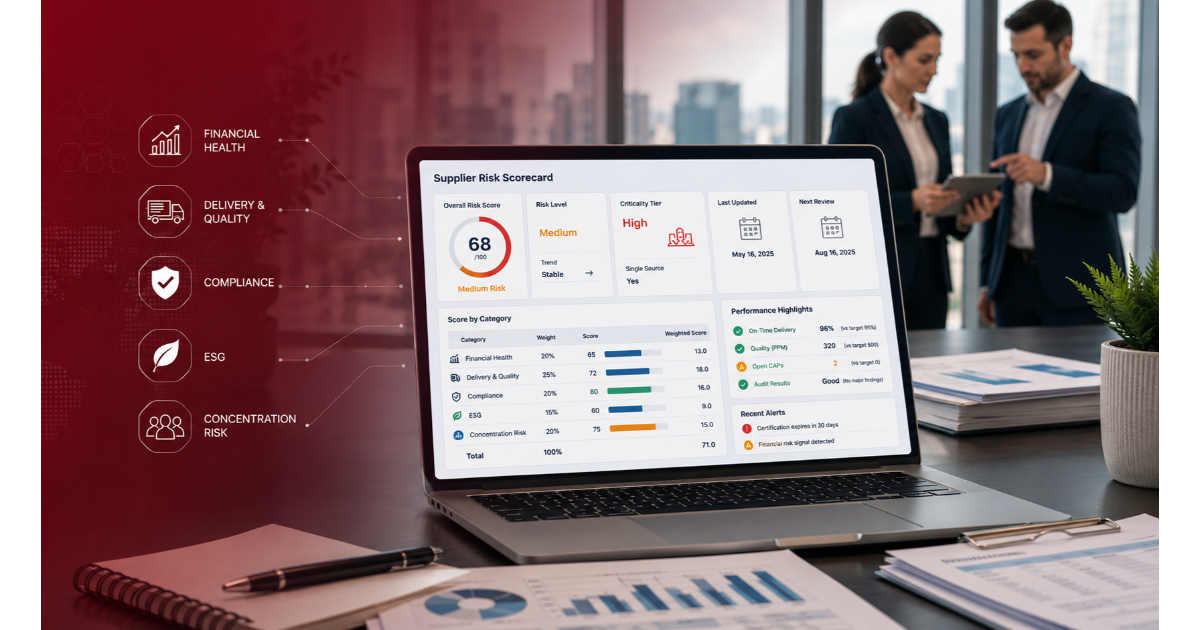
A supplier risk scorecard is a structured record that combines a supplier's performance, financial, compliance, and risk data into a single, weighted view. Its purpose is to give every stakeholder, procurement, quality, compliance, the same picture of a supplier rather than separate, disconnected files.
What Belongs on the Scorecard
Financial indicators
Payment history, credit rating trends, and any public signals of financial distress belong here, though this section doesn't need to be exhaustive. What matters more than depth is that the data stays current, since a financial indicator from a year ago tells you very little about a supplier's position today.
Delivery and quality KPIs
On-time delivery rate, defect rate, and how a supplier handles corrective action requests are metrics procurement teams already track closely. They belong on the same scorecard as compliance data rather than living in a separate system procurement checks and compliance never sees.
Compliance status
Certification validity, audit results, and any open findings should visibly affect the score the moment they change. A lapsed certification sitting unnoticed in a separate file, discovered only at the next scheduled review, defeats the purpose of tracking it at all.
ESG indicators
Labor practices, environmental compliance, and sourcing transparency, weighted according to how material they are for your industry and your own reporting obligations. A consumer goods company and a component manufacturer will reasonably weight this differently.
Concentration flags
A simple flag identifying suppliers who are single-source for a critical category, or who represent an outsized share of supply from one region. This is easy to leave off a scorecard and expensive to discover you needed it after the fact.
Weighting Criteria by Supplier Criticality
Not every field deserves equal weight across every supplier. For a critical, single-source supplier, delivery performance and concentration flags should carry heavy weight, since a shortfall there has few easy workarounds. For a supplier you could replace within days, lighter weighting across the board is appropriate.
Building this into the scorecard from the outset avoids a common trap: treating every supplier as equally important, which in practice usually means no supplier gets the depth of attention they actually need.
Scorecard vs Assessment: How the Two Work Together
A scorecard isn't a substitute for a full supplier risk assessment. It's the live summary that assessment findings feed into. When you run a deeper supplier risk assessment, the scorecard is where those results become visible day to day, rather than sitting in a report that only gets reopened once a year.
Keeping the Scorecard Current Instead of Annual
A scorecard updated once a year is already stale the moment a supplier's financial position shifts or a certification lapses somewhere in between. The scorecards that hold up under scrutiny, an audit, a customer question, an internal review, are tied to live data feeds and event triggers rather than a calendar reminder.
This doesn't require constant manual re-entry. It requires the underlying systems, financial monitoring, certification tracking, delivery data, to feed the scorecard automatically as conditions change, so the record reflects reality rather than the last time someone had time to update it.
How ComplyScore® Automates Scorecard Updates
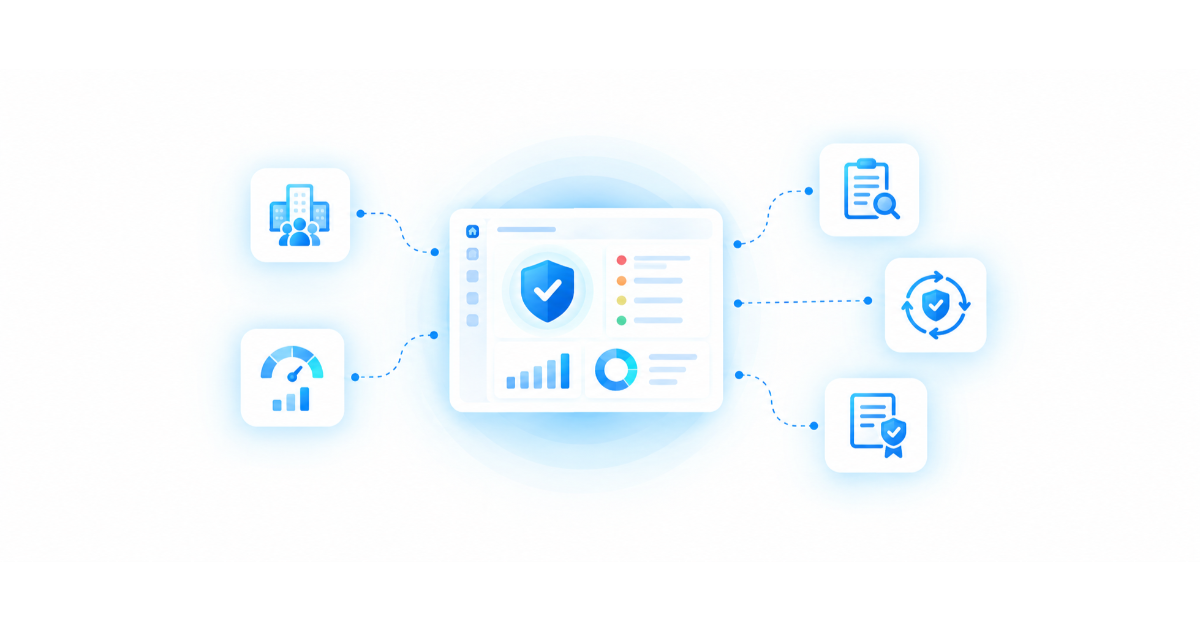
ComplyScore®'s supplier risk management platform pulls performance, compliance, and financial signals into a single scorecard automatically, so procurement and compliance are always working from the same numbers rather than reconciling two versions of the truth. When a certification lapses or a financial risk signal appears, the score updates immediately and routes to the right owner.
Suppose two teams are evaluating the same supplier for a contract renewal. Instead of procurement pulling delivery data from one system and compliance pulling certification status from another, both are looking at the same live scorecard, which tends to shorten the conversation considerably and remove a common source of internal disagreement.
Book a demo to see a live supplier scorecard built from your own data sources.






.webp?width=387&height=387&name=headless-tprm%20(1).webp)



































%20(1).jpg)

.webp)
.webp)
.webp)