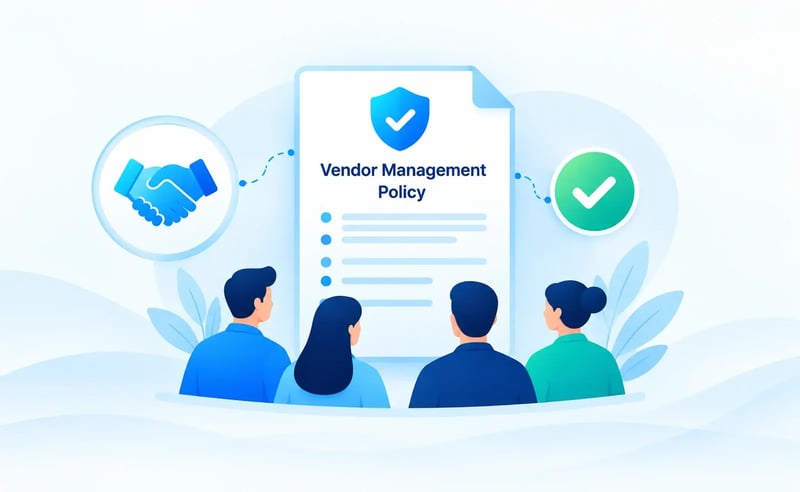
Auditors have started asking a question that many vendor risk teams struggle to answer on the spot: why does this vendor sit in this tier? A tier assigned three years ago by an analyst who has since moved on, with no recorded reasoning, now shows up as an audit finding even when the tier itself is correct.
US banking regulators are sharpening that question. In September 2026, the OCC, Federal Reserve, FDIC, and NCUA proposed replacing the 2023 interagency third-party guidance with a version that ties oversight to the risk each relationship actually presents.
Vendor risk tiering is where that principle becomes daily practice, and a model built for it does two jobs at once: it gives every tier a defensible reason, and it points your limited assessment hours and intelligence budget at the vendors that need them.
What Is Vendor Risk Tiering?
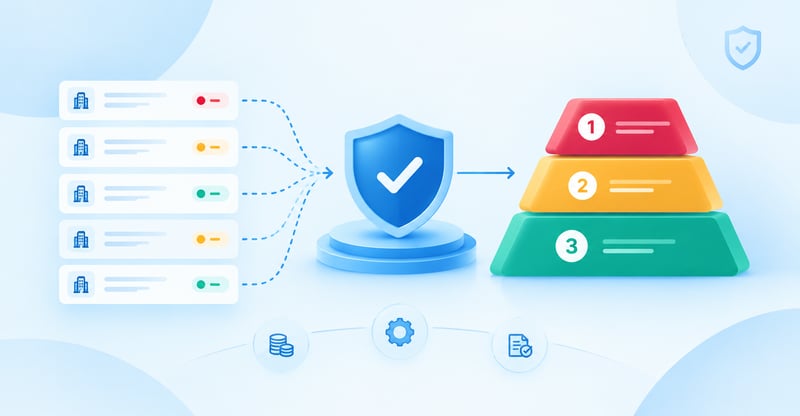
Vendor risk tiering groups vendors, or each engagement with a vendor, by inherent risk so assessment depth, monitoring, and approval levels scale with the exposure each one carries. A sound model uses documented criteria and records why every vendor sits in its tier, so different assessors reach the same answer.
Tiering happens before any assessment, which makes it the most consequential decision in your program. A vendor placed one tier too low skips the evidence review that would have exposed its gaps, and nothing later in the lifecycle corrects that.
Why Does Tiering Matter More Under the Proposed 2026 Interagency Guidance?
The proposed third-party risk management guidance states that sound programs “commonly begin with identifying and categorizing third-party relationships” and calls for oversight “proportionate to the risks they present.” The agencies also signal that the 2023 approach leaned too heavily on whether an activity was labeled critical, and too little on the risk the relationship actually carries. Comments close on November 16, 2026, so the final text may still change.
Two practical consequences follow for your tiering model, whatever the final wording:
- Labels need reasons. A tier based on a “critical activity” checkbox carries less weight than a tier traced to the data, access, and dependency behind it
- Lighter diligence becomes defensible for lower tiers. The proposal acknowledges that banks may rely on less detailed information, including public sources, for lower-risk relationships, provided the tiering behind that choice holds up
Proportionate oversight only works if your tiers are accurate, because every downstream shortcut inherits the tier’s reasoning.
What Should Decide a Vendor’s Tier?
Tiering inputs work in two different ways, and keeping them separate is what stops a model from drifting. Floors set a minimum tier that no score can override, while scored factors place a vendor within the range above that floor.
|
Input
|
How it works
|
Where the evidence comes from
|
|
Access to regulated or customer data
|
Floor: never below Tier 2
|
Intake form, data flow records, contract scope
|
|
Privileged or persistent system access
|
Floor: never below Tier 2
|
IAM records, integration requests
|
|
Sole supplier of a service your customers depend on
|
Floor: Tier 1
|
Business owner attestation, continuity plans
|
|
Operational dependency and replaceability
|
Scored
|
Business owner input, exit plan
|
|
Data volume and sensitivity mix
|
Scored
|
Data inventory, engagement scope
|
|
Regulatory footprint and geography
|
Scored
|
Vendor profile, processing locations
|
Floors keep a low score on secondary factors from pulling a high-exposure vendor into light-touch review. For a deeper look at the scored factors themselves, this guide on how to determine vendor criticality breaks down each one. Write your floors first, then score, because floors are the part of the model an examiner will test hardest.
How Many Tiers Do You Actually Need?
The right number of tiers is the number your team actually treats differently. Apply one test: if two tiers trigger the same assessment, the same monitoring, and the same approver, they are one tier with two names, so merge them.
Three tiers are enough for many programs, as long as each one changes what your team does:
|
Treatment
|
Tier 1
|
Tier 2
|
Tier 3
|
|
Assessment depth
|
Full standards-based assessment with evidence review
|
Targeted assessment on the two or three domains that matter for the engagement
|
Public-source vetting, sanctions screening, and a short attestation
|
|
Monitoring
|
Continuous, with paid security and financial feeds
|
Event-driven alerts
|
Event-driven alerts from public sources
|
|
Approval
|
Senior risk officer
|
Vendor risk lead
|
Business owner, with automated checks
|
|
Full review cycle
|
Annual, plus every trigger event
|
Every two years, plus trigger events
|
On trigger events only
|
The bottom row is where the budget lives. Every vendor you can defensibly move from Tier 1 to Tier 2 frees assessment hours and a paid intelligence subscription for a vendor that needs them.
Should You Tier the Vendor or the Engagement?
Tier the engagement, then roll the result up to the vendor. A single cloud provider might host your marketing site under one contract and process customer account data under another, and those two engagements deserve different scrutiny.
Use a simple rule: Each engagement carries its own tier and assessment scope, the vendor record displays its highest engagement tier, and the vendor drops a tier automatically when that highest engagement ends. This keeps a low-risk renewal from triggering a full assessment just because the same vendor holds one high-risk contract elsewhere.
How Do You Make Every Tier Defensible?
Defensibility comes from three habits, each one cheap to start and expensive to reconstruct after an audit request.
Record the rationale when you assign the tier
Capture the inputs used, any floor that applied, the evidence source for each input, who assigned the tier, and the date. A rationale written at the moment of tiering takes two minutes, while one rebuilt for an auditor two years later can take days and rarely convinces anyone.
Treat manual overrides as data
Every program needs a way to override the model, and every override tells you something. Track the override rate by business unit and by assessor each quarter; a rate that keeps rising means your floors or scoring no longer match how the business actually uses vendors.
Check your tier distribution every quarter
Watch the shape of your portfolio across tiers. A Tier 1 that keeps growing without new high-risk engagements usually means your floors are too broad, while a Tier 3 that never loses a vendor upward suggests your triggers are not firing.
When Should a Vendor Change Tiers?
Re-tiering changes the treatment a vendor receives, which makes it a separate decision from refreshing a vendor’s risk score, a process this guide to vendor risk scoring covers in detail. Tier moves run in both directions, and programs that only ever move vendors up end up paying Tier 1 costs for Tier 3 relationships.
Here are the events that should prompt a tier review in each direction:
- Move up: new access to regulated data, a new processing location, a change in ownership, a security incident, or a new AI feature that touches your data, the pattern behind shadow AI
- Move down: a high-risk engagement ends, data access is removed, or the contract scope narrows to non-sensitive services
Down-tier reviews are where the savings hide, because every program has vendors still assessed at a level their current engagement no longer justifies.
How ComplyScore® Turns Tiers Into the Right Workload
A tiering model on paper still depends on analysts applying it consistently across thousands of vendors and remembering to revisit it when engagements change. ComplyScore® builds the model into the workflow, so the tier decides the work automatically.
- Engagement-aware tiering scores each engagement by scope, data sensitivity, business criticality, and regulatory footprint, then sets assessment depth, evidence requirements, and monitoring for that tier
- Vendor profile intelligence enriches lower-tier vendors from public registries and open sources, giving you documented diligence without a questionnaire
- Tier-specific risk appetite lets you set tolerance thresholds per risk domain and tier, such as zero open high-severity cyber findings for Tier 1 vendors
- Targeted intelligence activation switches on premium feeds when a trigger such as a credit downgrade or breach fires, then scales back as risk stabilizes, cutting assessment costs by 40 to 60%
- Automatic re-tiering responds to events such as a new geography, a breach alert, or a credit downgrade, and routes the new actions to owners
- Exception approvals and audit trail keep every override and approval on record for examiners
ComplyScore® runs at the scale of Enviri’s vendor base of 45,000+ vendors across 30+ countries, where a tier decision repeated by hand would never stay consistent.
Where Should You Start?
Pull your current Tier 1 list and check how many of those vendors have a written rationale and a floor that justifies their placement. That single exercise tells you how defensible your model is today and how much assessment budget sits with vendors that may belong a tier lower.
To see engagement-aware tiering on your own vendor data, book a 30-minute demo.