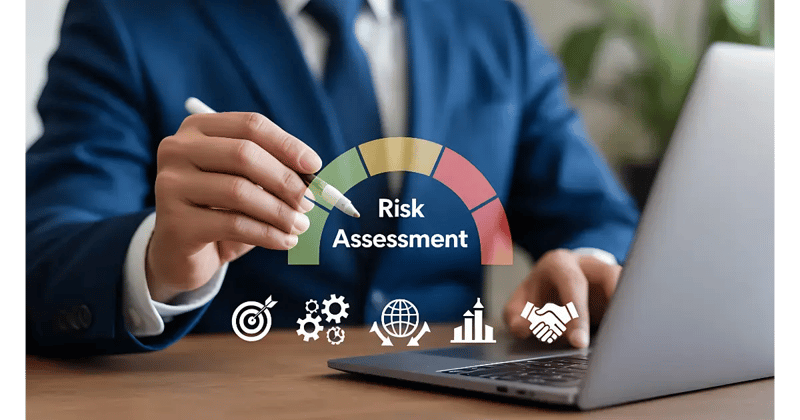
Most vendor risk programs treat criticality as a fixed attribute, something you assess once at onboarding and file away. That assumption holds up fine when your vendor count is manageable and your business is static. At scale, across geographies and evolving engagement scopes, it quietly becomes one of the most expensive blind spots in your TPRM program.
Criticality determines where your team focuses its due diligence effort, how deeply you assess each vendor, and how frequently you monitor them. Getting it wrong in either direction carries real cost: over-assessing low-risk vendors burns analyst capacity, while under-scrutinizing high-exposure ones creates the conditions for breaches, regulatory findings, and operational failures.
What Is Vendor Criticality?
Vendor criticality measures how dependent your organization is on a specific vendor's continued performance and what the operational, financial, or regulatory consequences would be if that performance fails. It reflects the business impact of disruption, not a judgment of the vendor's security posture alone. A vendor managing core financial infrastructure is critical regardless of their SOC 2 score; an office supplies vendor is not, regardless of their control gaps.
In a TPRM program, criticality drives the scope and depth of due diligence, monitoring frequency, contractual requirements, and escalation protocols assigned to each vendor relationship.
Criticality Is Not the Same as Risk
This is the distinction that most vendor management programs collapse, and the consequences are significant. A vendor can be critical to your operations but carry moderate inherent risk. Conversely, a vendor can present high inherent risk while being entirely replaceable within 48 hours. Treating these as the same thing leads to misallocated effort.
|
Dimension
|
What It Measures
|
Illustrative Scenario
|
|
Criticality
|
Operational dependence and business impact if the vendor fails
|
A payment processing vendor that handles every customer transaction. If they go down for 6 hours, revenue stops and regulatory SLAs are breached. High criticality, regardless of their security posture.
|
|
Inherent Risk
|
Exposure the engagement introduces before any controls are applied
|
A marketing analytics vendor with read access to behavioral data across 2 million users. High inherent risk due to data volume, but fully substitutable within a week.
|
|
Residual Risk
|
Risk that remains after controls are assessed and validated
|
The same analytics vendor post-assessment: encryption confirmed, access scoped, SOC 2 Type II current. Inherent risk was high; residual risk is now moderate. Criticality unchanged.
|
A printing vendor that produces your mandatory regulatory disclosures may be classified as critical (losing them disrupts compliance obligations) while carrying only moderate inherent risk. A SaaS analytics tool may present high inherent risk due to data access but be easily substituted within days, placing it outside the critical tier. Your due diligence depth and monitoring cadence should reflect both dimensions independently, rather than merging them into a single catch-all tier.
The Key Factors That Determine Vendor Criticality
Five factors consistently determine whether a vendor clears the critical threshold. Here they are, along with the questions each factor requires you to answer.
Operational dependency
- How deeply is your organization's day-to-day function reliant on this vendor's output?
- If the vendor's service becomes unavailable, what breaks first, how quickly, and how broadly?
A vendor whose failure would halt revenue generation, interrupt customer-facing processes, or disable core infrastructure carries a high operational dependency score.
Substitutability
Can you replace this vendor within a timeframe that your business can tolerate?
A vendor with a unique capability, deep integration into your systems, or a long onboarding curve is harder to substitute and therefore more critical, independent of their risk profile. High substitutability reduces criticality; low substitutability increases it.
Data sensitivity
What data does the vendor access, process, or store?
Vendors with access to personally identifiable information, protected health information, financial records, or regulated data inherit a higher criticality baseline because their failure introduces direct regulatory exposure, not just operational disruption.
Business impact of disruption
If this vendor fails to perform for 24 hours, what is the measurable consequence?
This question forces you to translate criticality into financial and operational terms: lost transactions, regulatory penalties, SLA breaches, customer churn, or reputational damage. Vendors where the answer involves material financial exposure or regulatory consequence belong in the critical tier.
Regulatory and contractual footprint
Some vendor relationships carry regulatory obligations that make them critical by definition, independent of operational dependence. Vendors operating under financial services regulations, healthcare compliance mandates, or data protection laws require a specific level of oversight that your program cannot scale back regardless of other factors. The regulatory footprint of the engagement is a floor, not just a variable.
Why Static Criticality Ratings Break Down
A vendor tiered as low-criticality at onboarding can become critical within months as their scope expands, their data access deepens, or your operational dependence on them increases. The methodology for determining criticality is sound. The structural failure is treating it as a point-in-time classification rather than a living assessment.
Here is what typically changes in a vendor relationship over 12 to 18 months, with no automatic re-tiering to reflect it:
- Engagement scope widens as business units adopt the service more broadly than originally contracted
- Data access deepens as the vendor gets connected to systems they did not originally touch
- Geographic footprint expands into regulated jurisdictions that add compliance obligations to the relationship
- Processing volumes increase in ways that change the financial and operational impact of a disruption
None of these changes trigger an automatic re-tiering in a static program. The criticality rating sits unchanged in a spreadsheet while the actual exposure has materially shifted.
For organizations managing hundreds or thousands of vendor relationships across multiple geographies and business units, this gap is not a theoretical risk. Monitoring cadence, assessment depth, and remediation SLAs all calibrate to an outdated picture, and that picture drifts further from reality with every quarter that passes.
How Engagement-Aware Tiering Fixes the Classification Problem
The answer to static tiering is a methodology that ties criticality to the actual engagement, not to the vendor as an entity. Engagement-aware tiering evaluates each vendor-service relationship individually, scoring it on the factors that drive real exposure.
What gets scored per engagement:
- Scope of services and functional dependency
- Data sensitivity and volume of regulated information in play
- Business criticality of the function the vendor serves
- Regulatory obligations attached to the specific engagement geography
This matters because the same vendor can carry different criticality levels across different engagements. A cloud infrastructure provider hosting your customer data in one engagement while providing internal collaboration tools in another deserves different scrutiny in each context. Treating them as a single entity with one criticality tier produces an inaccurate risk picture.
ComplyScore® by Atlas Systems builds engagement-aware tiering directly into its TPRM platform. Each vendor-service relationship is scored against the factors that determine real exposure, so assessment depth, monitoring frequency, and remediation SLAs automatically reflect the actual risk each engagement carries.
When conditions change, such as a scope expansion, a new geography, a breach alert, or a credit downgrade, ComplyScore® can trigger automatic re-tiering and route updated actions to the relevant owners in real time.
Global enterprises managing vendor bases across dozens of countries, multiple ERPs, and thousands of active vendor relationships face exactly this problem at scale. Any classification system that does not update when engagement conditions change produces a risk picture that drifts further from reality with every passing quarter.
With more than two decades of TPRM experience, Atlas Systems built ComplyScore® to address this gap directly, replacing point-in-time criticality ratings with a continuously maintained, engagement-level view of vendor exposure.
Want to see how engagement-aware tiering works against your current vendor portfolio? Request a demo of ComplyScore®.








.webp?width=387&height=387&name=headless-tprm%20(1).webp)










































%20(1).jpg)