Every year, TPRM teams add vendors to their queue faster than they can clear it. A GRC Director managing 300+ vendor relationships knows that feeling well: the assessment backlog is growing, the compliance calendar is full, and procurement is asking why onboarding a new supplier takes six weeks. That pressure doesn't come from a lack of effort. It comes from a process that was never designed to scale.
Security questionnaire automation changes that equation.
But what most guides miss is that the value isn't just faster paperwork. Done right, it reshapes how your team allocates risk expertise, how quickly vendors become operational, and how your organization demonstrates due diligence when regulators come knocking.
What Security Questionnaire Automation Actually Means
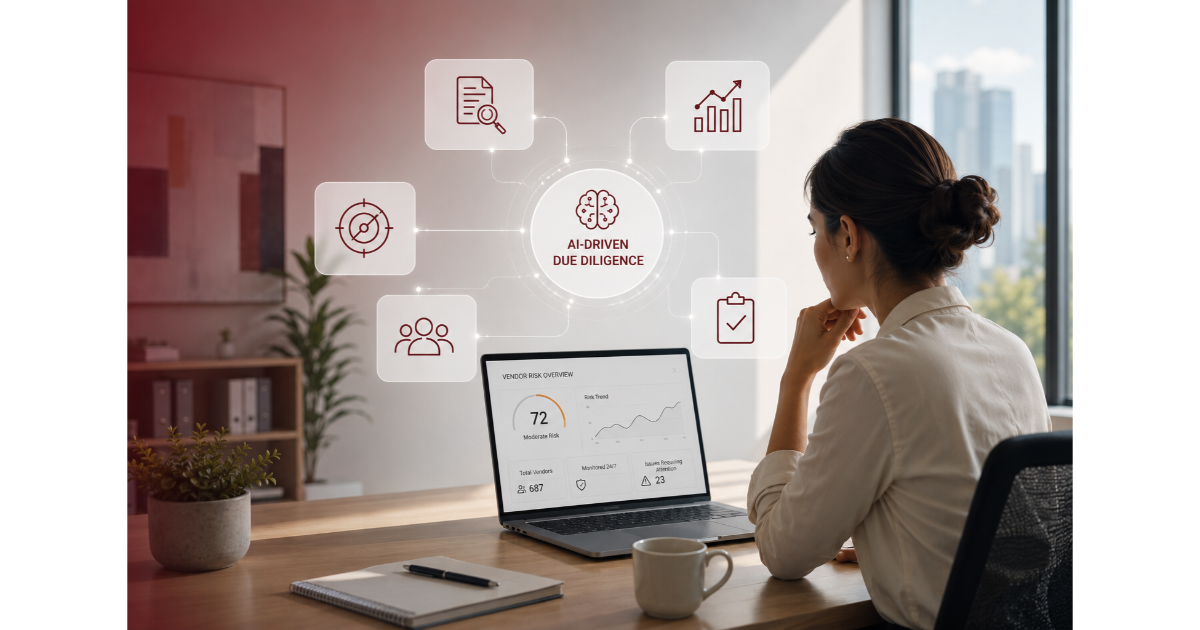
Security questionnaire automation is the use of AI-powered platforms to handle the distribution, tracking, analysis, and scoring of vendor security assessments without requiring manual coordination at every step. Rather than replacing human judgment, it removes the administrative friction that prevents your team from applying judgment where it actually matters.
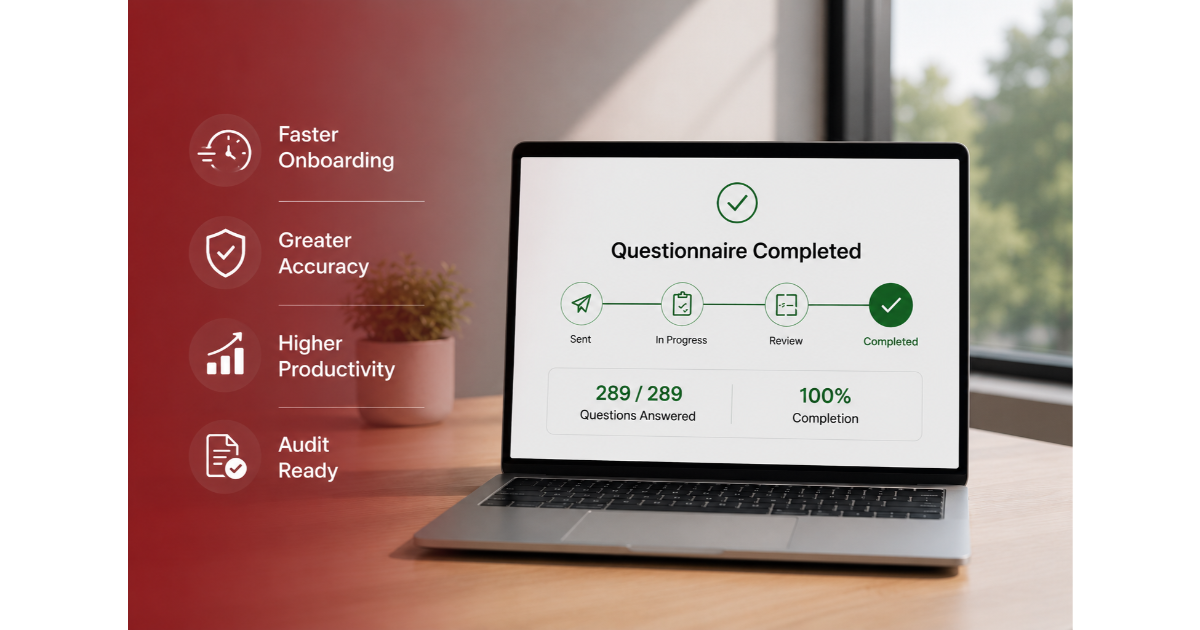
An automated assessment workflow sends the right questionnaire to the right vendor based on their risk tier, tracks response completeness in real time, flags inconsistencies or missing evidence, maps answers to compliance frameworks, and produces a scored risk profile your team can act on. All of this happens without someone chasing down a vendor for the third time via email.
For organizations managing hundreds of vendors across regulated industries, this isn't a convenience upgrade. It's the difference between a TPRM program that can keep up and one that is perpetually in catch-up mode.
The Real Cost of Manual Questionnaire Processes
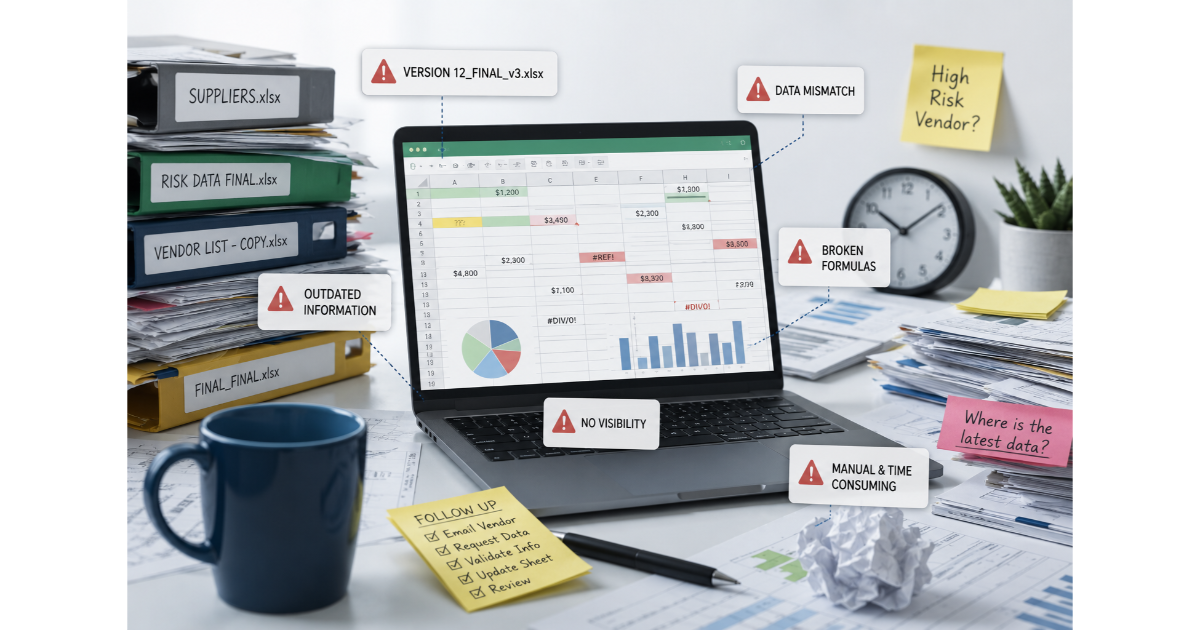
Most conversations about manual vendor assessments focus on time. And yes, the time cost is real. According to Gartner, manual vendor reviews take 15-20 hours on average per supplier.
When assessments take weeks, vendors don't wait. They start providing services before your team has confirmed their controls are adequate, or deals stall while procurement absorbs the delay. Either way, your organization carries risk it didn't choose to accept.
Four structural problems drive this:
- Volume without proportional headcount. Vendor ecosystems grow every year. Risk teams don't. A team of four cannot give every vendor the same level of scrutiny using manual processes.
- Questionnaire fatigue on the vendor side. Large vendors receive dozens of similar questionnaires annually. Rushed or copy-pasted responses are common, and they erode the accuracy of your assessments.
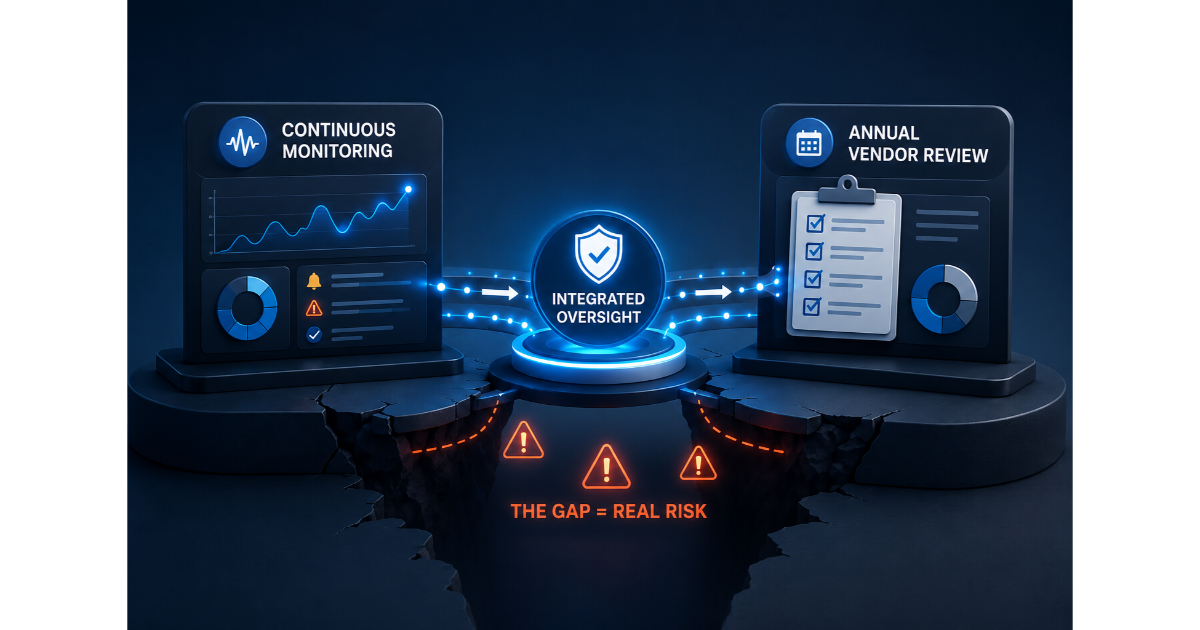
- Point-in-time blindness. A questionnaire completed in February tells you nothing about a vendor's posture in August. Without continuous validation, your risk data ages out of relevance silently.
- Framework duplication. If you're running assessments against SOC 2, ISO 27001, NIST CSF, and HIPAA simultaneously, your team is likely re-asking many of the same questions in different formats. That's an effort that intelligent control mapping can eliminate.
The result is a TPRM program where compliance exists on paper but risk clarity doesn't exist in practice.
What Automated Vendor Onboarding Actually Looks Like
When questionnaire automation is embedded into vendor onboarding, the experience changes for everyone involved: your risk team, your procurement team, and the vendor.
Here is what the workflow looks like with the right platform in place:
Intake triggers the right assessment automatically
A new vendor enters the system. Based on the data type they'll access, their industry, and your internal risk tiering criteria, the platform selects and sends the appropriate questionnaire. A low-risk SaaS vendor gets a lightweight assessment. A vendor handling sensitive customer data gets a deeper review without the need for manual routing and guessing.
Vendors complete assessments through a guided experience
Instead of a static spreadsheet attached to an email, vendors work through a structured digital assessment. Guided completion reduces incomplete responses and improves the quality of the evidence you receive. Follow-ups go out automatically for overdue items, without requiring a team member to track and chase.
AI analyzes responses and flags risk before a human touches it
When responses come in, the platform reviews them for inconsistencies, validates answers against prior submissions, and maps evidence to your relevant compliance frameworks. Your analyst receives a pre-scored risk profile with gaps already surfaced, not a stack of raw responses to read through.
Risk decisions happen faster, with more confidence
With the groundwork done automatically, your team spends its time on what matters: reviewing the flagged items, engaging directly with vendors on remediation, and making informed decisions about whether to onboard, escalate, or request additional documentation. What once took weeks now takes days.
Why This Matters More in Regulated Industries
For organizations in financial services, healthcare, manufacturing, and life sciences, vendor assessments are not optional or internal. They are part of your compliance posture. Regulators including the SEC, HIPAA oversight bodies, and frameworks like DORA and NIST 800-53 expect documented, consistent evidence of third-party risk due diligence.
Manual processes create gaps that are difficult to defend:
- Inconsistent questionnaire coverage across your vendor population
- Missing evidence for lapsed or overdue reassessments
- No clear audit trail showing when decisions were made and why
An automated TPRM process creates an audit-ready record by default, not as an afterthought before an audit. Every questionnaire sent, every response received, every risk decision made is documented with a timestamp your compliance team can produce on demand.
How ComplyScore® Automates Security Assessments End to End
ComplyScore® by Atlas Systems is built for organizations that need to run rigorous vendor risk programs at scale, without expanding their risk team with every new vendor relationship.
The platform handles the full assessment lifecycle, from vendor intake and questionnaire distribution through response analysis, risk scoring, and reassessment scheduling. Here is what that means in practice:
Tiered questionnaire assignment. ComplyScore® maps each vendor to a risk tier and assigns the appropriate assessment automatically. Critical vendors receive comprehensive assessments. Lower-risk vendors go through lighter reviews. Your team doesn't decide this for every vendor manually.
AI-driven response review. When vendors submit their assessments, ComplyScore® analyzes responses for completeness, consistency, and alignment with your control framework. Gaps and inconsistencies are surfaced immediately, so reviewers can focus on the exceptions rather than reading every response from scratch.
Framework mapping without duplicate effort. ComplyScore® maps assessment responses to SOC 2, ISO 27001, NIST CSF, and other frameworks simultaneously. If a vendor's evidence covers a control relevant to multiple frameworks, it counts once. Your team doesn't ask the same questions in five different formats.
Automated reassessment scheduling. Once a vendor is onboarded, ComplyScore® tracks their reassessment cadence based on their risk tier. Critical vendors go through quarterly reviews. Lower-risk vendors reassess annually. Reminders, questionnaire sends, and response tracking all happen automatically.
Audit-ready documentation throughout. Every action in the platform is logged. Your compliance team can pull a complete history of assessments, decisions, and evidence any time a regulator or auditor asks.
Organizations using ComplyScore® have reduced vendor assessment cycle times to 10 days vs. the industry average of 45-60 days. For enterprise programs managing thousands of vendor relationships, that compression translates directly into faster onboarding, better risk coverage across the vendor population, and a TPRM team that spends its time on risk decisions instead of administrative coordination.
ComplyScore® is recognized as a Representative Vendor in the 2025 Gartner Market Guide for TPRM Technology Solutions.
The Onboarding Backlog Is Solvable
The instinct many TPRM teams have is that expanding the vendor list means hiring more risk analysts. Security questionnaire automation makes a different case: that the right platform lets your existing team cover more vendors without sacrificing depth or accuracy.
The goal isn't to automate risk decisions. It's to automate everything that isn't a risk decision, so your team has the time and clarity to make better ones.
If your vendor onboarding cycles are running longer than they should and your assessments are aging faster than you can refresh them, the problem likely isn't your team. It's the process underneath them.
See how ComplyScore® handles vendor assessment automation for programs like yours.
Book a 30-minute demo with our TPRM experts.


.webp?width=387&height=387&name=headless-tprm%20(1).webp)































%20(1).jpg)