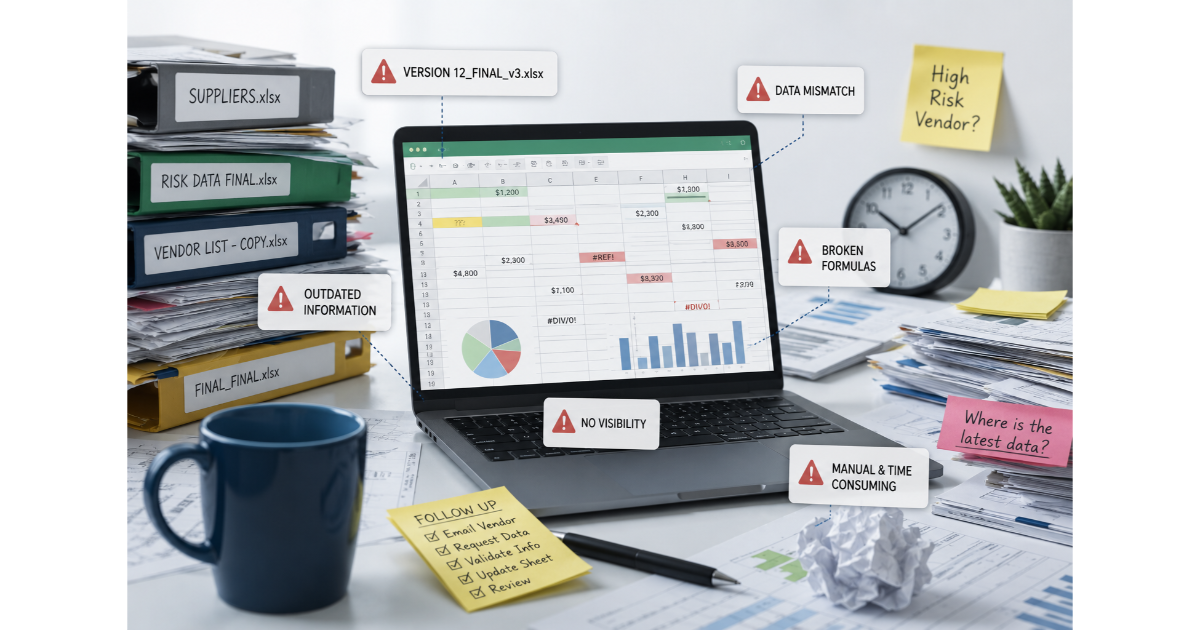
Think of your business as a fortress with strong walls and secure gates, but with supply carts and contractors entering through the side doors to fix the towers. These third parties are essential to keeping your fortress in shape, but they also bring their own risks. Similarly, third-party vendors provide specialized services and resources to improve your operations.
Improperly managed partnerships can create security gaps that expose your organization to financial, legal, and reputational risks. Effective third-party vendor management ensures that vendors adhere to the same security, privacy, and regulatory standards as your organization.
Breaches with third-party involvement increased by 60% year over year, now reaching 48% of all breaches, according to Verizon's 2026 Data Breach Investigations Report.
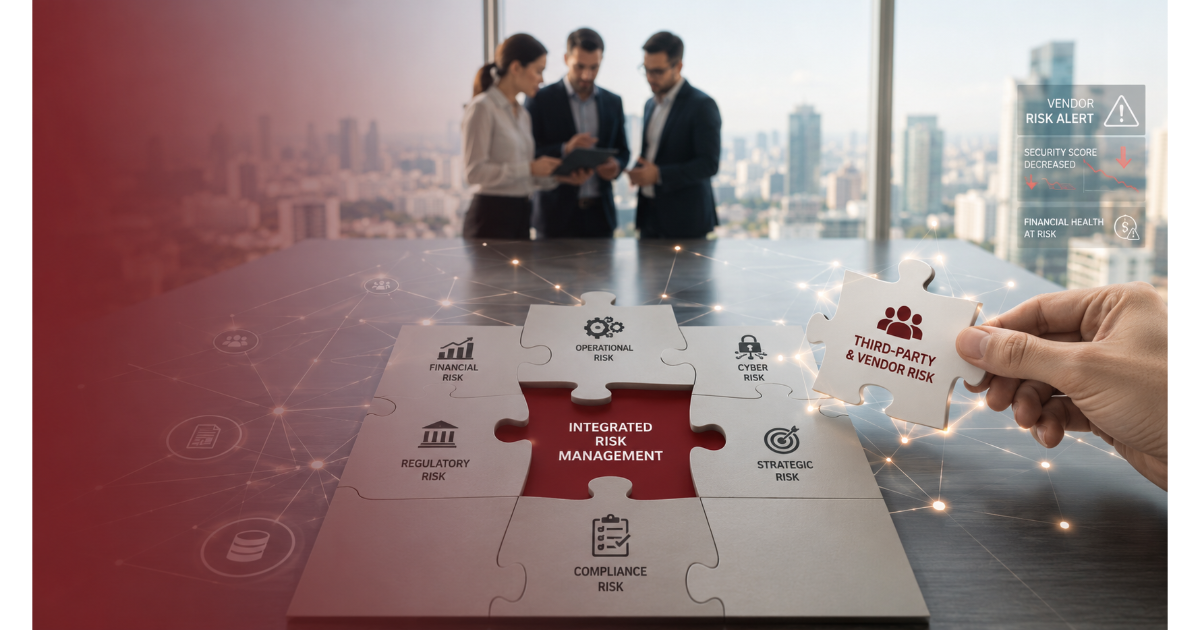
Third-Party Risk Management (TPRM) identifies, assesses, and mitigates risks arising from outsourced services, software, contractors, or any external party interacting with your organization. These could be vendors, suppliers, contractors, or any other external party accessing your company's sensitive information or systems.
Safeguarding against potential threats and disruptions is necessary for continuing your business operations smoothly. TPRM aligns third-party relationships with company goals and complies with regulations. It also helps build customers, partners, and shareholder trust.
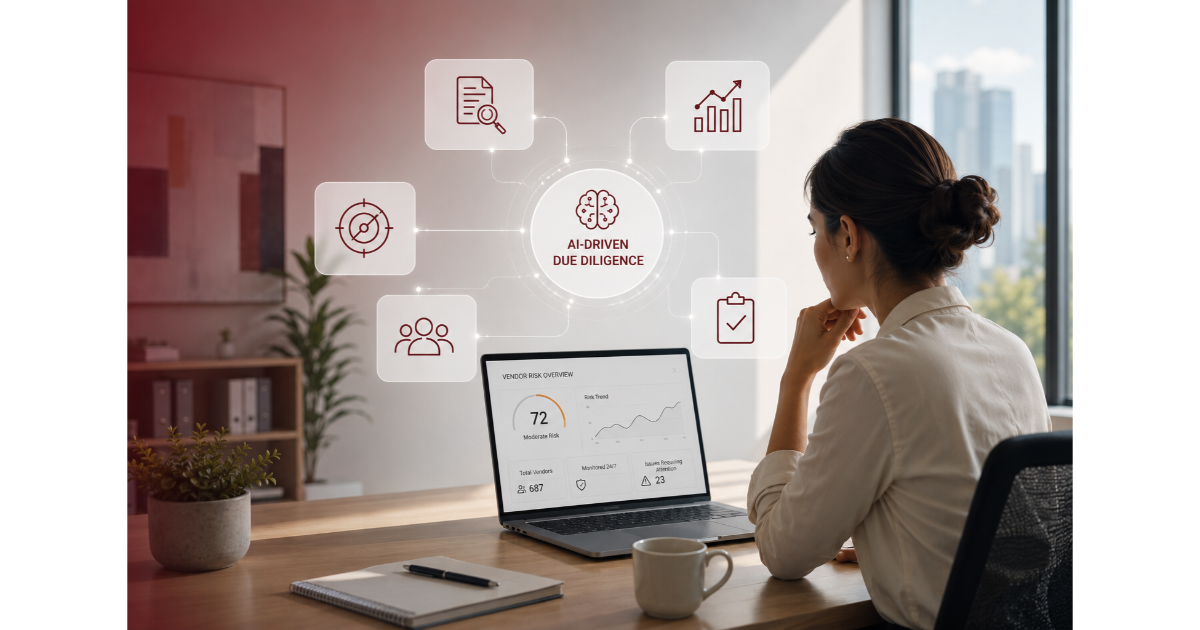
For teams managing this at scale, an AI based TPRM platform automates the heaviest phases from due diligence to continuous monitoring without adding headcount.
This article will help you understand TPRM and conduct third-party risk monitoring. We will also discuss the best practices for third-party vendor risk management to help you mitigate potential risks.
What is Third-Party Risk Management?
Third-party risk management is defined as the process of identifying, evaluating, and controlling risks from external business partners. It’s a constant effort to avoid issues like security breaches, compliance failures, financial losses, or reputational damage.
TPRM works as a safety net to keep your business safe while working with outside vendors, suppliers, or partners. Vendors with access to sensitive information, systems, or networks may put your organization at risk if you fail to manage them properly.
Understanding third-party risks
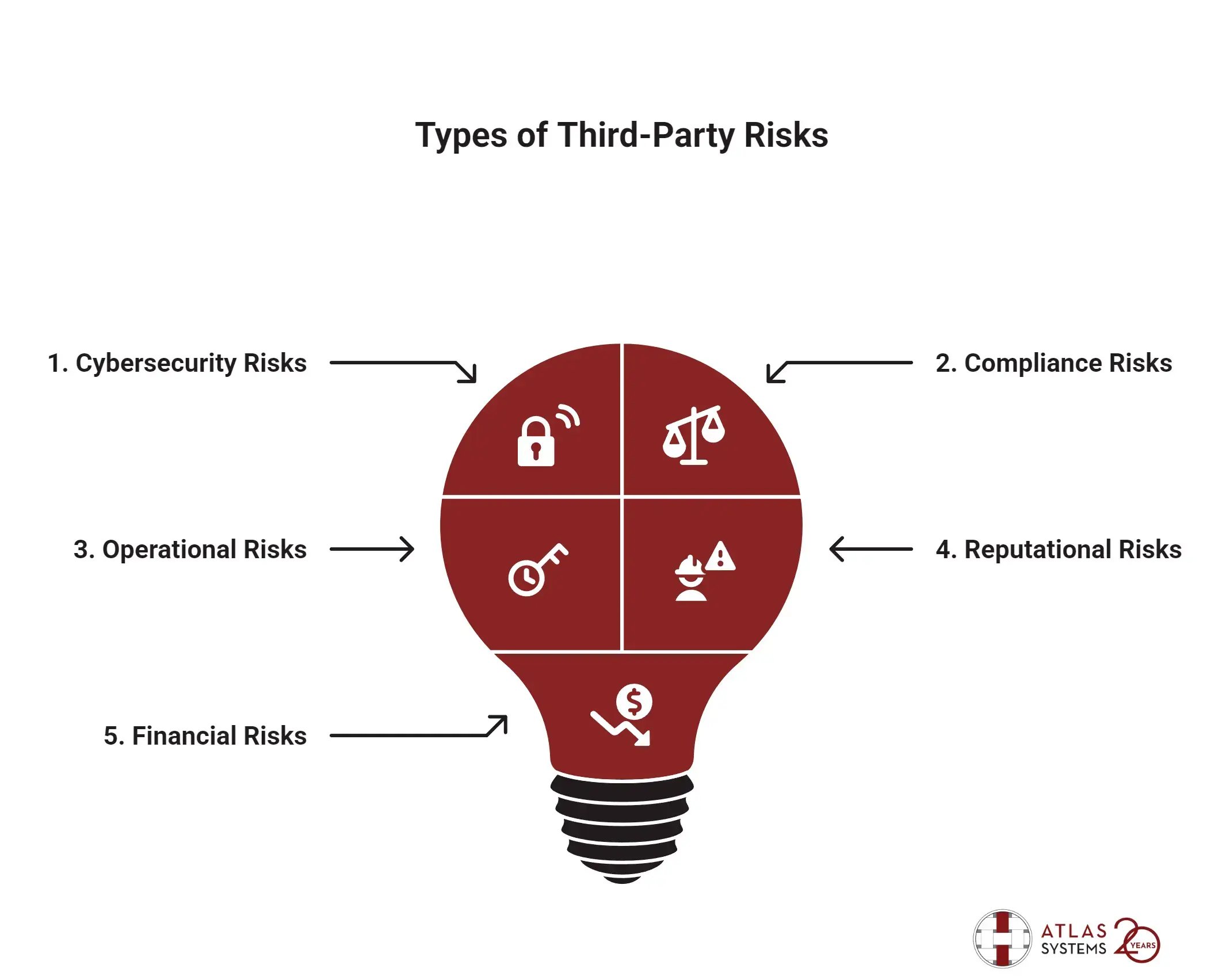
Third-party risks range from cyberattacks and data breaches to legal and compliance issues. Inadequate security measures, regulatory non-compliance, or unethical practices often create these risks.
Some common third-party risks include:
- Cybersecurity risks: Vendors may lack the same cybersecurity measures as your organization, leaving them vulnerable to threats. A breach in their system can expose your business's sensitive information. Deepen your third party cyber risk defenses prioritize vendor cyber assessments, continuous monitoring, and incident response to protect against supply chain attacks.
- Compliance risks: Third parties must follow industry-specific laws and regulations. State and local TPRM guideline violations may lead to legal consequences.
- Operational risks: If a third party misses deadlines or fails to meet quality standards, it can disrupt operations and cause financial losses.
- Reputational risks: A third party's misconduct or delays could harm your organization's reputation, leading to a loss of trust from customers, partners, and shareholders.
- Financial risks: Economic instability or vendor bankruptcy can directly impact your ROI.
The Importance of Third-Party Risk Management
Third-party partnerships are essential for scaling operations, allocating resources for innovation, and staying competitive. However, software providers and outsourced teams can pose risks, making third-party risk management important to protect your organization's assets. TPRM ensures vendor compliance and reduces risks that could lead to legal issues.
By setting up a solid TPRM strategy, you can confidently work with third parties, knowing you’ve taken steps to protect your company from risks. A third-party risk management program is important for the following reasons:
- Protects confidential information: Vendors often access sensitive company information like customer data, financial records, or intellectual property. TPRM ensures the security of sensitive data and limits its access to authorized users.
- Mitigates financial losses: Third-party issues can cause financial losses from operational disruptions, legal fines, or damage control expenses. An effective third-party risk management process helps reduce these risks and protect your bottom line.
- Ensures compliance: Organizations are accountable for their vendors' actions. Third-party compliance is important to prevent regulatory violations and penalties.
- Maintains reputation: A strong TPRM program builds trust with customers, partners, and shareholders. It shows your organization prioritizes security and holds third parties accountable.
Which department is responsible for TPRM?
Third-party vendor management is a shared responsibility that involves multiple roles and departments. Depending on the organization’s structure, you may have a third-party risk monitoring team or involve all departments like procurement, IT, legal, compliance, and finance. When stakeholders work together and communicate clearly, organizations can take a unified approach to tackling third-party risks with confidence.
Here is how you can involve key personnel across departments in your third-party risk management program:
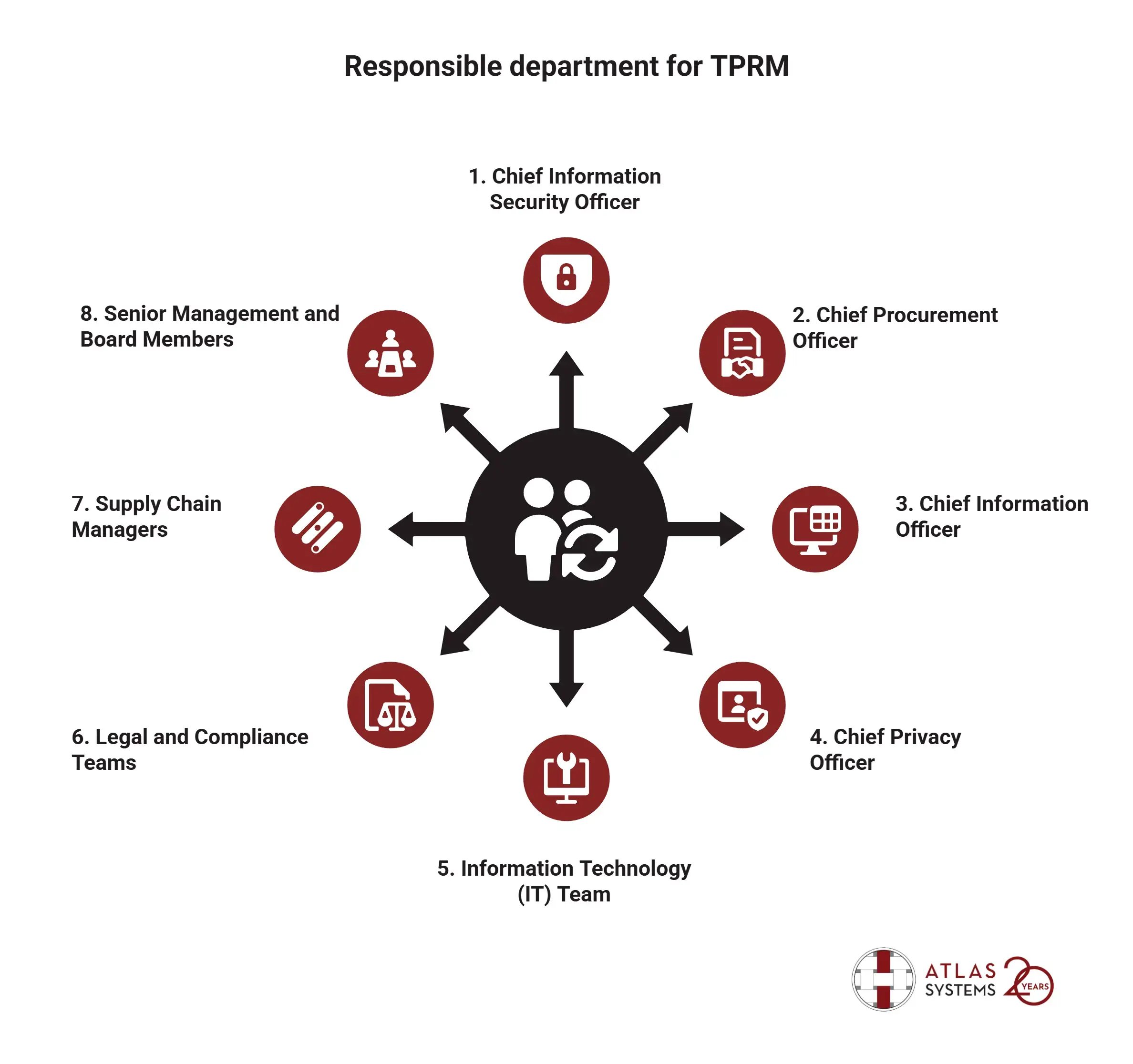
- Chief Information Security Officer (CISO): Manages cybersecurity risks by ensuring vendors meet security standards
- Chief Procurement Officer (CPO): Selects vendors and handles contract negotiations to align third-party practices with company goals
- Chief Information Officer (CIO): Monitors software, systems, data integration, and other IT risks
- Chief Privacy Officer (CPO): Ensures vendors comply with data privacy rules
- Information Technology (IT) Team: Monitors and manages vendor-related IT risks
- Legal and Compliance Teams: Address regulatory requirements, review contract terms, and conduct risk assessments to prevent legal actions
- Supply Chain Managers: Reduce operational risks from key supply chain vendors
- Senior Management and Board Members: Make TPRM-related decisions, set risk levels, and align the program with organizational goals
TPRM vs. VRM vs. GRC vs. Compliance Monitoring
TPRM gets used interchangeably with a few adjacent terms, and the overlap causes real confusion when programs are being scoped or budgeted. Here's how the four relate:
| Term |
Scope |
What it answers |
| TPRM |
All external parties — vendors, suppliers, contractors, and their subcontractors |
"What could this outside relationship expose us to?" |
| VRM (Vendor Risk Management) |
Vendors specifically, usually software or service providers |
A narrower subset of TPRM — same questions, smaller universe of relationships |
| GRC (Governance, Risk, and Compliance) |
The whole organization, internal and external |
The umbrella program TPRM feeds into — TPRM is one input to GRC, not a replacement for it |
| Compliance Monitoring |
The ongoing tracking function inside TPRM (and other programs) |
Checks adherence continuously rather than at scheduled intervals — a capability TPRM relies on, not a separate discipline |
In practice, most organizations need all four working together: GRC sets the policy, TPRM scopes the external relationships, VRM handles the vendor subset, and compliance monitoring keeps watch between review cycles.
The TPRM Lifecycle: Seven Core Phases
A TPRM program works best as one connected process, not two overlapping checklists. Each phase feeds the next, from the moment you first consider a vendor to the day you close out the relationship. Here's what the seven phases look like in practice.
1. Identification and tiering
Start by mapping every third party with access to your systems, data, or operations. You need full visibility before you can manage anything.
- Build a vendor inventory covering every third party with access to sensitive data or critical systems
- Pinpoint the specific risks each vendor could introduce, such as cybersecurity threats, compliance lapses, financial instability, or reputational harm
- Segment vendors into risk tiers based on data sensitivity, system access, and business criticality, so high-risk vendors get deeper scrutiny and low-risk vendors move through faster
2. Due diligence
Evaluate each vendor's reliability, security, and regulatory posture before you finalize the relationship.
- Research the vendor's history, financial stability, and reputation, including past performance with other clients
- Confirm the vendor's cybersecurity measures meet your standards through questionnaires, interviews, and audits
- Verify the vendor's compliance with relevant regulations, such as GDPR or HIPAA, as part of the initial evaluation rather than after onboarding
- Use risk-scoring tools or vendor management software to standardize how you compare vendors
3. Risk assessment
Once due diligence surfaces the facts, assess how likely each risk is to happen and how much damage it could do.
- Analyze the potential impact of each risk category: financial loss, reputational harm, or operational disruption
- Rank risks by likelihood and severity so you allocate resources to what actually matters
- Give extra scrutiny to vendors with access to sensitive data or critical systems, including on-site visits or penetration testing where warranted
4. Onboarding and contracting
Turn what you've learned into enforceable terms before granting access.
- Define roles, responsibilities, liabilities, and consequences clearly in the contract
- Set required security standards and data protection measures the vendor must maintain for the life of the relationship
- Build incident response and escalation protocols into the agreement, not as an afterthought
- Integrate the vendor's systems using access controls and encryption appropriate to their risk tier
5. Continuous monitoring
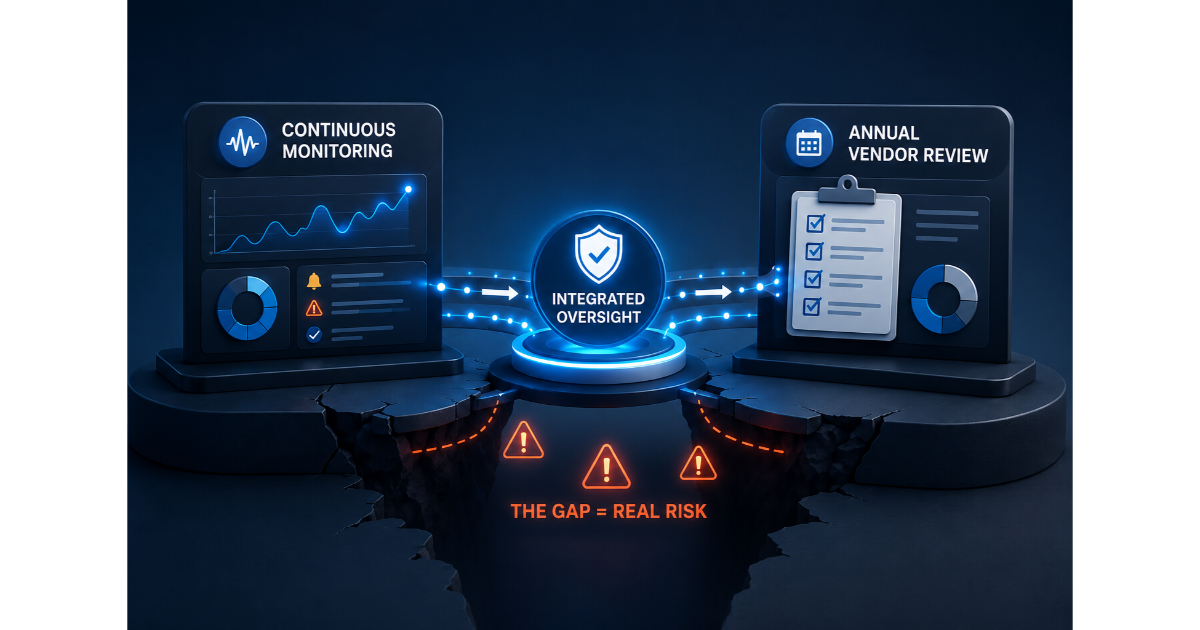
Risk doesn't stop at signature. Most vendor incidents happen after onboarding, not during it, which is why monitoring has to run continuously rather than wait for the next scheduled review.
- Track vendor performance against agreed KPIs and contractual standards on an ongoing basis
- Use automated alerts to flag security incidents, compliance lapses, or performance issues as they happen
- Schedule periodic audits alongside continuous monitoring. One doesn't replace the other.
- Address compliance gaps proactively to reduce the risk of fines or regulatory action
6. Remediation and reporting
When monitoring surfaces an issue, resolve it and document what happened.
- Work with the vendor directly to fix the underlying problem, not just the symptom
- Keep detailed records of every assessment, incident, and remediation step across the relationship
- Report risk status to senior management and the board on a regular cadence, not only when something goes wrong
- Keep documentation audit-ready at all times, since regulators and auditors will ask for it eventually
7. Offboarding
Ending a vendor relationship carries its own risks if you rush it.
- Revoke system access and confirm the vendor has securely transferred or destroyed any shared data
- Confirm the vendor has met every contractual termination requirement before you consider the relationship closed
- Resolve any outstanding risk items so nothing lingers after the relationship formally ends
Each phase depends on the one before it. Skip due diligence and your risk assessment is guessing. Skip continuous monitoring and your remediation always arrives late.
Benefits of Third-party Risk Management
Implementing a comprehensive TPRM program offers the following benefits:
1. Enhanced cybersecurity and data protection
- Assesses vendor cybersecurity to ensure adherence to industry standards
- Identifies vulnerabilities early to prevent breaches and unauthorized access
- Secures sensitive data, bolstering trust and overall security
2. Improved compliance and regulatory adherence
- Ensures vendors comply with laws like GDPR, HIPAA, or PCI DSS
- Conducts regular compliance checks to avoid fines and legal risks
- Demonstrates due diligence, safeguarding reputation and stakeholder trust
3. Operational resilience and business continuity
- Evaluates vendors’ disaster recovery and response plans for readiness
- Reduces supply chain and service disruptions by collaborating with resilient partners
- Ensures seamless business operations during unexpected events
4. Effective risk identification and mitigation
- Identifies, evaluates, and prioritizes risks systematically
- Focuses resources on critical risks to reduce overall exposure
- Detects vulnerabilities early, preventing escalation of issues
5. Enhanced vendor performance and service quality
- Establishes clear benchmarks and SLAs to define quality expectations
- Conducts regular performance reviews, ensuring accountability
- Provides constructive feedback to drive vendor improvement and innovation
6. Streamlined vendor management and governance
- Centralizes vendor data and interactions for improved visibility
- Ensures accountability with a structured and transparent approach
- Automates processes, saving time and minimizing errors
7. Cost optimization
- Prevents costly incidents by addressing risks early
- Identifies underperforming vendors or redundancies to streamline partnerships
- Maximizes ROI by strengthening third-party relationships
8. Strengthened stakeholder confidence
- Highlights commitment to risk management, fostering customer and investor trust
- Positions the organization as a reliable and responsible business partner
- Signals stability and foresight, attracting support from investors
Best Practices of Third-party Risk Management
Implementing strong TPRM practices mitigates vendor risks, strengthens operations, and ensures compliance. Here are the best practices of third-party vendor risk management:
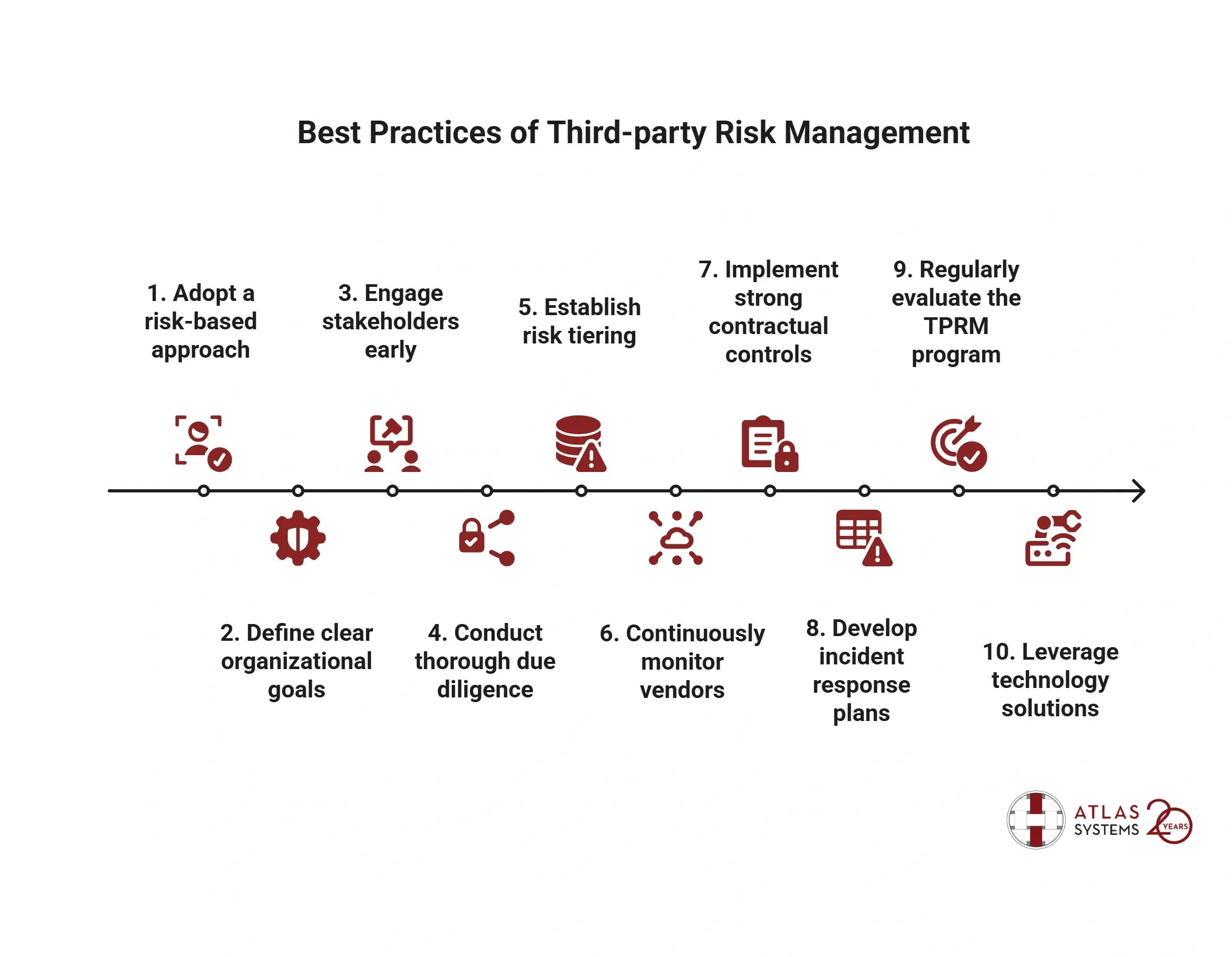
1. Adopt a risk-based approach
- Evaluate third parties using objective criteria like data sensitivity, financial impact, and operational dependency
- Focus resources on detailed assessments and continuous monitoring based on risk levels
2. Define clear organizational goals
- Align TPRM objectives with your overall risk management strategy
- Create a vendor inventory categorized by risk level and operational importance
3. Engage stakeholders early
- Involve compliance, IT, procurement, and legal teams at the start of the TPRM process
- Ensure alignment by gaining early buy-in from all stakeholders
4. Conduct thorough due diligence
- Evaluate vendors’ security measures, financial health, compliance records, and resilience
- Resolve issues early to prevent future disruptions
5. Establish risk tiering
- Classify vendors into risk tiers for a structured approach
6. Continuously monitor vendors
- Use real-time monitoring tools to track vendor performance, compliance, and security measures
- Adjust strategies based on evolving threats or changing risk profiles
7. Implement strong contractual controls
- Outline vendor obligations in contracts, covering security, data protection, compliance, performance metrics, penalties, and audit rights
- Regularly review contracts to address regulatory or risk updates
8. Develop incident response plans
- Develop plans to handle breaches, disruptions, or vendor failures
- Act swiftly to minimize damage and maintain business continuity
9. Regularly evaluate the TPRM program
- Track performance with KPIs and review regularly to identify gaps
- Update practices to address new risks, regulations, or business needs
10. Leverage technology solutions
- Use TPRM software to centralize data, automate assessments, and enhance monitoring
- Save time and improve accuracy with automated workflows
Challenges in Third-party risk management
Managing third-party risks is crucial, but organizations face major challenges in building strong TPRM programs. The key challenges of third-party risk management are:
- Limited resources and competing business priorities lead to gaps in TPRM assessments and monitoring.
- Monitoring subcontractors, dealing with data silos, and limited visibility increase the risk of missed vulnerabilities and compliance issues.
- Unclear policies and slow responses from vendors lead to miscommunication, delaying compliance and hindering effective risk identification and mitigation.
- Ensuring vendors meet data protection standards is difficult, and inconsistent audits increase the risk of non-compliance, leading to data breaches and harm to finances and reputation.
- Evolving risks and outdated assessment methods leave organizations vulnerable to overlooked threats and disruptions.
- Organizations struggle with changing regulations, vendor compliance, and the risks of non-compliance, including penalties and reputational harm.
- Managing multi-tiered supply chains is challenging due to hidden subcontractor risks, which can disrupt operations and damage trust.
- Vendors' reluctance to share data and resistance to audits hinder collaboration, making effective risk management challenging.
- Inconsistent evaluation methods and prioritization challenges make it difficult for organizations to compare vendor risks, leading to delays in risk mitigation and decision-making.
Mitigating TPRM Challenges
Organizations can use these strategies to address TPRM challenges:
- Establish a TPRM Program: Create and document a comprehensive program with clear policies, procedures, roles, responsibilities, and protocols for managing third-party risks.
- Leverage Technology: Use automation tools such as risk-scoring software, audit management systems, and vendor management platforms to increase efficiency.
- Prioritize Risks: Categorize vendors by their access to sensitive data or critical systems, prioritizing high-risk ones for thorough assessments and monitoring.
- Collaborate with Vendors: Promote collaboration by sharing security expectations, conducting joint assessments, and addressing risks together.
- Stay Up-to-date: Regularly review and update risk assessment methods to keep up with evolving threats and regulations.
- Invest in Employee Education: Train employees on third-party risk management to build awareness and ensure compliance.
How TPRM Requirements Differ by Industry
TPRM's core process stays the same across sectors, but what counts as "high risk," which regulations apply, and who's watching varies a lot depending on the industry. Here's what's different in the sectors where third-party risk gets the most scrutiny.
Banking and financial services
Bank regulators treat vendor oversight as an extension of the bank's own compliance obligations, not a separate concern. In the US, the FFIEC's third-party guidance and OCC interagency standards require banks to conduct due diligence, ongoing monitoring, and contract review for any vendor touching customer data or core operations — and examiners will ask for evidence, not just policy documents.
Insurance
Insurers face similar scrutiny through state-level frameworks like the NAIC's Insurance Data Security Model Law, which extends breach notification and safeguards requirements to third-party service providers handling policyholder data. TPAs, claims processors, and IT vendors all fall inside that scope, which makes vendor tiering by data sensitivity especially important in this sector.
Manufacturing
Manufacturing TPRM centers on supply chain resilience as much as cybersecurity — a single-source supplier going down can halt production the same way a data breach can expose records. Programs here typically track financial stability and geographic concentration risk alongside security posture, since a vendor's solvency matters as much as its firewall.
Healthcare
HIPAA makes vendor oversight a legal requirement, not a best practice — any vendor handling protected health information needs a signed Business Associate Agreement and evidence of adequate safeguards before they touch that data. We've covered this in depth elsewhere, so keeping it brief here on purpose.
Higher education
Universities manage third-party risk across two different regulatory lenses at once: FERPA governs student records, while the GLBA Safeguards Rule applies to institutions handling financial aid data — meaning the same vendor can trigger two separate compliance obligations depending on what they touch.
Federal and public sector
Government agencies and their contractors work under stricter, more prescriptive frameworks than most private-sector programs — NIST 800-53 and the broader Cybersecurity Supply Chain Risk Management (C-SCRM) practices set specific control requirements rather than general guidance, and FedRAMP authorization is often a prerequisite before a cloud vendor can even be considered.
Nonprofits
Nonprofits often assume they're too small to be a target, but donor data, grant records, and payment processing create the same exposure as any other sector — usually with a fraction of the budget to manage it. Risk-tiering vendors by what data they actually touch matters more here than anywhere else, since a resource-constrained team can't assess every vendor with the same depth.
Streamline Your TPRM With Atlas Systems
Prioritizing third-party risk management helps businesses maintain data security and operational stability. It is also a competitive advantage for your business.
Atlas Systems provides third-party risk management solutions to streamline your TPRM processes. Our platform focuses on automation, easy integration, and expert support, helping businesses of all sizes manage vendor risks, stay compliant, and strengthen operations.
Connect with Atlas Systems to protect your business against third-party risks and build better vendor relationships for long-term success.
FAQs about TPRM
1. What are the components of an incident response plan for third-party risk management?
An effective incident response plan for third-party risk management includes the following key components:
- Risk Assessment: Identify and prioritize potential risks linked to third-party partners
- Roles and Responsibilities: Define clear responsibilities for internal teams and the third party during an incident
- Incident Detection and Analysis: Set up monitoring tools to detect third-party incidents and analyze their impact
- Communication Protocols: Establish predefined methods for timely reporting and collaboration with third parties
- Response Strategies: Develop actionable plans to contain, mitigate, and resolve incidents effectively
- Post-Incident Review: Conduct thorough reviews to identify gaps and improve processes for future incidents
2. How can organizations address resource constraints in third-party risk management?
Organizations can address resource constraints in third-party risk management by adopting the following strategies:
- Prioritizing high-risk vendors to focus resources where they’re needed most
- Using automation tools to streamline assessments, monitoring, and reporting
- Consider outsourcing risk management tasks to specialized providers who can handle them efficiently
- Promote collaboration across IT, legal, procurement, and compliance teams to share expertise and resources.
3. What is fourth-party risk?
Fourth-party risk is the exposure created by your vendors' own vendors — the subcontractors, cloud providers, and tools your third parties rely on that you never directly assessed. You don't have a contract with them, can't audit them, and often don't even know they're in the chain.
4. What does TPRM stand for?
TPRM stands for Third-Party Risk Management, the process of identifying, assessing, and mitigating risks from vendors, suppliers, contractors, and any external party with access to your systems or data.
5. What are the benefits of third-party risk management?
TPRM protects sensitive data, reduces the financial and legal fallout from vendor failures, and keeps your organization compliant with regulations you're accountable for even when a vendor is the one who violates them. It also builds trust with customers and partners.
6. What industries benefit most from an operational TPRM platform?
Regulated and vendor-heavy industries see the most benefit: banking, insurance, healthcare, and manufacturing, where third-party access to sensitive data or critical systems is constant and regulators expect documented oversight. Any organization managing more than a handful of vendors benefits from automating the process.
7. What's the difference between TPRM and vendor risk management (VRM)?
VRM is a subset of TPRM focused specifically on vendors, usually software or service providers. TPRM covers a wider range of external relationships, including suppliers, contractors, and subcontractors. See the comparison table above for how they relate to GRC and compliance monitoring.
8. How many phases does a TPRM lifecycle have?
Sources describe anywhere from five to eight phases, and the count varies because different frameworks group the same activities differently. This guide uses seven: identification and tiering, due diligence, risk assessment, onboarding and contracting, continuous monitoring, remediation and reporting, and offboarding.
9. Why is third-party risk management important?
Vendors and contractors can expose your organization to security breaches, compliance violations, and operational disruptions you didn't cause but are still accountable for. Third-party involvement in data breaches doubled to 30% in a single year, according to Verizon's 2025 DBIR, making structured oversight a necessity rather than a formality.





.webp?width=387&height=387&name=headless-tprm%20(1).webp)




























%20(1).jpg)