Regulators are raising the bar on enterprise risk oversight. Boards are demanding a consolidated view of every risk category. And most GRC teams have invested significantly in an integrated risk management system to deliver exactly that.
So why did 97% of organizations still experience at least one supply chain breach in 2025?
The breach data and the platform investment tell two completely different stories. Understanding why requires looking at what most IRM programs actually include, and what they quietly leave out.
What Integrated Risk Management Actually Covers
Integrated risk management (IRM) is an organization-wide discipline that connects risk identification, assessment, response, and monitoring across all business functions through a single framework, shared data model, and enabling technology. Rather than managing financial, operational, cyber, and regulatory risk in separate silos, IRM creates a unified view that informs decision-making from the board level down to operational teams. The technology that enables this is typically called an integrated risk management system — the platform where that shared data model, workflow, and reporting actually live.
Gartner coined the term in 2017 to describe what became inevitable when digital complexity outpaced traditional governance structures. The core idea is sound: risk that lives in silos cannot be managed as a whole, and most material enterprise failures happen at the seams between functions, not within them.
An IRM framework typically organizes around six components:
|
Component
|
What it covers
|
|
Strategy
|
Risk appetite defined at board level and cascaded to operational teams
|
|
Assessment
|
Systematic identification and scoring across all risk domains
|
|
Response
|
Controls, ownership, and mitigation actions per risk type
|
|
Communication
|
Reporting structures tailored to each stakeholder level
|
|
Monitoring
|
Continuous tracking of risk status and control effectiveness
|
|
Technology
|
The platform that connects data, workflows, and reporting
|
When these six components work together, risk management shifts from a compliance function to a genuine strategic input. Leaders can evaluate decisions against a real-time picture of enterprise exposure, rather than a quarterly report from a siloed team.
Where the Framework Quietly Stops
Here is the part the IRM vendor landscape rarely addresses directly.
Most IRM implementations are built from the inside out. They start with internal risk domains (IT risk, operational risk, financial risk, regulatory compliance) and centralize them into a single platform. That work is valuable, and it improves visibility meaningfully for internal risk.
The problem is that the vendor ecosystem, the network of third parties that processes your data, runs your infrastructure, and delivers your services, sits outside the organization's edge. And most IRM architectures treat it that way.
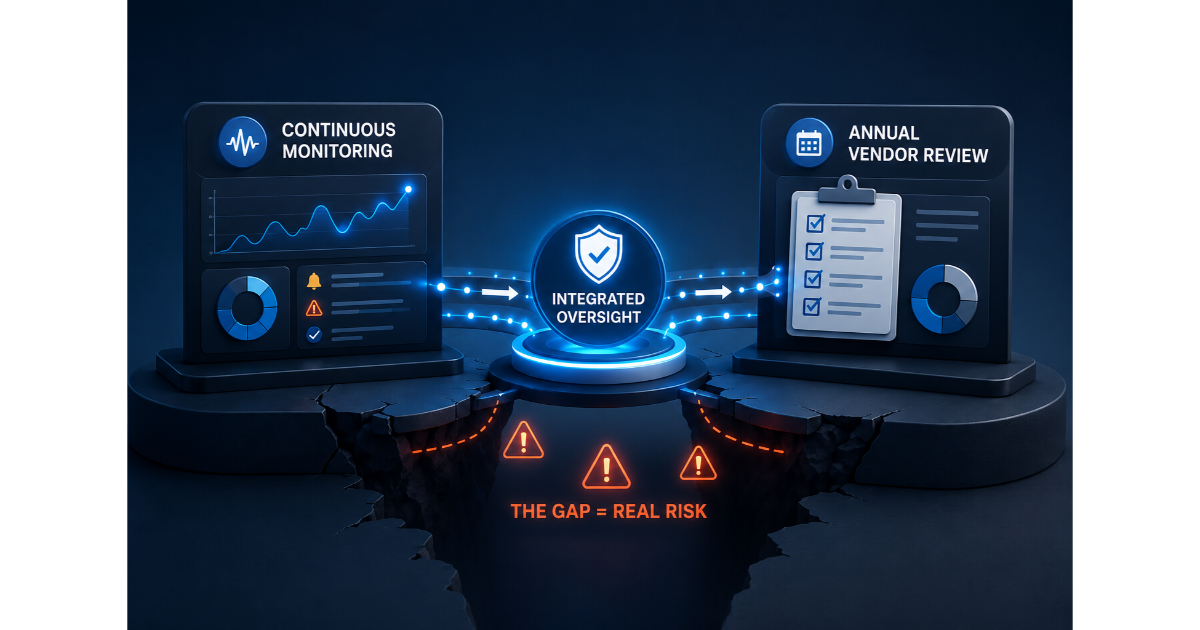
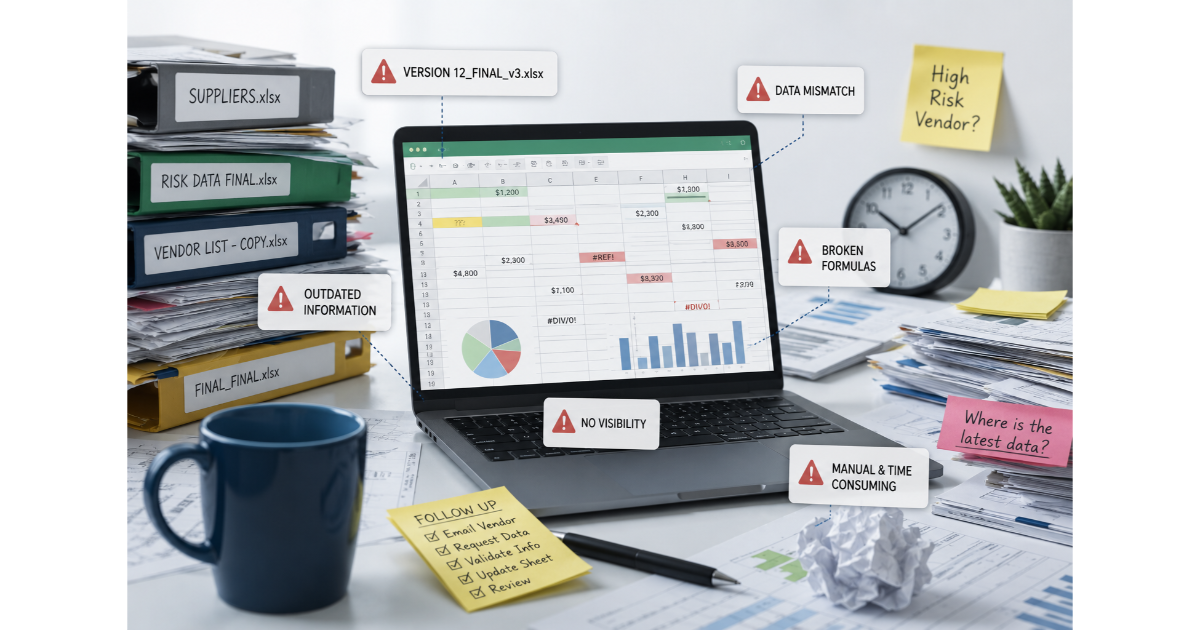
Third-party risk management (TPRM) in most organizations is owned by a separate team, running a separate tool, on a separate annual cycle. It feeds data into the IRM platform periodically, if at all. The risk taxonomy rarely aligns. The assessment cadence doesn't match. And when a vendor's security posture deteriorates in month four of a twelve-month assessment cycle, that change is invisible to the IRM dashboard until the next review window opens.
This is where the breach math comes from. Third-party involvement in breaches jumped to 30% in 2025, double the rate from the prior year, according to Verizon's Data Breach Investigations Report.
The average organization shares confidential data with nearly 300 vendors. Third-party and supply chain compromises cost an average of $4.91 million per incident, ranking second only to malicious insider threats in breach cost.
These aren't failures of internal risk governance. They're failures at the exact seam the IRM framework was supposed to eliminate.
Three Reasons This Gap Persists
Ownership is split at the organizational level
Inside most regulated enterprises, vendor risk management reports into procurement or a dedicated TPRM function. The IRM program sits under the CISO, CRO, or GRC leadership. These teams operate with different mandates, different toolsets, and different executive sponsors. Even when both functions exist and run well independently, they rarely share a risk taxonomy or a reporting structure. A critical vendor failure that materially changes enterprise risk posture simply doesn't register in IRM reporting until after the fact.
Annual assessment cycles create structured blind spots
Traditional TPRM runs on point-in-time reviews: annual questionnaires, periodic SOC 2 evaluations, snapshot risk scores. IRM platforms, by design, are built for continuous internal control monitoring. When vendor risk data refreshes once a year, the IRM dashboard shows coverage it doesn't actually have. Risk profiles change between windows. A vendor's financial health, cyber posture, or regulatory status can shift materially in the months between assessments. In fact, 27% of vendor risk is identified during the ongoing relationship rather than at onboarding.
Questionnaire volume degrades data quality
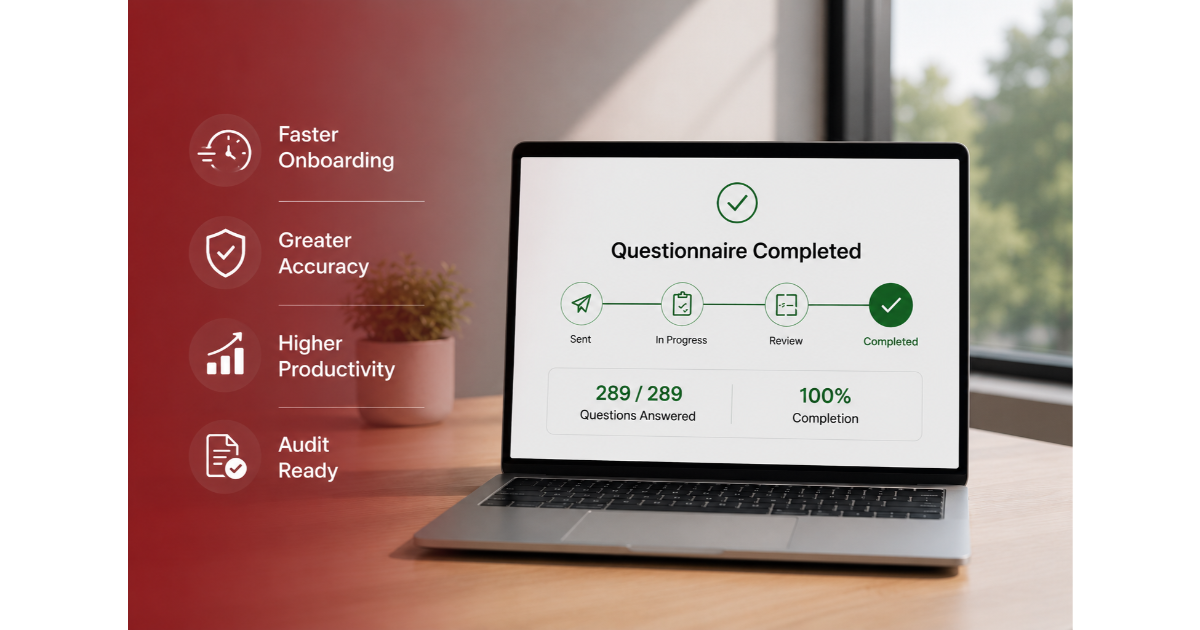
Volume is the other problem. When every vendor receives the same 200-question assessment regardless of their criticality or access level, the response quality suffers. Answers come back slowly, incompletely, or inconsistently. Low-signal vendor data flowing into the IRM platform distorts the broader enterprise risk picture that every other risk decision depends on. The result is an IRM program that looks comprehensive in its reporting but is working from a weakened foundation in its third-party inputs.
What Genuinely Integrated Third-Party Risk Looks Like
Closing this gap requires third-party risk to be architecturally inside the IRM program, not connected to it at reporting time.
Architecturally inside means vendor risk data shares the same taxonomy, controls framework, and monitoring cadence as every other risk category. A material change in a critical vendor's security posture surfaces in the enterprise risk score through the same process as any internal control failure. It doesn't wait for the quarterly vendor review.
Four capabilities define this level of integration:
Tiered, risk-calibrated assessments match assessment depth to actual exposure. Vendors with access to sensitive data or critical systems receive proportionally deeper reviews. Lower-risk vendors receive lighter-touch evaluations. Assessment design reflects actual risk, not administrative habit.
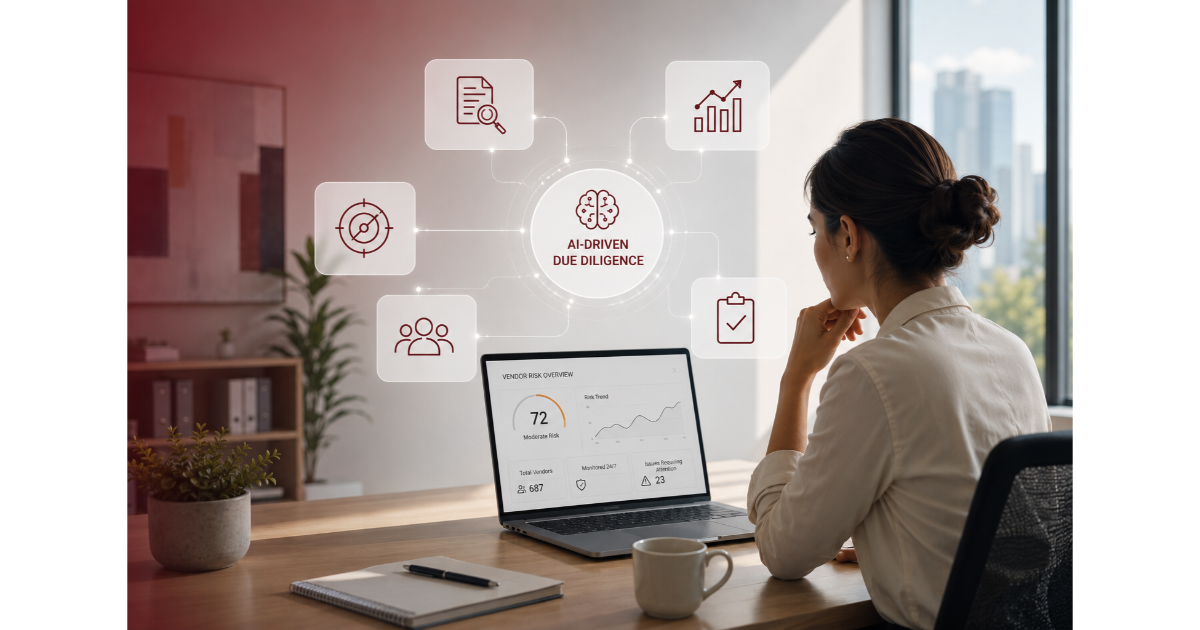
Continuous monitoring between assessment cycles closes the window between reviews. Real-time signals including breach alerts, dark web exposure, financial health indicators, and regulatory actions update vendor risk scores on an ongoing basis rather than on a fixed annual calendar.
A shared risk language across TPRM and IRM means a cyber risk event at a vendor registers as a cyber risk event at the enterprise level automatically, with no manual translation or re-categorization by the risk team.
Fourth-party visibility extends monitoring beyond direct vendor relationships. The vendor's vendors are increasingly the entry point for sophisticated attacks. Organizations that track sub-processor and sub-vendor relationships are better positioned to detect cascade risk before it reaches their environment.
How ComplyScore® Closes This Gap
ComplyScore® by Atlas Systems is a third-party risk management platform built for organizations that need vendor risk to function as a real input to their IRM program, not a periodic addendum to it.
The platform replaces annual questionnaire cycles with dynamic, tiered assessments calibrated to each vendor's actual risk profile. Continuous risk monitoring surfaces vendor-side changes between formal assessment windows, so a shift in security posture or regulatory status reaches the risk team when it happens, not at the next review. Because ComplyScore® integrates with enterprise GRC and IRM platforms, vendor risk data flows into the broader risk picture through the same channels as every other risk domain.
Atlas Systems has worked in governance, risk, and compliance for more than two decades. ComplyScore® is recognized as a Representative Vendor in the 2025 Gartner® Market Guide for Third-Party Risk Management Technology Solutions.
If your IRM program runs on accurate internal risk data but still relies on annual vendor questionnaires to cover the third-party view, the gap between those two things is exactly where your exposure lives.
Book a 30-minute demo with a TPRM expert to see how ComplyScore® integrates with your existing IRM framework.






.webp?width=387&height=387&name=headless-tprm%20(1).webp)






































%20(1).jpg)