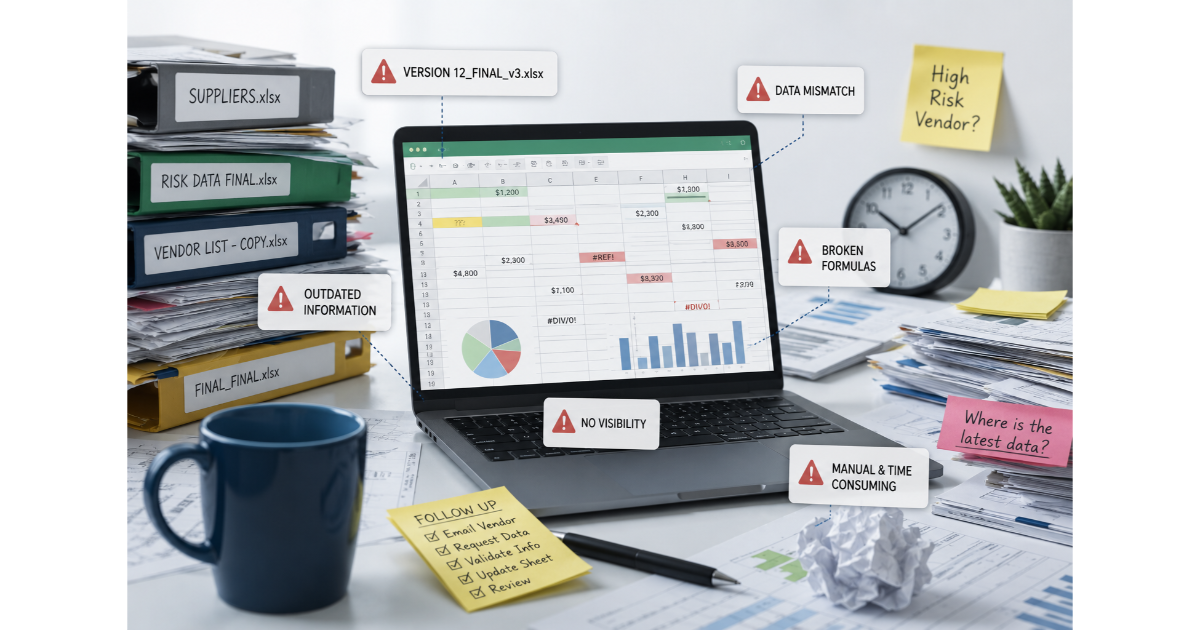
Identifying supplier risk is the easier half of the job. Deciding what to actually do about it is harder, especially since the simplest option, dropping every supplier that shows any risk, isn't realistic for most sourcing categories. Here are five practical strategies, what each one actually involves, and how to tell if it's working.
Quick Answer
The most effective way to mitigate supplier risk combines dual-sourcing critical categories, tiering monitoring intensity by supplier criticality, building risk controls into contracts, tracking supplier financial health continuously, and replacing annual reviews with ongoing monitoring for high-risk suppliers.
1. Dual-Source Critical Categories
For any category where a single supplier failure would stop production, it's worth qualifying a second source, even one you rarely use in practice. The value isn't in constant use. It's in having a tested option ready if the primary source falters.
What to do: start with your top single-source dependencies rather than trying to dual-source everything at once. How to measure it: the percentage of critical categories with a qualified backup supplier. What to adjust: if backup suppliers are technically qualified but never actually tested, run periodic small orders through them to confirm they can deliver when it counts, not just on paper.
2. Tier Monitoring Intensity by Criticality
Not every supplier needs the same level of oversight, and applying equal scrutiny everywhere usually means the suppliers that matter most get the same attention as the ones that barely register.
What to do: apply deep, frequent monitoring to your highest-criticality suppliers and lighter, less frequent checks to the rest. How to measure it: the percentage of your supplier base under active monitoring, broken out by tier. What to adjust: if lower-tier suppliers are consuming as much analyst time as top-tier ones, the tiering criteria need revisiting, not more headcount to cover the gap.
3. Build Risk Controls Into Contracts
Contract terms function as a mitigation tool in their own right, not just a legal formality signed once and filed away.
What to do: include audit rights, notification requirements for material changes, and performance-based termination clauses. How to measure it: the percentage of active supplier contracts that include these clauses. What to adjust: retrofit older contracts at renewal rather than trying to amend the entire portfolio at once, which tends to stall before it's ever finished.
4. Track Supplier Financial Health Continuously
Financial distress is one of the earliest and most reliable warning signs of a coming disruption, often visible months before it shows up as a missed delivery.
What to do: monitor payment behavior, credit signals, and public financial data for high-criticality suppliers on an ongoing basis rather than at a single annual checkpoint. How to measure it: the time between a financial risk signal appearing and your team acting on it. What to adjust: if that gap is measured in weeks rather than days, the signal isn't reaching the right person fast enough, regardless of how good the underlying data is.
5. Replace Annual Reviews With Continuous Monitoring
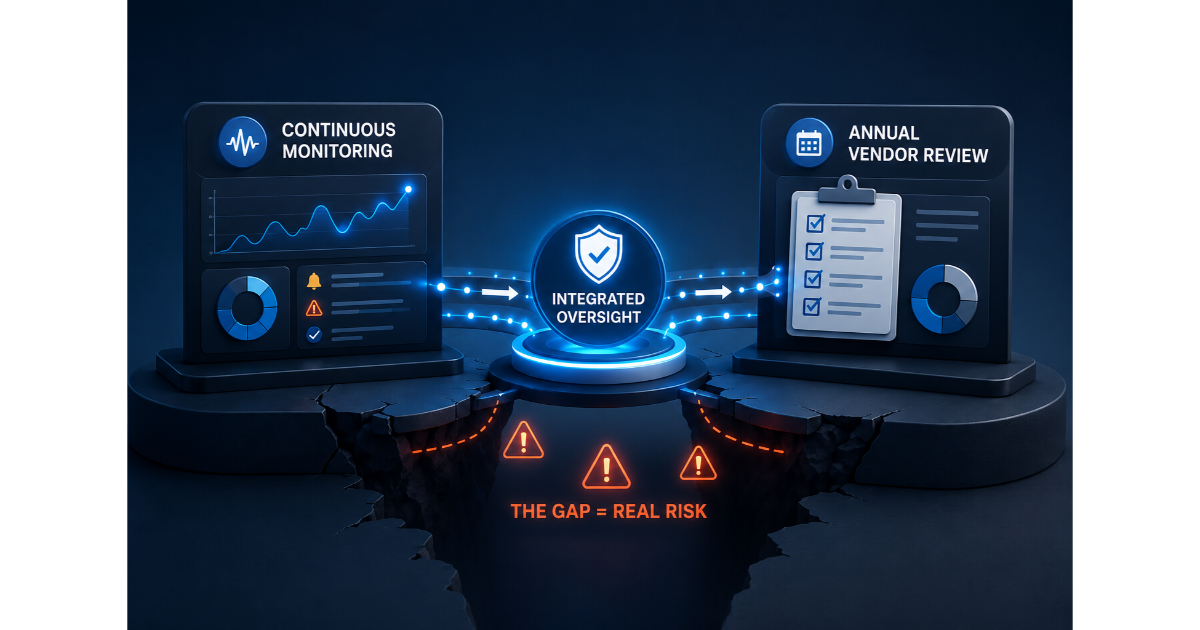
An annual review tells you how a supplier looked on the specific day you checked. Continuous monitoring tells you how they look right now, which matters because supplier risk rarely holds still for a full year between reviews.
What to do: shift your highest-criticality suppliers off a fixed annual cycle and onto event-triggered, continuous tracking. How to measure it: the percentage of high-tier suppliers under continuous rather than point-in-time review. What to adjust: start with your most critical suppliers rather than trying to convert the entire base at once, which tends to be slower and less effective than a focused rollout.
Building Mitigation Into the Program, Not Adding It On Afterward
These five strategies work best as a standing part of a supplier risk program, applied consistently, rather than as a one-time project run after a disruption has already made the case for them.
How ComplyScore® Supports Mitigation
ComplyScore®'s supplier risk management platform automates the monitoring and alerting side of mitigation, tiered by supplier criticality, so financial and performance signals reach the right owner without waiting for a scheduled review to surface them. Suppliers under continuous monitoring maintain over ninety percent SLA adherence on average, compared to programs still running on point-in-time reviews alone.
That shift frees analyst time to focus on the judgment calls that actually require it, like deciding what to do about a flagged supplier, rather than the manual work of finding the flag in the first place.
Book a demo to see criticality-based monitoring and alerting in action.
.webp?width=387&height=387&name=headless-tprm%20(1).webp)





















%20(1).jpg)