Suppose a supplier cleared your onboarding checks eighteen months ago. Their financials looked healthy, references checked out, every certificate was current. A lot can shift in eighteen months. Ownership can change hands, a key customer can walk away, a factory can lose a certification. Supplier due diligence is how you find out whether any of that has happened, before it shows up as a missed shipment or a failed batch.
The term gets used loosely, sometimes for a single onboarding form, sometimes for an ongoing program. At its core, supplier due diligence is the evaluation of whether a supplier can keep the commitments they made, beyond simply meeting a compliance checklist. That distinction matters, because a supplier can pass every certification requirement and still be financially fragile, operationally stretched, or one bad quarter away from missing a delivery.
What Is Supplier Due Diligence?
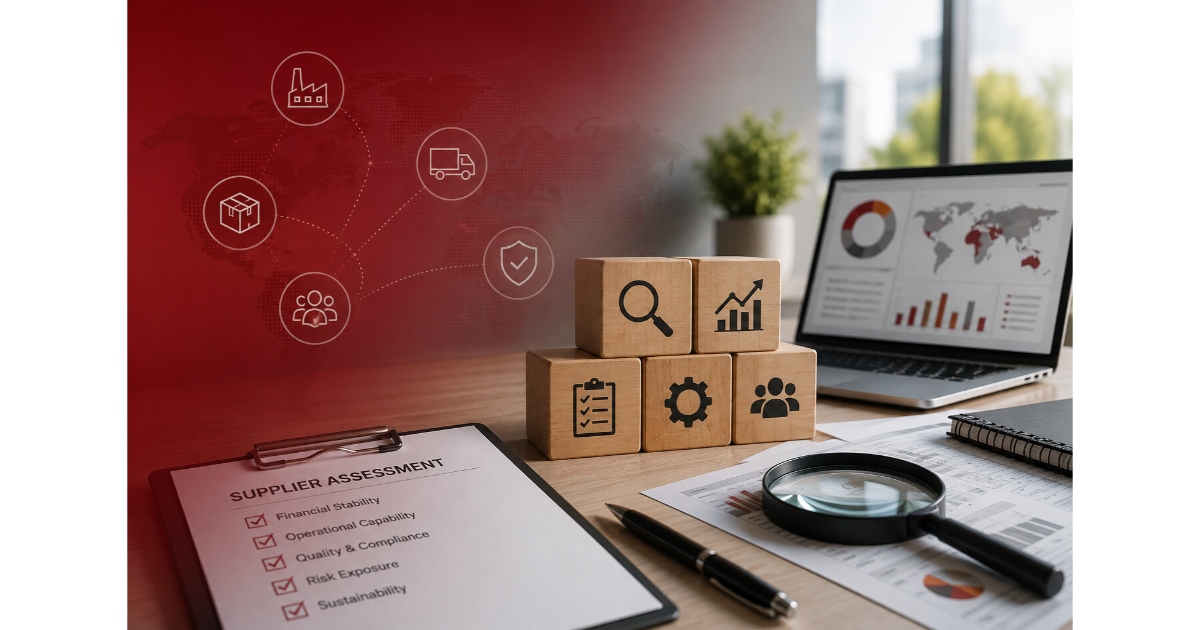
Supplier due diligence is the process of evaluating a supplier's financial stability, operational reliability, and capacity to deliver goods or services consistently, both before a contract is signed and throughout the relationship. It looks at whether a supplier can keep their commitments, beyond whether they meet a compliance checklist.
Supplier failure rarely arrives as one dramatic event. It tends to build gradually: a late payment to one of their own subcontractors, a quality slip that gets excused once, a capacity strain that shows up as slower response times before it shows up as a missed order. Due diligence exists to catch that pattern early, while there's still time to act on it.
Supplier Due Diligence vs Third-Party Due Diligence: What's the Difference
The two terms are often used as if they mean the same thing, and in smaller organizations the same team may run both under one label. It's worth separating them anyway, because they answer different questions. Supplier due diligence asks whether a supplier can reliably deliver goods or services: their financial footing, their production capacity, how they've handled disruption in the past.
Third-party due diligence, which we cover in detail in our guide to [third-party due diligence], casts a wider net. It leans toward compliance and security exposure: sanctions screening, data handling practices, regulatory alignment. Many organizations run both, applied at different depth depending on what a given supplier actually provides. A raw materials supplier and a cloud software vendor introduce different kinds of exposure, and one generic checklist rarely serves both well.
What Supplier Due Diligence Actually Evaluates
Financial stability and payment risk
A supplier's financial position tells you how much room they have before a slow quarter turns into a missed delivery. Payment history, debt levels, and how concentrated their revenue is across customers all factor in. A supplier drawing eighty percent of revenue from a single client carries different exposure than one with a broad customer base, even if both look identical on a basic credit check.
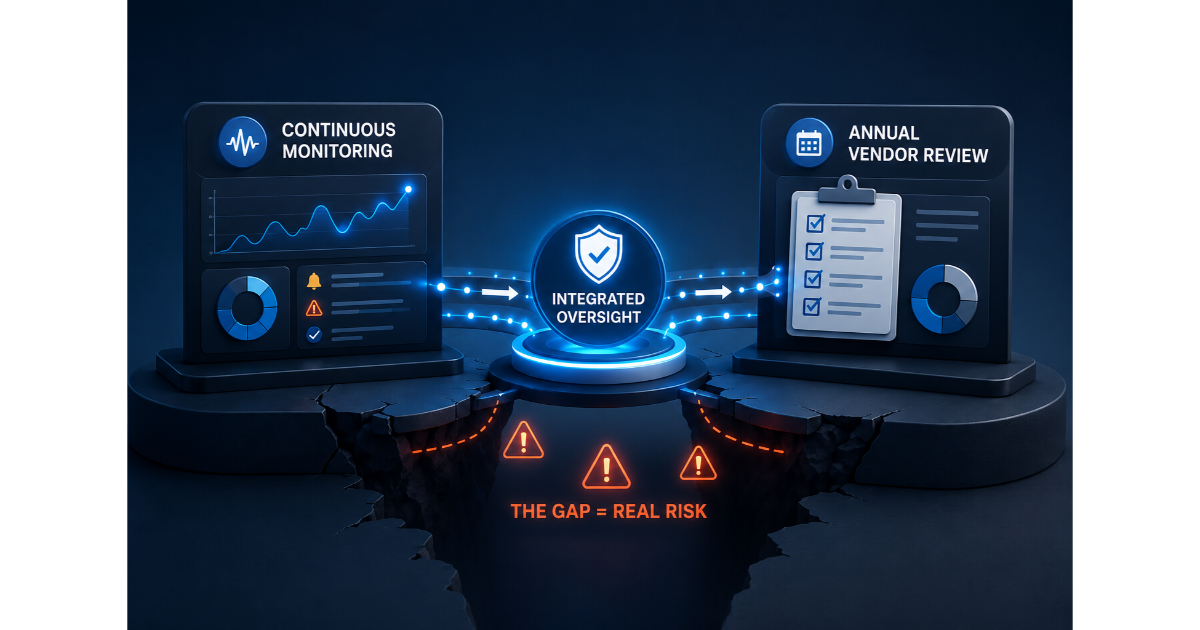
Financial distress rarely announces itself directly. It shows up first in slower payments to their own suppliers, delayed shipments blamed on unrelated causes, or a sudden reluctance to commit to volume. Tracking financial signals over time, rather than checking once at onboarding, is what catches this pattern early.
Operational and production reliability
Financial health tells you whether a supplier can afford to deliver. Operational reliability tells you whether they actually can, on the timeline and at the volume you need. This includes production capacity, whether they maintain backup facilities, and how they've responded to past disruptions, whether that's a fire at one plant or a shortage of a key input.
Site visits and direct reference conversations tend to surface far more here than a written questionnaire. A supplier can answer every capacity question correctly on paper while running near their limit in practice, with little real slack if demand spikes or a shipment needs to be expedited.
Geographic and single-source concentration exposure
Where a supplier operates, and how much of a given input or product runs through one facility or region, shapes how exposed you are to events entirely outside anyone's control: a weather event, a port closure, a shift in trade policy. This is worth mapping even for suppliers who look financially and operationally sound, because single-source supplier risk has little to do with how well-run a supplier is.
The exposure often builds for reasonable business reasons. Consolidating volume with one supplier for better pricing, or sourcing from one region because it was historically reliable, both make sense in isolation. Mapped across your full supplier base, the same decisions can leave a surprising share of your supply chain dependent on a single point of failure.
Quality, ESG, and sustainability practices
Quality audits, industry certifications, and labor practices matter in their own right, and increasingly because customers, investors, and regulators expect visibility into how goods are produced, not only what they cost. A supplier with strong ESG documentation is often also a supplier with more mature operational controls generally, since both tend to reflect the same underlying management discipline.
This is also where reputational exposure tends to concentrate. A quality issue is usually contained to the immediate business relationship. A labor or environmental violation traced back through your supply chain can become a public matter well beyond that original relationship.
Contractual and regulatory exposure
Contract history, past disputes, and current regulatory standing round out the picture, and they tend to be the most predictive of how a supplier behaves under pressure. A supplier with a pattern of contract disputes is showing you, in advance, how they're likely to handle disagreements with you too.
When to Run Supplier Due Diligence
Due diligence belongs at three points in a supplier relationship. The obvious one comes early in the supplier onboarding process, when you're deciding whether to bring a new supplier on at all. The second is contract renewal, when it's easy to assume nothing has changed simply because the relationship has been stable.
The third, and the one most programs skip, is trigger-based: a change in ownership, expansion into a new region, or a public disruption affecting a supplier's industry. Suppose a supplier you've worked with for years gets acquired by a private equity firm. That alone is reasonable grounds to revisit their financial profile and production commitments mid-contract, since ownership changes often bring shifts in priority that only surface later.
What to Collect, Scaled to Criticality
Rather than a single fixed checklist applied to every supplier, the more useful approach scales what you collect to how critical the relationship is. A low-risk, easily replaced supplier might need only basic financial and registration documentation. A single-source, business-critical supplier warrants a deeper file: audited financials, site inspection results, insurance coverage, and a documented view of their own subcontractor dependencies.
The aim is enough of the right information to make a defensible decision, and to be able to show, later, exactly what was reviewed and why a supplier was approved.
Why Manual Supplier Due Diligence Breaks Down as Supplier Count Grows
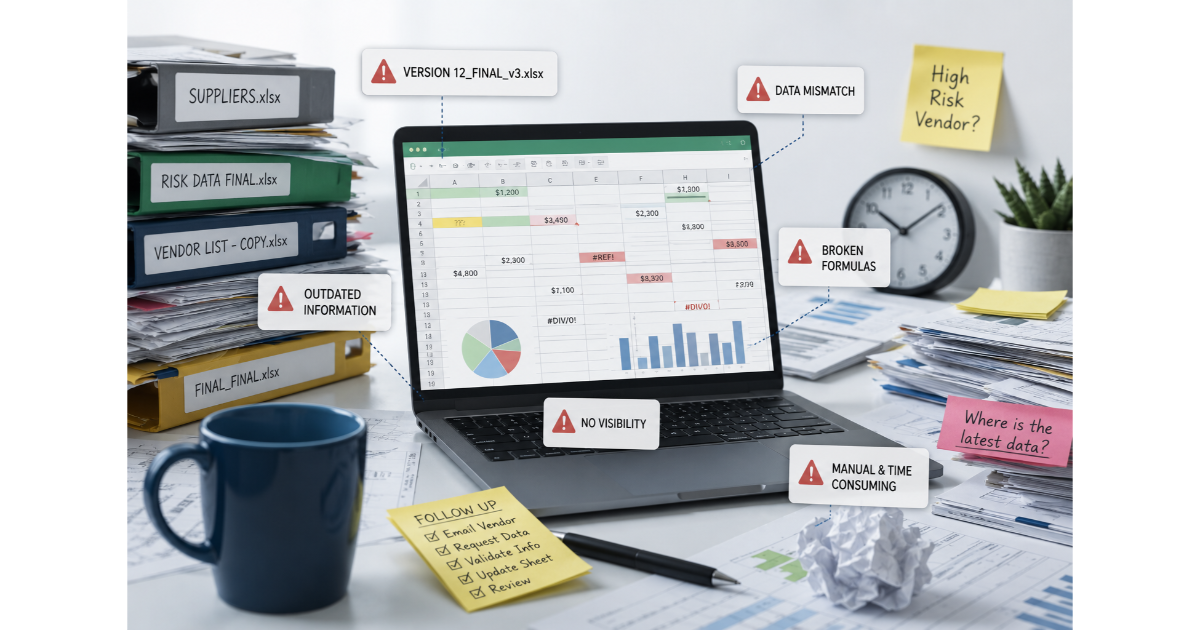
A due diligence process that runs comfortably at fifty suppliers tends to strain well before it reaches a few hundred, and the reason is rarely a lack of effort. Growth in supplier count, new regions, or new product lines can outpace a team's capacity to chase documents, track renewal dates, and reassess on schedule, even when the underlying process itself is sound.
This shows up first as a growing backlog of overdue reassessments rather than one dramatic failure. A supplier due for renewal in March quietly slips to June, then September, not because anyone decided that was acceptable, but because something more urgent kept competing for the same analyst's time.
How ComplyScore® Supports Supplier Due Diligence
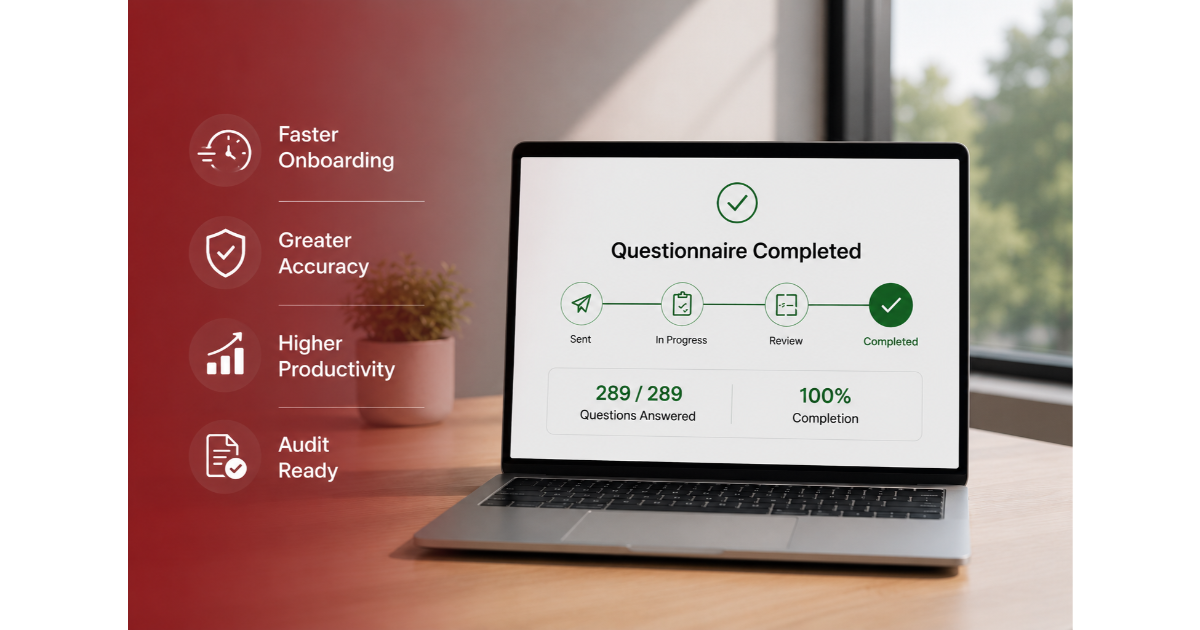
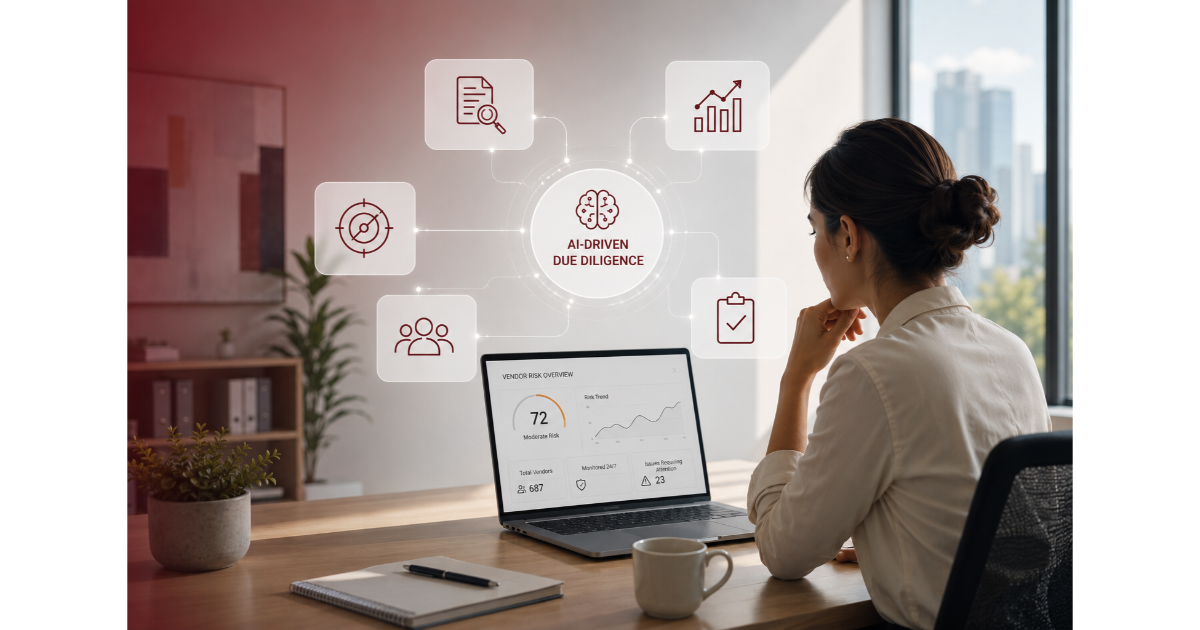
ComplyScore®'s supplier risk management platform automates the parts of due diligence that consume the most analyst time: collecting documentation, tracking financial health signals, and scheduling reassessment based on how critical a supplier is, rather than a single fixed calendar. When a supplier's financial profile shifts or a certification lapses, the relevant team gets flagged directly instead of finding out at the next scheduled review.
Every assessment also carries a complete, exportable audit trail. When a supplier's status is questioned, by an auditor, a customer, or your own leadership, the evidence of what was reviewed and when is already assembled rather than something someone has to reconstruct after the fact.
Book a demo to see how ComplyScore® tracks supplier risk against your own criticality tiers.






.webp?width=387&height=387&name=headless-tprm%20(1).webp)






































%20(1).jpg)