Paying for supplier monitoring data and still finding out about a disruption weeks after it happened is a more common experience than it should be. When that happens, the data was usually there and accurate. What was missing was a system built to act on the signal, not just collect it.
What Is Supplier Risk Monitoring?
Supplier risk monitoring is the ongoing tracking of a supplier's financial, operational, and compliance signals between formal assessments, so changes in risk are caught as they happen rather than discovered at the next scheduled review.
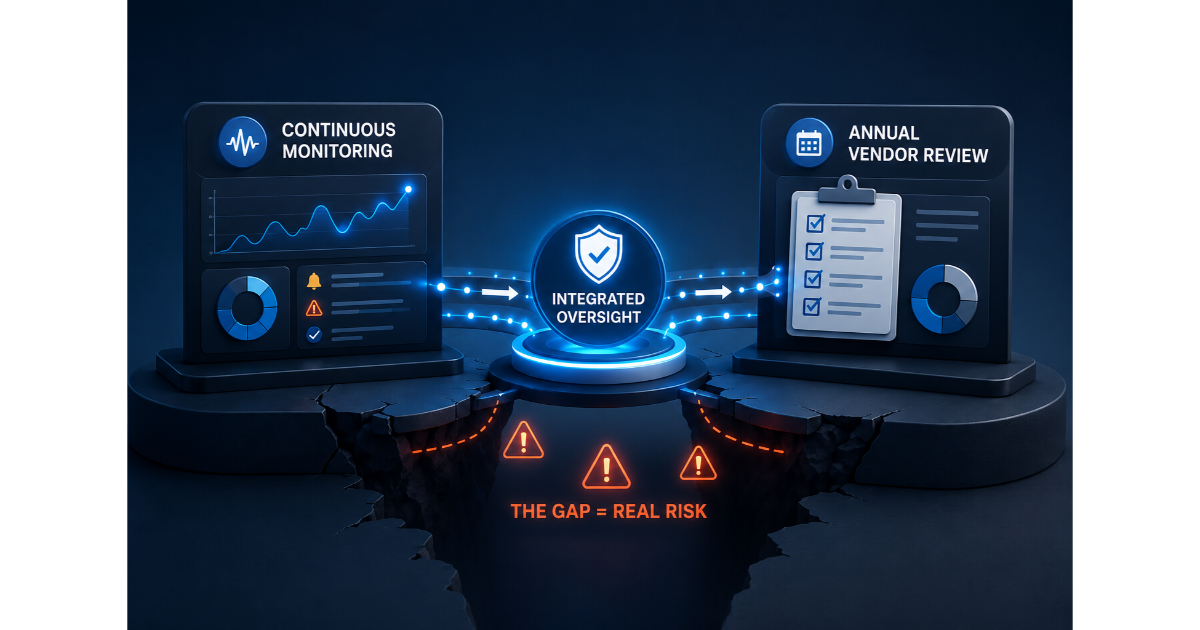
Point-in-Time Review vs Continuous Monitoring
A point-in-time review is a snapshot: accurate on the day it's taken, and gradually less accurate with every week that passes afterward. Continuous monitoring tracks signals as they change, which matters because supplier risk rarely stays still for a full year between formal reviews.
The two aren't competing approaches. Most mature programs keep periodic deep reviews for full risk reassessment, layered with continuous monitoring in between to catch what shifts before the next scheduled check comes around.
What to Monitor
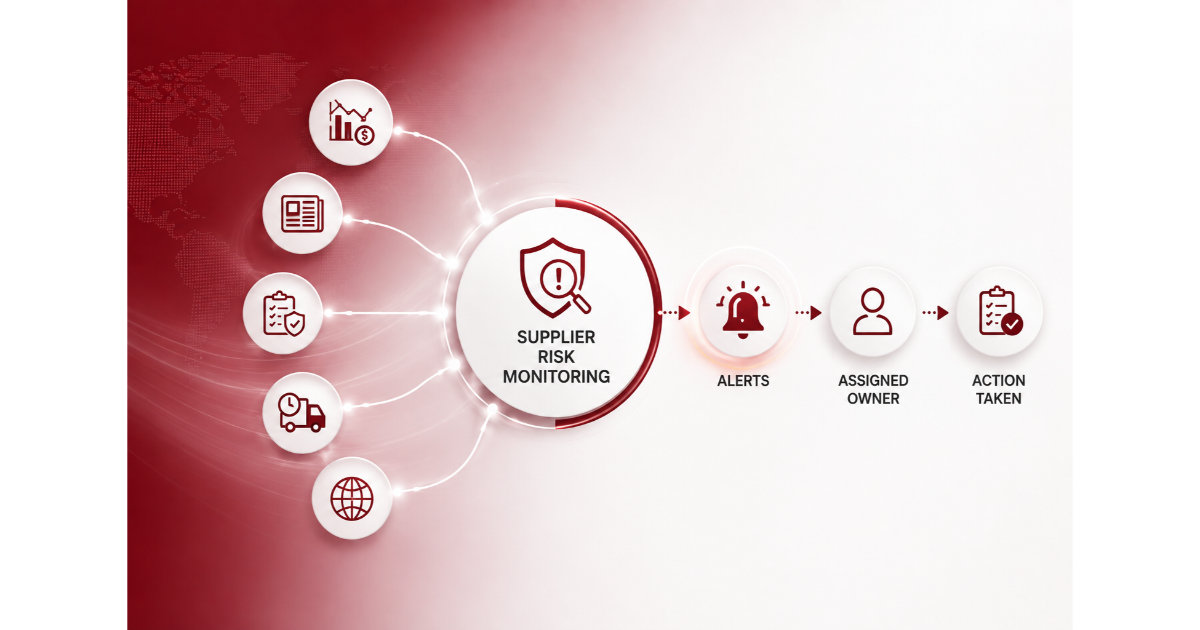
Financial signals
Credit rating changes, payment delays, and public financial distress indicators are often the earliest signal of trouble ahead, showing up in the data well before they show up in a missed delivery.
News and adverse media
Coverage of a supplier facing litigation, regulatory action, or operational trouble frequently surfaces before the supplier discloses anything directly to you.
Compliance and certification status
Lapsed certifications or failed audits, tracked as they happen rather than discovered at the next renewal cycle, when the gap between lapse and discovery could have run for months.
Delivery performance
Ongoing tracking of on-time delivery and quality metrics, watched as a trend rather than reviewed only at scheduled intervals.
Geopolitical and regional signals
Events in a supplier's operating region, weather, trade policy shifts, political instability, that could affect their ability to deliver, even when the supplier itself has done nothing wrong.
Why Data Without Action Doesn't Reduce Risk
Monitoring subscriptions are common. Acting on what they surface consistently is much less common. A recurring pattern across risk teams is paying for continuous data feeds that flag a real issue accurately and on time, only for that signal to sit unrouted because no one was explicitly responsible for the next step.
In these cases the data is usually accurate and timely. The missing piece is the link between a signal and a specific person expected to act on it within a defined window, and that link has to be built deliberately. It doesn't happen just because the data exists.
Setting Up Monitoring Triggers That Actually Route to Someone
An effective monitoring setup defines, for each risk category, what threshold triggers an alert, who receives it, and what the expected response time is. Without those three pieces defined ahead of time, monitoring data tends to accumulate in a dashboard rather than turn into action.
This is worth building deliberately rather than assuming it will happen naturally once monitoring is in place. A financial risk signal that lands in a shared inbox with no named owner tends to sit there exactly as long as an unmonitored risk would, just with better documentation of the fact that it was missed.
How ComplyScore® Handles Continuous Supplier Monitoring
ComplyScore®'s supplier risk management platform monitors financial, compliance, and performance signals continuously and routes each alert to a named owner with a defined response window, so a risk signal turns into an action rather than sitting unread in a dashboard.
Programs moving from annual reviews to continuous monitoring typically see supplier coverage rise from around a quarter of the base to over ninety percent. (Atlas Systems proprietary data.) That shift happens because the system is doing the ongoing watching that no analyst team, however dedicated, can sustain manually across hundreds of suppliers at once.
Book a demo to see continuous monitoring and alert routing set up on your own supplier base.






.webp?width=387&height=387&name=headless-tprm%20(1).webp)







































%20(1).jpg)